

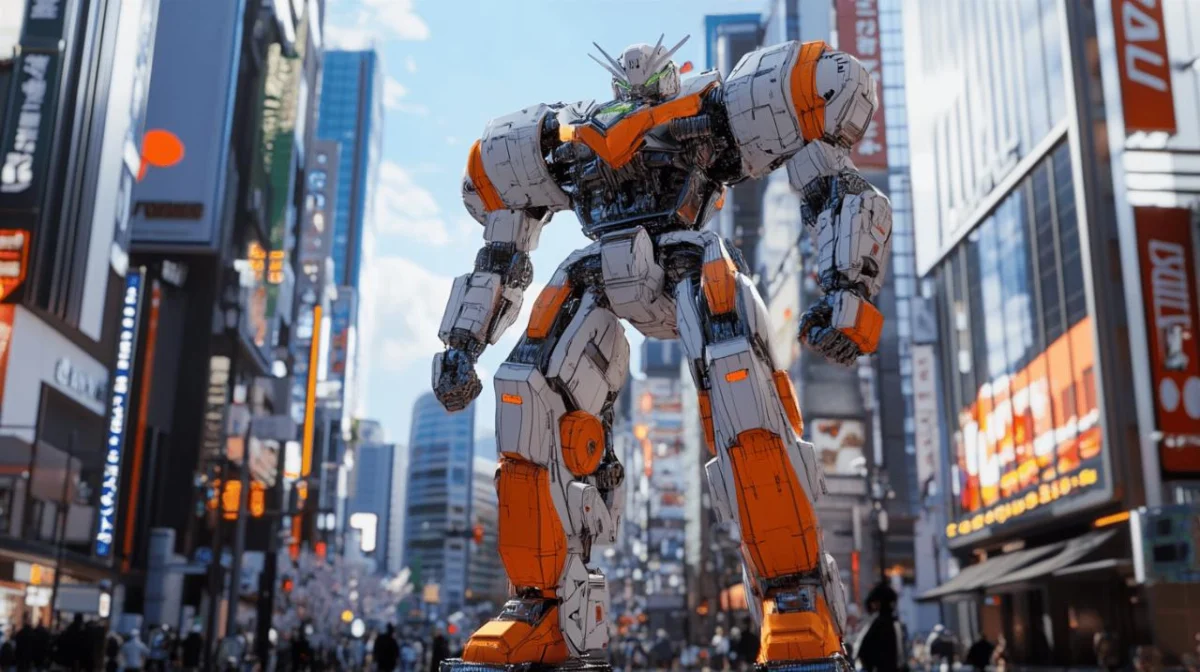
The global construction industry stands at a critical juncture. Faced with an aging workforce, a persistent shortage of skilled labor, and the ever-increasing demand for infrastructure, the sector is looking toward radical technological solutions. At the forefront of this transformation is Japan, a nation that has long been a pioneer in robotics. Central to this evolution is the HRP-5P, an autonomous humanoid robot developed by the National Institute of Advanced Industrial Science and Technology (AIST). This machine is not merely a novelty; it is a sophisticated, heavy-duty worker designed to operate in the unpredictable environments of modern construction sites.
Main Facts: The Anatomy of HRP-5P
The HRP-5P is an anthropomorphic robot engineered to replicate the physical capabilities of a human worker while bypassing the limitations of biological fatigue and human error. Standing as a testament to Japanese precision engineering, the robot is equipped with advanced sensors, high-torque actuators, and a sophisticated artificial intelligence framework that allows it to navigate, perceive, and manipulate objects within a construction environment.
Unlike stationary robotic arms found in factories, the HRP-5P is designed for mobility. It possesses a human-like range of motion, allowing it to perform tasks such as carrying heavy materials, positioning drywall panels, and executing structural assembly. By integrating real-time object detection and spatial mapping, the HRP-5P can identify building components, assess their orientation, and fix them into place with a level of repeatability that human workers—subject to physical exhaustion—cannot sustain over extended shifts.
Chronology: From Concept to Reality
The development of the HRP-5P is the culmination of decades of research into humanoid robotics by the AIST. While previous iterations of the HRP series focused on research, household assistance, or disaster response, the HRP-5P marks a pivot toward industrial utility.
- 2015–2017: The AIST begins the formal development phase of the HRP-5P, focusing on increasing the payload capacity and refining the sensory suite required for chaotic construction zones.
- September 27, 2018: The formal unveiling of the HRP-5P prototype. AIST demonstrates the robot successfully installing a drywall panel, marking the first time a humanoid robot of this complexity performed a standard, real-world construction task.
- 2019–2022: The focus shifts to software optimization and the refinement of AI algorithms. Researchers begin testing the robot’s ability to work in tandem with other machines and human supervisors.
- 2023–Present: The technology moves toward broader industrial adaptation, with AIST exploring applications in shipbuilding and aeronautics, where the HRP-5P’s precision is highly valued for intricate assembly tasks.
Supporting Data: The Efficiency Gap
The push for robotics in construction is backed by cold, hard data. In Japan, the construction sector is acutely affected by the country’s demographic crisis. The "silver tsunami"—the rapid aging of the population—has resulted in a sharp decline in the availability of young, able-bodied workers.
Performance Metrics
The superiority of robotics in this field is evident when analyzing output benchmarks:
- Precision: Specialized robots, such as those used for concrete finishing, can now achieve a precision of 0.5mm over a 250-meter span in a single day.
- Speed: Systems like Hadrian X have demonstrated the ability to lay 1,000 bricks per hour, a pace that would require a team of several human masons.
- Duration: The HRP-5P, alongside other autonomous systems, can operate 24/7 without the need for breaks, sleep, or ergonomic recovery, effectively doubling or tripling the potential work hours on a project site.
- Project Timelines: Modular construction and robotic integration have allowed companies to build 100-square-meter homes in as little as three days, with 3D-printing technologies (such as those pioneered by Winsun) capable of completing residential structures in under 24 hours.
Official Perspectives and Strategic Rationale
The AIST’s motivation behind the HRP-5P is rooted in national strategic necessity. During the unveiling, researchers emphasized that the robot was not intended to "replace" humans in a hostile manner, but to act as a "co-bot"—a collaborative tool that augments the limited human labor pool.
By automating the most physically demanding and repetitive tasks, the AIST aims to transition the role of the construction worker from manual labor to "robotic supervisor." This shift not only addresses the labor shortage but also improves worker safety. Construction remains one of the most hazardous industries in the world; by deploying the HRP-5P for heavy lifting and high-risk maneuvers, the industry can significantly reduce workplace injuries and fatalities.
Implications for the Global Construction Sector
The success of the HRP-5P serves as a blueprint for the global construction industry. The implications of this technological leap are profound and reach far beyond the borders of Japan.
Transforming the Construction Workforce
The integration of robots like the HRP-5P necessitates a radical shift in vocational training. As the industry becomes more automated, the demand for traditional manual laborers will decrease, while the need for robot technicians, software programmers, and systems maintenance experts will skyrocket. Educational institutions and trade schools are now under pressure to update their curricula to include robotics, coding, and remote system operation.
Safety and Collaborative Environments
The introduction of autonomous humanoid units creates new challenges for site safety. When humans and robots share a workspace, strict protocols must be established. The AIST has pioneered the use of "Safe Interaction Zones," where the robot’s AI constantly monitors for human presence using LiDAR and computer vision. If a human enters a "danger zone" near the robot, the system automatically slows or halts operation. This creates a symbiotic relationship: the robot handles the heavy lifting, while the human provides the high-level decision-making and oversight.
Beyond Buildings: Shipbuilding and Aerospace
The versatility of the HRP-5P is its most promising feature. Unlike single-task machines (such as a brick-laying robot), the humanoid form factor is designed to navigate environments built for humans. This makes it uniquely suited for:
- Shipbuilding: Navigating the tight, narrow corridors of a ship’s hull to perform welding or assembly in spaces that are difficult for humans to access.
- Aeronautics: Assisting in the assembly of large aircraft components, where precise positioning and repetitive movements are critical.
The Future of Infrastructure
The rise of the HRP-5P is part of a larger, systemic shift toward "Construction 4.0." This era is defined by the integration of drones for site surveying and thermal analysis, exoskeletons for worker support, and AI-driven project management software that optimizes material logistics. By the end of this decade, the construction site will likely look more like an automated factory floor than a traditional, chaotic building zone.
Conclusion: A Necessary Evolution
The HRP-5P is more than just a piece of hardware; it is a response to the inevitability of change. As populations age and the demand for housing and infrastructure grows, the construction industry can no longer rely on 20th-century methods. Japan’s commitment to the HRP-5P and its subsequent iterations highlights a pragmatic approach to a global problem.
By embracing robotics, the industry is not choosing between humans and machines, but rather choosing to evolve. The HRP-5P represents a future where the heaviest, most dangerous, and most monotonous tasks are handled with machine-like precision, allowing human workers to focus on the creative and complex aspects of building the world of tomorrow. The journey from the laboratory in Tsukuba to the global construction site is well underway, signaling a new, safer, and far more efficient era for the built environment.












No comments yet. Be the first to join the conversation!