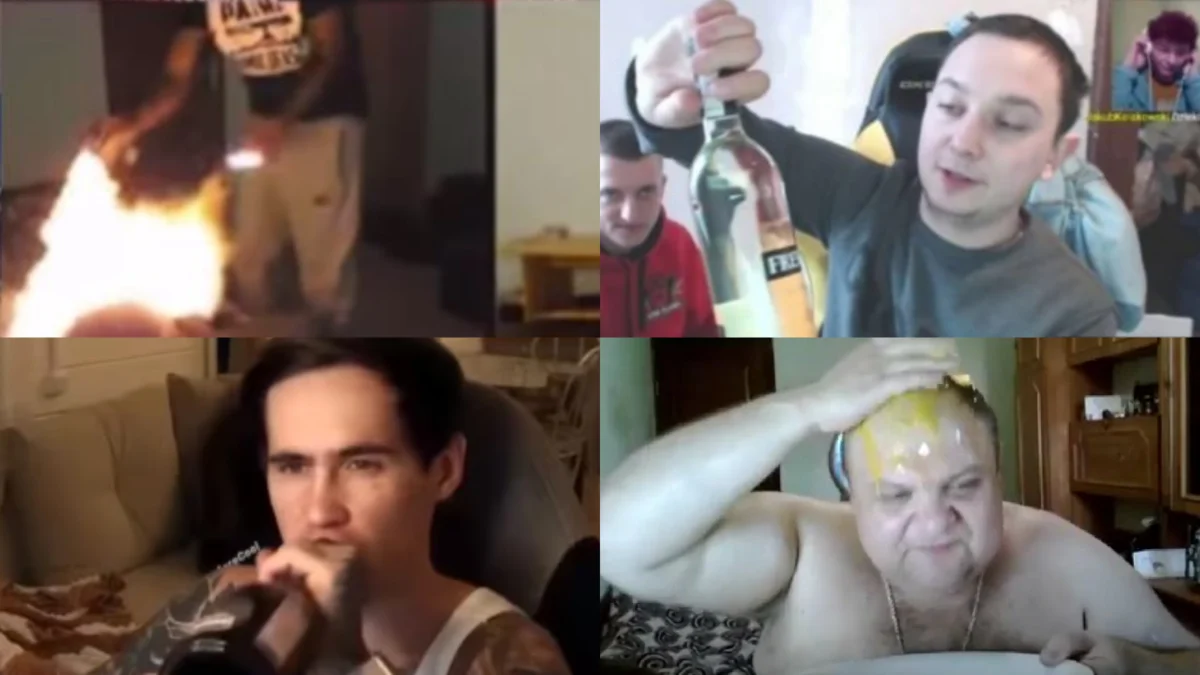
In a landmark move to curb the rising tide of digital exploitation, Poland has officially criminalized "trash streaming"—a phenomenon locally known as patostreaming. Following a decisive legislative process, Polish President Karol Nawrocki signed the bill into law on July 17, marking a pivotal moment in global internet regulation. Under the new statutes, content creators who broadcast violence, animal cruelty, or the degradation of others for financial gain or online clout face severe repercussions, with the most egregious offenders facing up to five years in prison.
The legislation represents a robust attempt by the state to bridge the gap between digital content creation and real-world accountability. By targeting the intersection of monetization and human rights violations, Poland is setting a precedent that platforms and governments worldwide may soon be forced to emulate.
A Chronology of the Legislative Crackdown
The journey to criminalizing patostreaming was not an overnight endeavor. For years, Polish law enforcement and social advocates had been documenting an alarming rise in broadcasts that pushed the boundaries of human decency.
- Early 2020s: Polish authorities began receiving an influx of reports regarding streamers who were soliciting donations to perform or induce dangerous, criminal, or humiliating acts on camera.
- Legislative Drafting (2023): As the popularity of these broadcasts grew, so did public outcry. Lawmakers began drafting legislation to specifically address the loopholes that allowed creators to claim "performance art" or "scripted content" as a defense against criminal liability.
- Bipartisan Momentum (Early 2024): The draft gained rare traction in a polarized political climate, receiving support from both Prime Minister Donald Tusk’s governing coalition and the opposition Law and Justice (PiS) party.
- The July 2024 Milestone: Following parliamentary approval, President Nawrocki officially signed the bill into law on July 17, 2024. The law immediately changed the legal landscape for digital creators, effectively ending the era of unregulated, abuse-driven content in the country.
Understanding ‘Patostreaming’: The Pathology of the Click
The term patostreaming is a portmanteau of "pathological" and "streaming." It describes a specific, parasitic subset of the creator economy where the primary draw is the suffering of the subject.
Unlike traditional livestreaming, which may involve gaming, commentary, or education, patostreaming relies on "shock value" as a currency. Creators often target vulnerable individuals—including those struggling with addiction, homelessness, or mental health issues—to subject them to degrading treatment for the amusement of a paying audience. Polish police have previously intercepted broadcasts where viewers actively paid for streamers to force participants to consume excessive amounts of alcohol, engage in physical altercations, or endure verbal and psychological abuse.
Crucially, the new law eliminates the "consent defense." Under the previous legal framework, streamers often argued that the victims were "willing participants." The new legislation explicitly clarifies that the degradation of human dignity cannot be legalized through consent, especially when financial incentive is involved.
Official Responses: A Divided Political Landscape
The introduction of this law has sparked a robust debate regarding the balance between public safety and freedom of expression.
The Pro-Legislation Stance
Konrad Ciesiołkiewicz, the deputy head of Poland’s State Commission for Counteracting Child Sexual Abuse, has been one of the law’s most vocal proponents. Speaking on the implications of the legislation, Ciesiołkiewicz described the move as "the end of accepting the building of popularity by humiliating others." His perspective is shared by a broad coalition of lawmakers who argue that the internet cannot be a lawless vacuum where human rights are surrendered for the sake of digital engagement.
The Concerns of the Opposition
Despite the overwhelming support for the bill, a contingent of right-wing lawmakers expressed significant reservations. Their primary concern centers on the potential for government overreach. Critics argue that by defining "harmful" content through broad legislative strokes, the state could inadvertently create a mechanism for censorship. They worry that future administrations might expand the definition of "trash streaming" to target political dissent or controversial speech, potentially chilling free expression online.

Global Context: A Trend Toward Accountability
Poland’s legislative action is not occurring in a vacuum. It is a direct response to a global trend of "extreme" content creation that has led to tragedy in multiple jurisdictions.
The Case of Sergio Jimenez (Spain)
The dangers of "challenge-based" streaming were brought into sharp focus in Spain, where influencer Sergio Jimenez died following a paid challenge that involved the consumption of large quantities of alcohol and narcotics. The incident sent shockwaves through the European streaming community, prompting Spanish police to launch an investigation into whether the organizers and the platform itself held criminal responsibility for inciting the lethal behavior.
The Tragedy of Jean Pormanove (France)
In France, the legal system is currently grappling with the death of Jean Pormanove. Prosecutors have moved to hold streamers Owen "Naruto" Cenazandotti and Safine Hamadi accountable for their role in a series of broadcasts that documented the systematic torture and humiliation of Pormanove before his death. The French case is significant because it highlights the necessity of "social media bans" as a punitive measure, a tool that Polish authorities are also considering incorporating into their broader strategy.
Implications for the Creator Economy
The Polish law serves as a warning shot to the major streaming platforms—Kick, Twitch, and YouTube—which have long struggled to moderate high-traffic, controversial content.
Liability and Platform Responsibility
Until now, many streamers operated under the assumption that their digital personas were separate from their real-world actions. By making it a crime to stage or falsely portray criminal acts, the Polish law removes the "scripted defense." If a streamer simulates a violent crime for views, they can be prosecuted as if the crime were real. This creates an immediate burden on platforms to verify content and act proactively against channels that thrive on volatility.
The Impact on Monetization
The economic engine of patostreaming is the direct donation system. By criminalizing the content, Poland is effectively turning the financial model against itself. Creators now face the prospect of a five-year prison sentence, which far outweighs the short-term financial gains of a viral stream.
A New Standard for Global Regulation
If the Polish model proves successful in reducing the prevalence of abusive content without infringing on legitimate free speech, it is highly likely that other EU member states will adopt similar legislation. The European Union’s Digital Services Act (DSA) already provides a framework for platform responsibility, but the Polish law adds a layer of individual criminal accountability that is currently lacking in most international jurisdictions.
Conclusion: Reclaiming the Digital Commons
The criminalization of patostreaming in Poland is a clear declaration that digital platforms are not immune to the laws of the physical world. While the internet has enabled unprecedented creativity and connection, it has also provided a dark theater for the most exploitative impulses of humanity.
By defining the boundaries of acceptable behavior—specifically by prohibiting the monetization of human misery—Poland has taken a necessary step toward civilizing the digital space. As the legal community watches the enforcement of this new law, the message to creators is unequivocal: the pursuit of popularity is no longer a valid excuse for the violation of human dignity. The era of profit-driven abuse is coming to a close, and the digital age is finally beginning to be held to the same standards of morality as the world offline.