Nana Muazin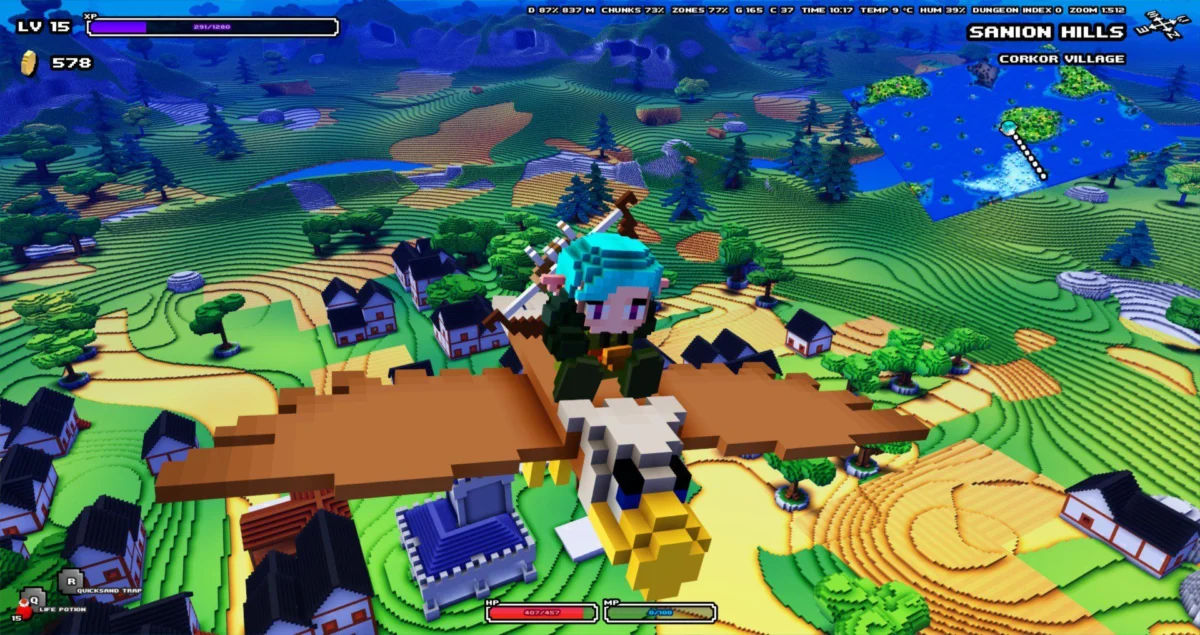
Published May 26, 2026, 6:30 PM EDT
By Patricia Hernandez
The digital landscape is littered with the remnants of ambitious dreams, but few tales are as protracted and peculiar as that of Cube World. Once hailed as the ultimate voxel-based adventure, a blocky paradise promising endless exploration and intricate RPG mechanics, the game has languished in an unfinished alpha state for over a decade. Its journey from internet darling to a niche curiosity is a potent narrative on the perils of indie development, the weight of overwhelming hype, and the solitary pursuit of a perfectionist’s vision.
As of May 2026, Cube World exists largely as a relic, a ghost in the machine of Steam’s vast library. Its concurrent player count hovers in the low double-digits—a stark contrast to the thousands who once flocked to its promise. The game’s "mostly negative" review score on Steam serves as a digital tombstone for unfulfilled expectations, a testament to a community left adrift. Despite these realities, its reclusive developer, Wolfram von Funck (known as Wollay), continues his work, meticulously refining details of a world that, for many, ceased to exist years ago. The recent, sporadic updates from Wollay only underscore the game’s unique predicament, igniting fleeting bursts of disbelief and nostalgia among those who remember its initial, dazzling ascent.
Chronology: A Decade of Dreams and Delays
The story of Cube World is less a conventional development timeline and more a series of dramatic peaks, prolonged valleys, and radical reboots, all centered around the singular vision of its creator.
The Genesis of a Blocky Dream (2011-2013)
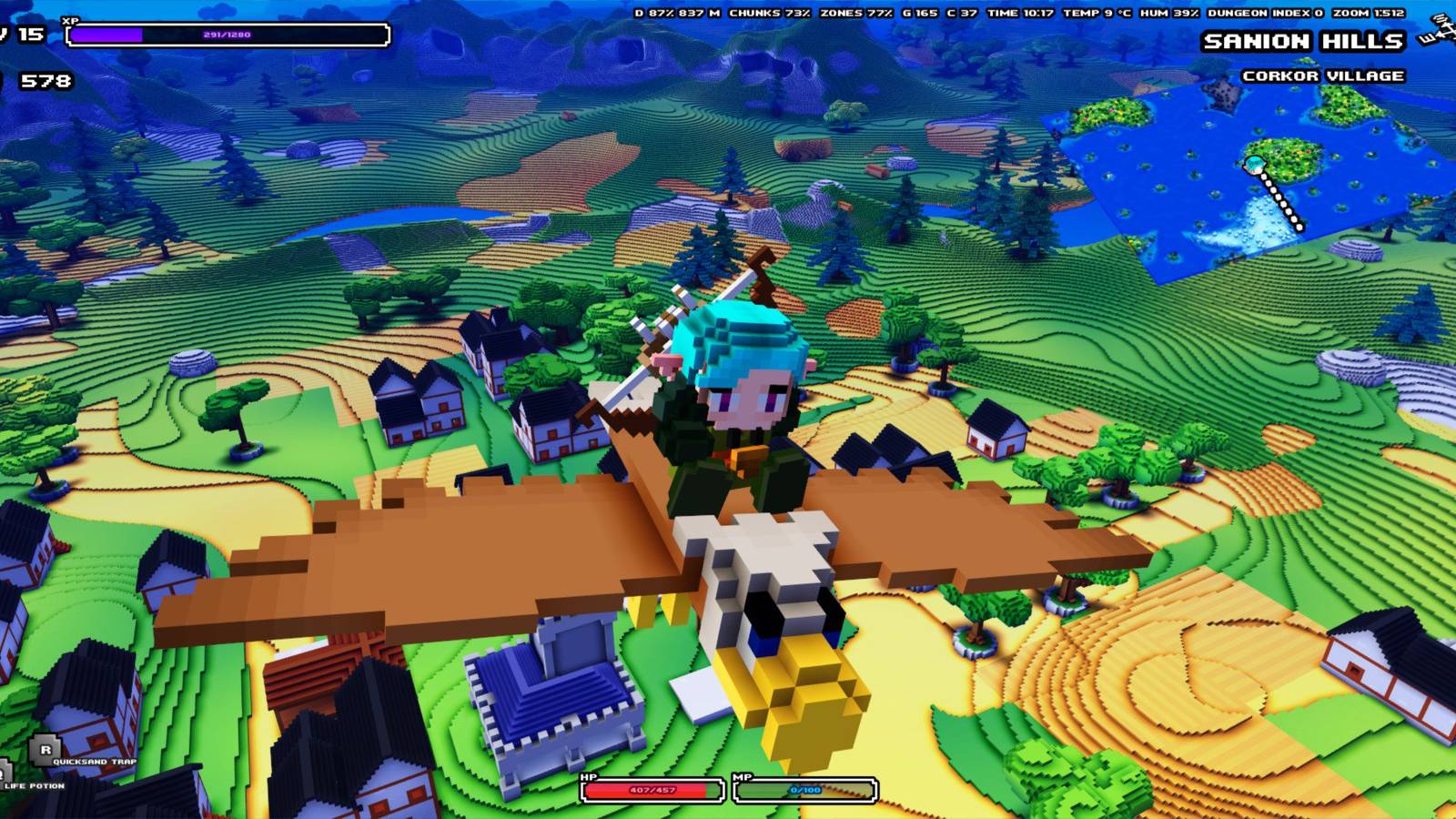
The saga began in 2011 when Wolfram von Funck, under the studio name Picroma (a two-person operation including his wife, Sarah von Funck), unveiled early footage of Cube World. What the internet saw was nothing short of revolutionary for its time: a vibrant, voxel-based open world teeming with dungeons, towns, and NPCs, all procedurally generated on the fly. Players instantly recognized the blend of Minecraft‘s creative freedom with deeper action RPG elements—classes, unique weapons, artifacts, and boss battles.
The initial trailers, showcasing adventurers gliding on hang gliders, battling colossal monsters, and delving into intricate caves, captivated a burgeoning online community. This was before No Man’s Sky captured the world’s imagination with its promise of infinite exploration, and Cube World‘s vision felt fresh, boundless, and incredibly ambitious. The visual style, reminiscent of classic 8-bit and 16-bit aesthetics rendered in 3D, struck a chord with gamers yearning for both nostalgia and innovation. Forums buzzed with anticipation, fan art proliferated, and Cube World quickly became one of the most hotly anticipated indie titles, building a level of organic hype that few small studios could ever dream of.
The Pre-Steam Era: Early Access and Initial Overwhelm
Before its eventual Steam release, Cube World was initially sold directly through Picroma’s website. This early access model allowed dedicated fans to dive into an evolving game, providing feedback and witnessing its iterative development. However, even in these early stages, the patterns that would define Cube World‘s trajectory began to emerge. Updates were sporadic, often punctuated by periods of radio silence from Wollay. His perfectionism was evident, as he frequently tinkered with core systems, sometimes leading to long stretches where the game felt stagnant to eager players.
The pressure mounted exponentially. The sheer volume of attention, while initially exhilarating, soon became a heavy burden. Wollay, a self-admittedly introverted developer, found the intense scrutiny and endless demands from the community overwhelming. This early period saw the first instance of Picroma temporarily halting sales of the game, a decision later attributed to the severe impact on Wollay’s mental health. The dream of Cube World was already proving to be a double-edged sword, offering immense creative freedom but also exposing its creator to unprecedented public pressure.
The 2019 Steam Alpha: A Critical Juncture
After years of development, intermittent updates, and prolonged periods of quiet, Cube World finally launched into alpha on Steam in October 2019. The anticipation was immense; for many, this was the moment the game would finally realize its potential. The release was met with an initial surge of enthusiasm, quickly propelling it to the top of Steam’s best-seller charts.
However, the euphoria was short-lived. Players who had followed the game for years, as well as newcomers drawn by the hype, quickly discovered that the Steam alpha was significantly different from the earlier versions and the idealized vision. While the procedural generation of the world remained impressive, core RPG elements—progression, loot balancing, quest design, and combat—felt underdeveloped and frustrating. The difficulty curve was often punishing, and the sense of meaningful advancement that is crucial to RPGs was largely absent. Many players felt that the game lacked direction, becoming a repetitive grind rather than an endless adventure.
The controversy stemmed from several factors: perceived regressions from earlier builds, the feeling that the game was fundamentally unbalanced, and the sudden realization that the polished vision seen in trailers was still far from reality. A flurry of initial patches followed the launch, addressing some critical issues, but this period of active engagement quickly dissolved into familiar silence. The mental health struggles that had plagued Wollay in the past resurfaced under the renewed intensity of the Steam launch. The game, despite its potential, receded back into obscurity, leaving behind a trail of disappointed fans and a "mostly negative" review score.
The Long Silence and Sporadic Resurrections (2019-2025)
Following the tumultuous 2019 Steam launch, Cube World entered its longest period of significant dormancy. Years passed with minimal communication from Picroma, leading many to assume the project had been abandoned. Yet, Wollay, in his characteristic reclusive manner, continued to work. For the most ardent fans, any post from Wollay, however brief, became an "event," a rare glimpse into the mind behind the blocky world.
In 2023, a significant development emerged: Wollay announced that he was moving Cube World to Unreal Engine 5. This was a monumental decision, essentially restarting a significant portion of the game’s underlying architecture after more than a decade of development in a custom engine. He dubbed this new iteration Cube World Omega, signaling a fresh start while simultaneously acknowledging the deep history of the project. This move, while technically ambitious, also highlighted Wollay’s perfectionist tendencies—a willingness to discard years of work to chase an improved vision, even if it meant further delaying a stable release.
Alongside the engine migration, Wollay shared insights into new features: procedurally generated creatures, expanded customization options, and the addition of new playable races like frogmen and lizardmen. These updates, though sparse, demonstrated a continued dedication to the aesthetic and systemic depth of his creation, even as the broader gaming world moved on. His blog posts during this period often emphasized his deep care for environmental details—the sway of grass, the formation of clouds, the way lily pads float on a lake—suggesting a developer more concerned with the minute artistic integrity of his world than with the commercial pressures or the demands of an impatient player base.
May 2026: A Glimmer of Progress?
In mid-May 2026, after another extended period of silence, Wollay once again surprised the Cube World community with a rare new look at the game. The update showcased UI improvements, refined tooltips, and inventory upgrades. Crucially, Wollay announced that he was "working on actual craft stations and shops next!"
For a game that has been in development for over 15 years, the reveal of basic crafting and shop mechanics, features considered foundational in most RPGs, struck many as both surreal and deeply frustrating. While it signaled ongoing development, it also underscored just how far Cube World remained from a complete, polished experience. This update, like many before it, served to highlight the unique, almost paradoxical, state of the game: perpetually in development, yet seemingly never progressing beyond its embryonic alpha stage in the eyes of the public.
Supporting Data: The Fading Pulse of a Dream
The concrete data points surrounding Cube World paint a picture of a game that has effectively vanished from mainstream consciousness, sustained only by a dedicated, albeit largely cynical, cult following and its creator’s unwavering focus.
Player Metrics: A Digital Ghost Town
The most telling statistic comes from SteamDB, which, as of this writing, reports a mere 19 concurrent players for Cube World. This number is not just low; it signifies a virtual abandonment by the vast majority of its initial player base. During its 2019 Steam launch, Cube World briefly topped the charts, drawing tens of thousands of players. The precipitous drop to double-digits indicates a complete collapse of engagement, a testament to the game’s failure to retain an audience after its initial burst of hype. The few players who remain are likely either deeply nostalgic, dedicated community members clinging to a fading hope, or simply those curious to revisit a piece of gaming history. For all intents and purposes, Cube World is a digital ghost town.
Community Sentiment: A Cacophony of Disbelief and Frustration
The "mostly negative" review score on Steam is a direct reflection of the community’s collective disappointment. Common complaints among reviewers consistently highlight:
- Lack of Updates: The primary grievance is the years-long stretches without meaningful updates or communication, leading to a sense of abandonment.
- Unfulfilled Promises: Many feel the game never lived up to its initial hype or even its earlier, pre-Steam versions.
- Broken Progression: A recurring criticism points to the game’s unbalanced and unrewarding progression system, making long-term play feel pointless.
- Repetitive Gameplay: Despite procedural generation, the core loop is often described as monotonous and lacking depth.
- Early Access Purgatory: Players frequently lament that the game has been stuck in an "early access purgatory" for far too long, with no end in sight.
The social media reaction to Wollay’s May 2026 update perfectly encapsulates this mix of disbelief, nostalgia, and outright frustration. On platforms like X (formerly Twitter) and Reddit, the comments were a microcosm of the game’s complex legacy:
- "This game is still being developed? I remember wanting this game so bad as a kid." – This sentiment, repeated across platforms, underscores the generational gap that has emerged during Cube World‘s prolonged development. Many who followed it as teenagers are now adults, and the game has become a childhood memory rather than a present reality.
- "Wait this game still exists?" – A common reaction, highlighting how deeply the game has faded from the public eye.
- "Am I going insane? Other than the UI being floaty and slanted, IT’S STILL THE SAME FUCKING GAME." – This raw frustration speaks to the core issue for many: despite years of development and restarts, the fundamental gameplay and scope appear largely unchanged. The perceived lack of significant progress on core mechanics, while Wollay focuses on aesthetic details, is a source of profound exasperation.
While the negative reactions are prominent, there is a segment of the community that maintains a cautious optimism or a sense of resigned acceptance. Some fans are simply happy to see any sign of life, even if their expectations remain tempered. Others view their initial purchase as a contribution to an interesting project, having long ago written off the monetary investment. "If it comes out, cool. If not, oh well," is a common refrain among this group, indicative of a community that has learned to manage its expectations through years of disappointment.
Wollay’s Blog and Communications: A Glimpse into Obsession
Wollay’s sparse blog posts are a unique form of "supporting data," offering rare direct insights into his development philosophy. His communications are characterized by:
- Focus on Detail: Instead of discussing major gameplay overhauls, Wollay often shares screenshots and descriptions of minute environmental details, such as "the way the grass sways," "how the sun sets," or "how lily pads float on a lake." This focus, while demonstrating artistic dedication, often bewilders players desperate for core gameplay improvements.
- Mental Health and Hype: In a now-deleted 2019 blog post, Wollay openly admitted that the massive attention Cube World received "wreaked havoc on [his] mental health." He expressed anxieties about releasing updates that weren’t "good enough" to meet the overwhelming hype. This admission provides crucial context for his reclusive development style and the long periods of silence.
- Detachment from Sales: Notably, Wollay never links to the game’s Steam page in his updates, nor does he actively encourage people to buy it. This is highly unusual for a developer with a commercial product. It suggests a profound detachment from the financial success or even the basic promotion of the game, indicating that his motivation is almost purely internal—an obsession with his creation rather than a drive for commercial viability.
The "Imagined Cube World" Phenomenon
Perhaps the most fascinating and melancholic aspect of the Cube World community is the rise of the "Imagined Cube World" phenomenon. This refers to a segment of fans who have convinced themselves that a superior, almost mythical version of Cube World once existed, or could exist, if only Wollay would revert to an earlier, unreleased build or concept.
These fans often point to old screenshots, early development videos, or even vague memories of pre-alpha concepts, believing that somewhere amidst Wollay’s numerous restarts and reworks, the "good version" was overwritten. They pine for a Cube World that they’ve never truly played, a perfect fantasy that only exists in their collective memory and speculation. The psychological underpinnings of this phenomenon are complex: a longing for lost potential, a profound sense of nostalgia for a game that never fully materialized, and a collective projection of hopes and dreams onto an elusive ideal. It’s a testament to the initial power of Cube World‘s vision that it could inspire such enduring, albeit imaginary, devotion. However, it also creates an impossible standard for Wollay, forever chasing a ghost of a game that may have only ever existed in the minds of his most ardent admirers.
Official Responses: The Solitary Vision of Wollay
The concept of "official responses" is somewhat ironic in the context of Cube World, given the developer’s reclusive nature. There are no press releases, no community managers, and certainly no traditional PR campaigns. Instead, Wollay’s "responses" are primarily his actions (or inactions) and his rare, often cryptic, blog posts. These reveal a developer deeply entrenched in a unique, solitary creative process.
Wollay’s Philosophy and Process: A Perfectionist’s Labyrinth
Wollay’s development philosophy appears to be driven by an uncompromising pursuit of his personal vision, almost to the exclusion of external pressures or commercial realities. His repeated decisions to restart development from scratch, most notably the 2023 migration to Unreal Engine 5, underscore a perfectionist streak that prioritizes internal satisfaction over external delivery. For Wollay, the game is seemingly never "good enough" to release in a definitive state.
His focus on minute details—the physics of lily pads, the rendering of clouds, the procedural generation of creatures—suggests a deep artistic care for the simulated world itself. He is a craftsman obsessed with the individual brushstrokes rather than the overall narrative of the painting. This meticulousness, while admirable in an artistic sense, has proven detrimental to the practical aspects of game development, where a balance between ambition, execution, and timely delivery is crucial. His own words about not wanting to release updates that don’t meet the hype reveal a crippling self-imposed standard, exacerbated by the initial overwhelming attention.
Silence as a Statement: The Unspoken Burden
The long periods of silence from Wollay are, in effect, his most consistent "official response." In an age of constant communication and transparency from early access developers, Wollay’s disappearances are a radical departure. To the community, this silence often conveys abandonment, frustration, or a lack of care. However, understood through Wollay’s own confessions, it likely stems from a combination of creative immersion, mental health struggles, and the crushing pressure of external expectations.
His silence, while frustrating for players, also provides him with the necessary isolation to pursue his vision without the constant noise of community demands. It’s a coping mechanism for a developer who found the spotlight unbearable. This approach, however, comes at the steep cost of alienating his player base and eroding trust.
The Lack of Commercial Drive: Art Over Commerce
Perhaps the most striking "official response" is Wollay’s apparent detachment from the commercial success of Cube World. His refusal to link to the game on Steam or actively encourage purchases, even as he shares updates, is highly unusual for a product that is still being sold. This suggests that the game has transcended its commercial identity for him; it is now a deeply personal project, an ongoing artistic endeavor rather than a product to be monetized.
This stance implies that Wollay is not driven by sales figures or market share, but by an internal artistic compulsion. While this dedication to craft is commendable, it leaves players in a perpetual limbo, having paid for a product that may never reach a commercially viable "finished" state. It highlights a fundamental disconnect between the developer’s internal motivations and the traditional expectations placed upon creators of commercial software.
Implications: Lessons from the Voxel Wilderness
The protracted and peculiar development of Cube World offers a wealth of implications, serving as both a cautionary tale and a unique case study for the gaming industry, indie developers, and the communities that form around ambitious projects.
The Pitfalls of Early Access: A Double-Edged Sword
Cube World stands as a stark example of the inherent risks associated with the early access model, for both developers and players. For developers, early access can lead to burnout, scope creep, and an inability to meet the initial hype, especially when the project leader is a perfectionist prone to restarting. The constant pressure and feedback, while valuable, can also be creatively stifling and detrimental to mental well-being.
For players, Cube World epitomizes the "early access purgatory"—a state where a game is sold as an unfinished product, receives initial updates, but then languishes indefinitely without reaching a 1.0 release. This leads to player fatigue, a loss of trust in the developer, and the feeling that their initial investment was for naught. The experience of Cube World contributes to the broader skepticism some players hold towards early access titles, making them wary of investing in games that may never fully materialize.
The Developer-Community Relationship: A Fragile Balance
The Cube World saga highlights the delicate balance required in the developer-community relationship. Intense, organic hype can be a developer’s greatest asset, but also their heaviest burden. Wollay’s experience demonstrates how overwhelming attention, combined with personal sensitivities, can lead to withdrawal and an inability to communicate effectively.
The challenge lies in fostering transparency and engagement without sacrificing developer well-being or creative autonomy. While some level of communication is vital to maintain a community’s trust, constant demands and negative feedback can cripple a small team, especially a solitary developer. Cube World underscores the need for indie developers to establish clear boundaries, manage expectations from the outset, and potentially seek support for the psychological toll of public development.
Market Saturation and Relevance: A Changing Landscape
Since Cube World‘s initial reveal in 2011, the gaming landscape has transformed dramatically. Minecraft has not only reigned supreme but has also spawned countless imitators and inspired a new generation of voxel-based games. Titles like Hytale and Lego Fortnite have emerged, refining the voxel aesthetic and delivering on similar promises of expansive, creative sandboxes with robust RPG or building mechanics. These games have capitalized on the nostalgia and appeal of blocky worlds, often with significant resources and consistent updates.
The question for Cube World, even if it were to miraculously launch in a 1.0 state, is whether it could find an audience. The market for "another blocky sandbox" is now highly saturated. While Cube World possesses a unique charm and artistic vision, its gameplay loop, even if refined, might struggle to stand out against more modern, polished, and actively supported alternatives. The window of opportunity for Cube World to capture a mass audience as a groundbreaking title has likely closed, leaving it to contend for a niche within a crowded genre.
The Future of Cube World: A Lingering Question Mark
What does the future hold for Cube World? A 1.0 release remains an elusive dream, constantly pushed further away by Wollay’s restarts and perfectionism. It is unclear if he can ever truly satisfy his own demanding vision, let alone the lingering, often conflicting, desires of his fragmented community. The "Imagined Cube World" phenomenon itself creates an impossible target, as no released game could ever live up to the collective fantasy woven around its unreleased potential.
While a "redemption arc" akin to No Man’s Sky is often hoped for by fans, the circumstances are vastly different. Hello Games, the developer of No Man’s Sky, eventually managed to deliver on its promises through consistent, large-scale updates and renewed communication. Wollay’s solitary, reclusive development style, coupled with his deep-seated perfectionism and apparent detachment from commercial pressures, makes such a turnaround far less likely.
Ultimately, Cube World‘s legacy may not be that of a triumphant game, but rather a profound case study. It is a testament to the allure of procedural generation, the immense power of internet hype, and the deeply personal, sometimes isolating, journey of a creator. It stands as a cult classic for those who remember its promise, a cautionary tale for aspiring developers, and a forgotten relic for the vast majority of the gaming world. Fifteen years after its initial reveal, Cube World remains an unfinished symphony, played by a lone composer, in a wilderness of his own making, forever chasing the perfect note.

 Lina Irawan
 Sagoh
Sagoh