

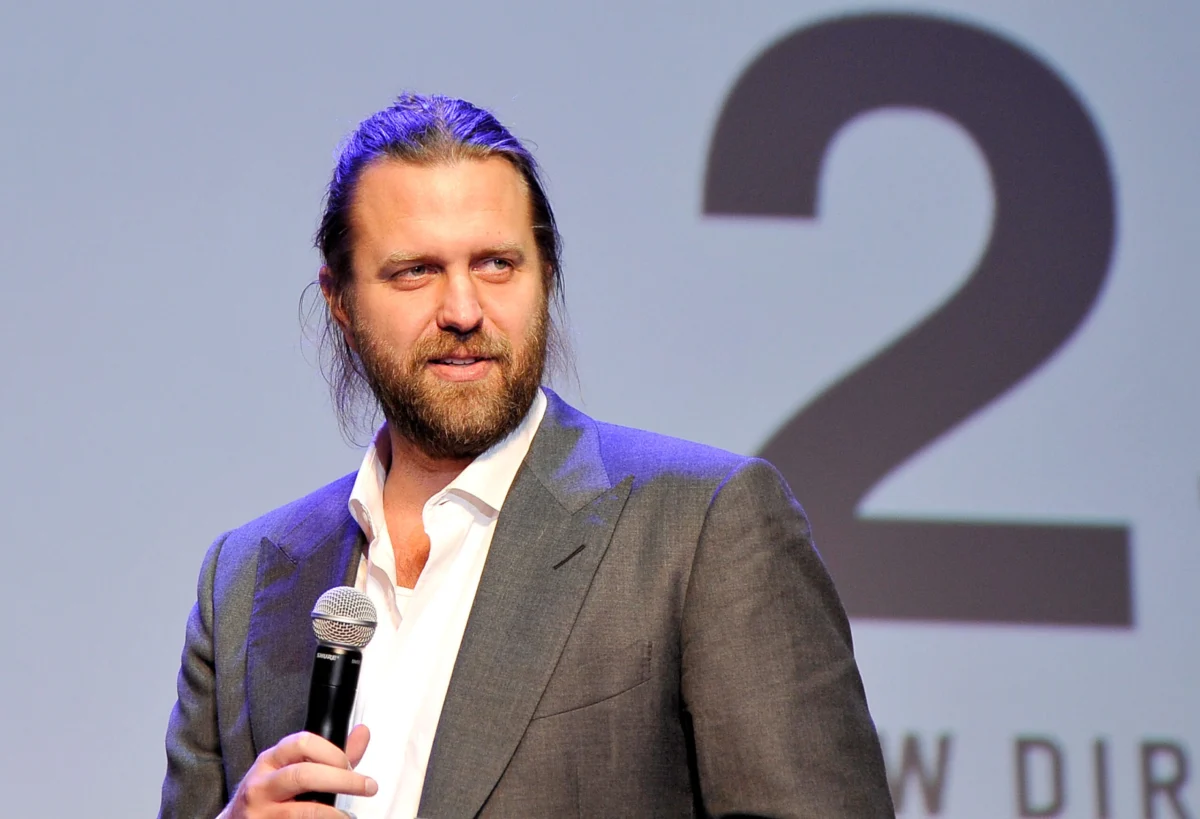
In a dramatic conclusion to one of the most bizarre and high-stakes legal sagas in modern entertainment history, filmmaker Carl Erik Rinsch—the director behind the 2013 blockbuster 47 Ronin—has been sentenced to 30 months in federal prison. The sentencing, delivered by U.S. District Judge Jed Rakoff, marks the final chapter of a complex web of deceit involving an $11 million production budget, speculative high-risk investments, and an increasingly fragile mental state that eventually led to a total professional collapse.
The case, which centered on a fraudulent deal with Netflix for a sci-fi series titled White Horse, serves as a stark warning to the entertainment industry regarding the intersection of creative autonomy, corporate oversight, and the unpredictable nature of human behavior.
The Verdict and Sentencing
On Monday, a Manhattan federal courtroom became the stage for the final act of Rinsch’s legal reckoning. Following a jury’s determination last year that found the director guilty of wire fraud, money laundering, and illicit monetary transactions, the court weighed the severity of his actions against the mitigating evidence of his mental health.
While federal prosecutors had initially advocated for a 60-month prison term, Judge Rakoff opted for a 30-month sentence. This decision was influenced by revelations regarding the director’s declining mental health during the period in which the fraud occurred. However, Judge Rakoff was clear that mental health struggles did not absolve Rinsch of the calculated nature of his deception.
"The perhaps improper medication Mr. Rinsch received may have played a role," Judge Rakoff stated during the hearing, as reported by Inner City Press. "But he was determined to lie to get substantial moneys from Netflix, cover it up through money laundering and lies. That was brought home to the court by his testimony. So, prison is required."
In addition to the two-and-a-half-year prison sentence, Rinsch has been ordered to serve three years of supervised release and must pay $11 million in full restitution to Netflix. The streaming giant is also currently seeking to recoup more than $4.4 million in legal fees stemming from the protracted litigation.
A Chronology of Obsession and Deceit
The trajectory of this case began with what appeared to be a standard, if ambitious, development deal. Netflix had initially expressed interest in the project White Horse, entrusting Rinsch with significant capital to bring the vision to life.
The Development Phase (2018–2019)
The partnership between Netflix and Rinsch began with high expectations. As a director with experience handling large-scale visual effects, Rinsch was seen as a capable hand for a high-concept science fiction project. However, internal friction began almost immediately. According to court filings, the production stalled as Rinsch struggled to meet contractual milestones.
The Financial Diversion (2020)
By 2020, the focus of the relationship shifted from creative development to financial mismanagement. Instead of utilizing the funds to build sets, hire crew, or develop the screenplay, Rinsch began transferring significant portions of the budget into personal accounts. He channeled millions of dollars into highly speculative, high-risk securities trades.
When those trades initially yielded profits, Rinsch did not reinvest them into the show. Instead, he used the windfall to purchase luxury vehicles, high-end watches, and other extravagant assets, all while maintaining a facade of professional progress with Netflix executives.
The Litigation Strategy (2021–2023)
Perhaps the most audacious element of the scheme occurred when Rinsch turned the tables on the studio. Realizing he had burned through the budget and failed to deliver the promised content, he initiated an arbitration process against Netflix. He claimed that the streaming service had breached their contract by failing to provide an additional $14 million in funding. The maneuver was an attempt to strong-arm the company into providing more capital to cover his mounting financial holes. An arbitrator eventually ruled in favor of Netflix, exposing the depth of the deception.
The Human Element: Mental Health and Peer Testimony
One of the most compelling aspects of the trial was the evidence provided by those closest to Rinsch. As the legal proceedings unfolded, a portrait emerged of a man who had seemingly detached from reality, leading to a profound psychological crisis that arguably paved the way for his criminal behavior.
In a letter to the court, his brother, Daniel Rinsch, noted: "Beginning in 2019, family members, friends, and colleagues observed significant changes in his thinking, communication and behavior. By late 2019, the toll on Carl’s psyche was clear. His emails had become strange and troubling, suggesting that he was no longer reasoning clearly."
This sentiment was echoed by others in his orbit. Mike Seid, a screenwriter and long-time friend, testified about social media posts from 2020 in which Rinsch claimed to have unlocked secrets to ending the global pandemic and boasted of his ability to communicate with "divine forces."
Even high-profile industry figures weighed in. Keanu Reeves, who headlined Rinsch’s 47 Ronin, provided a character statement that highlighted the director’s tendency toward self-sabotage. Reeves wrote, "I am, of course, not a therapist or psychologist. I write instead as an artistic peer of Carl’s, and as a friend. In my opinion, Carl can self-sabotage by amplifying the scale, scope and landscape of what had been negotiated, accordingly placing himself and his counterparties at odds."
Implications for the Entertainment Industry
The case of Carl Erik Rinsch serves as a cautionary tale for both creators and financiers in the streaming era.
The "Auteur" Trap
The industry often grants creative freedom to directors with established track records. However, when that freedom is decoupled from rigorous fiscal oversight, the results can be catastrophic. The Rinsch case highlights the need for studios to implement more granular auditing processes for development budgets, particularly for high-concept projects that rely heavily on complex visual effects and long-lead production times.
The Cost of Litigation
The fact that Netflix is still fighting to recover $4.4 million in legal fees demonstrates that the costs of fraud go far beyond the initial misappropriated funds. Legal battles in the entertainment sector are notoriously expensive and time-consuming, diverting resources that could have been used to produce dozens of other projects.
The Role of Mental Health in Professional Ethics
The court’s handling of Rinsch’s mental health creates a delicate precedent. While the legal system recognized his psychological state as a contributing factor, it refused to use it as a "get out of jail free" card. This reinforces a standard of accountability: regardless of personal struggles, individuals in positions of high financial responsibility are expected to operate within the bounds of the law.
Conclusion: A Final Message
The statement from U.S. Attorney Jay Claton following the sentencing was brief but served as a definitive capstone to the proceedings: "Today’s sentence sends a deterrent message: fraud will not be tolerated."
For Netflix, the ordeal is a closed chapter, though the financial recovery process remains ongoing. For Rinsch, the path ahead involves a transition from the world of high-budget filmmaking to the reality of federal incarceration. As the industry moves forward, the "White Horse" project will likely be remembered not for the story it failed to tell, but for the stark, cautionary narrative it wrote for the business of Hollywood.










