

The digital landscape in 2026 has reached a sophisticated inflection point. As artificial intelligence integrates more deeply into the creative workflow and user expectations for interactive storytelling continue to soar, the barrier between functional web design and immersive digital art has all but vanished. This report explores the latest trends in web architecture, layout efficiency, and user experience (UX) design, drawing from a curated showcase of the year’s most innovative projects.

The Core Philosophy of 2026 Web Design
At the heart of the current design movement lies a commitment to "intentional simplicity." Unlike the cluttered, information-heavy pages of the early 2020s, modern web design prioritizes user flow and cognitive ease. By analyzing recent industry leaders, we can identify a shift toward three specific pillars: spatial clarity, purposeful motion, and reductive content architecture.

Creators are increasingly leveraging robust website templates not as crutches, but as scaffolding. These foundations allow designers to focus on high-level UI/UX decisions—such as the psychological impact of button placement or the rhythm of scroll-triggered animations—rather than reinventing the technical wheel. Modern landing pages are now serving as definitive "narrative anchors," where the main value proposition is communicated in seconds through concise copy and intuitive visual cues.

A Chronology of Emerging Design Paradigms
The trajectory of web design over the past eighteen months has been defined by rapid adaptation.

- Early 2025: The Rise of Generative Integration: Initial experiments with AI-assisted layouts focused on efficiency and automated asset generation.
- Late 2025: The Shift to Interactive Storytelling: As technical limitations faded, portfolios and brand sites began to prioritize "explorable" experiences over static galleries.
- Q1-Q2 2026: The Aesthetic Maturity: We are currently seeing a refinement phase where brands are moving away from gimmicky AI effects to subtle, human-centric design, prioritizing accessibility and emotional resonance.
Analyzing the Industry Benchmarks
To understand where the industry is heading, we must examine the specific executions that are currently setting the pace. Below are several standout projects that represent the pinnacle of 2026 design standards.

MR.MOLD: Merging AI with Playful Narrative
The MR.MOLD website serves as a masterclass in thematic cohesion. By combining machine learning-driven assets with a whimsical, character-led story, the site transforms a standard corporate-adjacent narrative into a memorable Christmas journey. It demonstrates that even complex AI implementation must be grounded in a relatable emotional core.

Utopia Tokyo: Digital Historiography
Utopia Tokyo tackles the challenge of digital archiving. By creating an experience that bridges hidden historical data with speculative future-building, the site utilizes complex navigation systems that remain surprisingly intuitive. It proves that depth of content does not necessitate a cluttered interface.

Springs & PARADE: Luxury Real Estate Standards
Both Springs and PARADE redefine the real estate sector. By utilizing high-fidelity imagery and a "wellness-first" layout, these sites focus on the emotional outcome of living in these spaces rather than just listing square footage. The spacing and typography choices create an atmosphere of premium calm.

Elecctro & Solais: The New Corporate Aesthetic
These sites represent the "Expert Tech" movement. Elecctro manages to make vending technology feel cutting-edge, while Solais translates complex AI sentiment analysis into an immersive, data-driven visual dashboard. They prove that B2B platforms no longer need to be visually sterile.

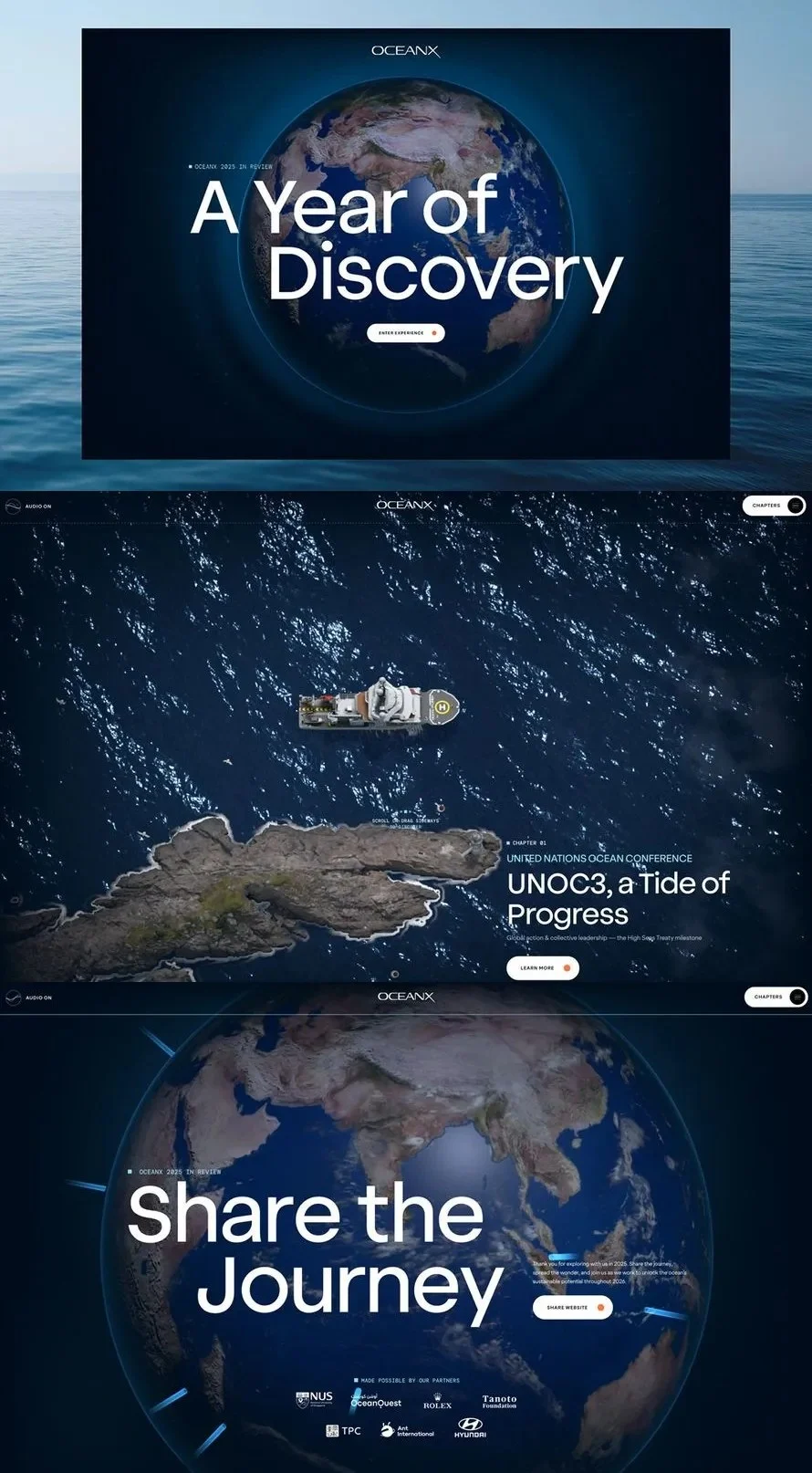
OceanX & Unseen Studio: Data as Art
The "Year in Review" format has been elevated by OceanX and Unseen Studio. These projects treat historical data as a narrative device, using motion design to guide the user through a chronological journey of their previous year’s successes.

Niche Aesthetics: Pimpan and The Way to Dream
Pimpan introduces a brutalist aesthetic to the Parisian fashion scene, utilizing harsh lines and bold, unapologetic typography. Conversely, The Way to Dream acts as a philosophical critique of systemic control, proving that web design can—and should—function as a medium for social commentary and artistic expression.

Implications for Future Digital Strategy
The data gathered from these projects suggests that the "one-size-fits-all" approach to web design is officially obsolete. As we move through the second half of 2026, the following implications are clear for designers and stakeholders:

1. The Death of Information Overload
The most successful websites are those that respect the user’s time. By reducing the number of sections and focusing on "high-impact" content, designers are finding that bounce rates decrease and conversion rates—whether that is a newsletter sign-up or a product purchase—increase significantly.

2. The Rise of "Hassle-Free" Infrastructure
Designers are increasingly adopting modular design systems. By changing individual layout components and A/B testing them in real-time, teams can optimize for user actions without the need for a full site redesign. This iterative approach is now the standard for competitive digital agencies.

3. Motion as a Functional Tool
Motion design in 2026 is no longer just for aesthetic flare; it is a navigational aid. Whether it is a subtle scroll transition or a complex hover effect, motion is being used to guide the user’s eye to the next logical step in the funnel, reducing friction and confusion.

Expert Commentary: Building for the Future
"The goal is not to impress the user with technical prowess, but to empower them with clarity," says one lead developer in the industry. "When a user visits a site in 2026, they have a singular goal. If our layout forces them to work to find the answer, we have failed. The best design is invisible—it simply facilitates the user’s intent."

To achieve this level of excellence, designers are encouraged to:

- Study, Don’t Just Copy: Don’t simply replicate a layout; analyze the spacing, the padding, and the weight of the typography to understand why it works.
- Test Early and Often: Use the "fresh" examples found in galleries as hypotheses. Implement similar structures in your own projects and measure the impact on user behavior.
- Prioritize Accessibility: A beautiful site that is hard to navigate for those with disabilities is, by definition, a broken site. Accessibility should be the foundation, not an afterthought.
Conclusion: The Path Forward
The websites highlighted in this report represent the cutting edge of what is possible when creative vision meets technical precision. Whether it is the bold, brutalist style of Pimpan or the immersive, data-rich environment of Solais, these examples serve as a roadmap for the future of the web.

As we look toward the remainder of 2026, the challenge for designers will be to balance the influx of new, powerful AI tools with the enduring need for human-centric design. By focusing on structure, maintaining a clear content flow, and continuously testing new layouts, creators can ensure their work remains relevant in an increasingly crowded digital marketplace.

Explore these collections regularly, download the assets that resonate with your project goals, and remember: the most effective websites are those that guide the user with purpose, elegance, and, above all, clarity.










No comments yet. Be the first to join the conversation!