Layla Zulfa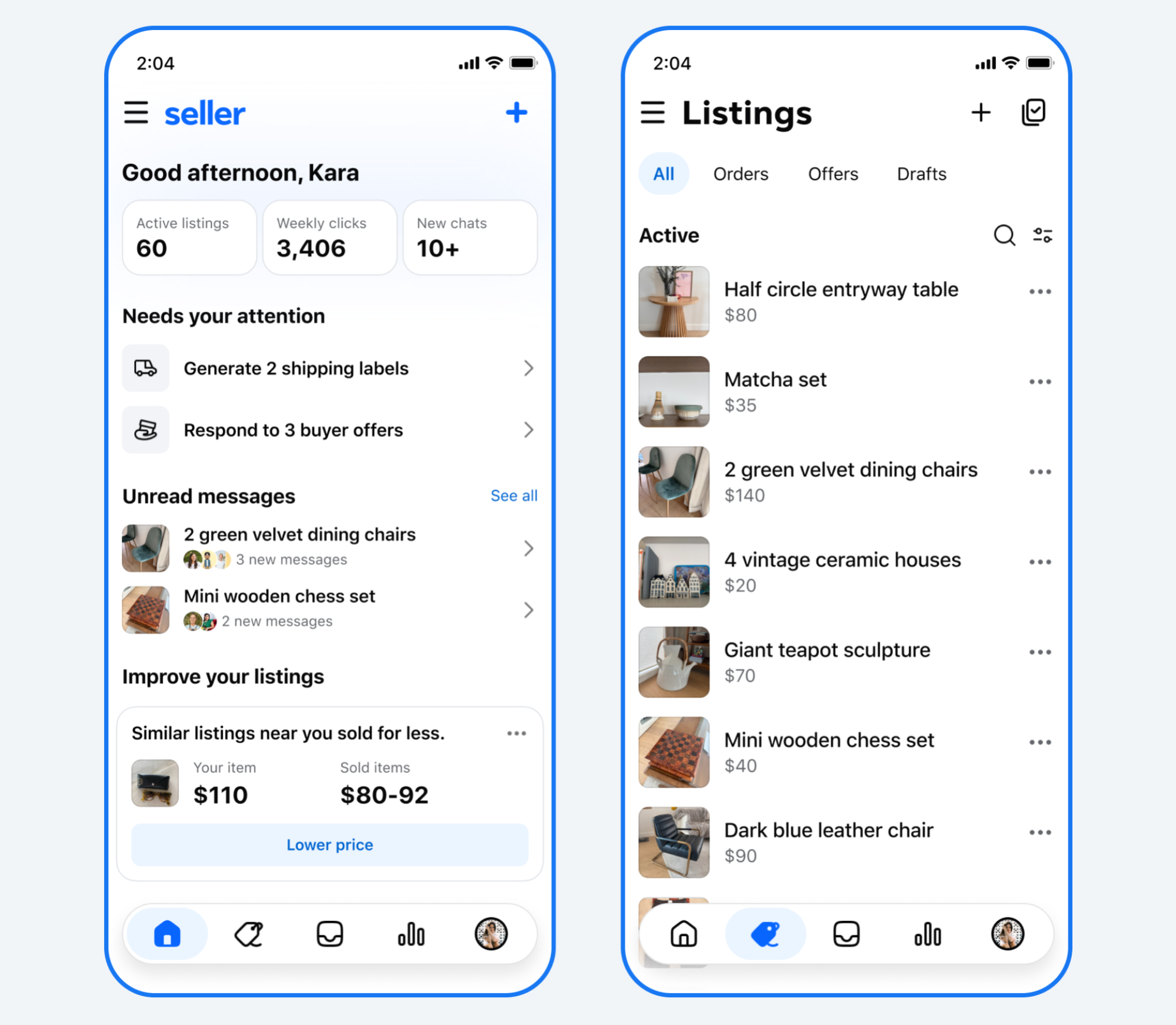
For a generation of digital natives, Facebook has often been dismissed as an aging relic—a platform for family updates and digital memories rather than the cutting-edge social utility it once was. Yet, beneath the surface of declining news feed engagement, a different story has been playing out. Facebook has quietly reinvented itself into a digital bazaar, becoming the modern-day equivalent of Craigslist, but with the algorithmic power of a global tech titan.
With the launch of its new standalone app, "Seller," Meta is officially doubling down on the engine that keeps the Facebook ecosystem humming: Facebook Marketplace. This strategic move signals a broader transition for the company, as it shifts from a singular, catch-all social network to a suite of specialized, power-user-focused tools.
The Main Facts: What is ‘Seller’?
On Friday, Meta officially rolled out "Seller," a dedicated mobile application designed exclusively for the power users who populate Facebook Marketplace with hundreds of millions of items each month.
The app is free to download and utilizes existing Facebook credentials, ensuring a seamless transition for veteran users. At its core, the Seller app serves as a centralized command center. It offers:
- Streamlined Listing Tools: A simplified interface for uploading photos and descriptions.
- Centralized Dashboard: A comprehensive view of all active, pending, and sold inventory.
- Dedicated Inbox: A partitioned messaging system specifically for buyer inquiries, separating sales negotiations from personal Facebook Messenger chats.
- Performance Analytics: Data-driven insights into how past listings have performed, allowing sellers to optimize their pricing and presentation.
Crucially, the economic model remains unchanged: Meta does not take a percentage of sales, nor does it charge listing fees. The company continues to monetize Marketplace through targeted advertising, allowing the platform to remain a frictionless environment for peer-to-peer commerce.
A Chronology of the Marketplace Transformation
To understand why Meta is launching a standalone app in 2026, one must look at the evolution of Facebook as a commerce platform over the last decade.
2016: The Modest Beginning
Facebook launched Marketplace as a simple tab within the main app, aiming to capture the informal peer-to-peer commerce that was already happening in local Facebook Groups. At the time, it was an experimental feature meant to increase time-on-app.
2020–2022: The Pandemic Surge
The global pandemic served as an unexpected accelerant. As supply chains faltered and people spent more time at home, Marketplace became an essential utility for local trading. During this period, the sheer volume of listings exploded, turning the feature from a "side project" into a pillar of the Facebook experience.
2024: The Shift Toward Fragmentation
Recognizing that the main Facebook app had become bloated, Meta began experimenting with a strategy of "unbundling." They realized that the "one-size-fits-all" approach was losing to more specialized, verticalized competitors.
May 2026: The "Forum" Precedent
In a move that acted as a trial run for the Seller app, Meta launched "Forum," a standalone application dedicated to Facebook Groups administrators. By giving these community leaders better moderation tools, Meta observed a surge in group activity. This proved that power users were hungry for specialized workspaces.
July 2026: The Launch of ‘Seller’
Following the success of Forum, Meta released the Seller app. It represents the maturation of Marketplace from a casual feature into a professional-grade commerce platform.
Supporting Data: Why Marketplace Matters
The numbers behind the decision to create the Seller app are staggering. Despite the narrative that Facebook is "dying," the data suggests that for a significant demographic, it remains indispensable.

- The Youth Demographic: Meta reports that one-third of all young adults (aged 18–34) who log into Facebook do so primarily to interact with Marketplace. For this cohort, the social feed is secondary to the commerce utility.
- Listing Velocity: The scale of the platform is massive. Every single month, more than 420 million items are listed on Marketplace. This represents a volume of inventory that rivals some of the world’s largest e-commerce retailers.
- Retention Drivers: Marketplace serves as a "sticky" feature. Users who engage in commerce are statistically more likely to return to the Facebook app daily, which in turn fuels the ad-supported revenue model that sustains Meta’s bottom line.
Official Responses and Strategic Vision
In an exclusive interview with the New York Times, Tom Allison, the head of Facebook, provided clarity on the company’s broader strategy. He framed the launch of the Seller app not as a departure from Facebook, but as a professionalization of its utility.
"We want to provide our power users with the same quality of tools that content creators expect," Allison stated. He drew a direct comparison to professional video editing suites, noting that just as creators need robust software to make high-quality content, high-volume sellers need dedicated software to manage their inventory, communicate with buyers, and track their analytics.
Allison emphasized that Meta is currently in a phase of "standalone experimentation." The goal is to identify the most valuable "verticals"—such as Groups and Marketplace—and build distinct, high-performance apps for them. "We are moving away from the idea that everything must live inside the main Facebook app," Allison added. "We are focusing on the jobs our users are trying to do."
The AI Integration: A Competitive Edge
One of the most significant features of the Seller app is the integration of proprietary AI. Users can now scan an item with their smartphone camera, and the app will automatically populate the listing details, including categories, suggested pricing based on local market data, and descriptive text. This drastically lowers the barrier to entry for casual sellers, potentially increasing the total volume of listings on the platform.
Implications: What This Means for the Future
The launch of the Seller app carries significant implications for both the digital marketplace landscape and the future of Meta as a conglomerate.
1. The Death of the "One-App" Strategy
Meta is clearly acknowledging that the "super-app" model—the idea that one interface can do everything—is becoming a liability. By spinning off Seller and Forum, Facebook is effectively becoming a "platform of platforms." This allows them to iterate faster on specialized tools without needing to push updates to the massive, complex code base of the main Facebook app.
2. A Direct Challenge to Craigslist and eBay
While Craigslist has largely remained stagnant in terms of UI and functionality, and eBay has become a more formal, fee-heavy environment, Facebook Marketplace is positioning itself in the "Goldilocks zone." It offers the local convenience of Craigslist with the modern interface and social verification of a contemporary tech product, all without the transaction fees that plague professional sellers on other platforms.
3. The Future of Community Commerce
The integration of AI into the listing process is a game-changer. By making it nearly effortless to sell items, Meta is likely to see an influx of "inventory" from users who previously found the listing process too tedious. This creates a virtuous cycle: more items lead to more buyers, which in turn attracts more professional sellers, further cementing Facebook’s dominance in the local classifieds space.
4. Risks and Challenges
Despite the optimism, the strategy is not without risks. Fragmentation could lead to user confusion; users may wonder why they need three different apps to interact with one platform. Furthermore, as Marketplace becomes more professionalized, it may attract more sophisticated bad actors or scammers, putting more pressure on Meta’s safety and moderation teams to keep the platform secure.
Conclusion
The launch of the Seller app is a clear signal that Facebook is no longer interested in competing solely on the strength of its news feed. Instead, it is betting its future on being the world’s most accessible, hyper-local, and AI-powered marketplace. By recognizing that its users are not just "socializers" but also "sellers," "buyers," and "community managers," Meta is evolving to meet the specific needs of a modern digital economy.
Whether this move will successfully revitalize the platform in the eyes of a skeptical public remains to be seen. However, one thing is certain: with 420 million items hitting the platform every month, Facebook has already won the battle for the local bazaar. Now, with the Seller app, they are simply trying to make that bazaar as efficient—and profitable—as possible.


 Raul Delapena Setiawan
 Dwi Wanna