Evan Lee Salim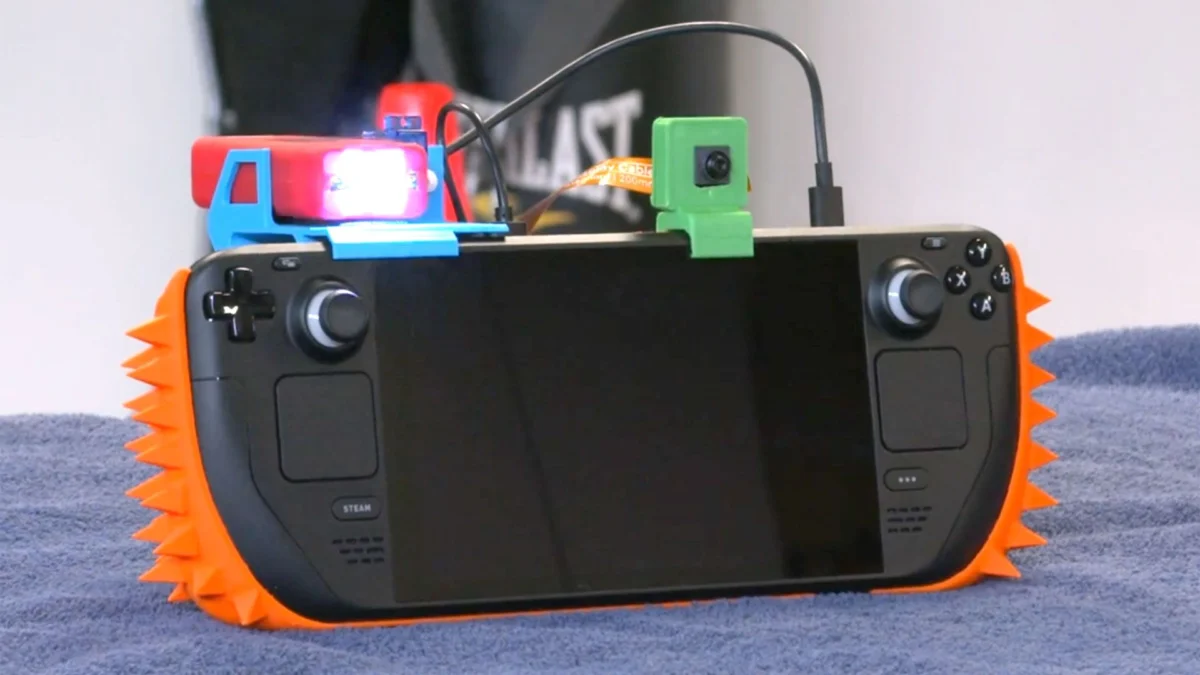
In the world of personal electronics, few things are as universally frustrating as the "borrower"—that well-meaning family member or friend who picks up your device, drains the battery to zero, and returns it with a shrug. For one dedicated Steam Deck owner, however, the era of passive-aggressive post-it notes and gentle requests has come to an abrupt, electrified end.
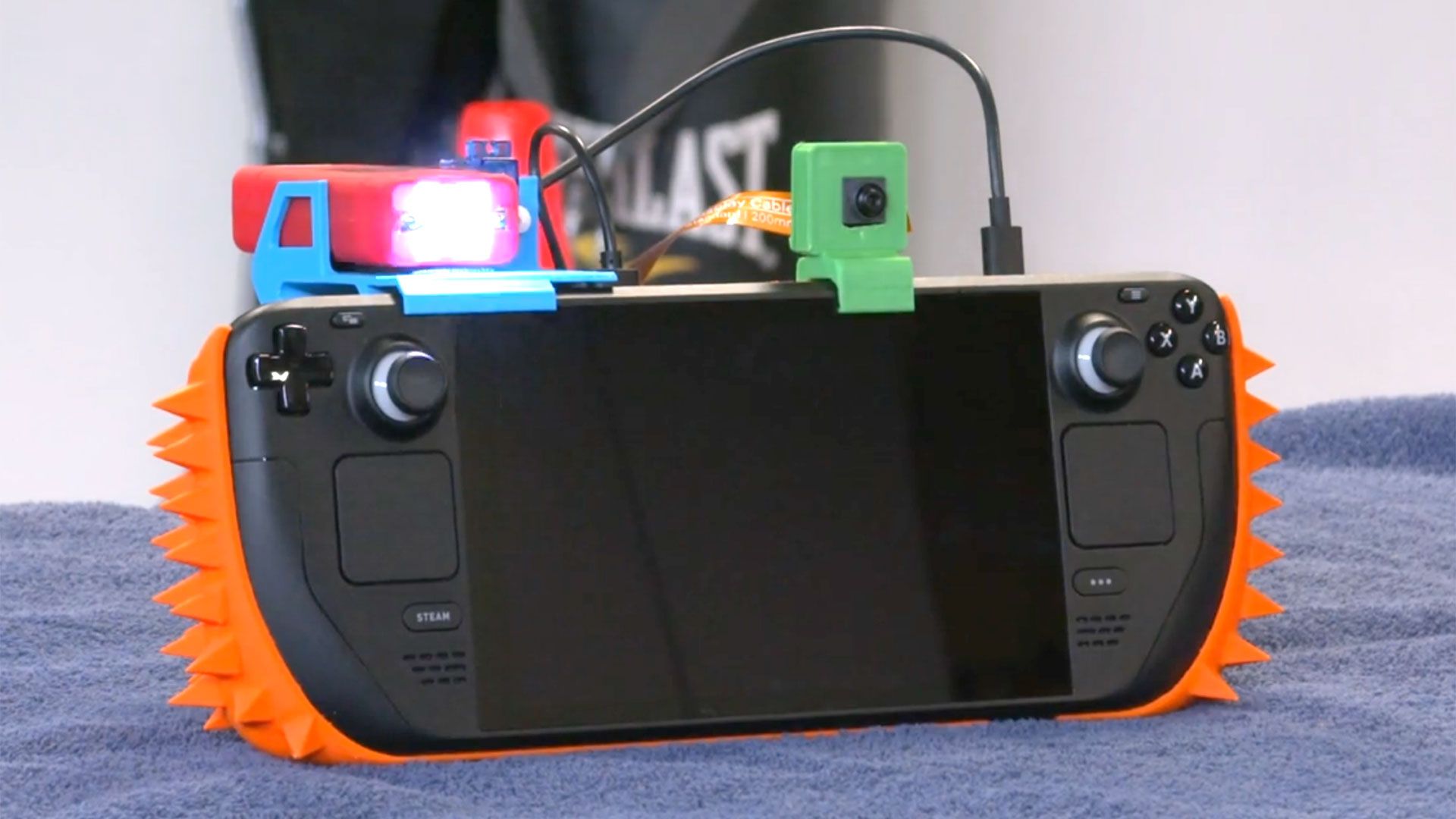
Redditor ConroyyJenkinss has taken defensive engineering to its logical, if slightly alarming, extreme. Tired of seeing their Steam Deck return to the charging dock with a dead battery, they have successfully transformed their handheld gaming PC into a "hostile architecture" fortress. The project, which was recently showcased on the r/SteamDeck subreddit, features a custom-built, 3D-modeled spiked case and a functional, Raspberry Pi-controlled taser system.
The Anatomy of an Anti-Sharing Security System
The project is a masterclass in over-engineering. ConroyyJenkinss began by modifying the very ergonomics that make the Steam Deck a market leader. The console’s signature curved, hand-filling grips—designed for hours of comfortable play—have been completely nullified by a jagged, 3D-printed chassis. Designed in Blender and printed to act as a physical deterrent, the case makes the device inherently uncomfortable to hold, serving as the first line of defense against casual snatch-and-grab attempts.
However, the physical shell is merely the aesthetic layer of a much more complex security stack. Underneath the hood, the creator integrated a Raspberry Pi microcomputer, a small speaker, an object detection camera, and a servo-actuated taser trigger.
The software logic, written in Python, is as efficient as it is intimidating. When the camera’s computer vision algorithm detects a person within its field of view, the system triggers an audio warning—a "goofy" sound file meant to alert the interloper—followed by a brief countdown. Should the intruder fail to heed the warning and retreat, the servo motor activates the taser. It is, by all accounts, a "chastity belt" for high-end consumer electronics.
Chronology of a DIY Obsession
The motivation behind this project was not born out of a desire for notoriety, but out of a recurring cycle of domestic annoyance.
- Phase 1: The Frustration Period. Like many device owners, ConroyyJenkinss faced the repeated issue of family members treating their Steam Deck as a communal toy. The primary grievance was not just the lack of permission, but the negligence regarding battery maintenance.
- Phase 2: The Design Phase. Recognizing that verbal warnings were insufficient, the user turned to 3D modeling software. The goal was to create an enclosure that was not only physically obstructive but also visually aggressive, deterring casual handling.
- Phase 3: The Implementation. Integrating the hardware proved the most difficult challenge. Fitting a Raspberry Pi, a power source for the taser, and the servo mechanism into a portable form factor required extensive modifications to the outer casing and custom wiring.
- Phase 4: Field Testing. Upon completing the build, the owner reported an immediate success rate of 100%. "Nobody touches my Steam Deck anymore," they noted in the Reddit thread.
Technical Hurdles and Practical Implications
While the project has been met with applause from the DIY community, it presents significant questions regarding the intersection of hardware modification and daily utility. The creator admits that the security measures are, at times, a "hassle" for the owner themselves. To engage in a standard gaming session, ConroyyJenkinss must physically remove the defensive casing and manually disarm the taser circuit.
Despite the inconvenience, the owner maintains that the tradeoff is worth the peace of mind. The project highlights a broader trend in the tech enthusiast space: the movement toward "hostile" personalization. As devices like the Steam Deck become more expensive and harder to replace due to current supply chain issues—often referred to in the community as the "RAMpocalypse"—owners are becoming increasingly protective of their assets.
The Context of the "RAMpocalypse"
The context of this extreme security measure is partially rooted in the current economic landscape of PC hardware. The "RAMpocalypse," a term describing the volatility in the memory and component market, has made high-performance handhelds like the Steam Deck more precious than ever. With Valve recently adjusting pricing to remain competitive against emerging threats like the PlayStation 5 Pro, the entry price for high-end gaming hardware is rising.
For the average consumer, a Steam Deck is a significant investment. When components become scarce or expensive, the loss of a device to physical damage or battery degradation caused by improper charging cycles is not just an inconvenience; it is a financial setback. While most users opt for a sturdy carrying case or a simple password lock, ConroyyJenkinss represents the radical fringe of the "do-it-yourself" protective movement.
Ethical and Safety Considerations
The use of a taser as a security mechanism raises obvious, though likely tongue-in-cheek, safety concerns. In the Reddit discussion, users questioned the legality and the potential for accidental discharge. ConroyyJenkinss has been careful to frame the device as a deterrent, emphasizing that the audio warning and the delay mechanism provide ample time for an innocent party to back away.
However, legal experts generally advise against the use of "booby traps" or active defensive measures that can cause bodily harm, even in domestic settings. While the project is clearly intended as a humorous solution to a household annoyance, it serves as a stark reminder of how far users are willing to go to defend their digital property.
Implications for Future Hardware Design
Does this suggest a market gap for "secure" gaming consoles? Probably not. Most manufacturers prioritize accessibility and user experience. However, the popularity of the r/SteamDeck post—which has garnered significant engagement—suggests that there is a deep-seated desire among users for better parental controls or physical security features.
Could we see software-locked biometrics or hardware-level "kill switches" in future iterations of handheld PCs? It is unlikely that companies will implement lethal (or semi-lethal) deterrents, but as the value of these devices grows, the demand for robust, built-in security features will likely increase. For now, the "taser-Deck" remains a one-of-a-kind experiment—a testament to one person’s refusal to let their battery hit 0% ever again.
Final Reflections
Ultimately, the story of ConroyyJenkinss is a modern fable about boundaries. It combines high-end technical skill, 3D printing prowess, and a healthy dose of comedic escalation. While we don’t necessarily recommend rigging a taser to your gaming console—the risk of frying your own motherboard is arguably higher than the risk of a family member draining your battery—the sentiment is one that many can relate to.
When we invest our hard-earned money into technology that brings us joy, we want to know that it will be there when we reach for it. Whether through software locks, dedicated charging docks, or, in this extreme case, a spike-covered, electrified chassis, the mission remains the same: protecting the gaming experience from the chaos of shared living.
As the tech community continues to push the boundaries of what is possible with 3D printing and open-source hardware, we will likely see more "defensive" projects emerge. For now, the Steam Deck community can take comfort in the fact that, somewhere out there, there is a device so well-defended that it has achieved a perfect state of solitude.
If you find yourself in the same position as ConroyyJenkinss, perhaps start with a simple lockable drawer before graduating to high-voltage electronics. But for those who choose the path of the dangerous DIYer, just remember: keep the key, and always, always remember to disarm the system before you try to play Elden Ring.


 Ammar Sabilarrohman
 Reynand Wu