Reynand Wu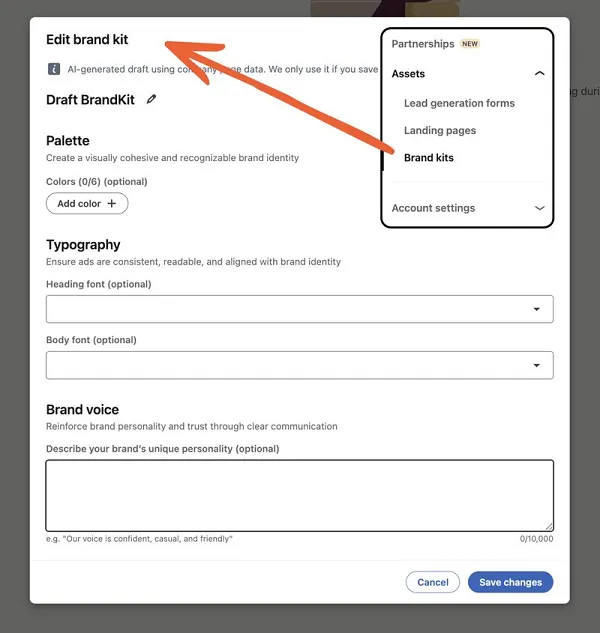
In an era where artificial intelligence is fundamentally reshaping digital marketing, LinkedIn is quietly rolling out a feature that aims to solve one of the most persistent problems in automated content creation: the lack of a cohesive brand identity. The platform’s new "Brand Kit" feature, currently being tested among select users, allows marketers to codify their visual and tonal guidelines directly within the LinkedIn Campaign Manager. By feeding the platform’s AI specific color palettes, font preferences, and brand voice descriptors, LinkedIn hopes to ensure that future AI-generated promotions remain consistently aligned with a company’s unique professional aesthetic.
However, this development arrives amidst a broader, complex debate regarding the role of synthetic content on social media. While LinkedIn is doubling down on tools that make AI integration seamless for advertisers, it is simultaneously attempting to curb the tide of low-quality, AI-generated "slop" that threatens to erode user trust. This dichotomy represents the central tension of the current technological cycle: how to provide efficient, AI-assisted productivity tools without sacrificing the authenticity that professional networking requires.
The Mechanics of the Brand Kit
The LinkedIn Brand Kit is designed as a centralized repository for a company’s core visual and verbal identity. According to early reports and observations from users like Anthony Blatner, the tool functions as a sophisticated "guardrail" system.
When a user initializes the Brand Kit for the first time, LinkedIn’s backend systems analyze the organization’s existing digital footprint. By scanning past content and the company’s official LinkedIn Page, the AI automatically assembles a baseline "brand voice." This initial profile can then be refined and supplemented by marketing teams, who upload official color hex codes, select approved typography, and provide written summaries of the company’s mission, tone, and editorial style.
How it Works in Practice:
- Asset Aggregation: The AI scans the company page to establish a historical baseline for voice and tone.
- Manual Calibration: Marketers input specific visual guidelines, ensuring that any AI-generated image or ad template automatically conforms to corporate design standards.
- Automated Enforcement: When the user initiates a campaign, the system uses these parameters as a "North Star." Every draft generated by the platform’s AI is pre-filtered through these constraints, theoretically reducing the need for manual design revisions and ensuring brand consistency across various ad formats.
A Chronology of LinkedIn’s AI Integration
LinkedIn’s journey into generative AI has been rapid and multi-faceted. Understanding the rollout of the Brand Kit requires looking at the company’s broader strategic shift over the last eighteen months:
- Early 2023: LinkedIn begins testing AI-assisted writing tools to help users compose profile summaries and job descriptions.
- Late 2023: The company introduces AI-powered features within its Campaign Manager to help marketers draft headlines and body copy for sponsored content.
- Mid-2024: Reports emerge of a "Brand Kit" in testing, signaling a shift from generic AI text generation to highly personalized, brand-specific creative assets.
- Late 2024 (Present): LinkedIn publicly acknowledges the need to manage the "AI feed" quality, simultaneously launching tools to assist creators while implementing new algorithmic measures to penalize low-effort, mass-produced AI content.
Official Stance and Strategic Rationale
LinkedIn has been transparent about the primary value proposition of the Brand Kit: efficiency and brand safety. As the platform noted in its documentation, the kit is designed to "reduce off-brand mistakes" and ensure that AI-drafted assets are ready for deployment without significant human intervention.
From a corporate perspective, the logic is sound. For small-to-medium-sized businesses (SMBs) that lack the resources for a dedicated design team, the Brand Kit functions as a virtual brand manager. It lowers the barrier to entry for high-quality, professional-looking advertisements. By reducing the time between ideation and publication, LinkedIn is essentially trying to keep marketers spending their budget on the platform rather than outsourcing creative labor to external agencies.
However, the "official" narrative often sidesteps the inherent risks of such automation. While the tool helps maintain visual consistency, it does little to address the depth or intellectual rigor of the content itself.
Implications: The Dichotomy of "AI Slop" vs. "AI Assistance"
The most significant implication of the Brand Kit is the acceleration of the "AI divide" on the platform. On one hand, LinkedIn is providing the very tools that enable users to create content at scale—content that, if overused, contributes to the very "AI slop" the platform claims to despise.
The Trust Deficit
Social media platforms are currently suffering from a crisis of credibility. As generative AI becomes more sophisticated, the feed is increasingly populated by content that is grammatically perfect but emotionally hollow. When users can sense that a post or an ad was generated by a machine, engagement often drops. The Brand Kit might solve the visual side of this problem, but it risks masking the intellectual laziness that often accompanies automated content.
The Over-Reliance Trap
The danger is not just that the AI makes mistakes, but that marketers will stop making decisions entirely. If a tool promises to draft, design, and style an ad with zero manual rework, the temptation to "set it and forget it" becomes overwhelming. This creates a feedback loop where the AI is trained on content that was previously generated by the AI, leading to a degradation in creativity—a phenomenon researchers call "model collapse."
Strategic Recommendations for Marketers
To avoid the pitfalls of over-automation, brands should view the LinkedIn Brand Kit not as a replacement for creative work, but as a framework for human-in-the-loop (HITL) processes:
- Use AI for Ideation, Not Finality: Let the Brand Kit provide the "first draft," but ensure that human editorial oversight remains the final gatekeeper.
- Prioritize Human Insight: AI cannot replicate the lived experience, market context, or specific customer pain points that a human marketer understands. Use the tool for the "how" (visuals and tone) but rely on human expertise for the "why" (the strategic message).
- Monitor Performance vs. Perception: If engagement drops on AI-heavy campaigns, it is a signal that the content has lost its human touch. Use the Brand Kit’s efficiency to free up time for deeper strategic analysis, not just to generate more volume.
The Future of Professional Networking
As LinkedIn continues to integrate AI, the platform faces a critical inflection point. It is attempting to balance the needs of enterprise advertisers—who demand efficiency and scale—with the needs of its user base, which demands authenticity and networking value.
The Brand Kit is a necessary evolution in this transition. It brings a level of professional rigour to AI generation that was previously absent. However, it also serves as a potent reminder that technology is only as good as the intent behind it. If businesses use the Brand Kit to automate high-quality, thoughtful messaging, the tool will be a success. If they use it to flood the network with brand-compliant, yet substantively empty, advertisements, they risk alienating the very audience they are trying to reach.
Ultimately, LinkedIn’s role in this ecosystem is to provide the infrastructure. The responsibility for maintaining the integrity of the professional conversation lies with the marketers and the brands themselves. As we move forward, the most successful brands on LinkedIn will likely be those that use AI to amplify their human expertise, rather than replace it. The Brand Kit is a powerful tool in the arsenal, but it is not a substitute for the strategic depth that defines a truly successful brand.


 Siti Muinah
 Dwi Wanna