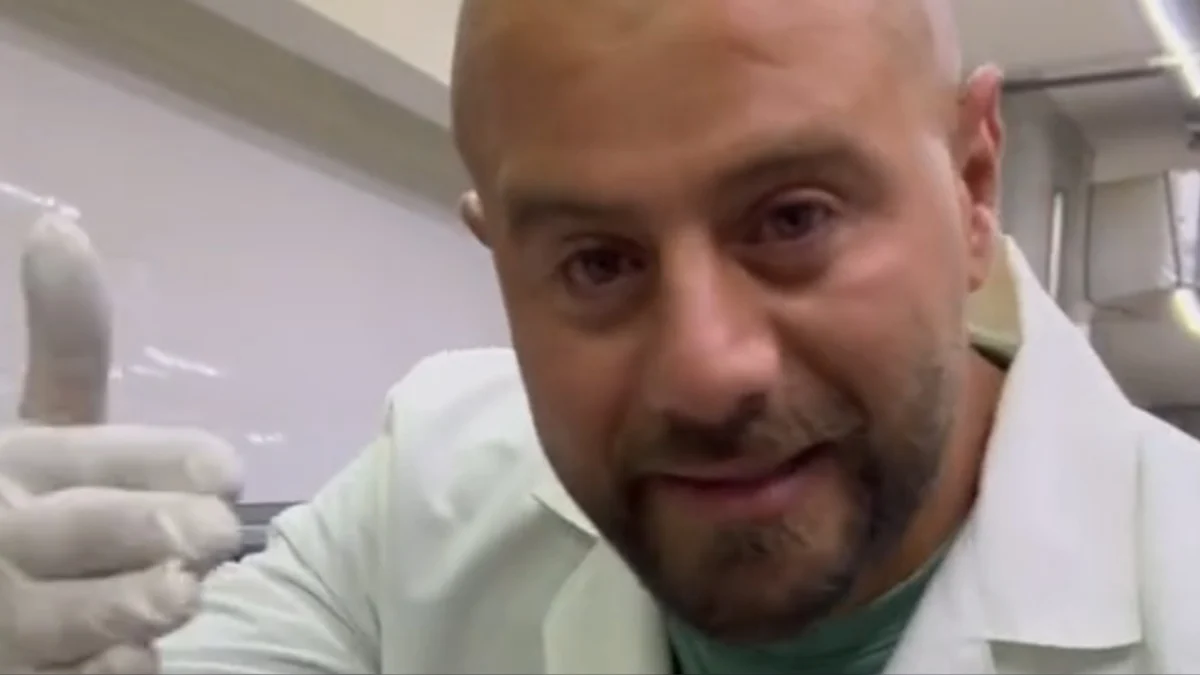
In the high-gloss world of digital content creation, few figures in the Middle East commanded as much attention as Georges Dib, better known to his eight million TikTok followers as “Doctor Food.” Known for his energetic reviews of restaurants, culinary experiments, and lifestyle content, Dib built an digital empire that blurred the lines between influencer marketing and commercial enterprise. However, that veneer of success has shattered following his arrest by Lebanese authorities, bringing to light a dark reality of alleged international drug trafficking hidden within his confectionery business.
The arrest of the prominent influencer has sent shockwaves through the region’s digital creator community and raised serious questions about the intersection of social media fame and illicit criminal activity. After a month-long manhunt, Lebanese Internal Security Forces (ISF) apprehended Dib, ending a high-stakes game of cat-and-mouse that had captivated and confused the public for years.
The Arrest: A Month-Long Manhunt Concluded
On August 23, the Internal Security Forces of Lebanon officially confirmed that the individual known as “Doctor Food” had been taken into custody. The operation was the culmination of weeks of intensive surveillance, intelligence gathering, and tactical planning.
According to police reports, Dib had been successfully evading capture by employing sophisticated counter-surveillance techniques. Despite being a fugitive, he remained prolific on social media. Investigators discovered that Dib would film his content in advance, creating a backlog of videos to be uploaded to his platforms to maintain the illusion of normalcy. Meanwhile, he frequently changed his residence, vehicles, and cellular devices to avoid leaving a digital or physical trail.
The final standoff occurred in the Rahbeh area of the Akkar district in northern Lebanon. Following a tactical raid on his hideout, officers from the Halba judicial detachment successfully apprehended the influencer. He was subsequently transported to the relevant authorities to face the multiple judicial warrants pending against him.
Chronology: From Culinary Influencer to Fugitive
The trajectory of Georges Dib’s public life—and his private legal entanglements—is a story of two parallel existences.
- The Rise to Fame: Over the past several years, Dib cemented his position as a household name in the Arab world. His content, centered on food, hospitality, and his own branded confectionery line, drew millions of views. His influence was so significant that his reviews could often make or break small businesses in the Lebanese food sector.
- The Hidden Charges: Unknown to his vast audience, Dib was entangled in a web of legal issues. Years prior, he had been convicted in absentia by a Lebanese court and sentenced to life in prison for charges related to drug trafficking. Despite this, he operated in plain sight for an extended period.
- The Airport Discovery: The turning point in the state’s investigation occurred when authorities at Beirut’s Rafic Hariri International Airport intercepted a shipment of confectionery products manufactured by factories owned by Dib. The cargo, which was destined for an unnamed Gulf country, was found to contain narcotics. This provided the "smoking gun" that shifted the focus from rumor to concrete evidence of a smuggling operation.
- July 2024 – The Denial: As news of his life sentence began to circulate in the media during the summer of 2024, Dib took to TikTok to issue a defiant rebuttal. In a video that now serves as a piece of incriminating evidence for his state of mind, he urged his followers to ignore the "false" reports, framing the accusations as a smear campaign.
- August 2024 – The Capture: Following the intensification of the police search in July, Dib’s luck finally ran out. After a month of evading authorities, he was captured in Akkar on August 23.
The Mechanics of the Alleged Crime
At the heart of the prosecution’s case is the accusation that Dib leveraged his legitimate business interests—specifically his confectionery manufacturing plants—to facilitate the international smuggling of narcotics.
According to judicial sources, the modus operandi involved masking illicit substances within mass-produced food items. By integrating the drugs into the supply chain of his own branded products, Dib allegedly attempted to bypass customs inspections at Beirut’s international airport. The sophistication of this operation, combined with the scale of his reach, suggests a well-coordinated effort to export narcotics into the Gulf market, where illicit substance prices and demand remain high.
The legal charges against him are severe: manufacturing of narcotics, trafficking, and international smuggling. These are not minor regulatory offenses; they are high-level felonies that carry the weight of life imprisonment under Lebanese law. The upcoming trial in Mount Lebanon is expected to delve into the financial records of his companies to determine the full extent of the operation and identify any accomplices who may have assisted in the manufacturing process.
Official Responses and Judicial Implications
The arrest has prompted a robust response from the Lebanese judicial system, which has been under immense pressure to address the country’s role as a transit point for narcotics.
The Internal Security Forces issued a detailed statement following the arrest, emphasizing the precision of the investigation. "The individual nicknamed ‘Doctor Food’ was apprehended… following a period of monitoring his movements and confirming his location," the statement read.
Legal experts in Lebanon note that Dib’s case is significant because it highlights the vulnerability of the food and beverage sector to criminal infiltration. The fact that a public figure—someone whose face is recognized by millions—was allegedly using his own brand as a front has ignited a debate about corporate transparency in the influencer economy.
As of late August, Dib is being processed for transfer to a specialized detention facility in Mount Lebanon. A judicial source speaking to AFP indicated that while he has already been sentenced to life in absentia, he will face a fresh trial regarding the specific charges uncovered by the airport shipment seizure. This second trial will likely serve to consolidate the evidence against him and may result in additional sentencing enhancements.
Implications: The Influencer Economy and Social Responsibility
The "Doctor Food" scandal serves as a stark cautionary tale for the modern influencer economy. When social media fame is used as a shield to hide criminal activity, the breach of trust with the public is absolute.
The Erosion of Digital Trust
For the eight million followers who consumed his content, the revelations have been jarring. Many commenters on his final posts expressed feelings of betrayal, while others have engaged in heated debates about the ethics of "de-influencing" and the necessity of verifying the businesses promoted by online personalities. The case raises a broader question: How much do we really know about the people we follow?
The Vulnerability of Regulatory Oversight
The fact that Dib was able to continue operating for years while under a life sentence suggests significant gaps in surveillance and inter-agency coordination. The case has spurred calls for stricter regulations on "influencer-owned" businesses in Lebanon, specifically those involving the manufacturing and export of goods. If an influencer is using their platform to market a product that is simultaneously being used for criminal enterprise, the regulatory burden on food safety and customs must be tightened to ensure that these products are not merely "brand-aligned" but also legally sound.
The Future of the Trial
The upcoming proceedings in Mount Lebanon will be closely watched by both the public and the international community. The outcome will likely serve as a litmus test for the Lebanese judiciary’s ability to prosecute high-profile figures. If found guilty on the new charges, it is highly probable that the original life sentence will be upheld and potentially compounded by additional years, effectively ending the career of one of the Arab world’s most recognizable online figures.
Conclusion
The arrest of Georges Dib marks the end of a bizarre and dangerous chapter in the history of Middle Eastern social media. What began as a digital career built on the promotion of culinary delights has descended into a criminal saga involving international smuggling and long-term imprisonment.
As the legal process unfolds, the story of “Doctor Food” remains a sobering reminder of the potential for digital platforms to be weaponized for illicit gain. For the millions of viewers who tuned in for his reviews and lifestyle tips, the realization that their favorite creator was allegedly hiding a criminal underworld behind his confectionery labels is a profound lesson in the nature of digital celebrity.
The case will remain a fixture of legal and media discourse for the foreseeable future, as authorities move to dismantle the infrastructure he allegedly built. For now, the "Doctor" is out of the kitchen, and the reality of his actions is being served in a court of law.