

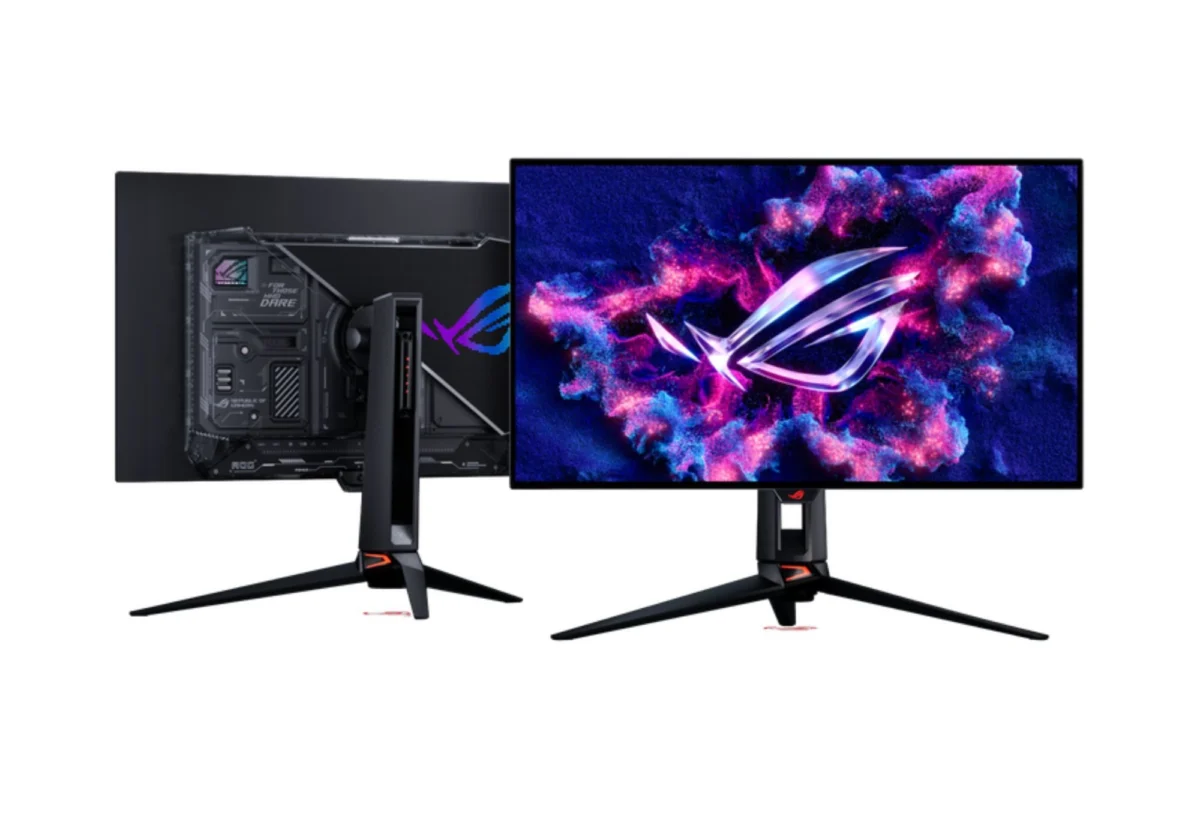
In a bold move that signals a departure from the stagnating conventions of the monitor market, Asus has unveiled two groundbreaking display technologies at Computex 2026. By introducing the world’s first OLED monitor engineered specifically for the hyper-competitive esports arena and a secondary color ePaper display designed to combat digital fatigue, the tech giant is effectively bifurcating the future of visual computing.
As the industry reaches a plateau in traditional LCD development, these two new offerings—the ROG Strix OLED XG259QWPG Ace and the ZenScreen Color ePaper MP13UC—illustrate a dual-pronged strategy: one path prioritizes the absolute limits of human perception, while the other prioritizes the long-term sustainability of human focus.
Main Facts: A Tale of Two Technologies
The ROG Strix OLED XG259QWPG Ace
At the center of the company’s gaming reveal is the ROG Strix OLED XG259QWPG Ace. This 24.5-inch powerhouse is the first of its kind to bring OLED technology into the 540Hz refresh rate territory. Traditionally, professional esports players have been tethered to TN (Twisted Nematic) panels, sacrificing color accuracy, contrast ratios, and viewing angles in exchange for the ultra-low response times required for competitive titles like Valorant and Counter-Strike 2.

Asus claims this new panel bridges the gap, offering the near-instantaneous response times inherent to OLED pixels while providing the deep, inky blacks and vibrant color saturation that OLED is famous for. By utilizing the latest generation of organic light-emitting diode materials, the monitor also boasts improved peak brightness and a higher color volume, addressing the historical longevity concerns that have previously kept OLEDs out of the professional tournament circuit.
The ZenScreen Color ePaper MP13UC
In stark contrast, the ZenScreen Color ePaper MP13UC represents a niche but growing demand for "calm technology." This 13.3-inch portable secondary display utilizes color ePaper technology. Unlike a standard tablet or portable monitor, the MP13UC is designed for passive, low-fatigue viewing. It is aimed at professionals who spend their days reviewing research, drafting documents, or keeping track of static reference materials. With an emphasis on the absence of blue light and the elimination of screen flicker, it offers a tactile, paper-like experience that aims to reduce the eye strain associated with 8-to-10-hour workdays.
Chronology: The Evolution of the Display Market
The trajectory leading to these announcements has been years in the making.

- 2020–2022: The industry was dominated by the race for resolution and "high refresh" gaming. LCD panels (IPS, VA, and TN) became increasingly refined, hitting 240Hz, then 360Hz.
- 2023–2024: OLED technology began to enter the mainstream gaming space, but primarily in large-format (27-inch to 32-inch) monitors. Esports pros remained skeptical due to the perceived "burn-in" risks and the challenge of pushing refresh rates to the extreme 500Hz+ levels.
- 2025: The shift toward "specialized displays" began as manufacturers recognized that a "one-size-fits-all" monitor no longer satisfied the diverse needs of modern users.
- June 2026 (Computex): Asus officially breaks the barrier. By successfully pairing a 540Hz controller with an OLED sub-pixel structure, the company has effectively declared the end of the TN panel’s dominance in esports. Simultaneously, the introduction of the ZenScreen Color ePaper acknowledges that the "more pixels, more brightness" philosophy is reaching a point of diminishing returns for productivity.
Supporting Data: Why Speed and Sustainability Matter
The Case for 540Hz
For the average user, the jump from 144Hz to 540Hz is often imperceptible. However, for the professional esports athlete, the data is clear. A 540Hz refresh rate reduces the frame interval to approximately 1.85 milliseconds. When combined with an OLED’s nearly instantaneous pixel response (often sub-0.03ms), the "motion blur" that plagues LCD screens is almost entirely eliminated. This allows players to track moving targets—like a character strafing in Overwatch 2—with significantly higher precision, as the image remains sharp even during high-velocity camera movements.
The Case for ePaper
The rise of digital fatigue is well-documented. According to recent ergonomics studies, prolonged exposure to high-intensity backlighting (typical of IPS and VA panels) contributes to "Computer Vision Syndrome." By moving to an ePaper architecture, the ZenScreen MP13UC reflects ambient light rather than projecting it directly into the user’s eyes. This not only significantly lowers the power draw—extending battery life for mobile setups—but also provides a flicker-free, high-contrast viewing experience that is physically closer to reading ink on paper.
Official Responses and Engineering Insights
Asus representatives have noted that the development of the XG259QWPG Ace was a collaborative effort involving feedback from some of the world’s top professional gaming organizations. "We didn’t just want to make a fast monitor; we wanted to make a tool," said an Asus product lead during the Computex presentation.

The inclusion of measurement markers on the stand and "pro-mode" settings that can be toggled without navigating complex OSD menus are testaments to this philosophy. These features were specifically requested by tournament players who often have to set up their gear in different environments with limited time.
Regarding the ZenScreen ePaper, the company emphasized its role in the "modular office." As work-from-home setups become more permanent, the demand for auxiliary screens that don’t add to the "light pollution" of a home office has spiked. The company sees the MP13UC not as a replacement for a main monitor, but as an essential, ergonomic peripheral for the modern multitasker.
Implications: The Future of Visual Computing
The release of these two products signals a significant shift in how hardware manufacturers view the desktop experience.

The End of the "General Purpose" Monitor
We are entering an era of extreme specialization. The "jack-of-all-trades" monitor is slowly being replaced by displays that are tuned for specific neurological and physical outcomes. The gamer needs a display that mimics reality with zero latency; the researcher needs a display that mimics paper to preserve cognitive bandwidth.
The Technological Divide
This divergence also poses a question for the consumer: where should they invest their hardware budget? With the ROG Strix OLED hitting premium pricing tiers, the barrier to entry for top-tier esports equipment continues to rise. Meanwhile, the ZenScreen Color ePaper suggests that productivity hardware may move away from the "RGB-everything" aesthetic, favoring minimalist, health-conscious design.
A Challenge to Competitors
Asus has effectively set a new benchmark. Competitors such as BenQ (known for its Zowie esports line) and Dell (Alienware) will likely be forced to pivot their roadmaps. If Asus has proven that OLED can be both fast enough for tournaments and durable enough for daily use, the market for traditional LCD esports monitors may shrink rapidly in the coming 24 months.

Conclusion: A Vision Beyond the Screen
The dual announcement from Asus at Computex 2026 is more than a simple product launch; it is a declaration of intent. By addressing the extremes of the user experience—the need for hyper-speed and the need for eye-comfort—Asus is catering to the two most pressing demands of the digital age.
Whether you are a competitive gamer aiming for the next tier of play or a professional seeking to reclaim your focus in a world of glaring, high-brightness screens, these new displays demonstrate that the future of computing is not just about having "more" of the same technology. It is about having the right technology for the task at hand. As we look toward the latter half of the decade, the industry is moving away from the "bigger, brighter, faster" mantra toward a more thoughtful, nuanced approach to how we interact with the digital world. Asus, for the moment, is leading that charge.












No comments yet. Be the first to join the conversation!