

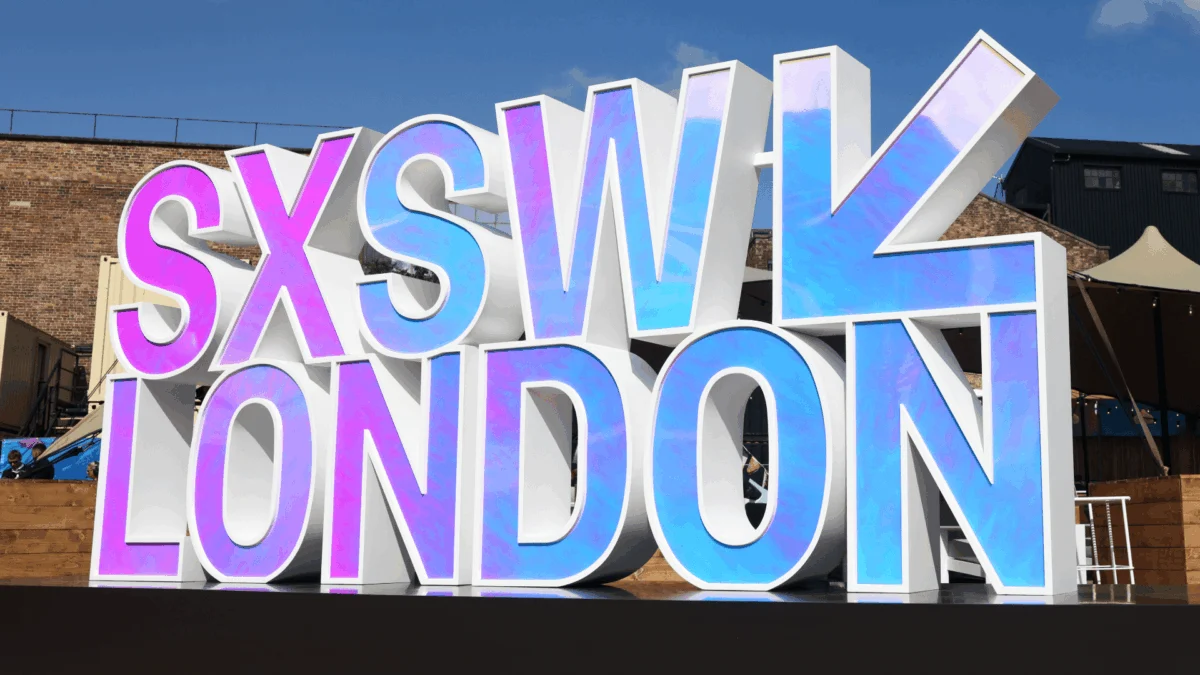
As the British capital prepares to host the second iteration of SXSW London, the air in the city is thick with the anticipation of a global convergence. Beginning this Monday, the event transforms London into a sprawling laboratory for the future, blending the legendary, freewheeling spirit of the original Austin festival with the sophisticated, interconnected pulse of a European creative powerhouse. Following a stellar inaugural year that drew over 20,000 international visitors from 80 countries, the 2026 edition promises to be even more ambitious, placing the collision of human ingenuity and machine intelligence at the center of the cultural discourse.
A Synthesis of Cultures: The London Twist
At the heart of the festival’s curation is Katy Arnander, the chief programming officer, who has spent the last year refining what it means to host an “Austin-born” event in a city as steeped in history as London.
“It’s got the Austin DNA in the model, but it’s also got a London twist,” Arnander explains. “Because, of course, London is very different from Austin. We have this incredible program mix of conference, screen, music, and visual arts because we are here in London. It is about discovery—learning, experiencing new things, and exchanging ideas.”
The programming reflects a deliberate effort to move beyond mere spectacle. By integrating a vast spectrum of film screenings, musical showcases, and avant-garde visual arts, SXSW London aims to create a holistic experience. A centerpiece of this year’s arts programming is the exhibition "Spain in Transmission: New Digital Work," featuring artists Enrique Agudo, filip custic, Jesu Moratiel, and Marina Núñez. This collection serves as a poignant reminder that while Spain is synonymous with the classical brilliance of Goya and Picasso, it is simultaneously a crucible for a new generation of digital creators who are redefining the boundaries of the canvas.
The AI Ubiquity: A Defining Narrative
If there is a single thread woven through every keynote, panel, and workshop at this year’s festival, it is the omnipresence of artificial intelligence. For the organizers, the question of whether to focus on AI was never really a choice.
“My question on that is: what doesn’t involve AI now?” Arnander asks. “AI is now a proprietary tool that affects everything, from editors, filmmakers, and musicians to research and development for new medicines and the modern workplace. Everything is about AI now.”
The festival’s discourse is shifting from the abstract “What is AI?” to the more pragmatic and urgent, “How will AI change my particular world?” This pivot is crucial for the creative class, who are currently grappling with the existential tension of the era. Creators are now tasked with a difficult balancing act: integrating sophisticated algorithmic tools into their workflows to amplify their output, while simultaneously ensuring they remain the masters, rather than the subjects, of their own technology.
In a bold move to address these concerns, Sir Tim Berners-Lee, the inventor of the World Wide Web, is set to debut "Charlie," a personal AI assistant. Built on open web standards, Charlie is designed to act as a gatekeeper and advocate, providing individuals with granular control over their own data—a direct rebuttal to the opaque, proprietary data harvesting models currently dominating the tech landscape.
Futurism in Practice: Robotics and the Workplace
Beyond software, the physical manifestation of technology is taking center stage. One of the most anticipated sessions, "A Robot Walks Into the Office," will feature Nathan Wallace, head of robotics at NextGen Ri, who will present a live demonstration of a Unitree G1 humanoid robot.
This is not merely a tech demo; it is an interrogation of the changing nature of labor. As humanoid robots begin to migrate from the controlled environments of factory floors into the chaotic, social spaces of offices and creative studios, the fundamental relationship between human workers and their tools is being rewritten.
“We call that futurism in practice,” says Arnander. “What does it look like to live in the future?” This theme of “living in the future” permeates sessions like "Seeing Is Believing: The Vision Behind Humanoid & Robotic AI," where experts will debate the ethics, safety, and social implications of integrating machines that look and act like us into our daily environments.

Techno-Feudalism and the Digital Polis
The festival is also leaning into the darker, more complex realities of the digital age. A significant portion of the programming is dedicated to the power dynamics of “Big Tech” and the rise of what some scholars call “techno-feudalism.”
Arnander notes that the festival will provide a platform for analyzing how technology giants influence global political campaigns and public discourse. “A theme that came through is this idea of how techno-feudalism and media have changed the way that people communicate,” she notes, pointing to how AI-driven communication strategies have become a primary tool in modern political influence, specifically mentioning the strategies used by high-profile figures like President Donald Trump to engage with mass audiences. The goal is to provide delegates with a critical lens to view the information they consume, helping them navigate a media landscape that is increasingly shaped by opaque algorithms.
The Human Element: Mental Health and Community
Amidst the high-tech debates, the festival acknowledges the psychological toll of living in a hyper-connected, fast-paced, and often overwhelming world. A series of sessions is dedicated to mental health, particularly focusing on the intersection of children, social media, and the anxiety surrounding global instability.
A highlight of this track is "Overloaded with Ruby Wax," featuring the acclaimed actor, writer, and Oxford-trained mindfulness expert. Wax will lead discussions on cognitive resilience—providing attendees with tangible tools to manage the “digital overload” that defines the modern human experience.
This emphasis on the human condition is the primary driver behind the festival’s expanded networking efforts. Having listened to attendee feedback from the 2025 inaugural year, organizers have scaled up their mentoring program significantly. With over 120 mentors available for one-on-one sessions, the festival is leaning into its role as a facilitator of human connection.
“People come to these events in real life to meet each other,” Arnander explains. “We have over 120 one-to-one mentors for 20-minute sessions. It’s like speed dating—you book it on the app, which is much better this year.”
To further encourage this, the festival has curated a more robust calendar of social events and open parties, ensuring that the serendipitous meetings that often lead to the next big breakthrough are a constant occurrence throughout the week.
Implications for the Future
As the doors open on Monday, SXSW London 2026 stands as more than just a festival; it is a barometer for the state of global culture. The integration of high-level robotics, data-sovereignty advocacy, and mental health awareness underscores a significant shift in the event’s purpose.
The implications are clear: the future is not something that happens to us—it is something we must actively participate in shaping. By providing a forum where artists, tech visionaries, and policymakers can share the same stage, SXSW London is fostering a multidisciplinary dialogue that is essential for the next decade. Whether it is through the lens of a humanoid robot, a digital painting, or a one-on-one mentorship session, the festival challenges its 20,000-plus attendees to reclaim their agency in a world increasingly dominated by the very tools they created.
As Katy Arnander puts it, "We’re all about networking this year." But in the context of SXSW London, "networking" is a shorthand for something much deeper: the forging of a collective response to the challenges of the 21st century. The world is watching to see how London—with its unique blend of tradition and radical innovation—will navigate the complexities of this new era. For the next week, the British capital will be the world’s most important classroom for the future.









No comments yet. Be the first to join the conversation!