The landscape of mobile computing is bracing for a tectonic shift. As AMD prepares to roll out its next-generation architecture, codenamed "Medusa Point" and set to debut under the Ryzen AI 500 series banner, early synthetic benchmarks are already signaling a performance leap that threatens to reshape the hierarchy of high-end mobile silicon. Recent data surfacing from the Geekbench database has provided a tantalizing glimpse into the capabilities of a 10-core engineering sample, suggesting that AMD’s upcoming Zen 6 architecture is poised to challenge, and in some cases eclipse, the most formidable desktop processors currently on the market.
The Core of the Matter: Medusa Point and the Zen 6 Revolution
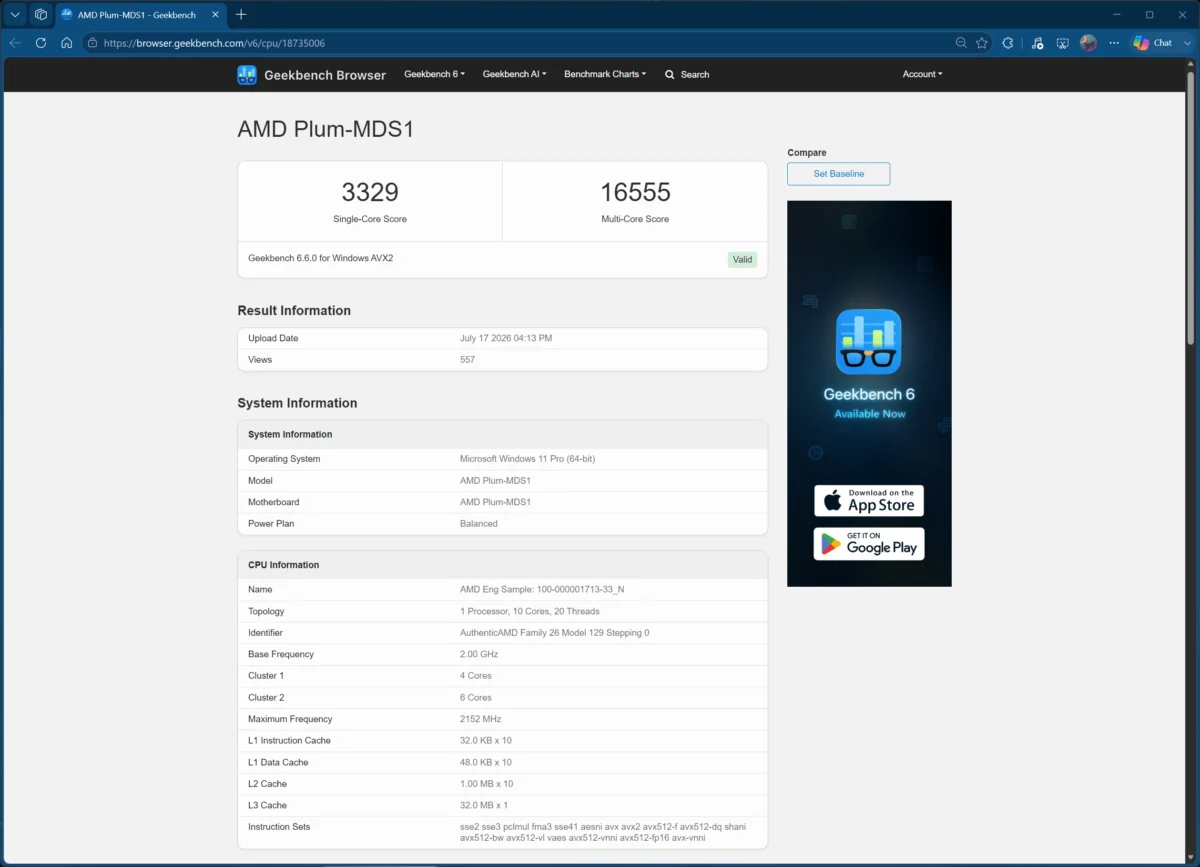
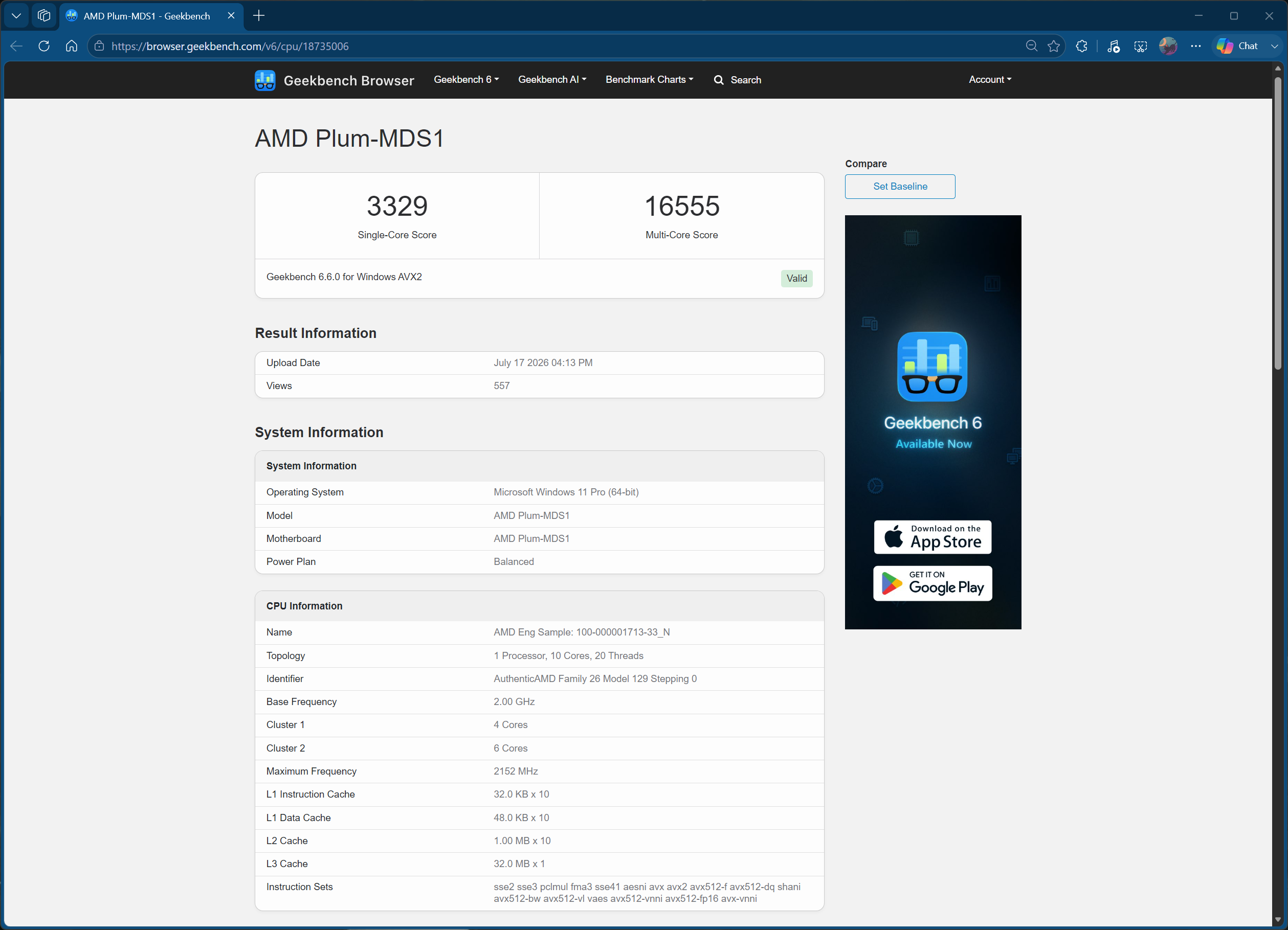
At the heart of the latest developments is a mysterious 10-core engineering sample, identified in Geekbench listings as "AMD Plum-MDS1." This chip is widely understood to be the vanguard of the Zen 6 mobile family. While the chip has appeared in the benchmark database previously, this latest entry represents a significant optimization, with the silicon demonstrating substantially higher clock speeds and more refined instruction throughput.
The "Medusa Point" architecture is widely anticipated to leverage the Zen 6 microarchitecture, which promises to introduce an 8-wide decode width and significant advancements in vector processing capabilities. For the average consumer, this translates to a massive improvement in instructions per clock (IPC), allowing the chip to perform more complex calculations with less energy—a critical metric for the mobile form factors these processors are intended to inhabit.
A Chronology of the Medusa Point Leaks
The progression of the Medusa Point leaks tells a story of iterative development. AMD’s product roadmap, which was recently clarified to the public, confirms that 2025 will be a pivotal year for the company’s mobile strategy.
- Early Sightings: The first whispers of "Medusa Point" appeared in developer documentation and supply chain leaks throughout the latter half of 2024. These initial reports identified the platform as a successor to the current Strix Point and Gorgon Point lineups.
- The Initial Benchmark: The first Geekbench entry for the 10-core SKU offered a baseline performance score that, while respectable, was clearly hampered by early-stage power management and thermal throttling—common hurdles in engineering samples.
- The Refinement Phase: A subsequent Geekbench listing surfaced, showing a marked improvement in both single-core and multi-core stability. The jump from the initial test scores to the current figures—approximately 5% in single-core and nearly 10% in multi-core—indicates that AMD’s silicon engineers are rapidly tuning the boost behavior and power delivery profiles of the chip.
- Current State: As of the most recent data, the chip is operating at a boost frequency of 5.37 GHz, a significant step up from previous reports, confirming that the silicon is maturing rapidly as it approaches its scheduled 2025 launch.
Supporting Data: Analyzing the Performance Metrics
The latest Geekbench results are, by any metric, impressive. The 10-core Medusa Point sample achieved a single-core score of 3,329 and a multi-core score of 16,555. To put these numbers into perspective, we must look at how they stack up against the current giants of the industry.
Single-Core Dominance
The single-core performance of this mobile chip is arguably the most shocking aspect of the leak. Scoring 3,329, it sits comfortably alongside—and in some cases above—desktop-class processors like the AMD Ryzen 9 9900X and the gaming-focused Ryzen 7 9800X3D. While it falls slightly short of Qualcomm’s Snapdragon X2 Elite, the fact that a mobile-optimized 10-core part is trading blows with 12-core and 8-core desktop powerhouses (which typically have significantly higher thermal headroom) is a testament to the efficiency of the Zen 6 design.
Multi-Core Efficiency
In multi-core testing, the chip achieves a score of 16,555. While this is lower than the massive 24-core Intel Core i9-14900KS, it is essential to consider the thermal and power envelopes. The Medusa Point chip is being designed for thin-and-light laptops, not massive desktop towers. When compared to its direct predecessor, the Ryzen AI 9 365, the Medusa Point chip shows a performance gain of roughly 33%. This is a generational leap that few manufacturers achieve in such a short window, signaling that AMD’s move to the new process node is paying dividends.
Official Stance and Market Context
While AMD has maintained a disciplined silence regarding specific SKU names and internal testing data, their broader roadmap is no longer a secret. The company has officially confirmed that Zen 6 will bring a new, highly efficient 8-wide CPU core, focusing heavily on AI-acceleration and vectorized performance.
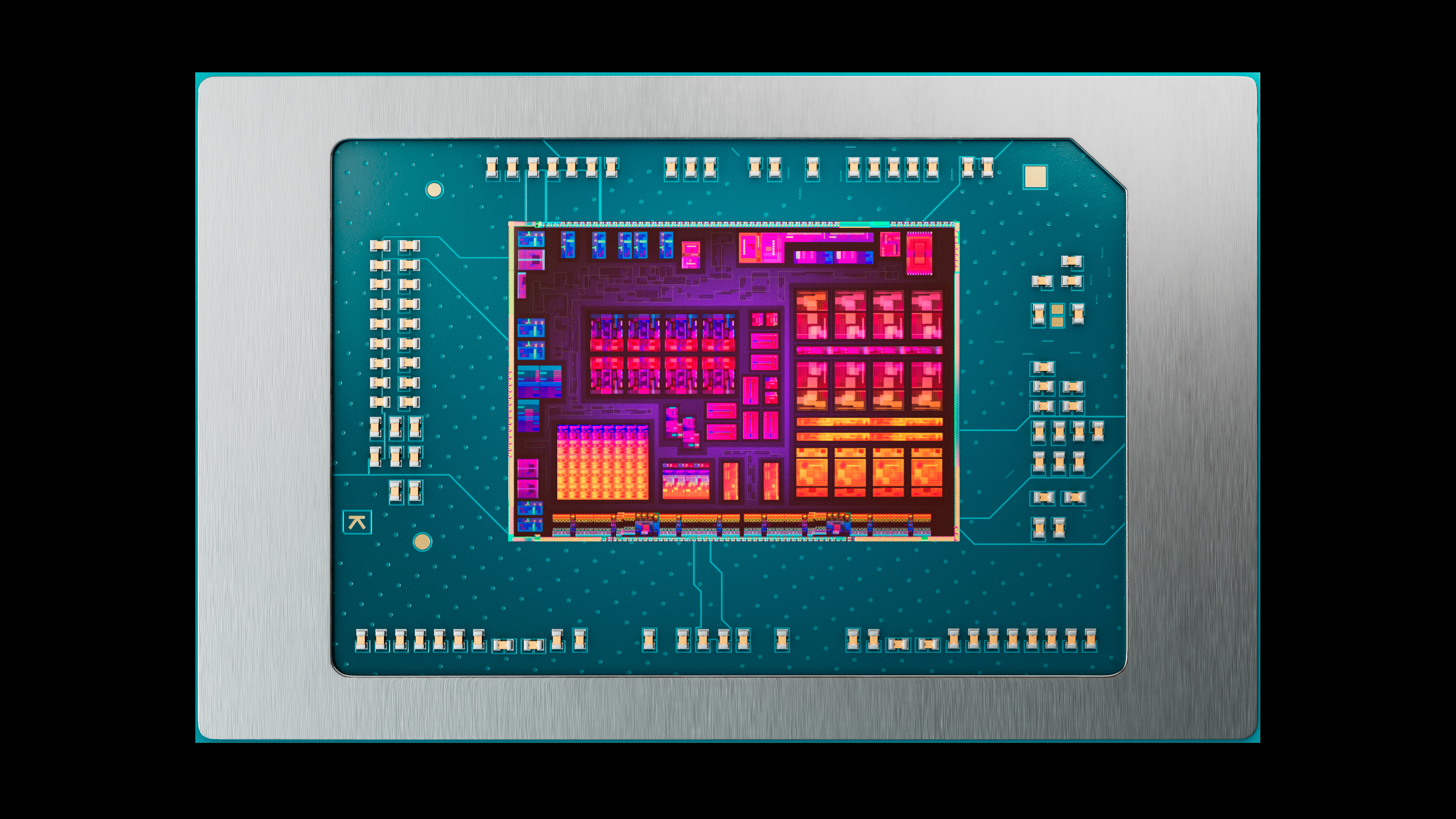
In official developer documentation released by AMD, the company highlighted the "strong vector capabilities" of the Zen 6 architecture. This is a clear signal that AMD is not just competing on raw clock speed, but on the ability to handle the AI-driven workloads that are becoming standard in modern operating systems and productivity applications.
The market implications are profound. AMD is positioning the Ryzen AI 500 series to go head-to-head with Intel’s "Panther Lake." By focusing on a 10-core configuration that delivers this level of performance, AMD is effectively creating a new "sweet spot" for premium mobile computing—offering desktop-tier performance in a chassis that can easily fit into a backpack.
The Implications: What This Means for Consumers
For the end user, the emergence of Medusa Point carries several key takeaways:
- Desktop Performance in Mobile Form Factors: The traditional gap between "mobile" and "desktop" performance is narrowing to the point of irrelevance. If this 10-core chip represents the mainstream mobile offering, users can expect to handle 4K video editing, complex 3D rendering, and heavy multitasking on laptops that were previously incapable of such feats.
- The AI Race: With "Ryzen AI" branding firmly at the forefront, these chips are optimized for the next wave of local AI processing. Whether it’s real-time voice translation, generative image fill, or advanced data analysis, the hardware is being purpose-built to ensure these tasks are handled locally, rather than in the cloud, improving privacy and latency.
- Efficiency and Battery Life: A critical aspect of the Zen 6 architecture is its move to a more advanced, efficient process node. By achieving higher performance at lower power consumption levels, these chips will likely offer not just more power, but better battery life, as the CPU spends less time at peak power draw to complete a task.
Future Outlook: Beyond Medusa Point
While Medusa Point is the immediate future, it is only part of a larger strategy. The industry is already looking toward "Gator Range" (Ryzen 10000 series) and the eventual introduction of Nova Lake from Intel. These future platforms will further push the boundaries of what is possible in mobile silicon.
However, for the 2025-2026 cycle, Medusa Point appears to be the "golden child" of AMD’s mobile portfolio. It strikes the perfect balance between the high-end, heavy-duty chips designed for workstations and the lower-power variants intended for ultra-portables.
As we move closer to the official launch, the technology community will be watching these Geekbench numbers closely. If the final retail silicon can maintain these performance levels under the sustained thermal loads of a real-world laptop chassis, AMD may well have a runaway success on its hands. For now, the "Plum-MDS1" is a bold, promising testament to the future of mobile architecture—and a stern warning to the competition that the Red Team is not slowing down.