Rifan Muazin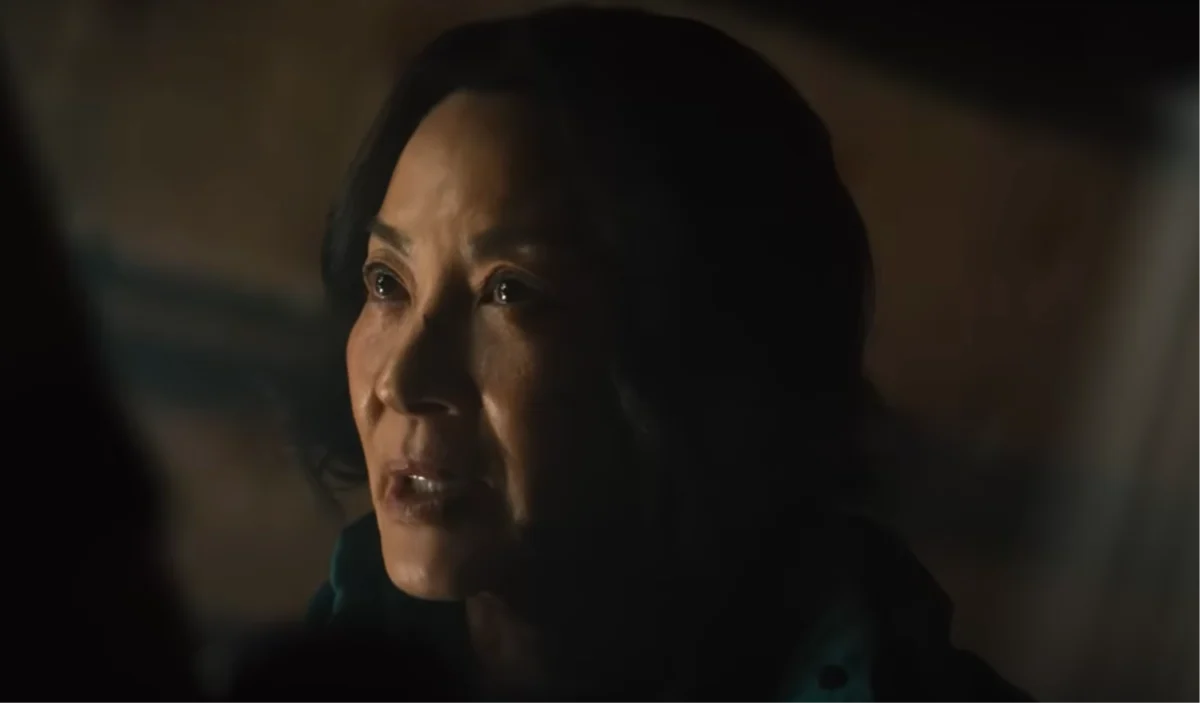
The neon-soaked, rain-slicked streets of Los Angeles are once again calling. After half a decade of anticipation, speculation, and behind-the-scenes development, Prime Video has finally unveiled the first teaser trailer for Blade Runner 2099. This limited series, which serves as a direct follow-up to Denis Villeneuve’s critically acclaimed 2017 masterpiece Blade Runner 2049, promises to expand the franchise’s philosophical inquiry into what it truly means to be human—this time, in a world where the power dynamic has been irrevocably inverted.
The Dawn of a New Era: Main Facts and Premise
Blade Runner 2099 is set five decades after the events of 2049. While the original Ridley Scott film and its sequel focused on the struggle for replicant survival under the thumb of a human-dominated society, the new series posits a chilling, reversed reality. The world is now in the wake of a successful, widespread replicant uprising.
In this new iteration of the future, the "artificial" beings have ascended to positions of authority. The societal structure that once treated replicants as disposable labor or sub-human tools has been dismantled, leading to a grim new status quo where humanity finds itself on the periphery of its own civilization.
The narrative centers on two primary figures caught in this shifting geopolitical landscape. Michelle Yeoh takes on the role of Olwen, an aging replicant who operates as a high-level Blade Runner. Her existence is defined by a ticking clock—as a replicant, she possesses an inherent awareness of her own mortality. Opposite her is Hunter Schafer’s character, Cora, a human fugitive who is forced to navigate the treacherous, neon-lit corridors of this society by assuming the guise of a replicant Blade Runner to avoid detection and persecution by the new ruling class. Their partnership, forged out of necessity and shrouded in mutual suspicion, forms the backbone of the series as they track down rogue elements in a world where secrets are the only currency that matters.
A Chronological Odyssey: From ‘Electric Sheep’ to 2099
To understand the weight of Blade Runner 2099, one must look at the lineage of the franchise. Philip K. Dick’s 1968 seminal novel, Do Androids Dream of Electric Sheep?, established the foundation: the blurring of lines between the organic and the synthetic, and the existential dread that accompanies the realization that "humanity" might just be a performance.
- 1982: Ridley Scott releases Blade Runner, introducing audiences to the noir aesthetic and the replicant question.
- 2017: Denis Villeneuve delivers Blade Runner 2049, expanding the lore to include the "miracle" of replicant birth, effectively closing the gap between creator and creation.
- 2019–2024: The development period for Blade Runner 2099. Initially announced roughly five years ago, the project underwent various shifts in production and creative direction to ensure it could live up to the high visual and thematic standards set by its predecessors.
- November 25, 2024: The official premiere date on Prime Video.
This chronological progression reflects a deliberate evolution of the franchise’s central thesis. Where the original films asked, "What is a soul?", 2099 asks, "What is our legacy once we are obsolete?"
Philosophical Underpinnings: Insights from Showrunner Silka Luisa
Showrunner Silka Luisa has been vocal about the importance of returning to the source material to ground the series. In an exclusive interview with Entertainment Weekly, Luisa emphasized that the series is not merely a visual homage but a thematic expansion of Philip K. Dick’s original vision.
"The show is really imagining what comes after us, and what does it mean to be human in a world where humanity is no longer relevant?" Luisa noted. She specifically highlighted the "zaniness" found in Dick’s writing—a quality often overlooked in favor of the bleak, rain-drenched aesthetic of the films. Luisa is interested in the juxtaposition of this "bubblegum" tone against the inherently dark and nihilistic reality of the Blade Runner universe. By balancing these tonal contradictions, the series aims to capture the surreal, disorienting nature of a society that has lost its grip on the definition of life.
Supporting Data: Production and Talent
The production scale of Blade Runner 2099 suggests that Prime Video is treating this as a flagship "tentpole" series. The casting is particularly noteworthy, signaling an intent to blend veteran gravitas with modern, high-energy performances:
- Michelle Yeoh: Bringing a lifetime of action and dramatic prowess, Yeoh’s involvement as the aging, weary Olwen promises to anchor the show’s emotional stakes.
- Hunter Schafer: Known for her ability to portray vulnerability and intensity simultaneously, Schafer serves as the audience surrogate, navigating the danger of being a "human in hiding."
- Supporting Cast: The ensemble, which includes Tom Burke, Dimitri Abold, and Wil Coban, provides a robust backdrop for the lead performances, ensuring the world feels populated, lived-in, and dangerous.
Visually, the teaser reveals a world that feels both familiar and alien. The signature "murkiness"—the haze of neon, smog, and persistent rainfall—remains, but there is a distinct evolution in the architecture and technology. Whether this visual choice is a nod to the "fallen world" trope or simply a stylistic evolution in modern cinematography, the grand, wide shots featured in the trailer suggest that the series has lost none of the epic, cinematic scale that made the previous entries so iconic.
The Implications: Why 2099 Matters
The cultural implications of Blade Runner 2099 are profound. We are currently living in an era where the boundary between human intelligence and artificial simulation is rapidly dissolving. By projecting a future where the creators (humans) are subservient to their creations (replicants), the show taps into a contemporary anxiety that is far more potent today than it was in 1982 or even 2017.
The Inversion of Power
The most compelling aspect of the premise is the reversal of the "master-slave" dialectic. Historically, the Blade Runner franchise has explored the morality of enslaving artificial life. By flipping this, the series forces the audience to consider whether human dominance is a natural right or merely a temporary state of affairs. If the replicants have successfully rebelled and taken the reins of society, are they simply repeating the cycles of cruelty and control that they were subjected to, or have they evolved into something fundamentally different?
The Death of the "Blade Runner" Concept
In the original films, the Blade Runner was a symbol of human authority, a hunter of "defective" units. By casting an aging replicant as a Blade Runner, the show suggests that the very concept of the profession has been repurposed. It is no longer about preserving human superiority; it is about maintaining a delicate, potentially corrupt order within a society that may be fundamentally broken.
Legacy and Expectations
The pressure on Blade Runner 2099 is immense. The franchise is held in high regard by cinephiles and sci-fi fans alike, and the bar set by the visual and auditory language of the films is incredibly high. However, the move to a long-form television format allows for something the films could only touch upon: character depth and the slow, agonizing rot of a society in transition.
Conclusion
The release of the Blade Runner 2099 teaser serves as a powerful reminder of why this franchise remains a pillar of science fiction. It does not just offer us cool visuals and synthetic faces; it offers a mirror to our own trajectory. As we move closer to a date on the calendar where our own technological advancements might eventually rival those of the Tyrell Corporation, the questions posed by Silka Luisa and her team become less academic and more urgent.
When the series premieres on Prime Video on November 25, viewers will not just be tuning in for another neon-soaked romp through a futuristic Los Angeles. They will be tuning in to see if humanity, as a species, still has a place in the story of the future. With a stellar cast, a conceptually daring premise, and a commitment to the dark, poetic themes of Philip K. Dick, Blade Runner 2099 stands poised to be one of the most significant television events of the year. The rain is falling, the lights are flickering, and the clock is ticking—it is time to see what comes after us.

 Asro
Asro
 Asep Darmawan