

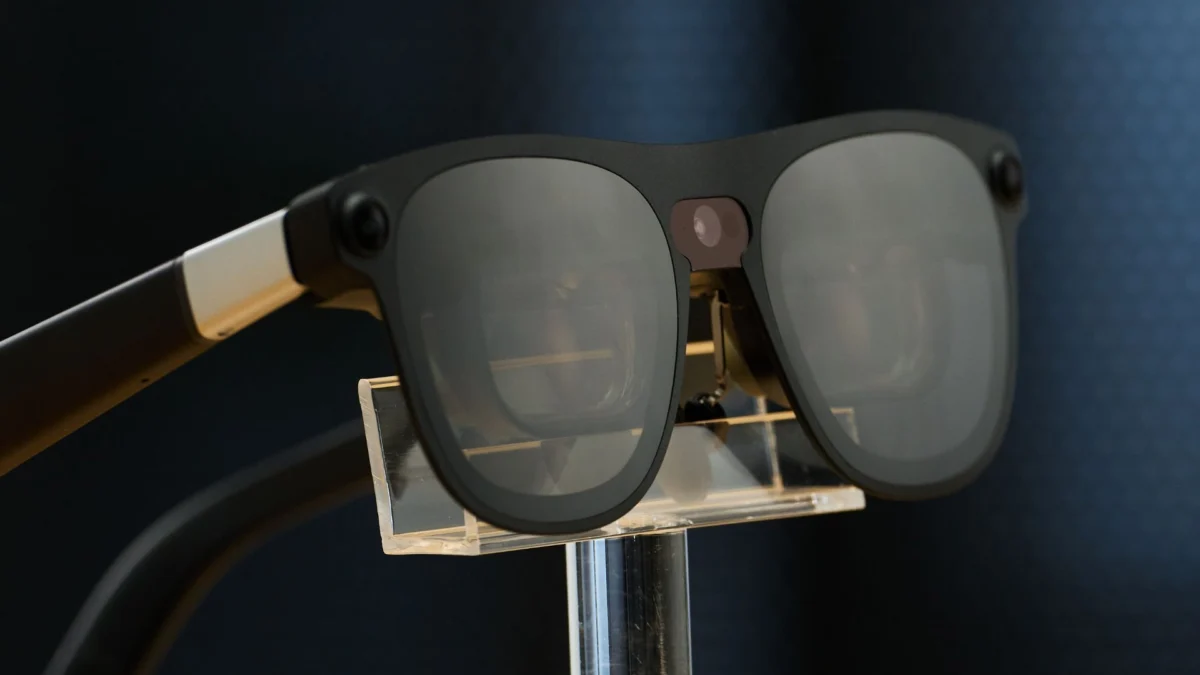
The landscape of wearable technology is undergoing a seismic shift in 2026. As tech giants and hardware innovators race to replace the smartphone-centric era with spatial computing, the debut of Xreal’s "Project Aura" at the I/O 2026 Developers Conference stands as a watershed moment. While the industry has long teased the arrival of functional, stylish smart glasses, Xreal’s latest endeavor—powered by the Android XR platform—promises to bridge the gap between niche enthusiast hardware and consumer-ready daily drivers.
Main Facts: The Xreal Project Aura Proposition
Xreal’s Project Aura is not merely another pair of smart glasses; it is a full-fledged spatial computing terminal. Unlike previous iterations of smart eyewear that relied on tethered screen mirroring or limited proprietary operating systems, Project Aura runs a native Android XR experience.
The standout feature of these glasses is their industry-leading 70-degree field of view (FOV). In the world of augmented reality (AR), FOV is the primary constraint that dictates immersion; a 70-degree span allows for a sprawling digital canvas that mimics a multi-monitor desktop setup. Users can anchor multiple Android app windows in their physical environment, creating a workspace that is as fluid as it is expansive.

Key technical specifications include:
- Native Android XR: Full access to the Google Play Store with no "hacks" or complex workarounds.
- Dual-Chip Architecture: A partnership with Qualcomm provides a powerful combination of standard Snapdragon silicon paired with a custom X1S processor designed specifically for spatial rendering and latency reduction.
- Gestural Control: Advanced hand-tracking sensors allow for intuitive navigation—swiping, pinching, and resizing windows in mid-air.
- Tethered Processing: To maintain a lightweight, stylish form factor, the glasses connect via cable to a sleek, smartphone-shaped "puck" that handles the heavy computational lifting.
Chronology: The Road to I/O 2026
The journey to Project Aura’s 2026 launch was marked by strategic silence and steady development.
December 2025: Xreal first teased the concept behind closed doors, providing a glimpse into the hardware’s capability to handle multi-window Android applications. The industry response was one of cautious optimism, as previous Xreal devices required external connections to PCs or phones to achieve similar multitasking feats.

Early 2026: The broader wearable market began to heat up. Reports surfaced of Samsung and Google collaborating on the Android XR platform, signaling that the software foundation for spatial computing was finally maturing.
May 2026 (I/O Conference): Google officially pulled back the curtain on its broader strategy for "Intelligent Eyewear." Alongside audio-only glasses developed with Warby Parker and Gentle Monster, Xreal’s Project Aura was highlighted as the premium, display-integrated flagship of the ecosystem. Xreal confirmed that the hardware would transition from prototype to consumer availability later this year.
Supporting Data: Why Project Aura Changes the Game
The primary hurdle for smart glasses has historically been the "software wall." Previous models, such as the Xreal One, were excellent display devices but were crippled by the need for a secondary host device to render complex applications. By running a native Android XR environment, Project Aura fundamentally changes the user relationship with the device.

The Display Breakthrough
The 70-degree FOV is a significant technological leap. To put this in perspective, most consumer-grade AR glasses currently hover between 40 and 50 degrees. By pushing to 70, Xreal allows for a "peripheral" digital experience, where virtual windows can exist outside of the central focus, allowing users to remain spatially aware of their real-world surroundings while keeping digital information at the ready.
The Processing Power
The integration of the custom X1S processor alongside Qualcomm’s Snapdragon silicon is a masterclass in optimization. By offloading the spatial tracking and visual rendering to the X1S, the device can maintain a consistent, high-frame-rate output that prevents the motion sickness often associated with early-generation AR hardware. The choice to keep a "puck" tethered to the glasses is a pragmatic one; it keeps the heat and battery weight off the user’s face, ensuring the glasses remain comfortable for extended wear.
Official Responses and Strategic Partnerships
The collaboration between Google, Xreal, and Qualcomm represents a "triad of power" in the wearables space.

"We are building the foundation for the next decade of mobile computing," said a Google spokesperson at I/O 2026. By opening the Android XR ecosystem to partners like Xreal, Google is effectively creating an "app store" for the face. Developers who have spent years perfecting mobile Android apps can now, with minimal effort, transition those applications into spatial, 3D-aware environments.
Xreal, for its part, has emphasized the "open" nature of this launch. Unlike competitors who have created walled gardens, Xreal is betting that the existing massive library of Android applications will be the primary driver for adoption. If a user can run their existing calendar, email, and productivity tools in a 70-degree spatial window, the barrier to entry for mainstream consumers effectively vanishes.
Implications: The Shift from Mobile to Spatial
The implications of Project Aura are profound for both the tech industry and the average consumer.

The Death of the Physical Monitor?
For the remote worker or the digital nomad, Project Aura poses a question: Why buy a physical monitor when you can carry a 100-inch virtual workspace in your pocket? If the latency remains as low as the demos suggest, we may be approaching a future where the office is entirely digital, persistent, and portable.
The Social Component
There is a distinct contrast between the "Audio Glasses" (focused on AI-driven conversation and observation) and the "Project Aura" glasses (focused on visual productivity). This suggests that Google and its partners are segmenting the market. Audio glasses are for the world—designed to help you navigate, translate, and interact with your physical environment. Project Aura is for the mind—designed to help you create, compute, and consume information.
The Challenges Ahead
Despite the optimism, significant questions remain. Battery life, while improved by the external processing puck, remains a critical factor. Furthermore, the social stigma of wearing glasses that are clearly "computing" devices has historically been a hurdle (as seen with the original Google Glass). Xreal will need to prove that the form factor is not just functional, but socially acceptable in professional and casual settings.

Conclusion: A New Horizon
As we look toward the remainder of 2026, the arrival of Project Aura represents more than just a new gadget. It is the culmination of years of R&D in optics, silicon design, and software architecture. By integrating the full power of the Android ecosystem into a high-FOV wearable, Xreal is not just chasing the future—it is attempting to define it.
Whether these glasses become the next "must-have" device or remain a high-end tool for early adopters will depend on the polish of the software experience and the continued growth of the Android XR developer community. However, one thing is certain: the era of staring down at our screens is coming to an end. Soon, we will be looking straight ahead, with our digital lives floating right in front of us.









No comments yet. Be the first to join the conversation!