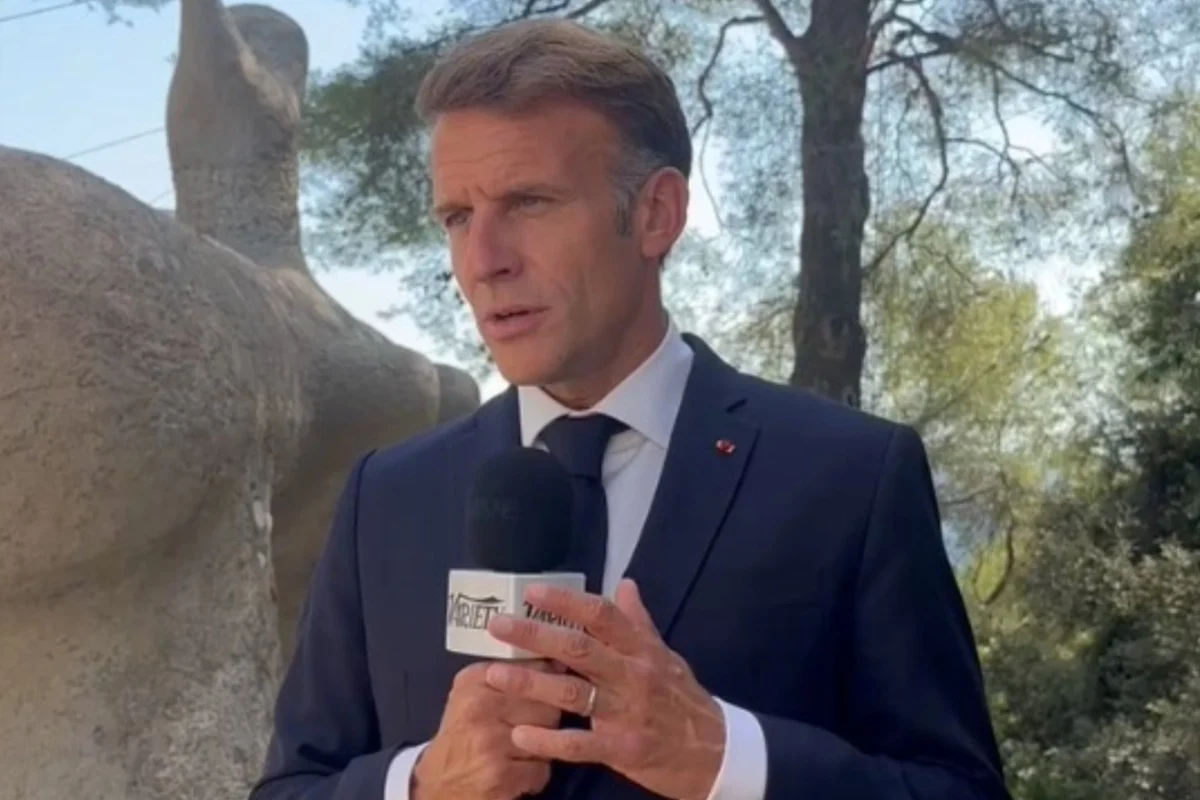
In the heart of the lush forests of Saint-Paul-de-Vence, at the prestigious Fondation Maeght, the Lumière Summit convened this week, bringing together global titans of the entertainment industry and political leaders. Co-chaired by French President Emmanuel Macron and South Korean President Lee Jae Myung, the summit served as a critical platform for addressing an industry at a crossroads. As the dominance of user-generated content platforms, the explosive rise of artificial intelligence, and unprecedented media consolidation redefine how the world consumes stories, the summit sought to establish a framework for the future of global cinema.
The State of Play: A Medium in Flux
The timing of the Lumière Summit was no accident. According to President Macron, the entertainment business is currently enduring a period of "dramatic upheaval." The traditional studio model, which has sustained global cinema for a century, is under immense pressure from the algorithmic efficiency of social media giants like YouTube and TikTok.
During an exclusive conversation with Variety at the event, Macron noted that YouTube has effectively become the "default platform" for billions worldwide. This shift represents more than just a change in viewing habits; it marks a significant migration of capital. As audiences spend increasing amounts of time on free-to-access, algorithmically driven platforms, the traditional revenue streams that fuel high-budget, scripted cinematic production are being diverted.
"YouTube is very efficient," Macron conceded. "But it is clear that today they divert a lot of people from the big channels where a lot of money is invested in creation."
Chronology of a Shifting Industry
The summit acted as a historical marker for a series of rapid developments that have defined the last decade of media:
- 2020–2022: The rapid acceleration of the "streaming wars," with platforms like Netflix, Disney+, and Amazon Prime Video becoming the primary distributors of global content.
- 2023: The global emergence of Generative AI, which forced creators and regulators to grapple with issues of intellectual property, copyright, and the nature of human creativity.
- 2024: President Macron’s continued efforts to bolster French AI companies like Mistral and lead the charge on the EU’s landmark AI Act.
- 2025: The height of media consolidation, exemplified by high-profile merger negotiations, including the complex Paramount-Warner Bros. deal, which has been under the scrutiny of international regulators.
- 2026 (Present): The Lumière Summit, which aims to synthesize these technological and economic pressures into a unified strategy for the preservation of cinema.
Supporting Data and The "Local Content" Imperative
The core of Macron’s argument lies in the economic ecosystem of filmmaking. He contends that platforms like YouTube, which currently outpace Netflix in terms of engagement in over 20 international markets, must be held to the same standards as traditional streaming services.
Under current European regulations, services like Netflix and Disney+ are required to invest a portion of their revenues into local production. Macron argues that this regulatory framework should be expanded to include social media giants. The goal is not to stifle these platforms, but to engage with them multilaterally to ensure they contribute to the financing of "local content" and the protection of authors’ rights.
This, he believes, is the only way to ensure that creativity continues to thrive in a digital-first world. "We need to engage with them," Macron asserted. "We need more creativity, more creations, and more respect for the authors."
The AI Challenge: Transparency as a Human Right
Beyond the economic distribution of content, the summit focused heavily on the existential threat posed by AI. As a leader who has championed technological sovereignty, Macron is acutely aware of the "AI race." He has pushed for increased computing capacity and expanded data centers in Europe to ensure the continent remains competitive.
However, for Macron, technological ambition is a hollow victory without ethical guardrails. He was explicit in his demands for transparency regarding AI-generated media.
"When you have content produced by AI, you just have to know it," he told Variety. "Transparency for us is key. We want to flag when the content is produced with AI. Because we think it’s fair."
The President warned that without strict transparency, the widespread use of AI could "totally transform the relationship to truth," potentially fueling a crisis of distrust not just in entertainment, but in science and democracy itself. This stance reflects a broader European philosophy: that the digital revolution must be managed through human-centric regulation rather than left to the whims of the market.
Official Responses and Industry Engagement
The summit was notable for the high-profile attendance of industry leaders, including Netflix’s Ted Sarandos, Disney’s Dana Walden, and NBCUniversal’s Donna Langley. Their presence signaled a willingness to engage with the French government’s regulatory roadmap.
Regarding the controversial Paramount-Warner Bros. merger, Macron maintained a pragmatic stance. While he denied a direct role in the lobbying process, he acknowledged that he had met with leadership figures like David Ellison in January to discuss the future of the industry. His priority remains clear: ensuring that any global media giant operating within European borders maintains a robust commitment to local infrastructure.
"What is important to us is to make sure that you will still finance creation, that you will still work with us, that you will still make more movies in France and in Europe," he emphasized.
Implications for the Future: The French Cultural Model
As Macron approaches the end of his second mandate, the Lumière Summit serves as a final push to solidify the "French exception" (l’exception culturelle). With the next presidential election on the horizon and the potential for a political shift, the film and television industry is anxious about the sustainability of the current model.
Macron remains defiant against those who would dismantle the National Film Board (CNC) and the various tax credits that have turned France into a production powerhouse. "We improved tax credits," he noted. "If somebody wants to withdraw this tax credit, it will just kill the industry and a lot of opportunities."
His efforts under the "France 2030" plan—investing heavily in studios and infrastructure—have already yielded results, with major international productions like the upcoming seasons of Emily in Paris and The White Lotus choosing to film in France.
Conclusion: The Soft Power of Art
Ultimately, the summit underscored that the battle for cinema is not just about economics—it is about soft power. For Macron, culture is the primary currency of French identity. By advocating for a multilateral, regulated, and transparent approach to the future of the moving image, he is attempting to preserve a system where art is recognized as an exception to the rule of pure market dynamics.
"Culture and art is part of what France is, but it’s part as well of our soft power outside," he concluded. Whether his vision of a protected, well-funded, and transparent cinematic future will survive the political changes of 2027 remains the most significant question for the next generation of French and European filmmakers. For now, the Lumière Summit has provided the blueprint; the challenge of implementation remains for those who follow.