

By [Journalist Name/Agency]
May 30, 2026
The world of cinema has lost one of its most influential, yet often understated, architects. Marcia Lucas, the legendary film editor whose sharp instincts and narrative precision helped shape the foundational identity of the Star Wars saga, has passed away at the age of 80. Her death marks the end of an era for the New Hollywood generation, a period defined by raw creativity and the emergence of the modern blockbuster.
Lucasfilm released a somber statement on May 30, 2026, expressing profound grief over the loss of a woman whose fingerprints are found on some of the most celebrated moments in motion picture history. While the Star Wars galaxy is known for its visual spectacle, it was the editorial rhythm established by Marcia Lucas and her peers that transformed space opera into a timeless, emotional human story.
The Main Facts: A Career Defined by Craft
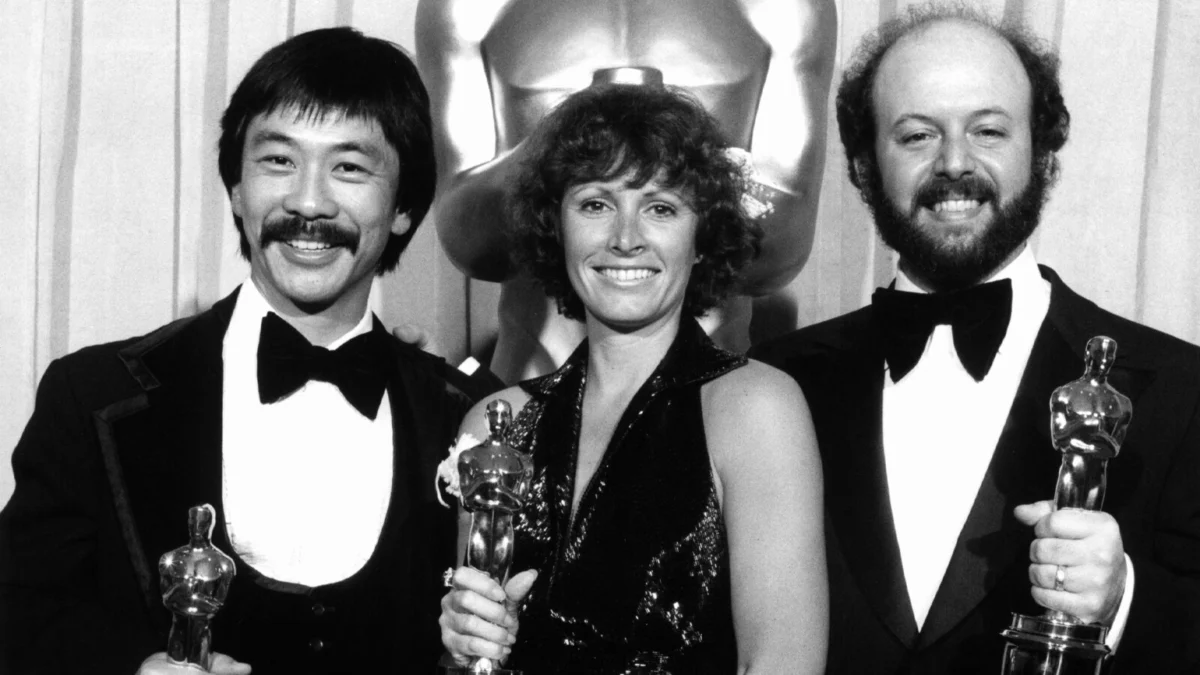
Marcia Lucas was more than a collaborator; she was a foundational force in the early days of Lucasfilm. As one of the three editors—alongside Richard Chew and Paul Hirsch—who secured the Academy Award for Best Film Editing for the 1977 original Star Wars (later retitled A New Hope), her legacy is permanently etched into the history of the medium.
Her professional journey was marked by a rare ability to bridge the gap between technical precision and emotional resonance. Throughout her career, she worked alongside the most prominent directors of the 1970s, including Martin Scorsese and her then-husband, George Lucas. Her work on films such as Taxi Driver and Alice Doesn’t Live Here Anymore cemented her reputation as a powerhouse editor long before the Star Wars phenomenon took hold of global culture.
Chronology: The Evolution of a Master Editor
To understand the scope of Marcia Lucas’s influence, one must look at the timeline of a career that spanned the most transformative decades of the American film industry.
Early Foundations (1971–1974)
Following the establishment of Lucasfilm in 1971, the company began production on George Lucas’s second feature, American Graffiti (1973). Marcia, already a rising talent in the industry, worked under the mentorship of legendary editor Verna Fields. Their collaborative effort on American Graffiti earned the pair an Academy Award nomination, signaling to Hollywood that Marcia Lucas was a force to be reckoned with.
The Scorsese Years (1974–1976)
While George Lucas was deep in the development of his space epic, Marcia brought her talents to the gritty, character-driven narratives of Martin Scorsese. She served as an editor on Alice Doesn’t Live Here Anymore (1974) and the seminal psychological thriller Taxi Driver (1976). This period allowed her to refine her ability to pace character development—a skill she would later bring back to the Star Wars project with devastating effect.
The Star Wars Revolution (1977–1983)
As Star Wars entered its arduous post-production phase, George Lucas realized the project required a massive editorial overhaul to make the film’s complex narrative coherent. Marcia returned to the fold, joining forces with Richard Chew and Paul Hirsch. Her work during this time is widely cited by film historians as the "secret sauce" of the original trilogy. She balanced the high-stakes action with the intimate character beats that made Luke Skywalker, Leia Organa, and Han Solo feel like real people.
Following her triumph at the 1978 Academy Awards, she remained a pillar of the Lucasfilm production house. She was instrumental in shaping the pacing of The Empire Strikes Back (1980) and Return of the Jedi (1983), ensuring that the emotional stakes matched the expanding scope of the galaxy.
Supporting Data: The Philosophy of the Cut
"I love film editing," Marcia Lucas famously remarked in an interview during the peak of her career. "I have an innate ability to take good material and make it better, and to take bad material and make it fair."
This philosophy serves as a window into her process. In the industry, editing is often called the "final rewrite." For Marcia, it was a process of excavation. She was known for her "gut" intuition—the ability to know exactly when a scene needed to breathe and when it needed to accelerate.
Key Contributions to the Star Wars Lexicon:
- Narrative Clarity: She helped streamline the convoluted drafts of early Star Wars scripts, focusing on the core "Hero’s Journey" archetypes.
- The Emotional Anchor: Industry insiders have frequently pointed to Marcia’s influence in ensuring that the film’s central romance and the bond between the lead trio remained the heart of the movie, preventing the technical spectacle from overshadowing the human elements.
- Pacing the Blockbuster: Her work helped establish the "pacing template" for the modern action film—a rhythmic structure that moves from character building to high-tension sequences with seamless efficiency.
Official Responses: A Community in Mourning
The reaction from the filmmaking community has been one of deep, collective sorrow. Since the news broke, tributes have poured in from directors, editors, and industry veterans who viewed Marcia as a mentor and a pioneer.
A spokesperson for Lucasfilm stated: "Lucasfilm joins the global filmmaking community in mourning the loss of Marcia Lucas. Her contributions were not merely technical; they were the heartbeat of the films that defined a generation. She taught us that behind every grand design, there must be a human touch."
Colleagues have highlighted her tenacity in a male-dominated industry. During the 1970s, as the "New Hollywood" movement took shape, Marcia was one of the few women in a position of high-level creative authority. She did not just navigate the industry; she dictated its standards.
Implications: The Enduring Legacy of an Editor
The death of Marcia Lucas prompts a broader reflection on the role of the editor in film history. In the era of the "auteur" director, the essential role of the editor is sometimes relegated to the background. However, the career of Marcia Lucas proves that the editor is often the co-author of the film.
Shaping the Modern Blockbuster
Without the editorial rigor brought by Marcia Lucas, it is arguable whether the Star Wars franchise would have achieved the same level of cultural ubiquity. Her ability to synthesize disparate pieces of film—the footage of space battles, the dramatic performances, and the experimental sound design—into a cohesive narrative arc created the blueprint for how we experience cinema today.
A Legacy of Mentorship
Beyond her own awards and accolades, Marcia’s legacy lives on in the editors she mentored. Many professionals currently working in the industry today cite her methods—the idea of "making bad material fair"—as a core tenet of their editorial workflow. She prioritized the audience’s emotional journey over the director’s ego, a stance that resulted in more accessible and enduring cinema.
A Final Tribute
As we look back at the films that shaped our modern mythology, the name Marcia Lucas will stand alongside the most significant creative forces of the 20th century. While she may have worked in the darkened rooms of editing suites rather than in the public eye, her influence on the pacing, the emotional stakes, and the very structure of the films we love is immeasurable.
She is survived by her colleagues, her friends, and the countless fans who have spent the last half-century living in the galaxy she helped build. Her passing is a profound loss, but as with all great editors, her work remains—a permanent, rhythmic, and vibrant testament to a life spent mastering the art of the cut.
The galaxy, quite simply, would not be the same without her.











No comments yet. Be the first to join the conversation!