
 Sagoh
Sagoh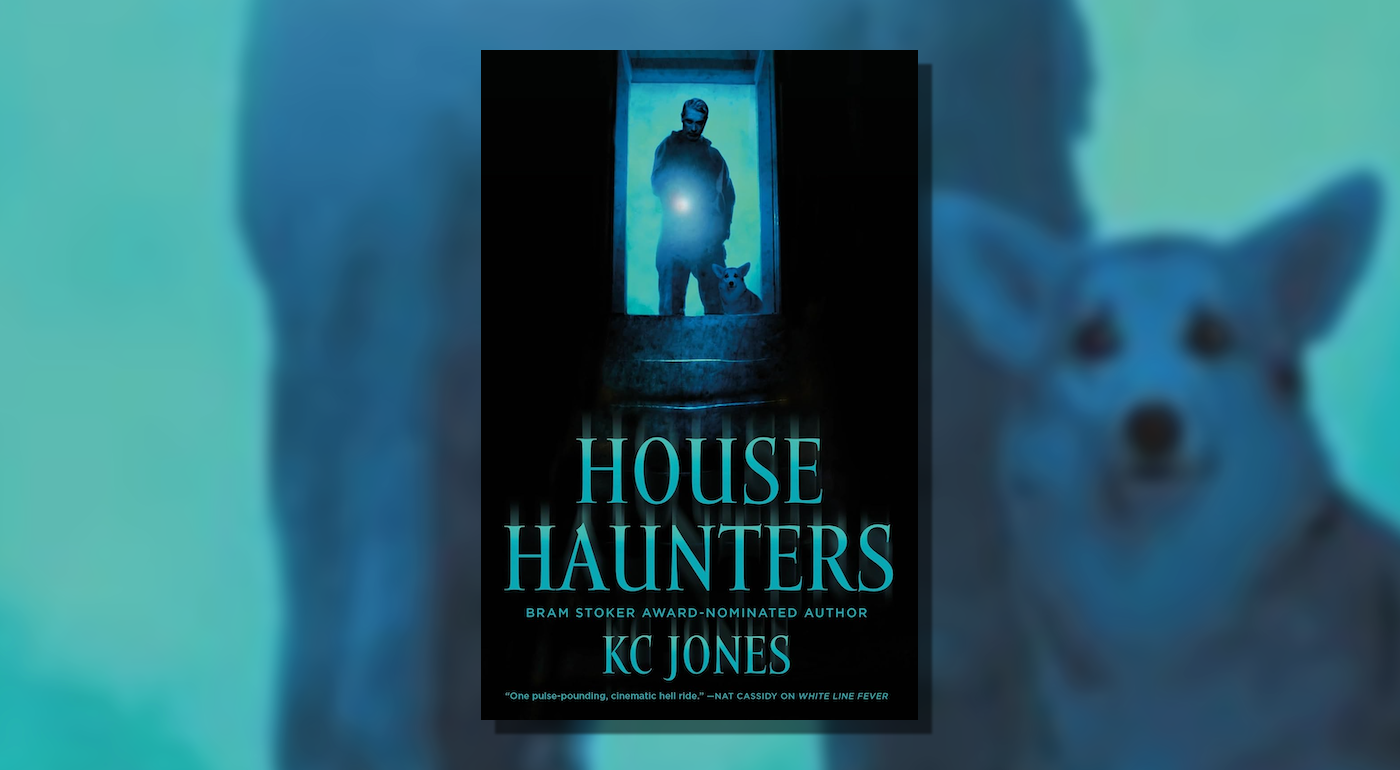
As the line between reality and content creation blurs, a new literary voice is stepping into the void to challenge our perceptions of both the haunted and the mundane. On October 6, Nightfire will release House Haunters by KC Jones, a high-stakes, fast-paced horror novel that promises to redefine the "ghost hunting" subgenre by filtering it through the cold, calculated lens of modern entertainment production.
In an era where streaming platforms and studios are increasingly reliant on artificial intelligence to greenlight projects, House Haunters offers a chilling meta-commentary on the desperation of the creative class. The story follows Grace, a producer fighting to save her career and her sanity by capturing the next breakout reality series. Her subject? Frank Pendleton, a brilliant, abrasive, and dangerously calm ghost hunter who claims to be devoid of fear.
The Premise: When Reality TV Meets Unreality
The core of House Haunters lies in the friction between its two protagonists. Grace is a woman under pressure, her professional worth tethered to an algorithm that demands hits. She finds her "TV gold" in Frank, a man who treats the paranormal not as a spiritual mystery, but as a maintenance issue—a defect in the structure of reality.
As the production team assembles to shoot a proof-of-concept, the boundary between the "show" and the "haunting" begins to dissolve. What starts as a cynical attempt to manufacture drama quickly descends into a visceral, terrifying ordeal. The novel forces its characters—and its readers—to confront a harrowing realization: ghosts are not just real, they are invasive, and the only person capable of navigating the supernatural might be the one man who refuses to feel anything at all.
A Narrative Chronology: The Threshold of Fear
The excerpt provided by Nightfire reveals the tense, atmospheric opening of the duo’s investigation into a suburban home plagued by the "Gray Lady."
The Arrival
The scene begins on a crisp, autumnal night. Grace and Frank stand outside a home that, on the surface, looks like any other listing. However, the presence of scuffed floors, an aggressive smell of mothballs, and a series of windows that refuse to stay closed signals something wrong. Grace, ever the professional, is documenting the process on her phone, struggling to balance her creative instincts with the rigid, utilitarian nature of her lead subject.
The Methodology
Frank Pendleton is the antithesis of the typical television medium. He doesn’t rely on theatrics or histrionics. Instead, he approaches the house like a contractor inspecting for water damage or faulty wiring. When asked about the windows, he dismisses the "supernatural" flair, focusing instead on the mechanics of gravity and structural integrity.
"They might drop on their own, due to balance malfunctions and gravity, but they certainly don’t slide up," Frank notes, his logic remaining cold and impenetrable. This deadpan confidence is exactly what makes him such a compelling, if difficult, lead for Grace’s project.
The Canine Catalyst
Adding a layer of grounded reality to the scene is Fish Stick, a corgi who serves as a vital component of Frank’s equipment. While Grace is busy framing shots and worrying about the "story," the dog acts as a silent, sensitive barometer. When Frank asks the dog if the area is "safe," her reaction—a determined, professional survey—suggests that in the world of House Haunters, the paranormal is a tangible, testable environment.
Supporting Data: Why House Haunters Resonates
The literary world has seen a surge in "horror-procedurals," but Jones distinguishes this work through the characterization of its lead. Frank Pendleton is not a "believer" in the traditional sense; he is a man whose lack of fear has rendered him a conduit for the spectral.

By framing the paranormal as "material defects" or "homeowner problems," the narrative mirrors the anxieties of modern life. Just as a homeowner might dread finding mold in the basement, the characters in House Haunters treat ghosts as a structural hazard—an unwanted guest that lowers the property value of existence. This shift from "spooky encounter" to "professional abatement" provides a unique tension that separates the book from standard haunted-house tropes.
Official Context and Production Notes
The publication of House Haunters is a significant moment for the Nightfire imprint, which has built a reputation for pushing the boundaries of horror. The book’s focus on the intersection of AI-driven media and authentic human terror is particularly timely.
Grace’s internal monologue—specifically the moment she coins the working title Death and Other Defects—highlights the desperate, creative process of someone who has lost their way in the industry. The book asks a fundamental question: if we can produce "content" out of anything, even our own nightmares, does that make the experience any less real?
Implications: The Future of the Genre
The implications of House Haunters extend beyond the printed page. By exploring the "behind-the-scenes" of a paranormal investigation, the book forces the reader to acknowledge the artifice of the medium. We are watching a producer watch a ghost hunter, and in that recursive loop, we find the true horror.
Themes of Alienation
Frank’s abrasive nature is not just a personality quirk; it is a defensive mechanism. His inability to feel fear—a trait that makes him an expert hunter—also separates him from the human experience. As Grace attempts to connect with him, she discovers that his coldness is both a shield and a prison. The "Gray Lady" that haunts the house is, in many ways, a reflection of the emotional detachment that defines the lives of the investigators.
The Reality of the Unreal
As the production moves from the foyer into the deeper, darker corners of the home, the novel promises to ramp up the intensity. For those expecting a standard jump-scare fest, House Haunters may be a surprise. It is a slow-burn study of obsession, the dehumanizing nature of the entertainment industry, and the terrifying possibility that some things are not meant to be recorded, broadcast, or "content-ified."
Final Considerations
As we approach the October 6th release date, the anticipation for House Haunters continues to build. The book serves as a potent reminder that the most terrifying stories are often the ones we try to frame within a lens. Whether you are a fan of psychological horror, industry-focused satires, or pure, unadulterated paranormal investigation, Jones’s latest work offers a haunting reflection of our own obsession with the "next big thing."
In the words of Frank Pendleton, "It’s a mom and her son who live here, now." And in the dark of the house, they aren’t the only ones. Prepare for a story that suggests the most dangerous thing in the room isn’t the ghost—it’s the person who thinks they can control it.
House Haunters is available for pre-order through Macmillan and major retailers. Readers are encouraged to keep their lights on—not because of the ghosts, but because, as the book implies, the real nightmare often hides in the editing bay.

 Nana Wu
 Ali Ikhwan





