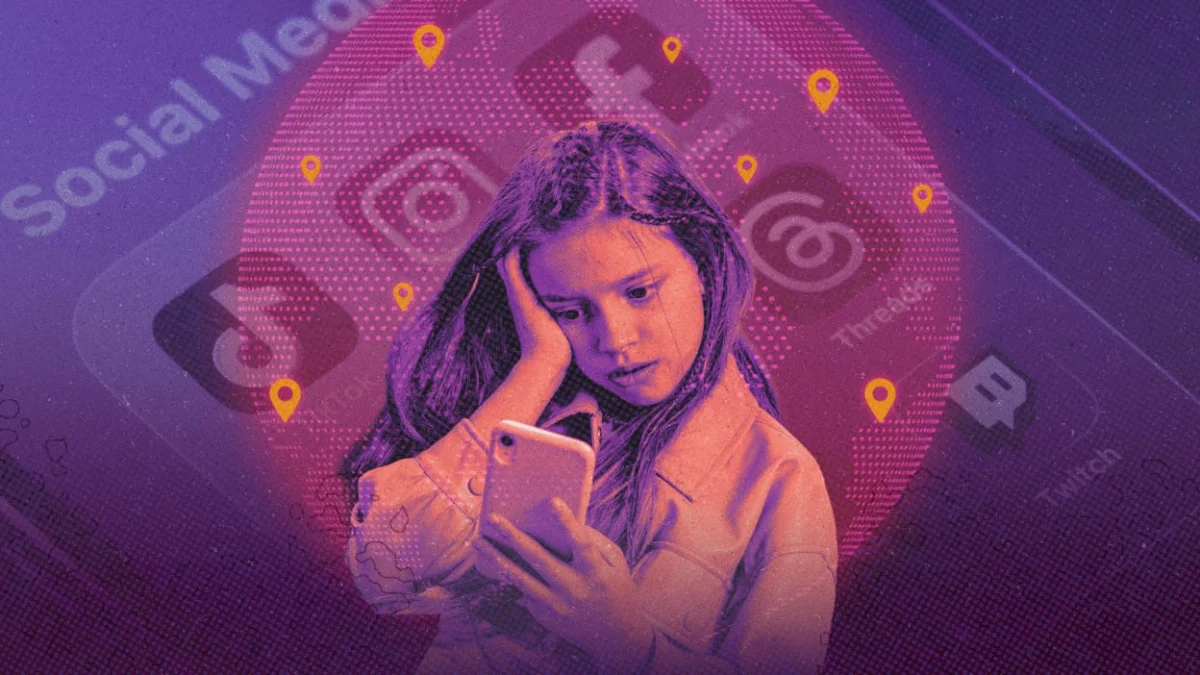
In the span of just eighteen months, the digital landscape for children worldwide has undergone a seismic shift. What began as a localized policy debate in Canberra has transformed into a sweeping international movement. Governments across the globe, from the Southern Hemisphere to the heart of Europe, are aggressively moving to sever the connection between social media platforms and their youngest users.
Driven by an intensifying mental health crisis, concerns over "addictive" algorithmic design, and the pervasive risks of cyberbullying and online exploitation, legislators are no longer merely suggesting safety guidelines—they are enacting total bans. As of July 2026, the legislative tide is turning against Big Tech, with nations implementing strict age verification laws that challenge the very architecture of the modern internet.
The Catalyst: Why Now?
The global legislative rush to restrict youth access to social media is not an isolated phenomenon; it is a reactionary response to a decade of mounting evidence. Legislators are pointing to a convergence of factors that have placed minors in the crosshairs of platform design:
- Mental Health Decline: Reports consistently link heavy social media usage among teens to rising rates of anxiety, depression, and body dysmorphia.
- Addictive Architecture: Features such as "infinite scroll," autoplay videos, and intermittent reinforcement loops are being targeted as specifically engineered to exploit the developing adolescent brain.
- Safety and Exploitation: The prevalence of child sexual exploitation, contact with dangerous strangers, and exposure to unmoderated, violent, or pornographic content has forced governments to move beyond voluntary industry regulation.
- The Privacy Trade-off: While these bans are framed as protective, they have triggered fierce debates regarding digital privacy, the normalization of surveillance-based age verification, and potential infringements on freedom of speech.
A Chronology of the Legislative Wave
The transition from a "connected" childhood to a restricted one has moved with unprecedented speed.
2025: The Foundation
- November 2025: Malaysia introduces the Online Safety Act 2025 (ONSA), setting the stage for strict enforcement on platforms with over 8 million users.
- December 2025: Australia cements its status as the global pioneer by passing the Online Safety Amendment (Social Media Minimum Age) Act, effectively banning children under 16 from major platforms.
2026: The Global Domino Effect
- February 2026: A flurry of activity across Europe as Spain, Poland, and Slovenia announce draft legislation aimed at curbing access for those under 15 or 16.
- March 2026: Brazil’s Digital Statute of Children and Adolescents takes effect, requiring guardian-linked accounts for minors. Simultaneously, Indonesia announces a sweeping ban for under-16s, targeting major hubs like YouTube and TikTok. Austria joins the fray with a proposed ban for under-14s.
- April 2026: Turkey passes a restrictive bill blocking under-15s from social media, mandating rapid content moderation. Greece announces a similar initiative to take effect in 2027.
- June 2026: Canada unveils the Safe Social Media Act, explicitly extending the scope of regulation to include generative AI platforms like ChatGPT and Claude. The UK confirms it will mirror the Australian model.
- July 2026: The European Union signals a unified push, with the European Commission recommending continent-wide restrictions for children under 13.
Country-by-Country Breakdown
Australia: The Blueprint
Australia remains the litmus test for these policies. Having implemented its ban in late 2025, the country is now facing the practical realities of enforcement. While the law mandates "reasonable steps" for platforms to verify age, a government-backed study published in July 2026 suggests the ban is currently struggling to achieve its goals, as tech-savvy youth find ways to circumvent verification. Furthermore, legal pushback from companies like Reddit highlights the ongoing tension between legislative mandates and platform operability.
Brazil: The Guardianship Model
Brazil has taken a distinct approach by focusing on parental integration. Under the Digital Statute of Children and Adolescents, the law mandates that children under 16 must link their accounts to a legal guardian. This moves the burden of responsibility from the platform alone to a shared responsibility model, while simultaneously curbing the "artificial" engagement features that keep children scrolling.

The European Union and France
France is set to become the first European nation to fully enact a comprehensive ban for under-15s. With the bill set to force all existing accounts into compliance by January 2027, France’s move acts as a bellwether for the rest of the EU. The European Commission’s recent report, which advocates for age-appropriate restrictions across all digital services—including video games and AI companions—suggests that the EU may soon adopt a bloc-wide standard that is even more stringent than individual national laws.
Indonesia: Targeted Deactivation
Indonesia’s approach has been perhaps the most aggressive in terms of execution. By naming specific platforms—including Facebook, Instagram, Threads, X, and Roblox—as "high-risk," the government initiated a widespread deactivation of accounts belonging to minors. This direct, state-led intervention signals a move toward a more controlled digital ecosystem.
Implications for Big Tech and Users
The legislative trend has profound implications for the future of the internet.
The Burden of Age Verification
Platforms are now forced to navigate the "verification paradox." To comply with these laws, companies must collect more personal data—such as government IDs or biometric scans—to confirm age. Paradoxically, this increases the very privacy risks that many of these laws were designed to mitigate. Critics argue that storing this data creates a honey pot for hackers and data brokers, placing children at new, distinct risks.
The End of the "Wild West"
For decades, social media operated under a model of growth-at-all-costs. These new laws effectively force companies to pivot toward a "safety-by-design" framework. Features that once drove massive engagement—such as algorithmic recommendation engines and infinite scrolling—are now legally categorized as liabilities.
The "Workaround" Culture
As history has shown with previous internet restrictions, technical barriers rarely act as absolute locks. Minors are already utilizing VPNs, third-party apps, and shared devices to bypass age gates. The long-term efficacy of these bans will likely depend not just on platform compliance, but on the cultural shift in how parents and schools manage digital hygiene.

Official Responses and Public Debate
The push for these bans has not been without detractors. Civil liberties groups, such as the Electronic Frontier Foundation (EFF) and various digital rights advocates, have argued that such bans limit a child’s right to access information, connect with peers, and explore their identities.
"We are essentially creating a bifurcated internet," says one policy analyst. "One for adults and one for children, but the technology to separate the two is fundamentally flawed and invasive."
Conversely, the political consensus is growing. Proponents of the legislation, including prime ministers in Denmark, Greece, and Australia, argue that the "digital experiment" conducted on children has failed. Their rhetoric focuses on "giving kids their childhood back," emphasizing the physical health benefits of reduced screen time, better sleep, and improved academic focus.
Looking Ahead: A Developing Landscape
As of late July 2026, the situation remains highly fluid. The UK is finalizing its legislative path, Germany is currently debating the merits of a similar ban, and Thailand is in the midst of a national conversation regarding the necessity of such measures.
The fundamental question remains: Can a government truly "ban" the internet for a demographic that has known nothing else? While the laws are being written in the halls of parliament, the reality is being lived out in the bedrooms and classrooms of the digital generation.
The global effort to restrict social media for minors is perhaps the most significant attempt to regulate the internet since its inception. Whether these measures will result in a healthier, safer generation or simply drive adolescent behavior further into the shadows remains the defining question of the late 2020s. As more nations join the list, the global digital map is being redrawn, one age-verification gate at a time.