

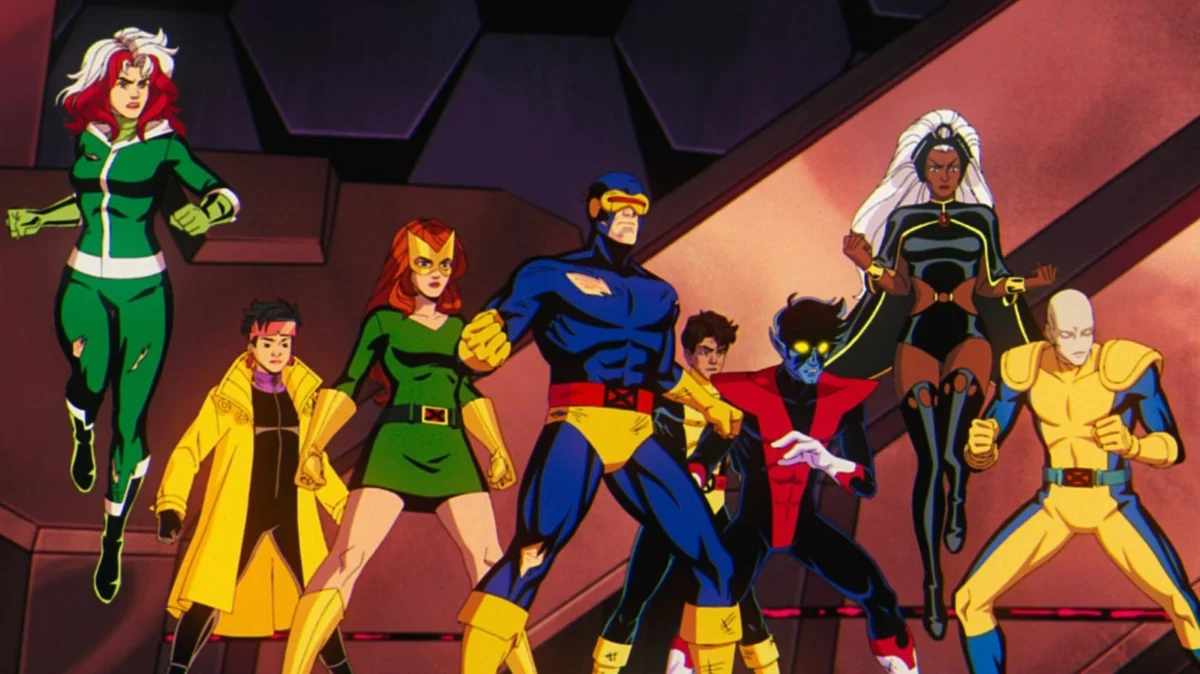
Spoilers for "X-Men ’97" Season 2, Episode 1 follow.
In the sprawling hierarchy of Marvel Comics, the term "Omega-level mutant" is the ultimate designation of power. Derived from the final letter of the Greek alphabet, it signifies a potential with no upper limit—an existence that represents the absolute zenith of a specific genetic ability. The X-Men roster has historically boasted several Omegas, from the reality-warping capabilities of Legion to the metal-manipulating magnetism of Magneto, or the cosmic, world-consuming potential of Jean Grey when acting as a vessel for the Phoenix Force.
However, as the highly anticipated second season of Marvel Studios’ X-Men ’97 kicks off, the series has provided a definitive, visceral reminder that the team’s most formidable asset is not the one who bends metal or wields the fire of creation. It is Ororo Munroe, better known as Storm. While others manipulate matter or energy, Storm acts as an avatar of the biosphere itself. She is not merely a mutant; she is a goddess, and in the season premiere, "Days of Past Future," she officially shattered the ceiling of what audiences thought her powers could achieve.
The Chronology of Power: From Weather-Witch to Solar Architect
To understand the magnitude of Storm’s evolution in X-Men ’97, one must look at her trajectory throughout the series. In the debut season, the creative team intentionally sidelined her raw power to explore her vulnerability. Following the adaptation of the classic comic storyline where Storm loses her abilities, she was forced to confront her deepest fears—claustrophobia and self-doubt—in the "Lifedeath" arc.
When she finally reclaimed her connection to the elements in Episode 6, the sequence was treated with the gravitas of a religious experience. She didn’t just regain her power; she reunited with a fundamental force of nature.
Now, in the Season 2 premiere, the stakes have escalated exponentially. Stranded in the dystopian hellscape of 3960 AD, the team finds themselves under the thumb of the eternal tyrant, Apocalypse. When Cyclops, Jean, and their son Nathan are abducted and placed on a slave transport, the X-Men face a logistical impossibility: they are outmatched, out-gunned, and running out of time.
In a moment of pure desperation, Storm—who has historically operated within the bounds of Earth’s atmosphere—is forced to look upward. She questions her own limits, famously remarking, "I control the weather, not the cosmos." Yet, in a display of sheer willpower, she reaches past the clouds and into the heart of the solar system. By summoning a solar flare, she imbues the team’s ship with cosmic energy, effectively weaponizing the sun to ensure their survival.
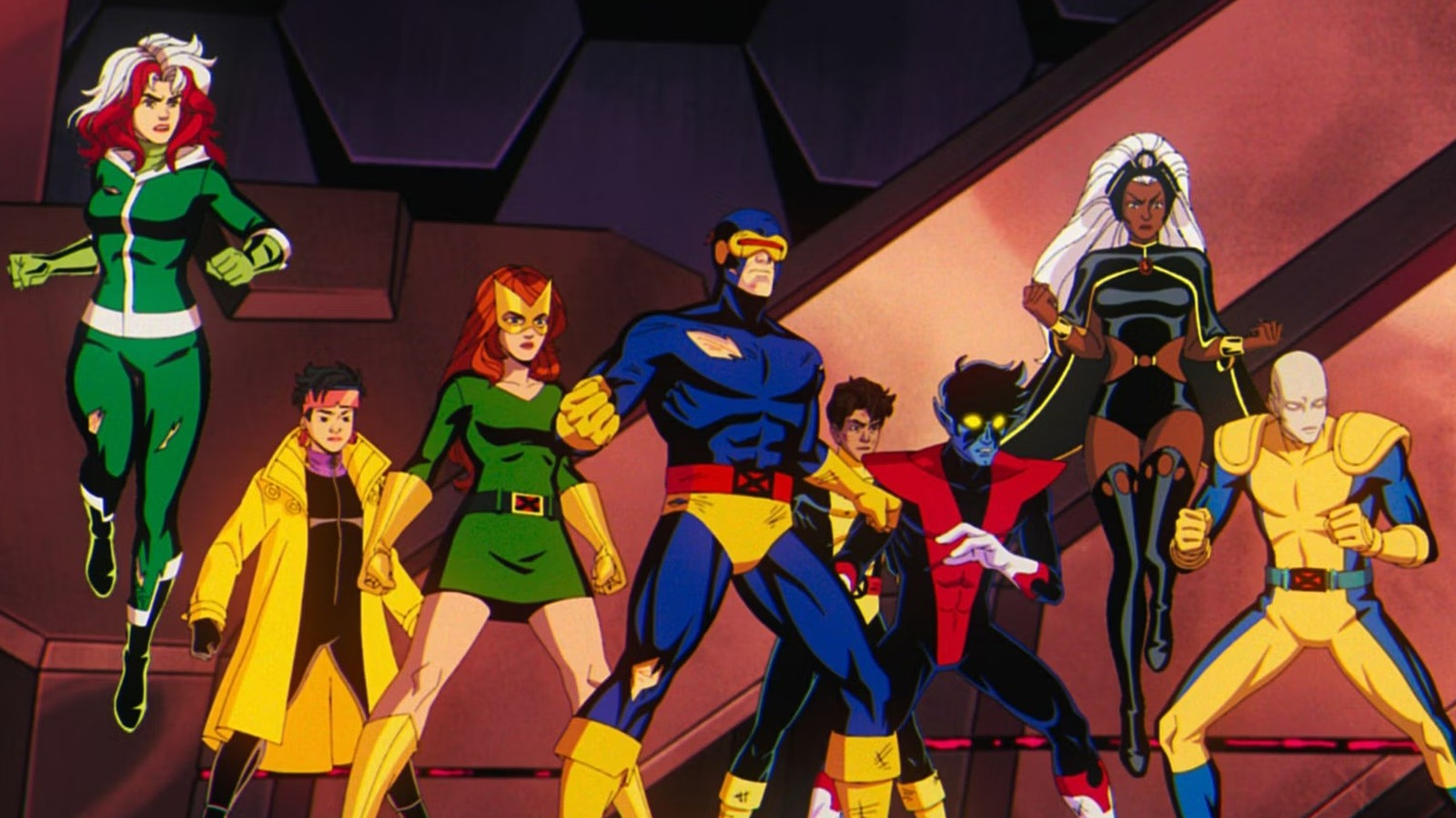
Supporting Data: The Anatomy of a Goddess
The technical execution of Storm’s power in X-Men ’97 is a masterclass in visual storytelling. The production team, led by the vision of Marvel Studios Animation, has long admitted that Storm is one of the most difficult characters to animate. Her powers are fundamentally fluid and grandiose; capturing the lighting of a hurricane or the volatile energy of a solar flare requires a level of detail that dwarfs standard character movement.
This visual spectacle is anchored by the musical composition of The Newton Brothers. Their track, "Give Them the Forecast," has become the sonic signature of Ororo’s dominance. The composition—defined by booming horns, choral chanting, and a sweeping, orchestral grandeur—is specifically designed to mirror the "goddess" archetype.
In "Days of Past Future," the music underscores her shift from a weather-controller to a cosmic conduit. When she declares, "Flames of the sun, source of all creation, I summon a tempest of fire and light whose flares ignite the spark of hope in darkness," she is not just using a power; she is performing an incantation. This isn’t science-fiction "mutant physics" anymore; it is the manifestation of a near-divine entity exerting its will upon the universe.
Official Perspectives and Behind-the-Scenes Challenges
The animators at Marvel Studios have previously discussed the "Storm Problem"—the reality that her powers are so vast that they threaten to trivialize any conflict. If Storm can simply summon a hurricane to wipe out a squadron of Sentinels, how can the writers maintain suspense?
The solution, as seen in the transition from Season 1 to Season 2, has been character-driven. By stripping her of her powers and forcing her to find them through internal growth, the writers ensured that when she does unleash her full might, the audience views it not as a "deus ex machina," but as a hard-won victory.
The production notes for the series indicate a concerted effort to maintain a "theatrical" quality to her combat. Whether she is unleashing an "arctic gale" to freeze the hearts of Apocalypse’s Horsemen or pulling solar energy from the corona of the sun, the intent is to frame her not as a soldier, but as a force of nature. The animators have utilized high-contrast lighting and particle effects to emphasize that when Storm is active, the environment itself is responding to her emotions.
The Implications: Storm vs. Apocalypse
The implications of this power jump are massive for the remainder of Season 2. If Storm can influence the sun, she is effectively operating on a scale that challenges the very hierarchy of the X-Men’s villains. Apocalypse has long been considered the pinnacle of mutant threats, a being who has stood for thousands of years.
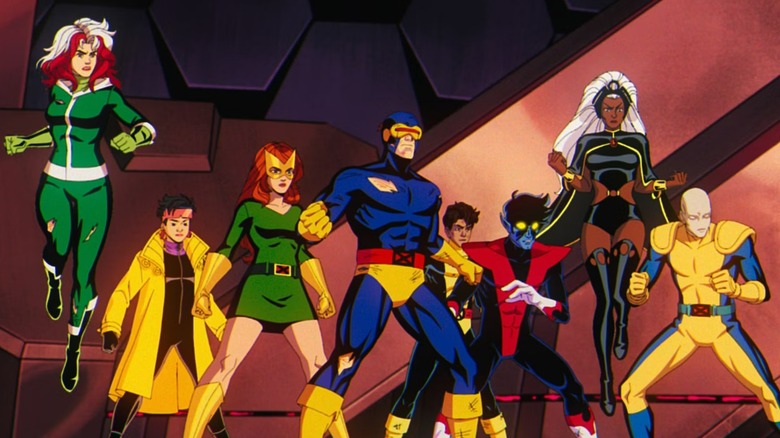
By demonstrating that she can bypass his technological and physical defenses with cosmic-level weather manipulation, the series establishes Storm as the primary check against the tyranny of 3960 AD.
Furthermore, this development changes the power dynamic within the X-Men. If Storm is truly capable of wielding the power of a star, she transitions from being a field leader to a global (and perhaps universal) safeguard. This shift suggests that the "Omega-level" classification may have been an understatement. Storm is no longer just a mutant; she is the guardian of the solar system.
Conclusion: The Horizon of the X-Men
As X-Men ’97 progresses, the question is no longer "Will the team survive?" but "What will Storm do next?" The premiere has set a high bar for the rest of the season. By expanding her influence from the meteorological to the astronomical, the show has revitalized the character for a new generation.
Storm has always been the heart and soul of the X-Men, but now, she is undeniably its spine. Whether she is fighting for the future of the species or battling the literal end of days under the rule of Apocalypse, Ororo Munroe remains the strongest, most awe-inspiring member of the team. As the series continues to drop new episodes on Disney+ every Wednesday, viewers are reminded that when Storm takes to the skies, the entire world—and now the sun itself—had better pay attention.
The era of the weather-witch is over. The era of the solar goddess has begun.








