

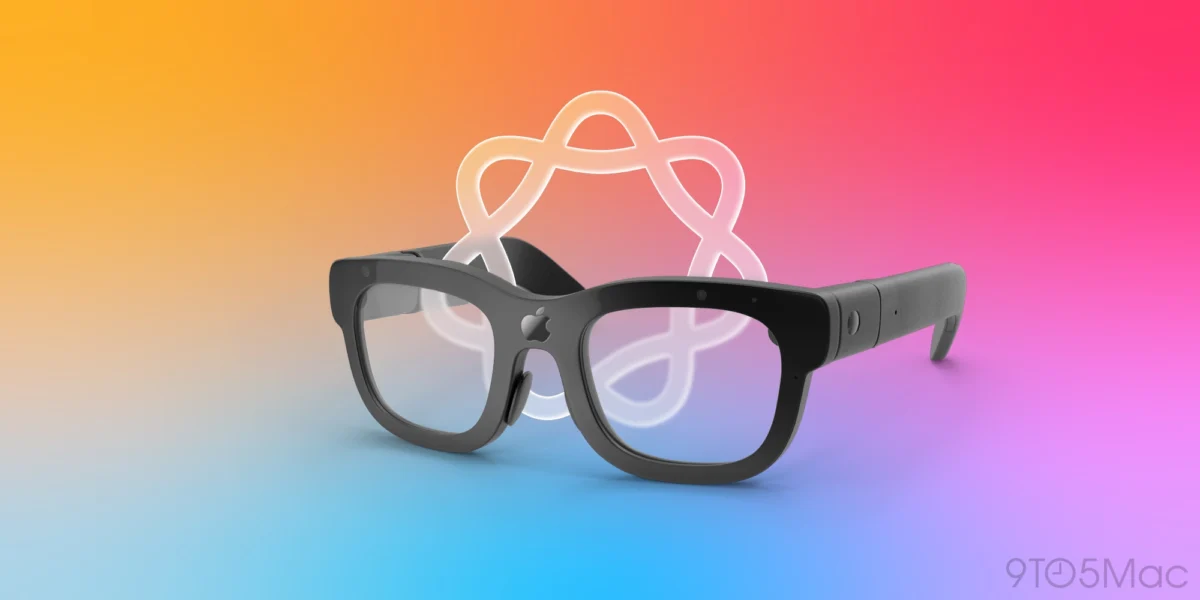
The roadmap for Apple’s next generation of wearable computing is undergoing a significant recalibration. According to recent reports, the company’s highly anticipated foray into the smart glasses market—a direct challenge to the Meta Ray-Ban collaboration—has hit a developmental roadblock, pushing the anticipated launch window into late 2027. Simultaneously, the long-rumored "Vision Air," a budget-friendly successor to the premium Apple Vision Pro, appears to have been relegated to a long-term project, with a market arrival not expected until 2028 or 2029.
These shifts underscore the immense technical and design hurdles Apple faces as it attempts to transition from traditional screens to ambient, wearable intelligence.
Main Facts: The New Wearables Timeline
The latest intelligence, provided by industry analyst Mark Gurman, paints a picture of a company prioritizing polish over speed. The smart glasses, internally codenamed "N50," are intended to serve as the primary hardware vessel for Apple’s burgeoning Visual Intelligence suite and an evolved, proactive version of Siri.
- Smart Glasses (N50): Initially slated for a late 2026 debut, the project has been pushed back by approximately one year. The current target for a public release is now the final quarter of 2027.
- Vision Air: Once thought to be shelved, this lighter, more affordable headset is back on the drawing board. However, it remains a distant prospect, with a potential release window between late 2028 and 2029.
- The Catalyst for Delay: Apple is reportedly concerned that its current visual AI capabilities are not yet robust enough to justify a consumer launch. The company, known for its "it just works" philosophy, is unwilling to risk its reputation on a product that could be perceived as underpowered or gimmicky.
A Chronology of Apple’s Wearable Ambitions
To understand the current state of these projects, one must look at the timeline of Apple’s experimentation with head-mounted hardware.
2023: The Vision Pro Premiere
The launch of the original Apple Vision Pro marked the company’s first major hardware category since the Apple Watch. Positioned as a "spatial computer," the device was an engineering marvel but struggled with high price points, a bulky design, and a limited software ecosystem.
2025: The Shift to Glasses
By mid-2025, internal reports suggested that Apple had realized the limitations of the "ski-goggle" form factor for everyday use. The company pivoted resources toward N50—a pair of glasses that would look and feel like standard eyewear but function as an AI-powered assistant.

2026: The "Year of Delay"
Early 2026 was supposed to be the lead-up to the N50 announcement. However, as the end of the year approached, reports began to surface that the visual AI—the core value proposition of the glasses—was not yet performing at the level required for a consumer-facing product.
2027-2029: The Future Horizon
The industry is now looking toward 2027 as the year Apple potentially pivots from a screen-centric hardware model to a sensor-driven, ambient computing model. By 2029, the combination of a refreshed Vision Air and a mature line of smart glasses could signal the true maturation of Apple’s "post-iPhone" strategy.
Supporting Data: Why the Delay Makes Sense
Apple’s decision to delay the N50 glasses is rooted in several critical technical and market factors.
The Visual Intelligence Barrier
The primary selling point for Apple’s glasses is the ability to process the world in real-time. Whether it is identifying a restaurant, reading a menu in a foreign language, or providing navigation overlays, the device must operate with near-zero latency. Apple’s current AI, while capable on the iPhone, requires significant optimization to function in a lightweight, battery-efficient form factor like a pair of glasses.
The "Fashion First" Strategy
Apple understands that for smart glasses to succeed, they cannot be "gadgets"; they must be fashion accessories. The company is reportedly experimenting with:
- Unique Colors and Materials: Shifting away from the sterile aluminum and glass of the Vision Pro.
- Prescription Integration: A massive market opportunity lies in replacing standard corrective eyewear.
- Ergonomics: The glasses must be comfortable enough to wear for eight to ten hours a day, a standard that the current, heavier prototypes have yet to meet.
Official Responses and Industry Outlook
While Apple has maintained its customary silence regarding unreleased products, the general sentiment within the supply chain and among industry analysts is one of measured patience.
Apple’s philosophy has historically been to enter a market later than its competitors—much like it did with the smartphone, the tablet, and the smartwatch—to ensure a superior user experience. By delaying the glasses, Apple is effectively signaling to investors that it would rather miss a window than release a sub-par product that fails to differentiate itself from the Meta Ray-Ban offerings.
According to Gurman, the company is treating the Vision Pro category as "on ice" until the technology reaches a point where it can be manufactured in a slimmer, more accessible form factor. This indicates a strategic pause: Apple is not abandoning the high-end spatial computing market, but it is waiting for the silicon and battery density to catch up to its design ambitions.
Implications: The Long-Term Vision
The implications of these delays are profound for both the tech industry and the consumer.
1. The Death of the "Goggle" Era
By delaying the Vision Air, Apple is tacitly admitting that the current "Vision" form factor is not a mass-market product. The industry will likely see a cooling off of the VR/AR hype cycle over the next 24 months as companies wait for the technology to evolve beyond expensive, niche headsets.
2. Apple Intelligence as the Operating System
The glasses represent the ultimate goal of "Apple Intelligence." By putting a camera, microphone, and processor on the face, Apple is moving toward a future where the AI doesn’t just respond to commands—it observes the user’s environment to offer context-aware assistance. This is a massive leap forward from the current voice-based interaction models of Siri.
3. A Battle for the "Face"
The delay gives competitors, particularly Meta, more room to iterate. Meta’s Ray-Ban glasses have already gained significant traction by focusing on utility—streaming, capturing, and listening—rather than trying to replace a computer monitor. Apple’s challenge will be to ensure that when it finally enters the market in 2027, its offering is not just a "me-too" product, but a revolutionary shift in how we interact with the digital world.

4. Impact on the Prescription Eyewear Market
If Apple successfully integrates health-tracking sensors and high-quality optical lenses into the N50, it could disrupt the multi-billion-dollar prescription eyewear industry. By positioning the device as a health tool, Apple could potentially subsidize the cost of the hardware through health insurance partnerships or long-term subscription services, a model they have already begun exploring with other health-centric features.
Conclusion
The road to the future of wearables is proving to be far more complex than the early buzz suggested. For Apple, the next two years represent a critical period of internal refinement. While the wait for the "Apple Glasses" has been extended, the delay may ultimately be the difference between a niche toy and a device that fundamentally changes how we perceive the world.
As we look toward 2027 and beyond, the focus will remain on whether Apple can reconcile its high standards for design with the demanding realities of next-generation artificial intelligence. Until then, the "Vision" of the future remains a work in progress, tucked away in the labs of Cupertino.












No comments yet. Be the first to join the conversation!