

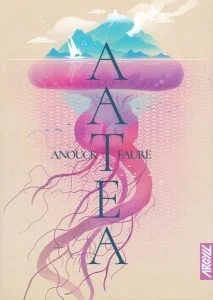
The prestigious Grand Prix de l’Imaginaire (GPI), one of the oldest and most influential literary honors in the French-speaking world, officially announced its winners for the 2026 edition on May 18. As the literary community turns its attention toward Montpellier, France, the announcement marks the culmination of a rigorous selection process that highlights the best in science fiction, fantasy, and horror. The official awards ceremony is scheduled for May 23, hosted at the Comédie du Livre, a major cultural gathering that serves as a fitting stage for authors whose works have pushed the boundaries of the imagination over the past year.
The Pillars of the Jury
The integrity of the Grand Prix de l’Imaginaire is maintained by a distinguished panel of jurors, whose collective expertise spans the breadth of speculative literature. For the 2026 edition, the jury was chaired by the renowned author Joëlle Wintrebert, with Olivier Legendre serving as vice-president and Jean-Claude Dunyach acting as treasurer.
The panel also included Sylvie Le Jemtel, Sylvie Allouche, Audrey Burki, Lloyd Chéry, Catherine Dufour, Benjamin Spohr, and Nicolas Winter. This diverse group of writers, critics, and scholars is responsible for navigating the vast landscape of genre fiction to identify works that demonstrate both literary merit and profound thematic relevance. Their selections reflect the current state of the industry, balancing commercial appeal with avant-garde narratives that challenge the reader’s perception of reality.
Chronology of the 2026 Awards Cycle
The road to the May 18 announcement began months ago, following a structured timeline designed to ensure fairness and transparency. The selection process for the GPI is notoriously thorough, involving several stages of vetting.
- Submission Period: Publishers and authors submit eligible works across multiple categories, including novels, short fiction, translations, and graphic design.
- Longlist Deliberations: The jury reviews the submissions, whittling down the field to a selection of works that demonstrate exceptional quality.
- The Shortlist Phase: During the early spring, the finalists for each category are announced, allowing the reading public to engage with the nominated works.
- Final Deliberations: In the weeks leading up to May, the jury convenes to cast final votes.
- Announcement: On May 18, the winners were revealed to the public, signaling the end of the competition.
- The Ceremony: The formal presentation takes place on May 23 in Montpellier, providing a platform for the winners to be celebrated within the literary community.
Categories and the Scope of the GPI
The Grand Prix de l’Imaginaire is unique in its breadth, covering not only creative fiction but also the technical and artistic contributions that sustain the genre. The categories for 2026 include:
- Roman Francophone (Novel in French): Honoring the best long-form narrative written originally in the French language.
- Roman Étranger (Foreign Novel): Recognizing outstanding international works that have been translated into French.
- Nouvelle Francophone & Étrangère (Short Fiction): Focusing on the precision and impact of shorter works.
- Roman Jeunesse (Youth Fiction): Highlighting literature written for younger audiences that encourages critical thinking and imagination.
- Prix Jacques Chambon (Translation): A vital category that acknowledges the crucial role of translators in bringing global voices to French readers.
- Prix Wojtek Siudmak (Graphic Design): Celebrating the visual language of the genre, from cover art to internal illustration.
- Essai (Nonfiction): Awarding scholarly work that analyzes or historicalizes speculative fiction.
- Prix Spécial: A discretionary award given for exceptional contributions that may not fit into standard categories, such as anthologies, career achievement, or unique editorial projects.
Supporting Data: The Evolution of Speculative Fiction
The 2026 winners arrive at a time of significant transition for speculative fiction in France. Statistical trends in recent years suggest a surge in "cli-fi" (climate fiction) and sociological science fiction, as authors grapple with the global implications of environmental instability and technological acceleration.
The jury’s selection process, while subjective, acts as a barometer for cultural interest. When comparing the 2026 nominations to previous years, one observes a distinct shift toward international collaboration. The presence of the "Foreign Novel" and "Translation" categories underscores the globalized nature of modern fantasy and sci-fi. Readers are no longer confined to national literary traditions; they are consuming stories that cross borders, drawing inspiration from diverse cultural mythologies and technological landscapes.
Furthermore, the emphasis on the Prix Jacques Chambon highlights the industry’s commitment to linguistic fidelity. In an era of rapid AI-assisted translation, the GPI reaffirms the value of the human translator, who must not only convert words but capture the "imaginaire"—the specific, often surreal, emotional resonance of the author’s original intent.
Official Responses and Industry Reception
While the formal winners list is the focal point of the event, the reaction from the community is equally significant. Industry figures have praised the 2026 jury for their inclusive approach to the selection process.

"The Grand Prix de l’Imaginaire continues to serve as the gold standard for what we consider ‘imaginative’ literature," said one industry analyst. "By rewarding both established veterans and emerging voices, the jury ensures that the genre remains vibrant, restless, and deeply concerned with the human condition."
The selection of Montpellier as the host city for the ceremony also reflects a decentralization of the French literary scene. By moving the presentation away from Paris, the GPI encourages wider engagement with readers across the country, reinforcing the idea that speculative fiction is a democratic art form that belongs to everyone, regardless of geography.
Implications for the Future of Genre Fiction
What does the 2026 Grand Prix de l’Imaginaire tell us about the future? Firstly, it confirms that speculative fiction is no longer a "niche" interest. It has matured into a sophisticated tool for social commentary. The themes present in this year’s winning works—ranging from the ethics of artificial intelligence to the exploration of post-colonial futures—demonstrate that authors are using the genre to ask the hard questions that mainstream literature often avoids.
Secondly, the awards signal a healthy market for translations. By highlighting international authors, the GPI helps bridge the gap between global markets. This is vital for the growth of the genre, as it encourages publishers to take risks on non-Western narratives that offer fresh perspectives on common tropes.
Finally, the Prix Wojtek Siudmak serves as a reminder that science fiction and fantasy are visual mediums. In a world increasingly driven by digital media, the craftsmanship of physical books—the design, the cover art, the typography—remains a tangible hook for readers. The emphasis on aesthetic quality ensures that the physical book retains its status as a collector’s item and a work of art.
Conclusion
As the 2026 Grand Prix de l’Imaginaire draws to a close, the literary community celebrates the efforts of those who dare to dream of worlds beyond our own. The winners recognized this year are more than just authors; they are architects of possible futures and mirrors reflecting our present-day anxieties.
The ceremony at the Comédie du Livre serves as a powerful reminder of the resilience of the written word. In an age of ephemeral content and digital noise, the commitment shown by the jurors and the nominees remains a beacon for anyone who believes in the transformative power of storytelling. As we look toward the future, the legacy of the 2026 GPI will undoubtedly be defined by the influence these works have on the next generation of writers, ensuring that the imaginaire continues to thrive, evolve, and inspire.
Acknowledgments: This report was compiled using information provided by the Grand Prix de l’Imaginaire committee and reporting from Ersatz Culture. For further updates on the winners and their subsequent book tours, readers are encouraged to follow the official GPI website at gpi.noosfere.org.











No comments yet. Be the first to join the conversation!