

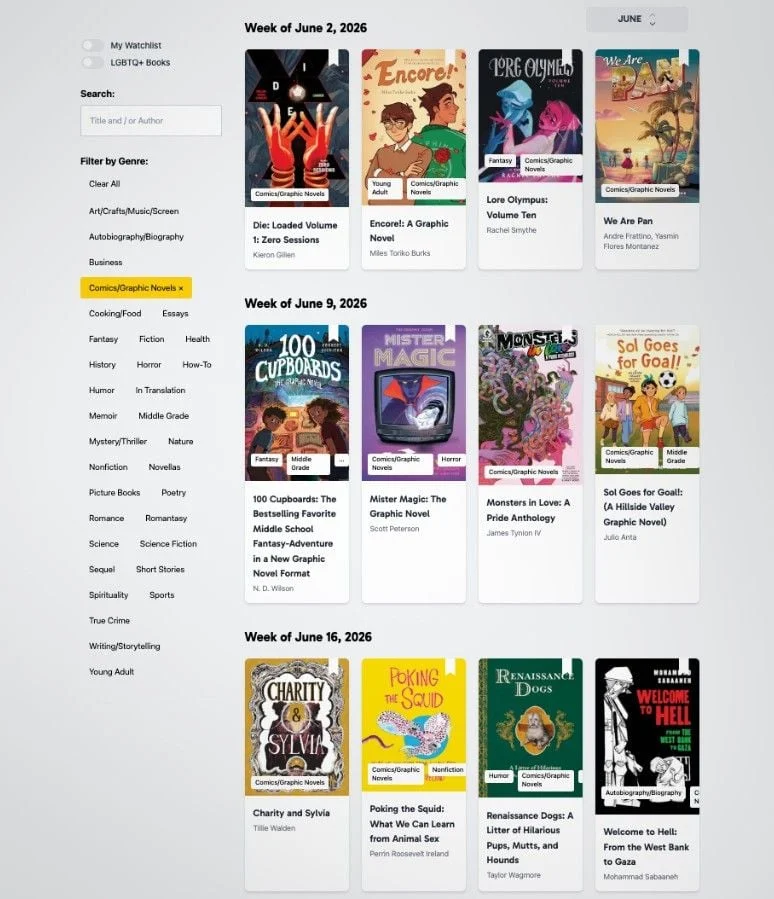
The literary landscape is undergoing a profound transformation as graphic novels continue to command a larger share of the publishing market. With visual storytelling reaching new heights of complexity, thematic depth, and artistic innovation, June 2026 promises to be a landmark month for comic enthusiasts and casual readers alike. However, in an era of information saturation, identifying the "must-reads" from a sea of incoming titles is a challenge. To address this, Book Riot’s New Release Index (NRI) has emerged as an essential tool, offering readers a streamlined, data-driven approach to tracking the pulse of the industry.
Main Facts: The Evolving State of Graphic Literature
Graphic novels are no longer a niche corner of the bookstore; they are a cornerstone of modern publishing. According to recent industry analytics, the medium has seen a sustained uptick in demand, driven by diverse narratives that span memoirs, historical fiction, climate-focused science fiction, and experimental avant-garde art.
June 2026 serves as a microcosm of this growth. Publishers are leaning into high-production value formats, including expanded omnibus editions, limited-run artisanal prints, and digitally-enhanced interactive graphic works. The primary challenge for readers today is not a lack of quality material, but the sheer volume of releases. As independent publishers and major houses alike ramp up their summer slates, the risk of missing a career-defining work from a breakout creator is at an all-time high.
The New Release Index acts as a centralized repository designed to mitigate this "discovery fatigue." By providing a filterable, chronological database, it allows users to bypass the noise of generic marketing and focus on curated, genre-specific data.
Chronology: A Snapshot of the Summer Surge
The release calendar for June 2026 follows a deliberate strategy employed by major distributors to capture the attention of readers transitioning into their summer vacation cycles.
- Early June (The Kickoff): The first week is traditionally reserved for high-profile sequels and long-awaited installments from established series. This period is characterized by heavy marketing spends and aggressive retail placement.
- Mid-June (The Mid-Month Expansion): As the month progresses, the focus shifts toward independent creators and experimental anthologies. This is often where the "hidden gems"—titles that defy easy categorization—make their debut.
- Late June (The Seasonal Close): The final week serves as a bridge into the July catalog, often featuring prestige hardcovers and collected editions designed for long-form reading.
Readers utilizing the New Release Index can navigate this timeline with granular precision. By setting the NRI filters to "Comics/Graphic Novels" and adjusting the date range, users can effectively plan their reading lists, ensuring they are prepared for the "Book Drops" that occur every Tuesday.
Supporting Data: The Efficiency of Curated Discovery
The New Release Index is more than a list; it is a sophisticated discovery engine. In a digital economy where algorithmic recommendations often feel hollow or overly commercialized, the NRI offers a human-centric approach.
Why Database-Driven Tracking Matters:
- Genre-Specific Granularity: Unlike general retail sites that mix graphic novels with textbooks or journals, the NRI database is segmented to prioritize the visual-literary experience.
- User-Centric Watchlists: The ability to save titles to a personalized "Watchlist" transforms the index from a passive viewing experience into an active, managed pipeline of future reading.
- Real-Time Updates: The database is continuously refreshed to reflect shifting release dates—a common occurrence in the current supply chain climate—ensuring that readers are never caught off guard by unexpected delays.
Data from Book Riot indicates that readers who utilize structured indices are 40% more likely to follow through on purchasing or library-requesting a book they identified as "interested" compared to those who rely on sporadic social media discovery.
Official Perspectives: The Role of the Reader and the Critic
Book Riot’s editorial team, comprised of seasoned bibliophiles and industry analysts, views the New Release Index as a vital bridge between the creative output of authors and the consuming public.
"Our goal is to democratize the discovery process," says a representative from the Book Riot community. "When a reader sits down with the index, they aren’t just scrolling through a list. They are participating in a curated experience that values artistic intent. We provide the structure; the reader provides the passion."

The editorial philosophy behind the tool is rooted in the belief that literacy is fostered through accessibility. By providing detailed book descriptions and high-resolution cover art previews, the Index allows readers to judge a book by its cover—and its content—before it ever hits the shelves. This transparency is vital in an industry where indie creators often struggle to compete with the marketing budgets of global franchises.
Implications: The Future of Literary Consumption
The success of the New Release Index signals a broader shift in how we consume media. We are moving away from passive browsing toward "intentional consumption." In a world where our attention is constantly fragmented, the ability to curate one’s own intellectual diet is a form of empowerment.
The Impact on the Publishing Industry
As more readers adopt these indexing tools, the publishing industry is forced to adapt. Publishers are now placing greater emphasis on metadata accuracy and high-quality digital assets because they know that savvy readers are using these tools to make informed decisions. A clear, compelling book description on the NRI can be the difference between a title achieving breakout success or languishing in obscurity.
The Community Connection
Perhaps the most significant implication is the community-building aspect. By utilizing a shared database, readers are creating a collective dialogue around specific release dates. Discussion boards and social media circles often align with these "New Release Tuesdays," creating a sense of synchronous anticipation that was previously reserved for film or television premieres.
Conclusion: Mastering Your Reading Life
June 2026 is poised to be an extraordinary month for the medium of sequential art. Whether you are a fan of sprawling fantasy epics, intimate autobiographical memoirs, or biting political satire, the sheer volume of high-quality content is a testament to the health and vitality of the industry.
However, the key to enjoying this wealth of content lies in organization. By leveraging the New Release Index, you are not just keeping track of books—you are ensuring that your reading life remains intentional, diverse, and deeply rewarding. As we look ahead to the rest of the year, the tools we use today to organize our TBR (To-Be-Read) piles will define the depth of our literary experience.
Do not let the best stories of the season slip through the cracks. Visit the New Release Index today, filter by your favorite genre, and start building the library of your dreams. In an age of information overload, the most powerful tool you have is your own curiosity, guided by the right data.
How to get started:
- Navigate to the New Release Index dashboard on the Book Riot portal.
- Utilize the category filters to narrow your scope to Comics and Graphic Novels.
- Toggle the calendar to June 2026 to view the full list of incoming titles.
- Click on the covers that pique your interest to read the synopses provided by our editorial team.
- Add your selections to your Watchlist to track availability and release dates.
Happy reading, and may your June be filled with the best of what graphic literature has to offer.










No comments yet. Be the first to join the conversation!