Introduction: The Biological Mirror
In the seventh grade, a biology teacher posed a question that would disrupt the worldview of many students in the room. The lesson plan called for a standard taxonomic overview of the living world, but the takeaway proved far more volatile than a simple diagram of a cell. As the teacher explained the classification of life, they dropped a foundational scientific truth: Humans are, quite literally, animals. We are not a separate kingdom; we are not distinct from the evolutionary tree. We are primates.
For most students, this was a moment of fleeting surprise—a quiet "wow" followed by an acceptance of the biological reality. But for one student, this premise was not merely inaccurate; it was an affront to her sense of identity. "Humans are not animals," she insisted. When pressed by the teacher to define what, if not animals, humans might be, her answer was simple and resolute: "Humans."
This anecdote serves as a perfect microcosm of a phenomenon psychologists call "belief perseverance." It is the tendency to cling to a deeply held conviction even when presented with overwhelming evidence to the contrary. In Western culture, this belief—that humanity occupies a space distinct from the "animal world"—remains a cornerstone of our collective psyche. While we intellectually concede our status as mammals, we culturally behave as though we are a separate category of being, one defined by superior intellect, linguistic complexity, and tool-making prowess.
The Chronology of Human Exceptionalism
To understand why we struggle to identify as animals, one must look at the long trajectory of Western philosophy and scientific history.
The Aristotelian Legacy
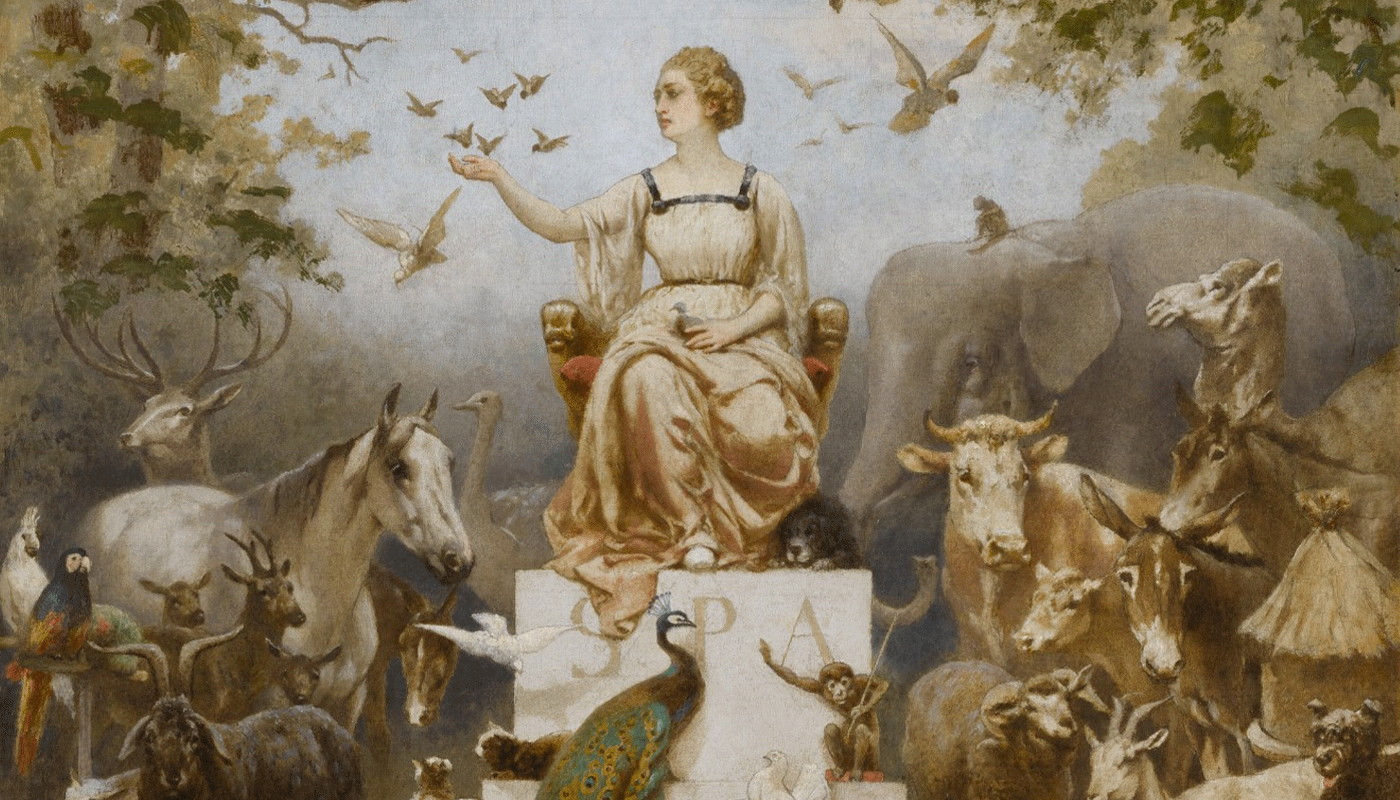
For millennia, the Western tradition has been dominated by the Scala Naturae, or the "Great Chain of Being." Originating with Aristotle and later refined by medieval theologians, this hierarchical framework placed humans just below the angels and leagues above the rest of the animal kingdom. In this worldview, animals were designed for human utility. This binary—human versus beast—was not just a biological distinction; it was a moral and ontological one.
The Enlightenment Shift
Even as the Enlightenment ushered in the scientific method, the "human exceptionalism" bias remained intact. René Descartes famously proposed that animals were mere "automata," biological machines incapable of feeling pain or possessing consciousness. While modern biology has dismantled these claims, the cultural residue of this era persists. We have moved from viewing animals as machines to viewing them as "lesser" intelligences, yet we still hold the human experience as the standard by which all other life is measured.
The Modern Cognitive Revolution
The 20th and 21st centuries have seen a paradigm shift. With the advent of advanced tools—neuro-imaging, complex behavioral studies, and longitudinal observations of primates, cetaceans, and corvids—the barrier between "human" and "animal" has grown porous. We now recognize that animals exhibit complex social structures, use tools, display grief, and possess varying levels of self-awareness. Yet, despite this scientific progress, the societal instinct to distance ourselves from the "animal" label remains deeply ingrained, particularly in the narratives we create.
Supporting Data: The Anthropomorphic Lens
Our discomfort with our animal nature is most clearly reflected in the stories we tell, especially those featuring talking animals. These narratives fall into two primary categories: the "translated" animal and the "anthropomorphic" human.
The Translated Animal
Works such as Richard Adams’ Watership Down or Tad Williams’ Tailchaser’s Song attempt to bridge the gap by grounding their narratives in the "essential nature" of the creatures they depict. In these stories, the author acts as a translator, taking what we know of animal behavior and projecting it into a narrative framework. While we can argue about whether a rabbit can truly experience political maneuvering, these stories attempt to honor the animal’s perspective.
The Anthropomorphic Human
Contrast this with the classic anthropomorphic tradition, where animals are effectively "humans in animal suits." In these tales, creatures walk on two legs, wear clothing, possess opposable thumbs, and navigate human-centric social and political systems. These stories do not seek to understand the animal; they use the animal as a vessel for human allegory.
As noted in the analysis of the film Zootopia, there are worlds where primates are entirely absent, creating a self-contained society that mirrors our own. When humans do inhabit these worlds, the divide is often stark. We see the animal kingdom as a separate, often pastoral or savage realm that exists in parallel to, but never truly integrated with, our own.
The Intersection of Technology and Nature: The Case of Hoppers
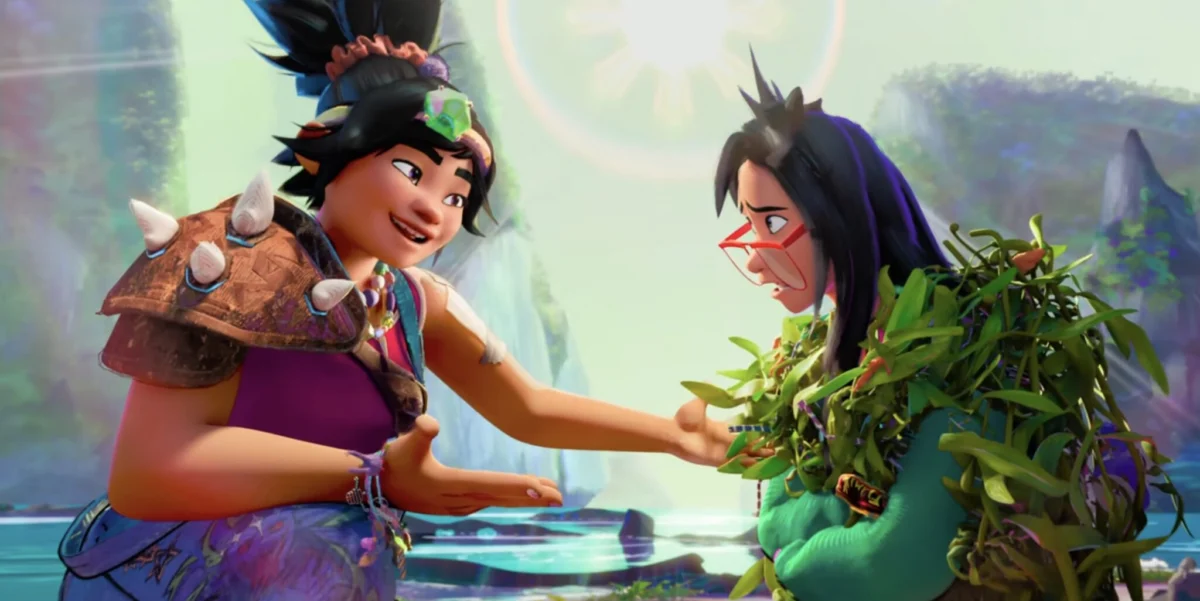
The recent discourse surrounding the film Hoppers offers a fascinating lens through which to view these cultural anxieties. The film uses a science-fiction conceit—technology that allows humans to inhabit animal forms—to force a connection between the two worlds.
The core irony of the Hoppers universe is that while animals possess their own sophisticated language and society, humans remain the "outsiders" who cannot communicate without technical intervention. Even in a story about unity and the breaking of barriers, the human is still the "other." The film highlights a profound existential loneliness: we are surrounded by sapient life, yet we are the only species that has effectively locked itself out of the conversation.
This reflects a persistent truth: we view our intelligence and technology as the primary agents of our separation. We are "above" or "apart" because we have built a world that no other species can access.
Official Perspectives: The Scientific and Ethical Implications
The scientific community is increasingly vocal about the dangers of human exceptionalism. Ethologists and biologists argue that our refusal to acknowledge our animal nature is not just a philosophical error—it is an environmental catastrophe.
The Ethical Cost of Othering
When we classify animals as "lesser," we justify their exploitation. If an animal is seen as a commodity or a "non-person," the moral constraints on how we treat them are significantly reduced. Modern animal welfare organizations, such as the Nonhuman Rights Project, have begun lobbying for the legal recognition of personhood for certain species, arguing that the binary divide is an outdated legal fiction that obscures the reality of sentient suffering.
The Psychological Benefit of Distance
Conversely, psychologists argue that the use of talking animals in children’s literature serves a protective function. By projecting complex human issues onto a toad in a tweed suit or a wily rabbit, we create a psychological buffer. We can engage with difficult themes—mortality, hierarchy, social conflict—without the raw, personal impact of seeing a human in that position. It allows us to process our own foibles through a lens of whimsy, making the "hard parts" of the human condition easier to digest.
Implications: A New Way Forward
The question remains: How do we reconcile our biological reality with our cultural narratives? The path forward requires a re-evaluation of how we teach our children to perceive the natural world.
- De-centering the Human: We must transition from stories where animals are merely metaphors for human behavior to stories that honor the alien, brilliant, and complex realities of non-human lives.
- Bridging the Language Gap: As we learn more about animal communication, we should use our storytelling to highlight these discoveries, rather than simply projecting our own verbal structures onto them.
- Recognizing Sapience: The most critical lesson of the coming century is the realization that we are not the only sapient beings on this planet. Acknowledging this does not diminish the human experience; it enriches it by placing us within a larger community of intelligence.
Conclusion: We Are All In This Together
The seventh-grade student who refused to accept she was an animal was, in a way, speaking for all of us. There is a profound human resistance to being "just another animal." We crave a sense of special status. However, as our tools become more advanced and our environmental crises more acute, that insistence on separation is becoming a liability.
We are not above the animals, nor are we apart from them. We are deeply, inextricably, and beautifully part of the tapestry of life on Earth. The stories we tell—whether through film, literature, or scientific inquiry—must shift to reflect this. We need to stop looking at the animal kingdom as a mirror for our own behavior and start seeing it as a society of neighbors. As we continue to evolve our understanding of our place in the world, the final, most important lesson is one of unity: we are all in this together, and our survival depends on the recognition of our shared, animal, existence.