

As the Japanese education system grapples with the tension between century-old traditions and the evolving needs of a modern, diverse society, one institution in Kyoto Prefecture is taking a bold step forward. Tanabe Junior High School in Kyotanabe has announced that it will become the first public junior high school in Japan to officially adopt a hoodie as part of its school uniform, marking a radical departure from the rigid sartorial standards that have defined the country’s classrooms for generations.
This decision, timed to coincide with the school’s upcoming 80th-anniversary celebrations, represents more than just a change in dress code; it is a profound acknowledgment of the "genderless" era and a prioritization of student comfort and economic accessibility.
The Core Facts: A Modern Twist on Tradition
Starting this November, students at Tanabe Junior High will have the option to incorporate a specifically designed zip-up hoodie into their daily ensemble. The garment is a sleek, functional piece of apparel: gray in color with sharp black trim, featuring the school’s official emblem embroidered on the left chest.
Crucially, the hoodie is not intended to be a mere casual add-on for gym class or commuting. The school administration has officially sanctioned it as a full-fledged uniform component. Students are permitted to wear it during regular classroom hours, and, in a break from formal protocols, it is officially approved attire for high-stakes events, including graduation ceremonies and entrance ceremonies for incoming students.
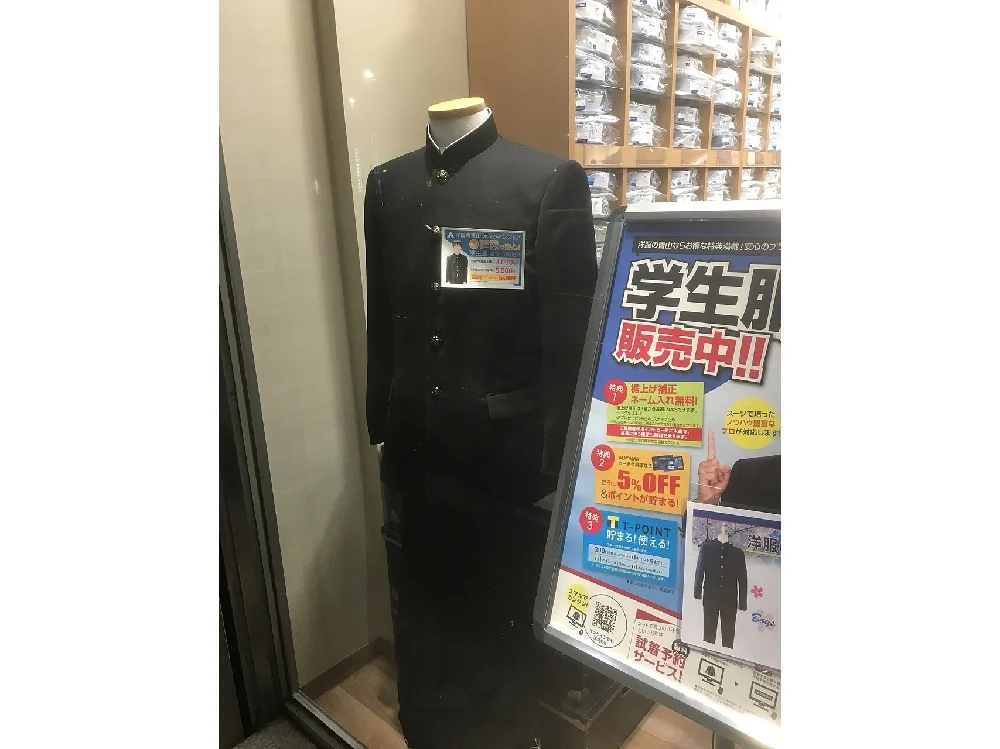
The initiative is designed to offer flexibility. Students are not forced to abandon their traditional uniforms; rather, the hoodie acts as an additional, optional choice. Pupils may choose to purchase the hoodie alongside their existing gakuran (the traditional high-collared jacket for boys) or sailor-style blouses, allowing them to rotate their attire based on personal preference or the specific needs of the day.
A Chronology of Change: From Tradition to Innovation
The path to this decision was not an overnight occurrence but the result of a multi-year process involving rigorous student feedback and administrative reflection.
The Stagnation of the Status Quo
For decades, Tanabe Junior High has maintained the standard Japanese aesthetic: the gakuran for boys and the iconic sailor-suit blouse and skirt for girls. While these garments are deeply embedded in the cultural identity of the Japanese middle school experience, they have come under fire in recent years for their lack of gender neutrality and their restrictive, formal nature.
Three Years of Polling
To gauge the pulse of the student body, the school administration conducted annual surveys over the last three years. In each of these polls, the majority of students opted to retain the traditional gakuran and sailor suits, signaling a deep-seated respect for the school’s history. However, while students clung to the tradition, they also expressed a growing desire for comfort and utility.
The Design Phase
Recognizing that the traditional uniform was becoming a barrier to modern student life, the administration shifted the conversation from "replacing" to "evolving." Working closely with student representatives, the school moved away from the standard blazer-and-tie format that many other schools are adopting, opting instead for a garment that resonates with the current generation: the hoodie. The design process was collaborative, ensuring that the final product was not only functional but also aligned with the aesthetic preferences of the students who would actually wear it.
Supporting Data: Why the Hoodie Wins
The adoption of the hoodie is backed by compelling practical and economic data, which distinguishes it from previous efforts to modernize school attire.
1. Economic Accessibility
The financial burden of school uniforms in Japan is notoriously high. Traditional gakuran and sailor-suit tops can be prohibitively expensive for many families. The new hoodie is priced at 9,000 yen (approximately US$58). This price point is roughly 50 percent cheaper than the traditional uniform tops, providing significant relief to parents and guardians without sacrificing the school’s branding.

2. Maintenance and Practicality
Traditional uniforms in Japan often require professional dry cleaning, adding a recurring cost and a time burden to the family. The new hoodie, by contrast, is machine-washable. This change addresses the logistical reality of modern, dual-income households where parents have less time to manage complex laundry requirements for delicate garments.
3. Versatility and Comfort
The move addresses the physical needs of growing adolescents. A zip-up hoodie offers superior thermal regulation compared to stiff, wool-blend gakuran jackets. By allowing students to wear these garments in the classroom, the school is indirectly addressing the issue of student comfort, which research suggests is a key factor in academic engagement and concentration.
Official Responses: A "Genderless" Era
The school’s official statement regarding the change is perhaps the most significant indicator of a cultural shift. By explicitly stating, "We came to the decision [to introduce a hoodie uniform] taking into consideration that we are in a diverse and genderless era," the administration is making a clear value statement.
In many Japanese schools, uniform policies have been historically gender-binary, forcing students to choose between a "boy’s" or "girl’s" outfit. By introducing a hoodie—a gender-neutral garment by design—Tanabe Junior High is creating a more inclusive environment where students can express their identity without the social pressure or administrative rigidity of traditional gendered dress codes.
Educational experts have lauded the move as a pragmatic solution to a social problem. Instead of engaging in protracted debates about gender-neutral blazer designs, the school opted for a solution that was universally accepted, cost-effective, and culturally relevant to the students themselves.
The Broader Implications for Japanese Education
The decision by Tanabe Junior High is likely to cause ripples throughout the Japanese Ministry of Education and local school boards nationwide.
Breaking the "Blazer" Trend
While many Japanese schools have been transitioning to blazers to appear more "modern," the blazer still carries a formal, somewhat western-centric, and restrictive air. By skipping the blazer and moving straight to a high-quality, branded hoodie, Tanabe is challenging the definition of what "professional" or "proper" looks like in a school setting. It posits that a school’s dignity is found in the character of its students, not in the rigidity of their lapels.
Strengthening School Identity
By incorporating the school’s emblem directly onto the hoodie, Tanabe Junior High has successfully updated its branding. This allows the school to maintain a sense of community and institutional identity while shedding the archaic silhouettes of the post-war era. It serves as a blueprint for other schools looking to mark milestone anniversaries—not by looking back, but by looking toward the future.
The Ripple Effect
As news of this policy spreads, other districts facing declining student engagement or struggles with uniform-related costs may look to Tanabe as a case study. If the pilot program proves successful—if students are more comfortable, if families save money, and if the school’s atmosphere remains orderly—it is highly probable that the "hoodie uniform" will cease to be a novelty and begin to trend as a viable alternative for public education institutions across the archipelago.
Conclusion: A Lesson in Adaptability
As Tanabe Junior High approaches its 80th birthday, it is doing so with a youthful energy that belies its age. The hoodie is not just a piece of fabric; it is a symbol of a school that listens to its students and is unafraid to challenge the status quo. In an era of rapid social change, the ability to adapt—to trade the starch of the gakuran for the comfort of a hoodie—might just be the most important lesson the school teaches its students this year.
The future of the Japanese school uniform is no longer set in stone; it is being written in the soft, gray fabric of a zip-up hoodie, proving that tradition and innovation can, in fact, share the same hallway.












No comments yet. Be the first to join the conversation!