

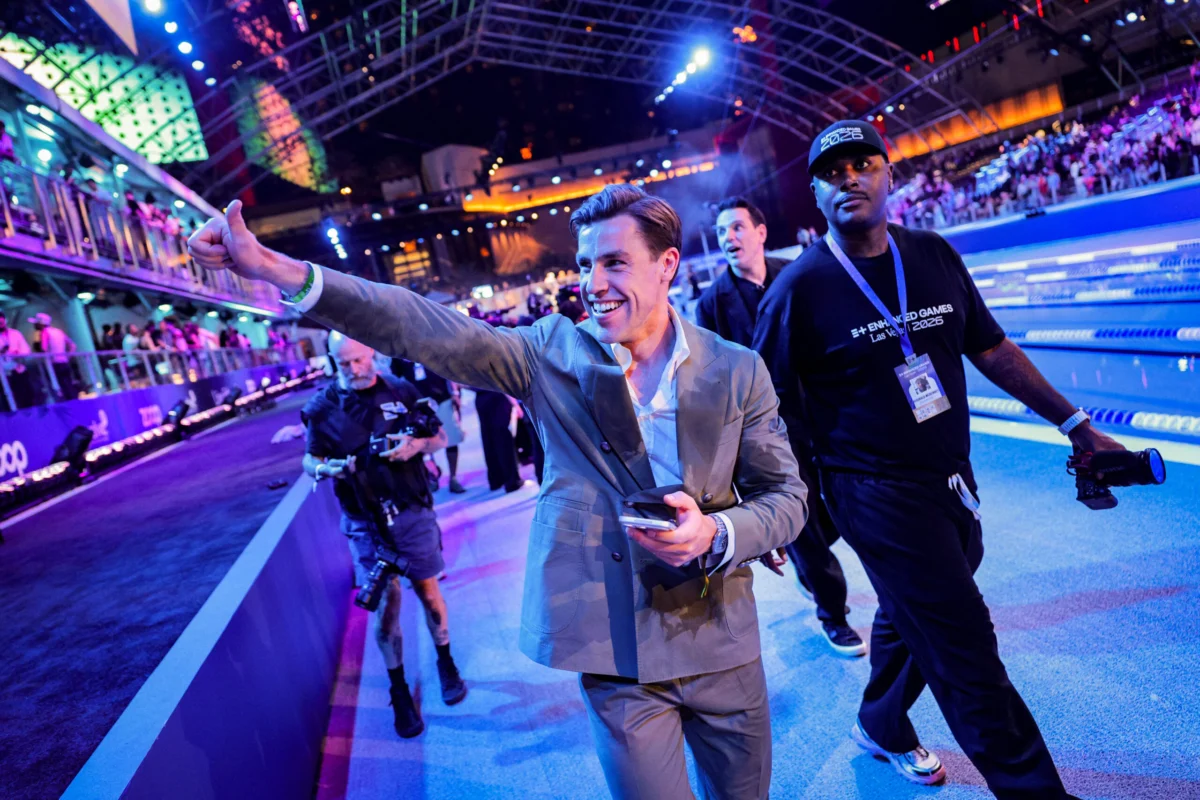
Under the relentless, scorching sun of the Nevada desert, the atmosphere at Resorts World Las Vegas during Memorial Day weekend was thick with more than just heat—it was heavy with the scent of ambition, skepticism, and the faint, sterile aroma of a laboratory. I stood on the sidelines watching Boady Santavy, a two-time Canadian Olympic weightlifter, struggle to hoist a bar over his head. The stakes were simple yet staggering: a clean lift would net him $250,000.
Santavy’s physique, characterized by massive, vascular arms that seemed better suited to a Marvel comic book than a human frame, was a testament to the ethos of the event. But as he dropped the bar—a failed 183-kilogram (403-pound) snatch—and hobbled away, cursing under his breath, the facade of the "super-athlete" cracked. This was the Enhanced Games, a competition that has sent shockwaves through the sporting world, challenging every convention of human physical limits and the very definition of "fair play."
The Genesis of the "Steroid Olympics"
The Enhanced Games are not merely a sporting event; they are a calculated, billion-dollar disruption of the athletic industrial complex. Born from the minds of Silicon Valley veterans with backgrounds in cryptocurrency, artificial intelligence, and biotech, the games have found backing from heavyweight investors like Peter Thiel and former Coinbase executive Balaji Srinivasan.

The concept is as audacious as it is polarizing: a global, televised competition where performance-enhancing drugs (PEDs)—including anabolics, testosterone, peptides, and human growth hormones—are not only permitted but encouraged. Unlike the clandestine, high-risk world of illicit doping, Enhanced athletes compete under the supervision of medical professionals. The participants, a diverse cohort of 42 athletes ranging from seasoned Olympians to niche specialists, spent 12 weeks at an elite compound in the United Arab Emirates, where doctors tailored "protocols"—custom drug cocktails—to optimize their physical output.
Chronology of a Spectacle
The weekend was designed as a carefully curated narrative of human potential.
Friday: The media arrived. Some 200 journalists were hosted in a dedicated workspace, provided with meals, and granted unprecedented access to athletes and executives. The underlying tension was palpable; as observers, we were simultaneously the critics and the free marketing machine for a company currently valued at $1.2 billion following its recent IPO.

Saturday: The competition proper began. The venue, a $50 million, purpose-built open-air stadium, played host to swimming, track, and weightlifting. The vibe was an eclectic, almost surreal, fusion of a high-end biotech conference, a WWE event, and a dystopian game show. The crowd, populated by influencers and venture capitalists, cheered as athletes stalked the grounds like titans. Biohacker and longevity enthusiast Bryan Johnson, dressed in a whimsical outfit, provided color commentary, further cementing the link between the tech-bro "life extension" movement and the event’s mission.
The Climax: The weekend concluded with the men’s 50-meter freestyle. In what felt like a scripted finale, Greek swimmer Kristian Gkolomeev shattered the world record with a time of 20.81 seconds. The stadium erupted, red lights flashed, and CEO Maximilian Martin rushed the pool to embrace the winner, the perfect photo opportunity for an emerging global brand.
The Business of Biology: Official Perspectives
The organizers of the Enhanced Games, specifically CEO Maximilian Martin and Executive Chairman Christian Angermayer, view their endeavor not as an affront to sports, but as a necessary correction to a broken system.

"People have been using performance enhancements for a long time," Martin stated during a press conference, drawing a parallel between the athletes and the "enhanced" look of Hollywood action stars. "We’re entering that market with a pathway for people to get the benefits they’re looking for in a safe, medically supervised way."
Angermayer, ever the pragmatist, was more blunt: "I’m a capitalist. There is no reason why something that is good should not also be a business."
Conversely, the establishment has been scathing. The World Anti-Doping Agency (WADA) has labeled the games "dangerous and irresponsible." Travis Tygart, CEO of the U.S. Anti-Doping Agency, went further, calling the entire enterprise a "clown show that puts profit over people." The fundamental disagreement lies in the philosophy of risk: while Enhanced argues that supervised doping is safer than the current status quo, critics argue that normalizing these substances invites long-term, irreversible health consequences for both the athletes and the impressionable youth who view them as icons.

The "Looksmaxxing" Cultural Shift
The timing of the Enhanced Games is no accident. It aligns with a broader, dangerous cultural trend often referred to as "looksmaxxing"—an extreme, social-media-driven pursuit of physical perfection. Influencers like the 20-year-old "Clavicular," alongside prominent podcasters like Joe Rogan and Andrew Huberman, have fueled a surge in public interest regarding peptides and testosterone.
In the Bay Area, the obsession has reached a fever pitch. Startups like Superpower and Noho Labs are riding the wave, and "peptide parties"—where the elite gather to inject compounds—have become a clandestine rite of passage. This is the demographic the Enhanced Games aims to capture: a generation that views the human body as a piece of hardware to be optimized, upgraded, and monetized.
Implications: A New Era of Human Performance?
The implications of the Enhanced Games extend far beyond the tracks and pools of Las Vegas. If the event succeeds in normalizing the use of regulated performance enhancers, we may be witnessing the birth of a new, post-natural era of sports.

However, the reality of the games was less "transhumanist revolution" and more "niche entertainment." Despite the presence of high-profile athletes like Hafthor "The Mountain" Bjornsson, many of the performances failed to live up to the hype. Some athletes, such as American swimmer Hunter Armstrong, competed while abstaining from any enhancements, citing personal integrity and Olympic ambitions. Armstrong’s participation—and his success—suggests that the "enhanced" advantage may not be as insurmountable as the marketing materials imply.
The deeper question remains: is this truly about health, or is it about vanity? By setting the event in Las Vegas—a city built on the illusion of immediate gratification and the thrill of the gamble—the organizers have inadvertently revealed the nature of their mission. They are selling a dream of youth and power to a culture that has grown impatient with the slow, grueling reality of natural human progress.
As I exited the media center in the early hours of Sunday, I caught a final glimpse of Maximilian Martin. He was alone in a bathroom, adjusting his suit in the mirror—a singular, quiet moment of reflection for a man who has wagered his reputation on the idea that humanity is ready to rewrite its own biological code. When I offered a brief, exhausted "Congratulations," he nodded, turned back to the glass, and continued to check his appearance. It was a fitting end to the weekend: a performance of perfection, for an audience of one.

The Enhanced Games may be the start of a revolution, or they may simply be a fleeting, expensive experiment in the limits of vanity. Only time—and the long-term health of its participants—will tell.












No comments yet. Be the first to join the conversation!