

By Callum Mercer, Senior Editor
Updated: April 24, 2026
The landscape of professional Counter-Strike 2 has officially moved beyond the theoretical. For years, the esports industry operated under the shadow of a duopoly, where the combined dominance of ESL and BLAST created a predictable, if somewhat rigid, tournament circuit. However, the 2026 season marks a definitive departure from that era. Following Valve’s sweeping regulatory overhaul of tournament licensing, the ecosystem has fractured and reformed into something far more volatile, aggressive, and expansive.
The announcement that PGL and StarLadder have locked in 11 top-tier event windows for the remainder of 2026 is not merely a scheduling update—it is a direct challenge to the status quo. By seizing these dates, these organizers are testing the viability of Valve’s "open-circuit" mandate, forcing a confrontation between legacy incumbents and ambitious challengers. As the calendar becomes increasingly crowded, the industry is entering a high-stakes stress test: can the Counter-Strike ecosystem support this level of expansion, or is it hurtling toward a state of unsustainable exhaustion?
The New Frontier: Breaking the Duopoly
The structural shift in the Counter-Strike business model is rooted in the removal of partner-team protections. For much of the early 2020s, the "closed-circuit" model ensured that a select group of organizations held permanent spots in top-flight leagues. This provided financial stability but effectively stifled the meritocratic spirit that once defined the game.
Valve’s intervention, which mandated that tournament invitations must be based on objective ranking systems rather than long-term commercial partnerships, has fundamentally changed the power dynamic. PGL and StarLadder, two of the most storied names in the industry, have moved rapidly to fill the vacuum.
PGL, having established a reputation for robust production quality and massive arena events, is positioning itself as a year-round pillar of the circuit. Simultaneously, StarLadder’s return—following its successful 2025 revival—signals a strategic reclamation of the "StarSeries" brand, aiming to leverage nostalgia and historical prestige to capture the attention of a new generation of fans.
A Chronology of the 2026 Shift
The timeline of this transition highlights the speed at which the market has evolved:
- Q1 2026: Initial murmurs of scheduling conflicts emerge as organizers begin bidding for venue dates. Valve’s licensing guidelines are fully enforced, creating an immediate scramble for top-tier dates that were previously locked away in long-term exclusivity deals.
- Early April 2026: PGL successfully executes the Bucharest event, demonstrating that the organizer can deliver elite-tier competition at speed. This victory provides the social proof required to validate their wider 2026 calendar ambitions.
- Mid-April 2026: Detailed reports from HLTV confirm the 11-event window distribution. This serves as the "opening salvo" of the new era, forcing ESL and BLAST to re-evaluate their own strategic positioning in a market where they no longer hold absolute control over the calendar.
- Late April 2026 (Present): The industry enters a phase of "crowded saturation." With PGL and StarLadder finalizing their windows, the focus shifts to the logistical reality: how will the world’s top 20 teams manage their travel, practice, and health commitments in a season that no longer offers a quiet week?
The Data Behind the Disruption
While the full rulebooks, qualification mechanics, and long-term commercial models for these 11 events are still being formalized, the data points we do have paint a clear picture of a "land grab."

The "Tier-One" Density
The sheer volume of events is the primary concern for stakeholders. In a traditional two-operator system, top-tier teams could expect roughly 15 to 20 high-stakes matches per season. With the addition of PGL and StarLadder’s new slots, that number is projected to climb by 30-40%.
- The Attendance Factor: Teams are no longer guaranteed invites. The new system requires qualification via open paths, meaning the "big names" must consistently perform to stay relevant.
- The Broadcast Battle: With more tournaments comes more broadcast content. This creates a fragmentation of the viewership base, forcing organizers to compete not just on production quality, but on timing—ensuring their matches don’t cannibalize the audience of a rival event.
Official Stances: The Rhetoric of Openness
Both PGL and StarLadder have utilized similar messaging to justify their expansion, framing it as a service to the community.
PGL’s Perspective:
PGL has positioned itself as the champion of the "open ecosystem." Their leadership argues that the market was artificially starved of high-quality, independent events. By creating more opportunities for teams to compete, PGL claims they are fostering a healthier, more competitive environment where the best teams rise to the top based on current form rather than past reputation.
StarLadder’s Perspective:
StarLadder’s narrative is one of restoration. Having been a cornerstone of the professional scene for years, their return is framed as a "reclaiming of the throne." By emphasizing regional qualifiers and a clear, merit-based route to the top, they are appealing to the grassroots element of the Counter-Strike community that felt alienated by the closed-partner era.
Implications: The Risks of Exhaustion
While the shift toward an open circuit is a win for the sport’s integrity, it presents significant risks for the Esports Business sector.
1. The Risk of Player Burnout
The most immediate concern is the human element. Professional Counter-Strike is mentally and physically demanding. A calendar that is "brutally dense" leaves little room for recovery. If teams are forced to attend back-to-back events to maintain their world ranking, we may see a decline in the quality of play, as fatigue inevitably impacts reaction times and tactical decision-making.
2. Commercial Overload
For sponsors, the market is becoming harder to navigate. In a system with two primary operators, branding was centralized. Now, with more events and more organizers, brands must spread their budgets thinner, or choose to back only the "marquee" events, potentially leaving secondary tournaments underfunded.
3. The Incumbent Response
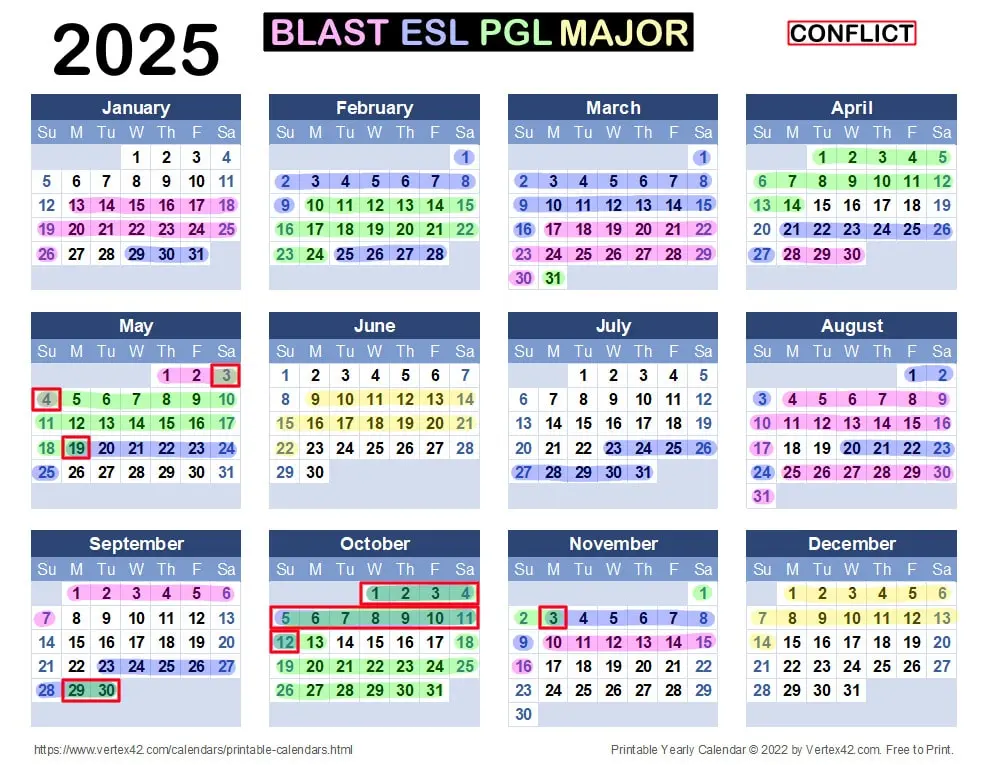
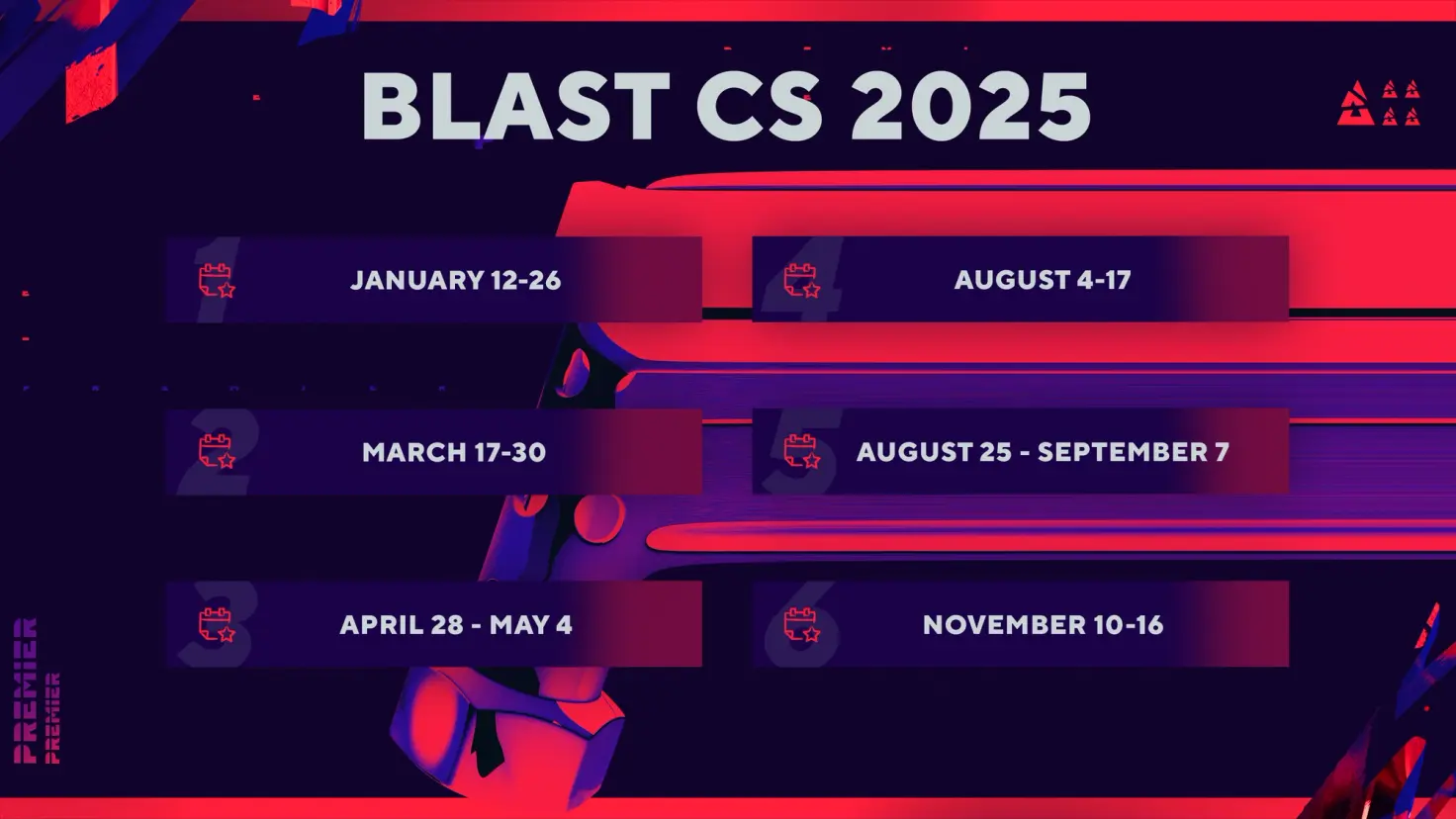
We must not mistake the current landscape for a total collapse of the old guard. As evidenced by BLAST’s recent moves in Porto and the ESL FACEIT Group’s ongoing partnerships (such as their recent deal with Kick), the incumbents are not retreating. They are doubling down. This competition for "premium dates" is the frontline of the conflict. The months of May and September will be particularly telling, as these periods are the most likely to see "scheduling clashes" where top teams must choose which tournament to attend.
The Road Ahead: Will the Model Hold?
The next six months will serve as the ultimate litmus test for Valve’s vision. If PGL and StarLadder can successfully execute their events without major technical hitches and, crucially, maintain high viewership, the "open-circuit" model will be vindicated.
However, if the calendar leads to a diluted competitive product—where top teams are forced to field substitute rosters or skip events entirely—the industry may be forced to pivot once again. The "open era" is no longer an abstract goal; it is a live, functioning system. It is now a matter of whether this new, crowded landscape can produce the sustainable, high-quality growth that fans and investors crave.
Ultimately, the success of this transition will not be measured by the number of press releases or the density of the tournament schedule. It will be measured on the server, in the broadcast studio, and in the spreadsheets of the organizations attempting to thrive in an environment where, for the first time in a decade, nothing is guaranteed.
Callum "Cal" Mercer is a UK-based esports journalist covering competitive titles across the LEC, VCT, and global Counter-Strike circuits. With a background in broadcast production and data analysis, he specializes in tactical breakdowns, roster strategy, and the business dynamics shaping modern professional gaming.











No comments yet. Be the first to join the conversation!