

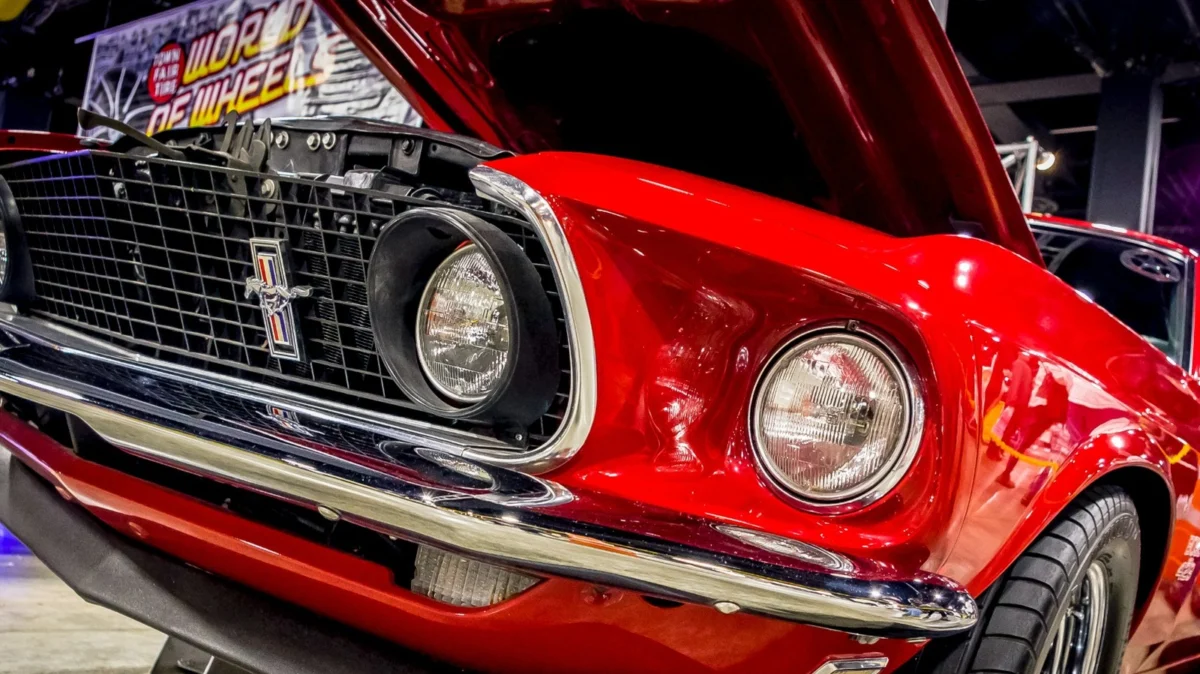
In the pantheon of American automotive history, few vehicles command the reverence and, quite frankly, the awe of the 1969–1970 Ford Mustang Boss 429. It is a car that exists at the intersection of engineering madness and marketing brilliance. With only 1,358 units ever produced, it has transcended its status as a mere "muscle car" to become a blue-chip asset, with average market values reaching a staggering $358,681 as of March 2026.
For the uninitiated, the Boss 429 was not merely a performance trim; it was a desperate, brilliant solution to a racing problem. Ford needed to homologate its massive 429-cubic-inch semi-hemi V8 for NASCAR competition. The engine was so physically gargantuan that it would not fit into the engine bay of the standard Mustang, requiring Ford to contract Kar Kraft to physically modify the shock towers and widen the front end of the chassis. The result was a front-heavy, tire-shredding, high-speed monster that remains one of the most sought-after collector cars on the planet.
The Anatomy of a Legend: Main Facts
The Boss 429 was built for a singular purpose: to conquer the high-banked ovals of NASCAR. While the factory rated the engine at a modest 375 horsepower, enthusiasts and historians have long known this to be a classic case of corporate "detuning" for insurance and regulatory optics. Modern dyno testing and period reports suggest the true output of these engines resides comfortably in the 500-horsepower range.
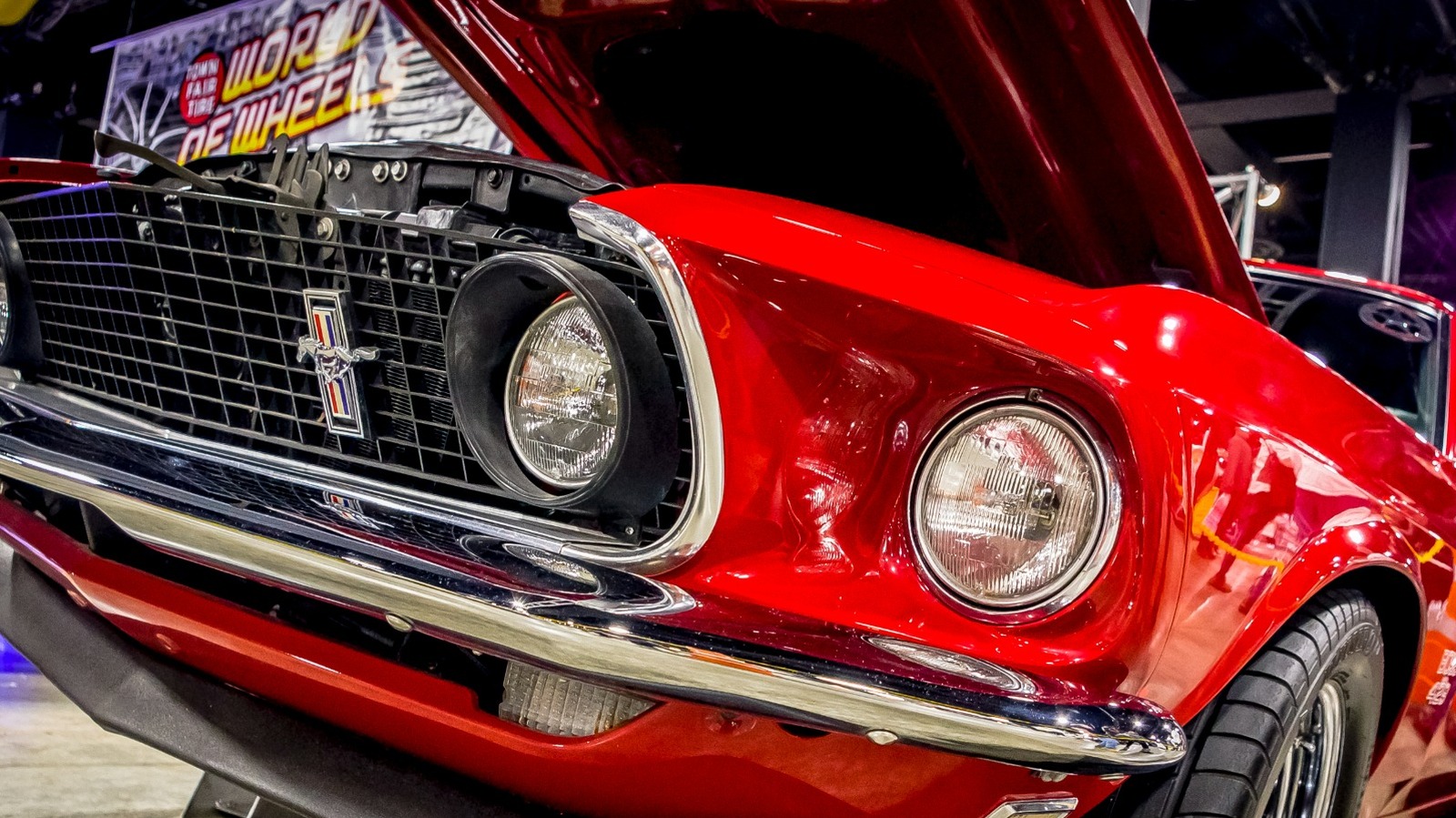
Beyond the engine, the Boss 429 was a masterclass in specialized assembly. Because the engine was so large, the car utilized a remote-mounted battery in the trunk to balance weight and a specialized cooling system to prevent the "Shotgun" engine from overheating during daily use. Its rarity, combined with its unique status as a "racing engine in a street shell," makes it the ultimate expression of the late-60s horsepower wars.
A Chronological Descent into the Muscle Era
The muscle car era did not happen in a vacuum; it was a response to a booming youth market and a culture obsessed with straight-line speed.
- 1964–1967: The Genesis: The Pontiac GTO is widely credited with igniting the fire. By dropping a big-block engine into a mid-size chassis, Pontiac created a formula that every other manufacturer would scramble to copy.
- 1968: The Peak of Excess: Manufacturers began moving from "street" muscle to "factory drag" specials. This era saw the introduction of limited-production, race-ready cars like the Hurst-modified Mopars.
- 1969–1970: The Boss 429 Era: This represented the absolute zenith of the movement. Ford, Chevrolet, and Chrysler were locked in an arms race that prioritized cubic inches over all else.
- 1971–1974: The Decline: Facing stricter emissions standards and the looming oil crisis, the compression ratios were dropped, and the "muscle" began to fade, turning the icons of the 60s into the highly collectible rarities they are today.
Supporting Data: The "Cheaper" Alternatives
While the Boss 429 sits on its pedestal, the collector market offers several alternatives that mirror the "racing car for the street" philosophy. Even these "budget" options command significant capital, proving that the demand for pure, unadulterated American power remains stronger than ever.
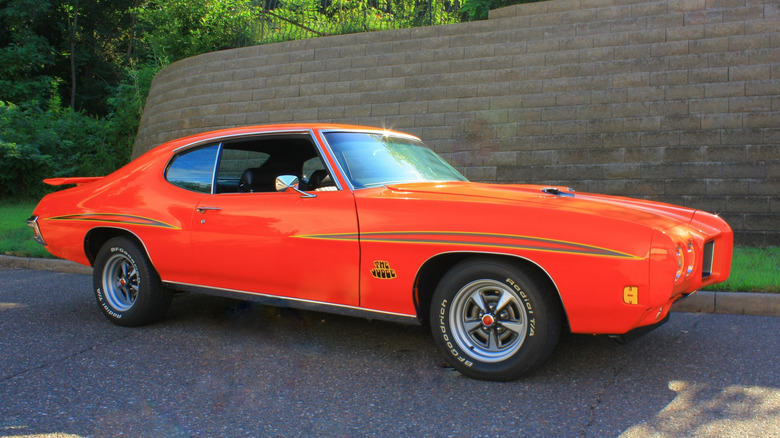
1. The 1970 Pontiac GTO Judge (Ram Air IV)
The Judge is the visual embodiment of the muscle car movement. Priced around $90,000, it is significantly more accessible than the Boss 429. The Ram Air IV engine was a masterpiece of internal combustion, officially rated at 370 hp but widely acknowledged to produce significantly more. The appeal here is the balance of street-legal intimidation and track-bred torque.
2. The 1968 Shelby GT500 KR
The "King of the Road" was the pinnacle of the Shelby lineup. While the Boss 429 is a wide-bodied, purpose-built machine, the GT500 KR represents the refinement of the big-block Mustang. With an average market price of roughly $226,717, it provides a more traditional Mustang aesthetic while packing the legendary 428 Cobra Jet V8, which, like the Boss, was notoriously underrated by the factory.
3. The 1970 Plymouth Hemi ‘Cuda
If the Boss 429 is the king of the track, the Hemi ‘Cuda is the king of the street. With its 426 Hemi engine—perhaps the most famous powerplant in American history—the ‘Cuda is the definition of "min-maxing" for power. At approximately $200,000 for a clean example, it remains a serious investment that offers quarter-mile performance that often eclipses the Boss 429.
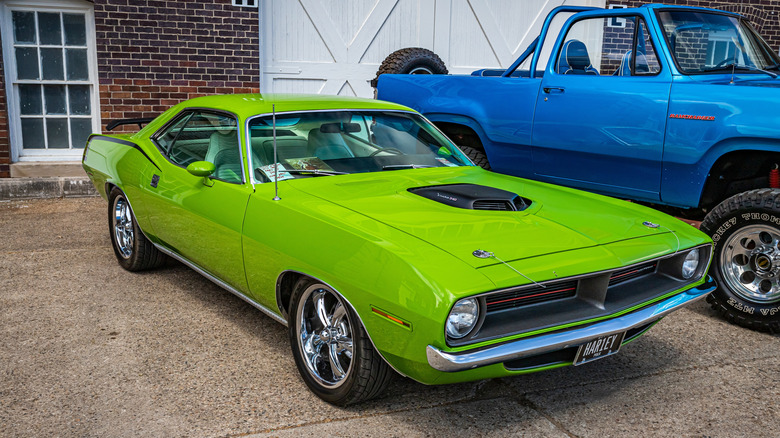
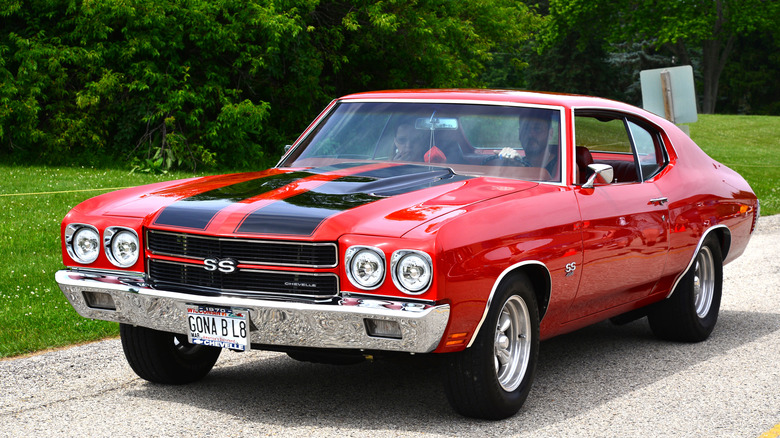
4. The 1970 Chevrolet Chevelle SS 454 (LS6)
The Chevelle SS 454 stands as the final word in factory big-block dominance. The LS6 package, with its 450-hp rating, was the most powerful engine Chevrolet put into a passenger car during the era. At $173,000, it offers a more "sedan-like" comfort combined with a massive displacement that few cars in history can match.
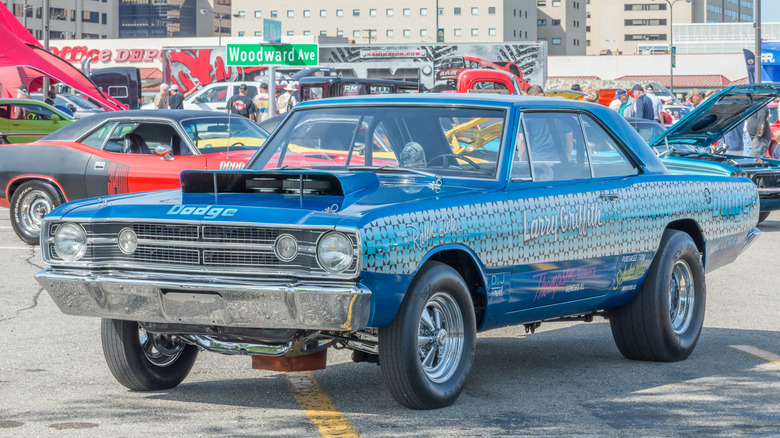
5. The 1968 Hurst Hemi Dart/Barracuda
These are the most extreme entries on this list. These weren’t mass-produced cars; they were chassis shipped to Hurst to be turned into pure drag racers. At $150,000 to $250,000, they are the closest a collector can get to owning a professional drag car. They are loud, uncomfortable, and utterly uncompromising.
Official Perspectives: The Valuation Landscape
When consulting data from industry authorities like Classic.com and Hagerty, a clear picture emerges: the market for "homologation specials" is disconnected from the broader collector car market. While a standard Mustang or GTO might fluctuate with general economic trends, the Boss 429 and the Hemi ‘Cuda are viewed as "blue-chip" tangible assets.
Experts note that the valuation of these vehicles is heavily influenced by "provenance"—the documentation of the car’s history, the integrity of its numbers-matching components, and the original factory build sheets. For the Boss 429, the rarity of the Kar Kraft modifications adds a layer of complexity to restoration that keeps prices consistently elevated compared to more "off-the-shelf" muscle cars.
Implications for the Modern Collector
The existence of these vehicles in the 21st century carries significant weight for the automotive enthusiast. First, these cars represent an era of engineering that will never be repeated. The transition to electric vehicles and high-efficiency, small-displacement turbocharged engines means the "Big Block" philosophy has become a relic of a bygone age.
Furthermore, the price disparity between the Boss 429 and its competitors highlights a shift in collector priorities. Buyers are no longer just looking for "a fast car"; they are looking for historical milestones. The Boss 429 is not just a car; it is a piece of NASCAR history. The Hemi ‘Cuda is a piece of drag-racing legend.
For the prospective collector, the implication is clear: the era of "cheap" muscle is long gone. Even the "alternatives" discussed here require a significant financial commitment. However, for those who value the mechanical honesty of a naturally aspirated V8 and the raw, analog experience of a manual transmission coupled to a heavy-duty chassis, there is no substitute.
As we look toward a future dominated by software-defined vehicles, the 1969–1970 Boss 429 and its peers serve as a reminder of a time when the path to performance was simple: build a bigger engine, strengthen the frame, and let the driver figure out the rest. It is a philosophy that may be outdated, but it remains, undeniably, the heart of American automotive soul.











No comments yet. Be the first to join the conversation!