

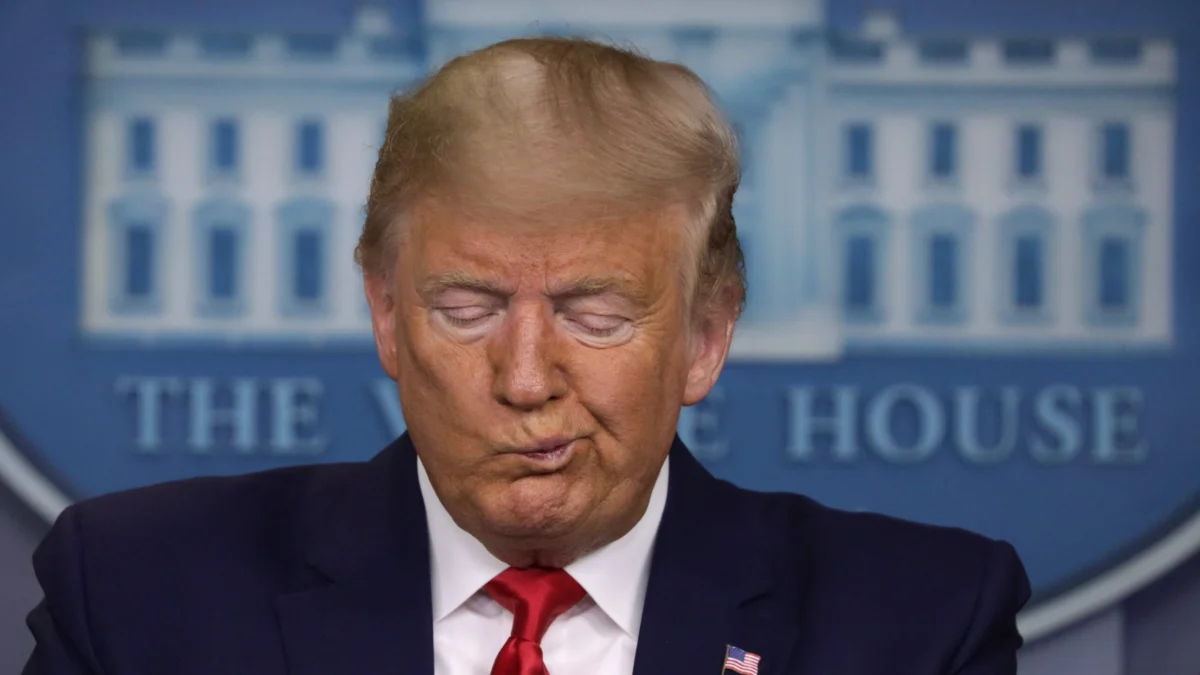
In a move that has ignited a fiery debate over the intersection of industrial policy, environmental stewardship, and the global race for artificial intelligence supremacy, former President Donald Trump has issued a sharp rebuke of New York Governor Kathy Hochul’s recent decision to halt the development of large-scale data centers.
The clash centers on a landmark executive order signed by Governor Hochul on July 14, 2026, which imposes a one-year, statewide moratorium on the construction of hyperscale data centers—specifically those requiring 50 megawatts (MW) or more of power. While the Governor’s office frames the pause as a necessary cooling-off period to assess environmental impacts, Trump has characterized the policy as a catastrophic economic misstep that threatens America’s competitive edge in the burgeoning AI landscape.
The Core Conflict: Economic Engine vs. Resource Burden
The disagreement highlights a growing tension across the United States: how to balance the insatiable energy demands of the digital age with the grid stability and environmental goals of local jurisdictions.
In a statement posted to Truth Social, Donald Trump did not mince words, describing data centers as "money machines" that serve as the bedrock of modern economic prosperity. He likened these facilities to "liquid gold," arguing that they are not merely warehouses for servers, but essential infrastructure that generates significant tax revenue, creates high-skilled jobs, and drives technological innovation.
"This is a terrible decision that handicaps our future," Trump wrote, urging Governor Hochul to reverse the moratorium immediately. He further warned that such policies risk driving essential infrastructure investment to states like Alabama, Florida, Texas, and Arizona, or worse, ceding the global AI race to international competitors like China.
Chronology of the New York Moratorium
To understand the weight of this standoff, it is necessary to examine the timeline leading up to the current legislative freeze:
- Early 2026: Mounting pressure from environmental advocacy groups and local municipalities across New York State reached a boiling point. Concerns were primarily focused on the strain that massive data centers place on local power grids and the potential for increased carbon emissions.
- June 2026: Discussions regarding grid reliability intensified following a series of reports from the New York Independent System Operator (NYISO), which highlighted the growing difficulty of balancing load requirements for industrial-scale tech projects.
- July 14, 2026: Governor Kathy Hochul signed the executive order establishing a 12-month moratorium on any new hyperscale data center projects requiring 50MW or more of power.
- July 2026 (Post-signing): The immediate aftermath saw a flurry of criticism from industry lobbyists and business leaders, culminating in the high-profile intervention from Donald Trump, who positioned the issue as a matter of national economic security.
The Anatomy of a Hyperscaler
A "hyperscale" data center is a massive facility, often spanning hundreds of thousands of square feet, designed to support robust, scalable applications. These facilities are the physical homes of cloud computing, massive database management, and the training of Large Language Models (LLMs) that power contemporary AI.
Proponents of these facilities, including Trump, emphasize their self-sufficiency. Many modern hyperscalers are designed with built-in water cooling and, increasingly, dedicated power procurement strategies. Trump’s argument hinges on the belief that these facilities represent a "tremendous win" for communities, providing tax bases that fund schools, roads, and local services without placing undue strain on existing public infrastructure.
Conversely, skeptics—and the architects of the New York moratorium—point to the sheer volume of electricity required to cool the racks of high-density GPUs (Graphics Processing Units) used for AI. As the state moves toward a greener energy grid, the rapid proliferation of high-energy-demand centers threatens to undermine these transition goals, potentially forcing a reliance on fossil-fuel-based "peaker" plants to meet demand during peak usage hours.
Official Responses and Strategic Implications
The Governor’s office has defended the moratorium as a proactive, rather than reactive, measure. A spokesperson for the Hochul administration stated that the year-long pause is intended to provide the state with a "strategic window" to conduct a comprehensive audit of current energy usage, the environmental footprint of existing data centers, and the long-term sustainability of the power grid.
"We are not anti-innovation," the statement noted. "We are pro-sustainability. New York must ensure that its growth is managed in a way that protects our environment and the reliability of power for every resident and business, not just the largest tech giants."
However, the political implications of this move are profound. By framing the moratorium as a barrier to AI leadership, the opposition—led by Trump—has successfully elevated a local zoning issue to a national security concern. In the context of the global AI arms race, where speed-to-market and infrastructure readiness are paramount, any delay in construction is viewed by industry experts as a strategic failure.
The Global Stakes: AI Leadership
The argument that New York’s ban could benefit other US states is already proving true. Commercial developers are currently recalibrating their expansion plans, looking toward states with more favorable regulatory environments and more robust energy grids. This shift risks creating a "geography of convenience" where data infrastructure concentrates in states that are least restrictive, rather than those that are most efficient or environmentally conscious.
Furthermore, the "China factor" mentioned by Trump resonates with a segment of the electorate and the tech industry that fears any self-imposed bottleneck will leave the United States vulnerable. As international competitors invest heavily in domestic data infrastructure, the cost of regulatory friction in the U.S. could be measured in lost market share for American companies and a slower adoption rate for domestic AI technologies.
Conclusion: A Precedent for Future Policy
The standoff between the Trump critique and the Hochul administration’s moratorium marks a turning point in how American states will handle the "Energy-AI Nexus." If New York successfully navigates this year to produce a modernized, sustainable framework for data center development, it could serve as a blueprint for the rest of the nation.
However, if the moratorium is viewed as a stifling bureaucratic hurdle that pushes investment out of the state, it will likely become a rallying cry for deregulation and a focal point for future political campaigns. As the world moves deeper into the era of artificial intelligence, the question of where we house the "brains" of the future is no longer a matter of local planning—it is a cornerstone of the 21st-century economy.
The next twelve months will be critical. The industry will be watching closely to see if the moratorium serves as a genuine period of policy reform or if it becomes the first in a series of roadblocks that will fundamentally shift the landscape of American technological development. For now, the debate remains unresolved, with the future of the digital economy hanging in the balance.











