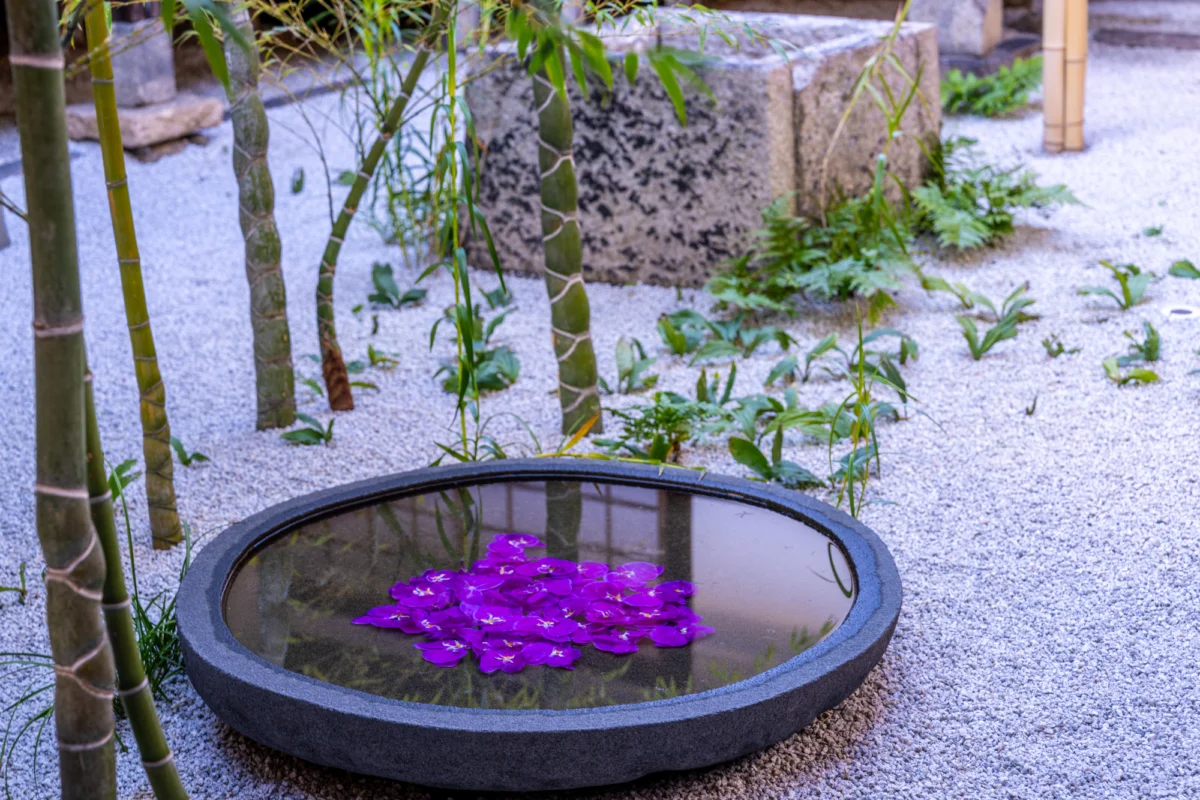
In the quiet, historic corridors of Kyoto’s Higashiyama district, a cultural flashpoint is unfolding. Seiraiin, a sub-temple of the venerable Kenninji—Kyoto’s oldest Zen site—has become the latest battleground in Japan’s ongoing struggle against the consequences of overtourism and the aggressive pursuit of social media clout. Following reports of a ban on kimono-clad visitors, the temple has clarified its position: the restrictions are not a targeted attack on any specific nationality or traditional attire, but a desperate measure to preserve sanctity against the rise of what locals have dubbed “Insta-pests.”
The incident highlights a broader, nationwide crisis. As Japan grapples with a post-pandemic surge in tourism, the delicate balance between cultural preservation and the insatiable demand for "Insta-genic" content has reached a breaking point. From the slopes of Mt. Fuji to the narrow alleys of Gion, businesses and sacred sites are increasingly drawing a hard line in the sand.
A Brief Chronology: From Welcomed Guests to "Insta-Pests"
The story of Seiraiin is one of high hopes meeting modern-day reality. For years, the sub-temple remained closed to the public, functioning in its traditional, quiet capacity. In 2024, the temple doors were finally thrown open to celebrate the 750th memorial of Rankei Dōryū, a renowned Chinese Zen master who played a pivotal role in establishing authentic Chan/Zen practices within Japan.
To honor the occasion, the temple’s abbot commissioned an ambitious artistic centerpiece: a massive white-dragon ceiling painting titled Hakuryū-zu. The work, donated by celebrated Chinese visual artist Chen Man, was an immediate success. It became a social media sensation, drawing thousands to the temple’s Instagram page and physical grounds.
However, the transition from “sacred site” to “tourist hotspot” proved jarring. Within months of opening, the temple found its serene environment disrupted by a new breed of visitor: the influencer. These individuals, often more concerned with securing the perfect, professionally-styled portrait than appreciating the spiritual significance of the space, began to overwhelm the staff.
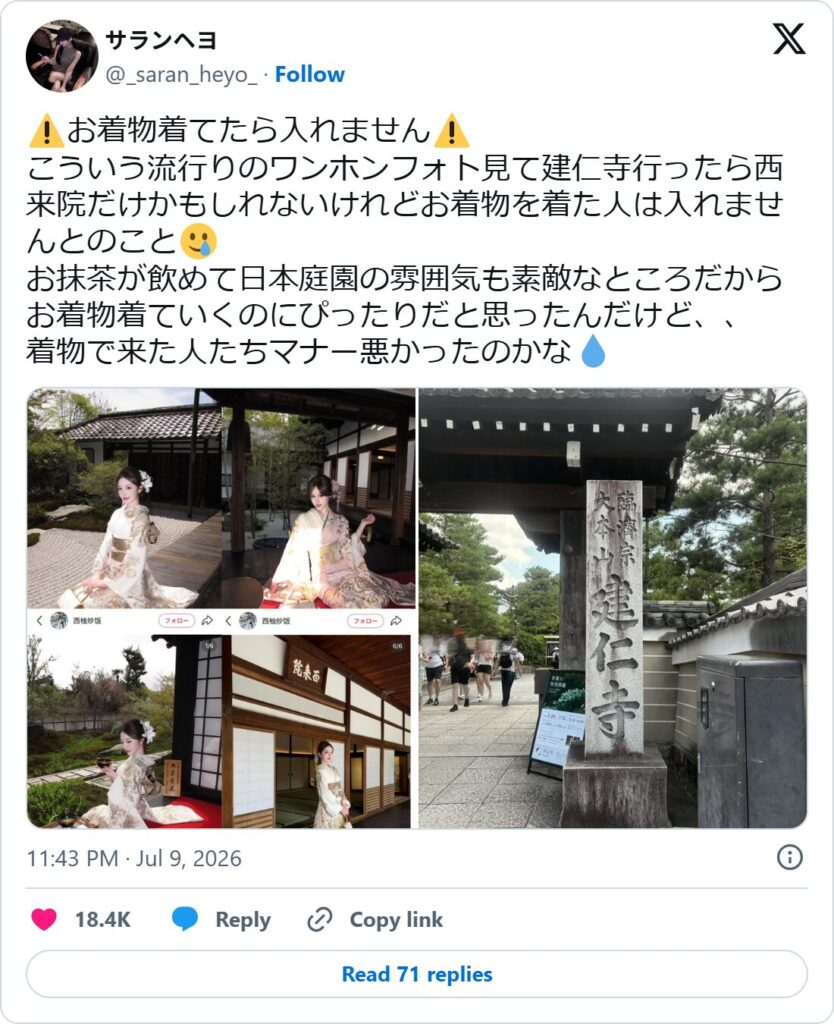
The breaking point was captured by a user on X (formerly Twitter) under the handle @_saranheyo. The user shared a photograph of a sign at the temple’s gate, which explicitly stated that entry was denied to those wearing kimono. The post ignited an immediate firestorm of debate, with many users initially pointing fingers at Chinese influencers, who are often associated with the wanghong aesthetic—a style characterized by heavy makeup, elaborate traditional dress, and meticulously staged photography at cultural landmarks.
The Cultural Anatomy of the Backlash
The initial outrage on Japanese social media was swift and, in some cases, xenophobic. Commenters were quick to blame foreign tourists for the degradation of Japanese manners. The term wanghong became a shorthand for perceived disruption. However, as the conversation evolved, the narrative shifted. It became clear that the issue was not the kimono itself, nor was it solely the fault of international visitors.
As subsequent reports emerged, it was revealed that Seiraiin’s policy was far more nuanced than a blanket ban on traditional Japanese dress. The temple clarified that everyday, authentic kimono wearers are welcome. The true target of the restriction is the performative, “flashy” attire often associated with professional shoots—including excessive accessories and, tellingly, Lolita fashion or other costumes that turn a place of worship into a studio set.
This realization sparked a broader internal reflection in Japan. Users began to acknowledge that domestic influencers are just as guilty of “Insta-pest” behavior as their international counterparts. The term insuta-bae—originally coined as a positive buzzword for “Insta-genic” in 2017—has been repurposed with a sinister twist: insuta-hae, where the kanji for "fly" or "pest" replaces the original. This linguistic shift reflects a profound cultural fatigue with the digital obsession that prioritizes aesthetics over the dignity of the physical space.
Supporting Data: A Nation at a Tipping Point
Seiraiin is far from an isolated case. The “Insta-pest” phenomenon has become a recurring theme in reports of local frustration across the archipelago. The economic benefits of tourism, which were once the primary goal for many Japanese businesses, are now being weighed against the hidden costs of operational disruption.
- Nara’s Record Shop: Django Record, a small business in Nara, reported that groups of influencers would visit multiple times to take photos for their feeds, occupying space and distracting staff without ever making a purchase. The owner reached out to legal platforms to ask if they could legally evict these individuals, illustrating the extent to which small businesses feel besieged.
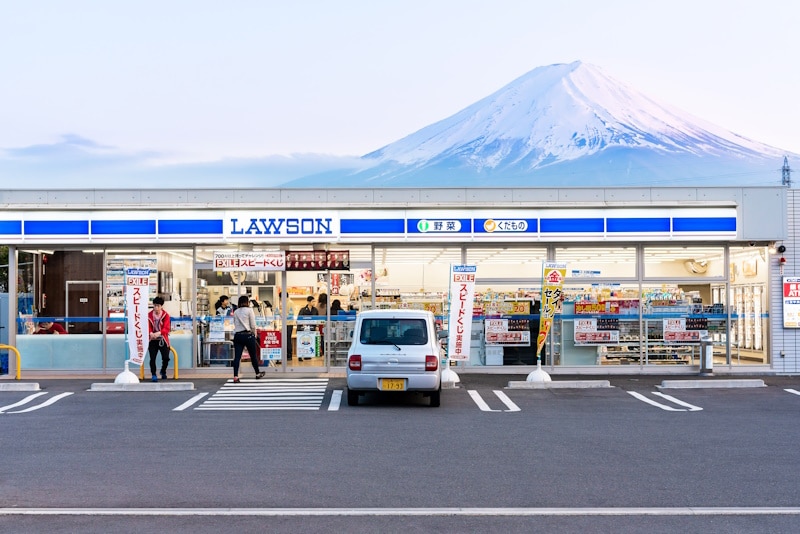
- The Mt. Fuji Lawson: The convenience store in Fujikawaguchiko became an international cautionary tale after thousands of tourists flocked to the site to snap a specific angle of the store framed against the mountain, leading to littering, traffic violations, and general chaos.
- The "Slam Dunk" Crossing: In Kamakura, the rail crossing made famous by the anime Slam Dunk has seen such extreme overcrowding that local authorities have had to implement aggressive crowd control measures to prevent accidents.
- The Gion Fines: In Kyoto’s historic geisha district, the local government has gone as far as issuing fines for trespassing into private residential areas, as tourists chased down geisha and maiko for photos, treating human beings like zoo exhibits.
These incidents are not limited to tourism. Domestic creators have also faced severe backlash. The YouTuber group Comdot, once the darlings of the Japanese internet, saw a massive exodus of approximately 300,000 subscribers in 2023 after being exposed for hosting loud, late-night filming sessions in a residential apartment building. Despite apologies, the incident permanently damaged their reputation, proving that the Japanese public has little tolerance for those who treat communal spaces as their private playground.
Official Responses and Legal Context
The question remains: what rights do business owners have to restrict access to their property? In Japan, the law is complex. While public businesses are generally open to all, owners maintain a degree of autonomy in setting rules for conduct.
The legal concept of shōzō-ken (portrait rights), grounded in Article 13 of the Japanese Constitution, protects an individual’s right not to be photographed without consent. This is the cornerstone of many “no photography” policies in establishments like the historic Bar Lupin in Ginza, which prohibits non-consensual photography to protect the privacy of its patrons.
However, for a temple like Seiraiin, the issue is not just privacy—it is the physical and spiritual integrity of the site. When influencers knock over gates, damage tatami mats, or block the paths of genuine worshippers, they move from being “customers” to being a liability. Legal experts note that while businesses should weigh the benefits of potential “free advertising” against the inconvenience, they are well within their rights to deny service to those who disrupt their operations.
The Implications: Moving Toward a Sustainable Future
The situation at Seiraiin serves as a microcosm for the struggle of modern Japan. As the country continues to promote itself as a premier global tourist destination, it is simultaneously forced to develop a protective wall around its most precious assets.
The “kimono ban” is a misnomer, but the sentiment behind it is a warning. It is an expression of a society that is no longer willing to trade its tranquility for viral clout. The temple continues to welcome visitors—it explicitly invites people to lie down on the tatami mats to appreciate the white dragon ceiling—but it expects them to do so with the reverence the space demands.
For influencers and tourists alike, the message is becoming increasingly clear: the era of unchecked “Insta-genic” entitlement is coming to a close. Whether it is through restrictive signage, outright bans on photography, or increased policing of public areas, Japan is reclaiming its spaces.
Ultimately, the backlash against “Insta-pests” is not about excluding people; it is about protecting the sanctity of the experience. It is a reminder that when we visit a place—whether a historic temple in Kyoto or a local neighborhood—we are guests, not the main characters. To continue to enjoy these sites, visitors must move beyond the lens and begin to respect the people, the privacy, and the profound silence that these locations were designed to preserve. The future of tourism in Japan depends on this fundamental shift: from looking through a screen to looking with one’s own eyes.