Nila Kartika Wati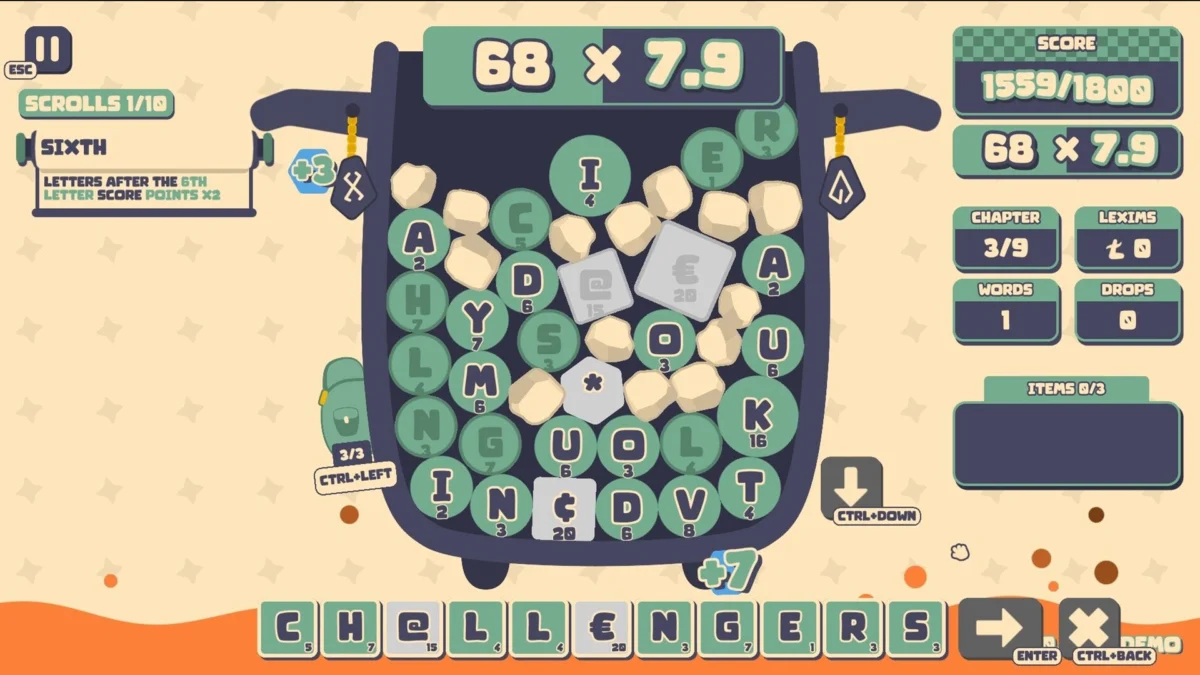
In the volatile landscape of modern independent gaming, success often breeds imitation. We have watched the "Vampire Survivors" effect ripple through the industry, followed by the frantic, high-stakes atmosphere of "Lethal Company" and the grimy, calculated tension of "Buckshot Roulette." Most recently, the poker-themed roguelike "Balatro" has dominated the discourse, spawning a sub-genre of games that attempt to capture the "just one more run" dopamine loop of deck-building.
However, developer MrEliptik has taken this blueprint and stripped away the chips and cards, replacing them with something far more cerebral: the alphabet. The result is Lexispell, a physics-based, word-crafting roguelike that demands both the linguistic dexterity of a Scrabble grandmaster and the spatial awareness of a puzzle game aficionado.
The Core Concept: Where Lexicography Meets Roguelike
At its most fundamental level, Lexispell positions the player as a fledgling witch brewing volatile concoctions. The mechanics are a clever synthesis of two distinct genres: the physics-based merging seen in titles like Suika Game and the high-score-chasing strategy of a modern roguelike.
Players are presented with a cauldron—a confined container—into which they drop letters. The physics engine dictates how these letters tumble, bounce, and settle against one another. If two identical letters collide, they fuse, creating a higher-tier character with increased point value. The objective is to extract words from this chaotic soup of characters, with the scoring system rewarding both the rarity of the letters used and the length of the words formed.
Unlike traditional word games that provide a static grid, Lexispell forces you to contend with gravity. A well-placed ‘Z’ might be buried by a cascade of ‘E’s, forcing the player to strategize not just about their vocabulary, but about their board management.
A Chronology of the "Word-Roguelike" Evolution
To understand the significance of Lexispell, one must look at the evolution of the word-game genre. For decades, the genre was defined by static, turn-based experiences like Boggle or Bookworm. The advent of Wordle in 2021 proved that a simple, daily linguistic challenge could capture the global zeitgeist.
However, Wordle lacked the "run" structure of the roguelike. The emergence of games like Balatro provided a framework for exponential growth—where a player starts with meager resources and, through strategic choices, builds a "synergy engine" capable of astronomical scores.
- The Early Phase: Word games remained largely solitary or competitive-multiplayer puzzles with little persistence.
- The "Balatro" Catalyst: The massive success of poker-based roguelikes proved that players were hungry for "run-based" progression systems where every decision—which card to buy, which to discard—felt consequential.
- The Lexispell Shift: MrEliptik’s project marks a pivot point. By integrating physics (the cauldron) and "Scrolls" (the roguelike upgrades), Lexispell shifts the burden from pure vocabulary knowledge to tactical resource management.
The Mechanics of Mastery: Scoring and Synergy
The depth of Lexispell lies in its "Scroll" system. Much like the Joker cards in Balatro, these items provide the permanent or conditional buffs necessary to push through increasingly difficult rounds.
The Math of the Word
Scoring in Lexispell is non-linear. Every word is subject to:
- Base Value: The sum of the individual letter values.
- Multiplier: Calculated based on the length of the word.
- Anadrome Bonuses: A sophisticated nod to linguistic enthusiasts, where words that become different words when reversed (e.g., "STAB" and "BATS") trigger significant point surges.
The Strategic Scrolls
Players can purchase scrolls between rounds. These function as the "build" of the run. A player might prioritize "Symmetry Scrolls," which grant bonuses for palindromic letter patterns, or "Gravity Wells" that manipulate how letters fall into the cauldron. The synergy between these scrolls and the physical layout of the cauldron creates a tactical layer that keeps the gameplay loop fresh.
The "Dark Souls of Wordle": Is the Comparison Justified?
The phrase "the Dark Souls of [X]" has become a tired trope in gaming journalism, yet in the case of Lexispell, it touches upon a genuine truth regarding the game’s difficulty curve. Unlike Wordle, which gives the player six chances to guess a single hidden word, Lexispell requires the player to manage a volatile board under time pressure.
When you are staring at a cauldron filled with an awkward assortment of consonants, desperately hunting for a word that will save your run, the tension is palpable. The game doesn’t just test your knowledge of the English language; it tests your ability to maintain composure while the physics engine threatens to bury your best letters at the bottom of the pile. It is "punishing" in the sense that a single poor placement can snowball into a failed run, much like a poorly timed dodge in a FromSoftware title.
Supporting Data: The Rise of "Cozy-Hard" Games
Lexispell sits at the intersection of two booming market trends: the "Cozy Game" aesthetic and the "High-Difficulty Roguelike" gameplay loop. According to recent Steam analytics, games that combine relaxing, tactile interactions (like dropping letters into a cauldron) with high-stakes, "one more try" mechanics see higher player retention rates than those that rely on pure twitch reflexes or static puzzles.
The accessibility of the word-game genre provides a low barrier to entry, while the roguelike progression provides a high ceiling for mastery. This creates a "sticky" gameplay loop that appeals to both casual word-puzzle enthusiasts and hardcore optimization gamers.
Official Developer Stance and Community Feedback
MrEliptik, the developer behind Lexispell, has framed the project as an exploration of "linguistic entropy." In developer logs, they have emphasized that the game is intended to be a sandbox of sorts. "The goal wasn’t just to make a word game," the developer noted. "The goal was to make a game where the letters themselves behave like physical entities with personality."
Early community reception on platforms like Reddit and the Steam forums has been largely positive, though a common critique is the steep learning curve. Players have noted that the "Scroll" system can be overwhelming for those who aren’t used to the exponential math often found in deck-building games. However, the developer has been responsive, pushing updates to balance the score multipliers and refine the physics interactions.
Implications: The Future of the Genre
The success of Lexispell suggests that the roguelike format is far more versatile than many initially thought. By moving away from the traditional tropes of combat—swords, guns, and magic—and into the realm of abstract systems like poker, language, or even logistics, developers are finding new ways to keep the "run-based" genre feeling fresh.
What This Means for Future Developers:
- Genre Blending is Key: The next wave of successful indies will likely continue to fuse disparate genres (e.g., physics + vocabulary, horror + deck-building).
- Accessibility vs. Depth: Lexispell proves that you can make a game that is easy to understand ("spell words from letters") but difficult to master ("manage a physics-based cauldron while optimizing for exponential scores").
- The "Slow Burn" Appeal: While many modern games chase the high-octane thrill of battle royales, there is a clear, underserved market for games that prioritize thoughtful, methodical decision-making.
Conclusion: A Worthy Addition to Your Library
Lexispell is more than just a "Wordle" clone with a physics skin. It is a robust, well-considered puzzle-roguelike that demands a different kind of mental agility. While it may not offer the same visceral satisfaction as conquering a boss in a traditional roguelike, it offers something arguably more rewarding: the satisfaction of finding that one perfect word that turns a failing run into a legendary score.
For those who enjoy the "Balatro" formula but are looking to trade in their poker chips for a dictionary, Lexispell is a mandatory experience. It is clever, it is challenging, and most importantly, it treats the English language with the same respect—and the same reckless abandonment—that it treats its own physics engine. You can find it on Steam now, provided you have the vocabulary to back up your ambition.
Whether you are a seasoned gamer looking for your next addiction or a casual fan of daily word puzzles, Lexispell offers a unique, chaotic, and deeply rewarding experience that proves the pen—and the cauldron—is indeed mightier than the sword.


 Asro
Asro
 Muslim