Evan Lee Salim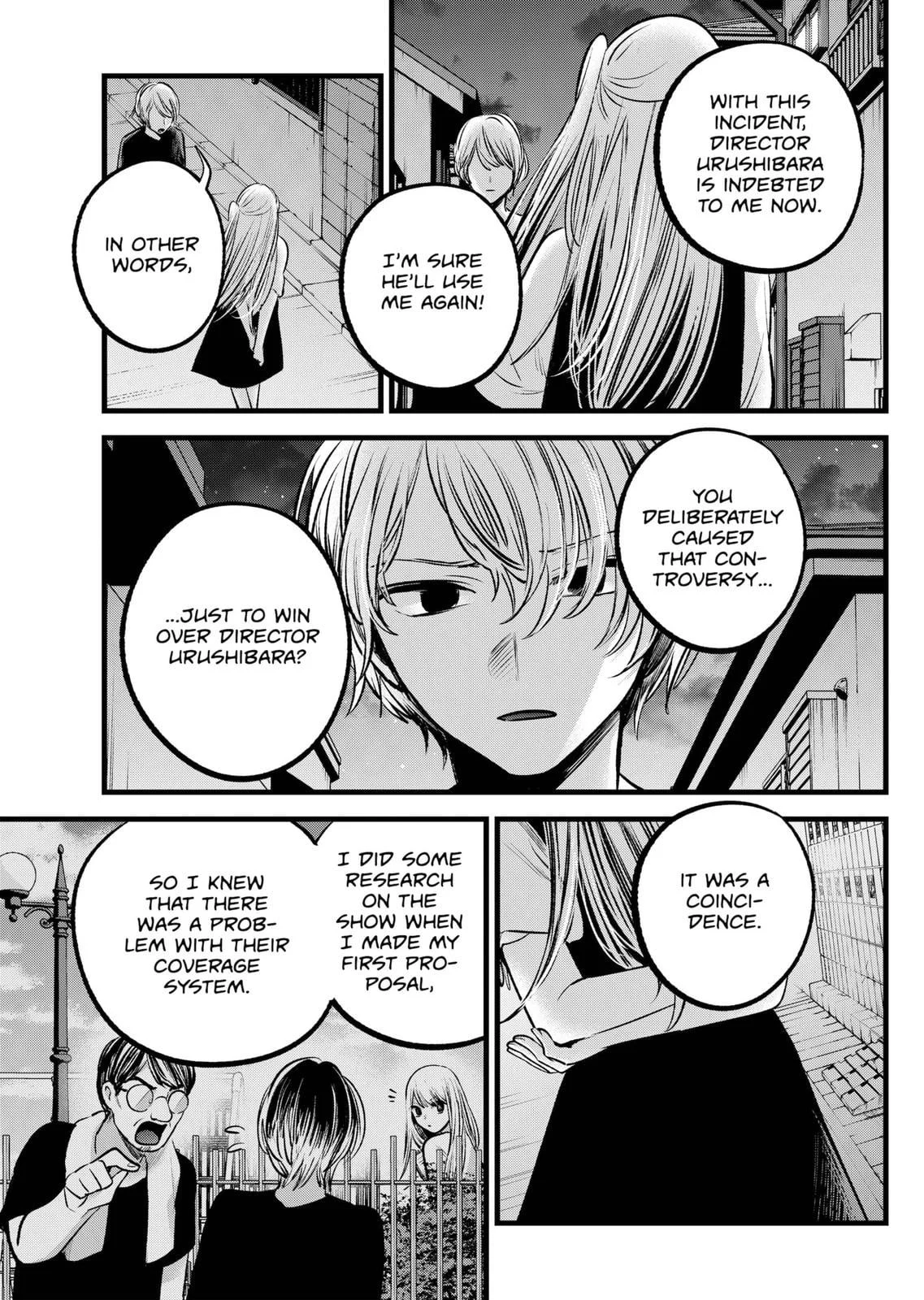
The long-standing tension between anime fans and English-language localization houses has reached a new boiling point following the release of Oshi no Ko Season 3. At the center of the controversy is Sentai Filmworks, the studio responsible for the English subtitles and distribution. Critics and viewers alike are accusing the localization team of intentionally overwriting the original Japanese creative vision to include modern Western social media buzzwords—specifically the term "cancel culture"—at the expense of the author’s original metaphors.
This development comes during a period of heightened scrutiny for the localization industry. As advancements in Artificial Intelligence (AI) offer the potential for more literal, cost-effective translations, human localizers are under increasing pressure to prove their value. However, instances where scripts are perceived to be "politicized" or "modernized" with fleeting slang often have the opposite effect, fueling a growing demand for "purist" translations that adhere strictly to the source material.

Main Facts: The Discrepancy Between Page and Screen
The controversy stems from two specific instances in the third season of Oshi no Ko, an anime based on the critically acclaimed manga written by Aka Akasaka (Kaguya-sama: Love is War) and illustrated by Mengo Yokoyari (Scum’s Wish). The series is celebrated for its unflinching, cynical look at the Japanese entertainment industry, touching on topics like idol culture, cyberbullying, and the manipulative nature of reality television.
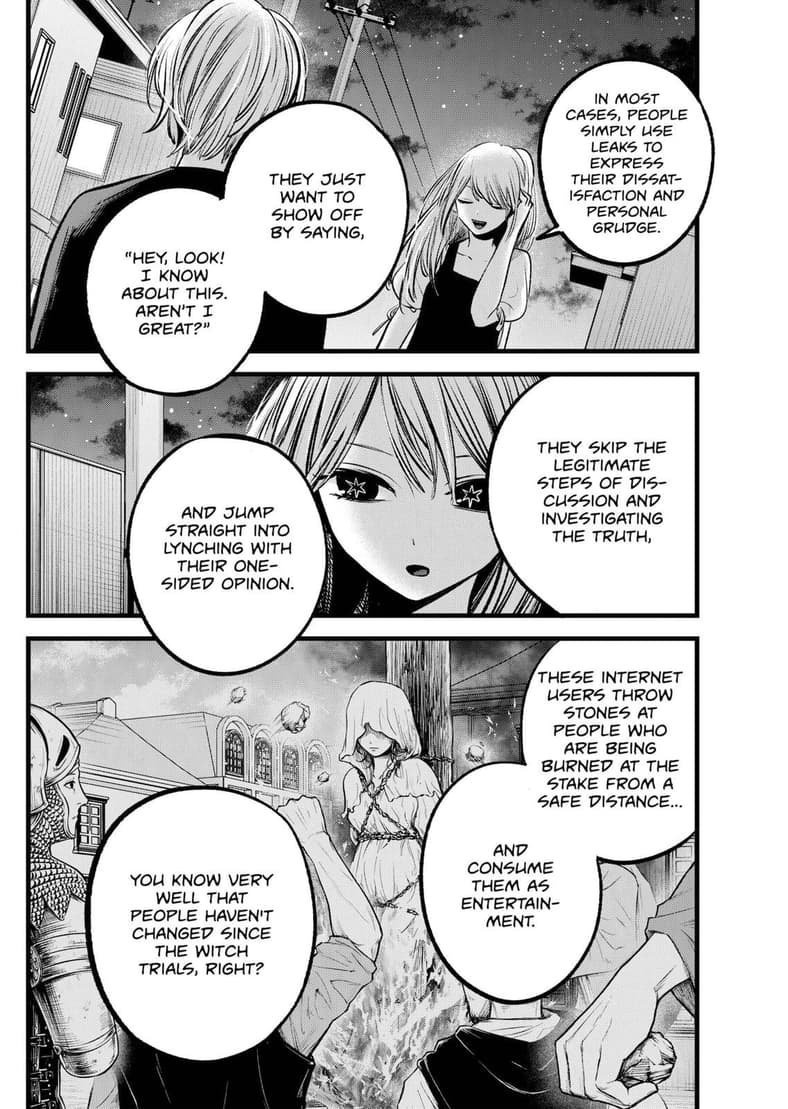
In Episode 4, titled "Blind," the character Ruby Hoshino discusses the mechanics of online lynch mobs. In the original Japanese manga (Chapter 93, "Leak"), Akasaka utilizes a visceral, timeless metaphor: "These internet users throw stones at people who are being burned at the stake from a safe distance and consume them as entertainment." This imagery evokes the historical cruelty of public executions, suggesting a primal, mob-like bloodlust.
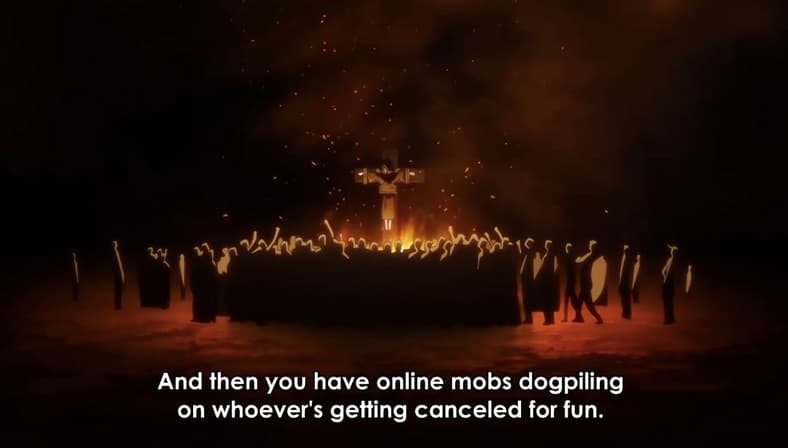
However, the Sentai Filmworks localization replaces this imagery with modern colloquialisms. The subtitle reads: "And then you have online mobs dogpiling on whoever’s getting canceled for fun."

A similar shift occurs in Episode 5, "Casting," regarding the character Mimi Yoshizumi, a Vtuber facing a career-ending scandal. In the manga, her brother Shun states, "She was obviously butchered online, so she had no choice but to suspend her activities." The English localization for the anime changes this to: "Naturally, she got mega-cancelled and has to stop streaming for a while!"
Chronology of a Growing Divide
To understand the weight of this controversy, one must look at the timeline of Oshi no Ko’s publication and the subsequent localization trends that shaped the current landscape.
- 2020–2022: The Oshi no Ko manga begins serialization in Weekly Young Jump. Chapters 93 and 99, which deal with the "Dig Deep" arc and the Vtubing scandal, are published in 2022. Fans praised the series for its nuanced take on "enjou" (the Japanese term for social media "flaming" or "burning").
- 2023–2024: The first two seasons of the anime adaptation by Doga Kobo become global hits. During this time, several other high-profile localization controversies emerge, such as Netflix’s Blue Box, where the term "feminine" was reportedly changed to "feminist" in the English script, sparking accusations of ideological tampering.
- 2025–2026: As Season 3 of Oshi no Ko enters production and subsequent release, the "localization vs. translation" debate becomes a focal point of the anime community. The rise of "fan-subs" (unauthorized translations by fans) begins to see a resurgence as viewers seek alternatives to official platforms like HIDIVE (Sentai’s streaming service).
- Present: The release of Episodes 4 and 5 of Season 3 triggers a viral backlash on social media platforms like X (formerly Twitter) and Reddit. Side-by-side comparisons of the manga panels and the anime subtitles become the catalyst for a broader discussion on the "death of the author" in translation.
Supporting Data: Linguistic Fidelity vs. Cultural Adaptation
The core of the argument against Sentai Filmworks lies in the linguistic difference between the Japanese term enjou and the English term "cancel culture."

In Japanese media, enjou (literally "flaming" or "blazing up") refers to a sudden burst of criticism or a social media firestorm. While it shares similarities with "canceling," it is often used to describe the phenomenon of the crowd’s reaction rather than a specific social movement or ideological "de-platforming." By using "cancel culture," critics argue that localizers are imposing a specific, Western-centric sociopolitical framework onto a story that is explicitly about the unique pressures of the Japanese idol and Vtubing industries.
Furthermore, data from fan communities suggests that the use of "slang" in localization leads to rapid dating of the material. A study of early 2000s localizations that used then-current slang (such as "radical" or "pwned") shows that those translations are now viewed as "cringe-worthy" by modern audiences. By using "mega-cancelled," Sentai risks making Oshi no Ko—a series that aims for a gritty, timeless critique of fame—feel like a product of a very specific, and potentially brief, era of the 2020s.
Official Responses and Industry Standards
As of this report, Sentai Filmworks has not issued a formal statement regarding the specific dialogue choices in Oshi no Ko Season 3. Historically, localization houses have defended "liberal" translations by citing the need to make the content "accessible" or "relatable" to a domestic audience.
Professional localizers often argue that a "word-for-word" translation can be dry and fail to capture the flavor of the dialogue. They contend that their job is to translate the intent rather than just the words. In this view, "cancel culture" is seen as the closest cultural equivalent to the Japanese experience of online ostracization, even if it sacrifices the specific metaphors used by the author.
However, this "intent-based" approach is increasingly coming into conflict with the creator-centric view held by many fans. The sentiment among the "anti-localization" movement is that if an author like Aka Akasaka chose the metaphor of "burning at the stake," it is the localizer’s duty to preserve that specific imagery, as it reflects the author’s unique voice and the cultural context of the work.
Implications: The Future of the Medium
The controversy surrounding Oshi no Ko has several long-term implications for the anime industry and its global consumption.
1. The Rise of AI and Automation
The more localizers are perceived as "activists" or "editors" rather than translators, the more the industry moves toward AI-driven solutions. Several Japanese publishers have already begun experimenting with AI translation tools that prioritize literal accuracy over cultural adaptation. If fans feel that human localizers are "corrupting" the source material, the pushback against AI in the creative arts may weaken in the niche of translation.
2. Cultural Homogenization
By replacing unique Japanese metaphors with Western social media terminology, there is a risk of cultural homogenization. Anime is often celebrated for its "otherness"—its ability to provide a window into a different cultural perspective. When that perspective is filtered through the lens of Western "cancel culture" or "identity politics," the medium loses some of its educational and cultural value.
3. Fracturing of the Fanbase
The divide between those who prioritize "readability" and those who prioritize "fidelity" is widening. This has led to a fractured market where official releases are often viewed with skepticism. If official distributors like Sentai Filmworks and HIDIVE lose the trust of the "core" anime audience, it could lead to a decline in subscriptions and a return to the "piracy era" of the early 2000s, where fans turned to unofficial sources to get the "unfiltered" version of their favorite shows.
4. Impact on the Creative Process
Finally, there is the question of the creators’ rights. While authors like Aka Akasaka rarely have direct control over the English subtitles of their work, the "localization" process can significantly alter how a character is perceived globally. If a character like Ruby Hoshino is made to sound like a Western social media influencer rather than a calculated, Japanese "revenge-driven" idol, the nuances of her character arc may be lost on an entire segment of the global audience.
Conclusion
The Oshi no Ko localization controversy is more than just a dispute over a few lines of dialogue; it is a battle for the soul of international media exchange. As the entertainment world becomes more interconnected, the responsibility of the translator has never been greater. Whether Sentai Filmworks and other industry leaders will heed the calls for greater fidelity to the source material remains to be seen. For now, the "burning at the stake" metaphor remains a haunting reminder of the original text—a text that many fans feel has been "canceled" by the very people hired to share it with the world.


 Ali Ikhwan
 Lina Irawan