


In the digital-first era, the question "Is social media worth the investment?" is no longer a matter of opinion—it is a data-driven imperative. With nearly 5.75 billion users projected to be on social media globally by 2026, the platforms have evolved from simple engagement channels into sophisticated revenue-generating engines. However, despite this growth, a staggering 68% of marketers express significant concern over their ability to prove the Return on Investment (ROI) of their social efforts to stakeholders.
To thrive in today’s competitive landscape, businesses must move beyond vanity metrics and adopt a rigorous, multi-faceted approach to calculating and communicating the true value of their social media presence.

The Evolution of the ROI Formula
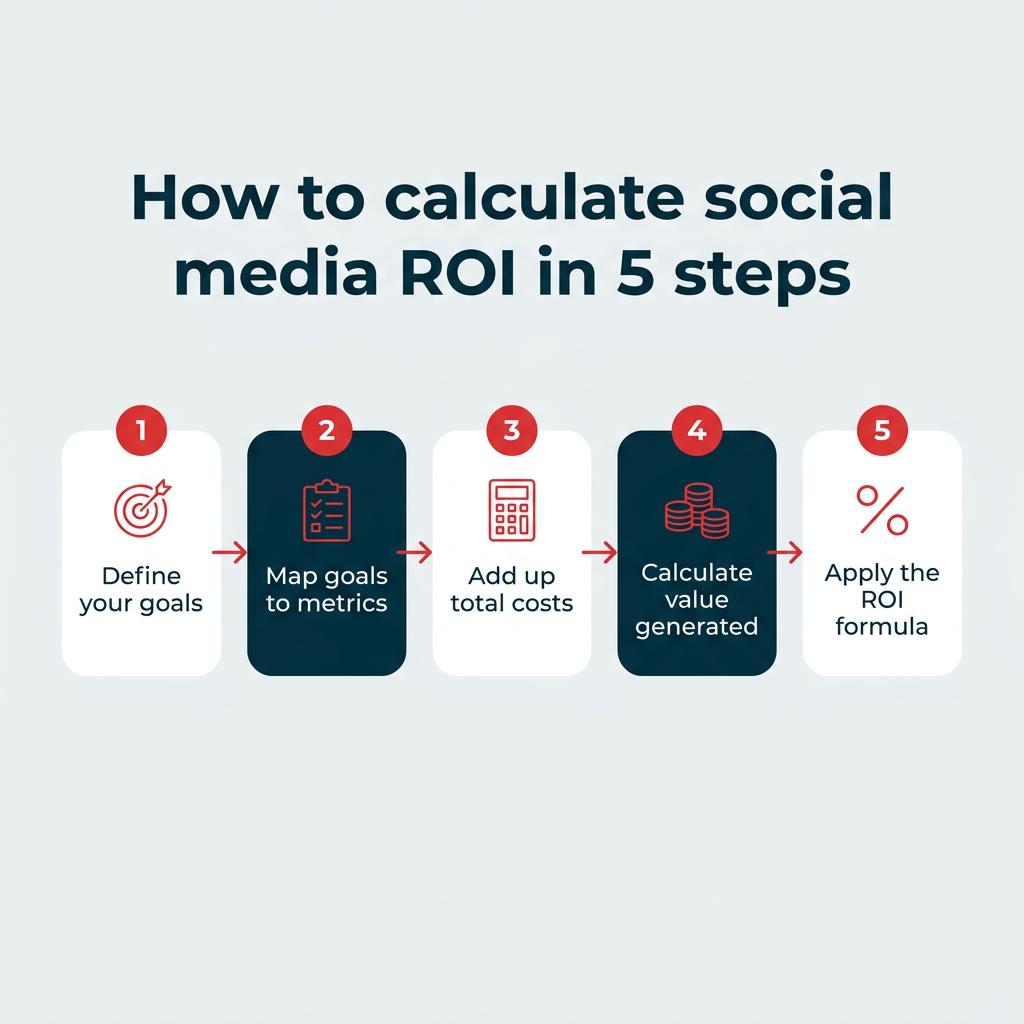
The traditional definition of ROI is a straightforward mathematical exercise: ((Value Generated – Costs) / Costs) x 100. While this formula remains the bedrock of financial analysis, the complexity of the modern customer journey has rendered "simple" revenue attribution insufficient.
Social media rarely operates in a vacuum. A user may encounter a brand on Instagram, research the company on LinkedIn, and eventually convert through an email link or paid search ad. If a business relies solely on "last-click" attribution, social media is frequently undervalued. Modern marketing teams are now shifting toward multi-touch attribution models, which grant social media the "assisted conversion" credit it deserves for its role in the top and middle of the sales funnel.

The Multi-Dimensional Nature of Value
To capture the full picture, organizations must categorize their social media returns into two distinct buckets: monetary and non-monetary.
Monetary Value
- Direct Sales: Revenue generated through social commerce tools or tracked via UTM parameters.
- Lead Generation: The dollar value of leads acquired through social-driven landing pages.
- Cost Savings: Reductions in customer support expenses due to automated social messaging or community-led support.
Non-Monetary Value (The Proxy Strategy)
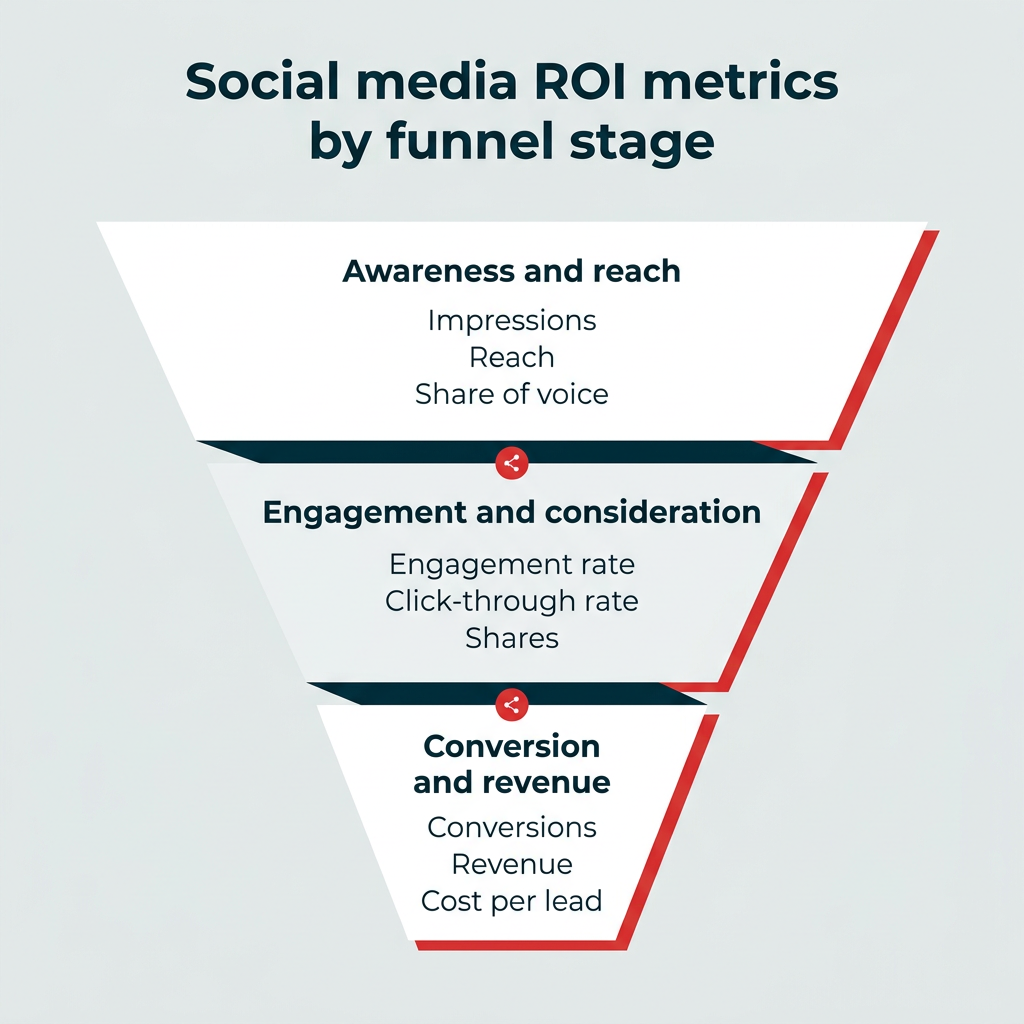
Brand awareness, sentiment, and share-of-voice are notoriously difficult to quantify. To solve this, savvy marketers assign "proxy values." By calculating the Customer Lifetime Value (CLV) of an engaged follower or the cost-per-click (CPC) equivalent of organic reach, teams can fold qualitative brand health indicators into the quantitative ROI formula.

Chronology of an ROI-Driven Campaign
For social media efforts to be measurable, they must be planned with precision. The following cycle defines the life of a high-performing social campaign:
- Strategic Alignment: Before a single post goes live, teams must define specific goals. Are you driving short-term revenue, or are you building long-term brand equity?
- Infrastructure Setup: Implementing UTM parameters and tracking pixels at the start of a campaign is non-negotiable. Without these, the "last-click" problem becomes an insurmountable roadblock.
- The Execution Phase: During the campaign, real-time analytics allow for agile adjustments. If data shows that Instagram Reels are underperforming compared to carousels, the strategy is adjusted mid-flight.
- Reporting and Attribution: At the conclusion of a reporting period (typically quarterly), data from native platform dashboards, Google Analytics, and CRM systems are synthesized into a unified view.
- Executive Synthesis: The final report translates technical data into business-language outcomes, emphasizing how the campaign moved the needle on core company KPIs.
Supporting Data and Market Trends
The case for social media investment is backed by significant market momentum. According to Statista, the social commerce market is expected to reach $908.5 billion in 2026, marking a 10.7% year-over-year increase. Furthermore, projections suggest that social-driven purchases will surpass the $1 trillion mark by 2028.
This trend underscores why enterprise-level organizations are increasingly prioritizing social media in their annual budgets. Data from industry reports consistently show that 46% of marketers believe social media is a primary driver of sales improvement. When these findings are presented alongside internal conversion data, the "soft" nature of social media marketing disappears, replaced by concrete evidence of bottom-line growth.
The Roadblocks to Accurate Measurement
Why is ROI tracking still a point of friction for so many? The hurdles are largely structural:
- Data Silos: Every platform—from TikTok to LinkedIn—maintains its own isolated analytics dashboard. Piecing these together manually is an error-prone task that diverts time from strategy to data entry.
- Delayed Conversions: In B2B and enterprise sectors, the sales cycle can span months. A LinkedIn post viewed in January might not result in a contract signing until April.
- The "Dark Social" Phenomenon: Much of the traffic coming from social media is obscured by privacy settings or direct traffic, making it difficult to attribute specific conversions to the original social touchpoint.
Strategic Implications: How to Improve Your ROI
Once the baseline ROI is established, the goal shifts to optimization. The most effective way to improve ROI is through relentless experimentation.
A/B Testing as a Growth Lever
Experimentation is the heartbeat of modern social strategy. By testing variables—such as headlines, creative formats, or posting times—marketers can systematically increase their efficiency. For example, testing the efficacy of long-form video against short-form clips can reveal which format drives a higher conversion rate, allowing the team to allocate budget toward the winning format.
Competitor Benchmarking
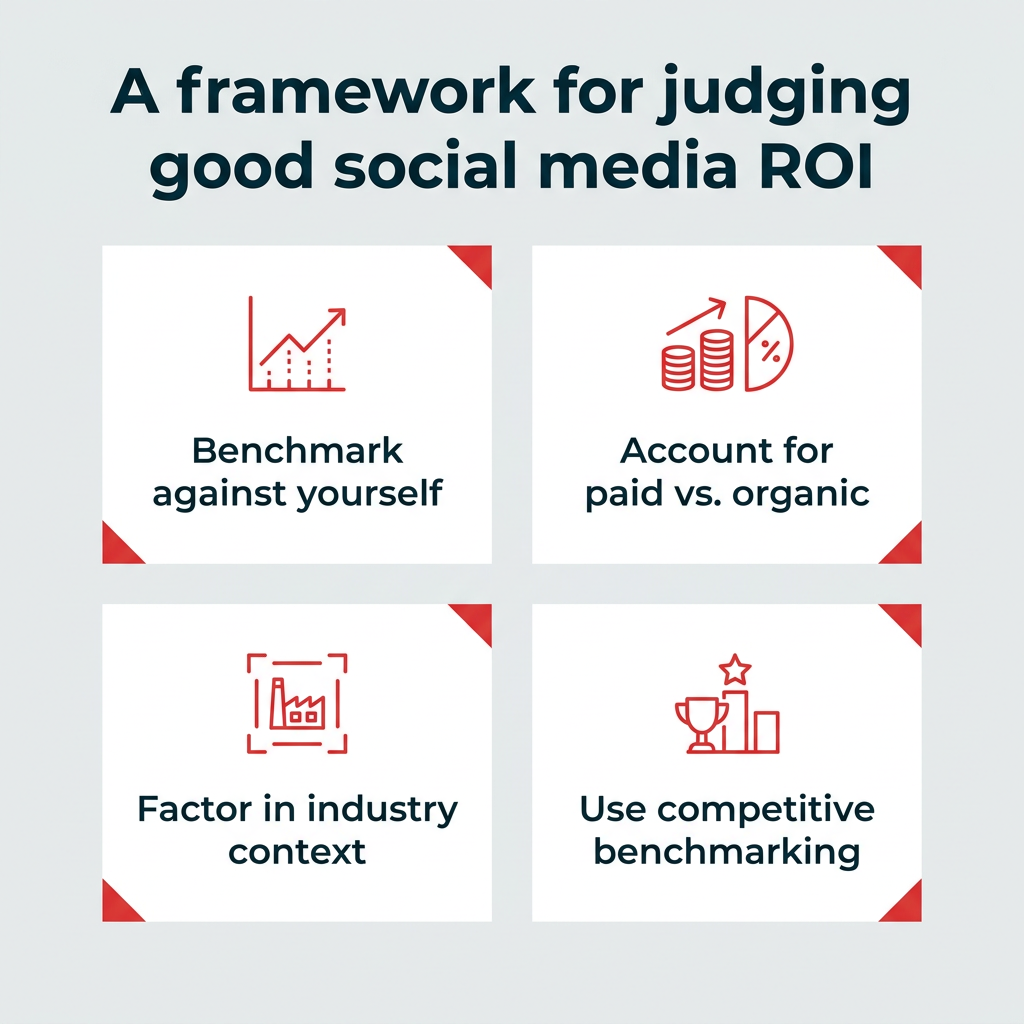
Because social media is a public forum, it is a treasure trove of competitive intelligence. Advanced analytics platforms, such as Hootsuite’s suite of tools, allow marketers to track the performance of up to 20 competitors simultaneously. By analyzing which hashtags, posting times, and content themes are working for industry rivals, brands can benchmark their own performance and identify gaps in their strategy.
The Role of Social Commerce
For e-commerce brands, the most direct path to high ROI is the reduction of friction. Social commerce tools allow users to discover, research, and purchase a product without ever leaving the social app. This "closed-loop" measurement provides the cleanest data available, as the entire conversion journey happens within a single ecosystem.

Leveraging Unified Technology
To overcome data silos, enterprise-level teams are turning to unified management platforms. By integrating social analytics with web analytics (such as Google Analytics or Adobe Analytics) and CRM systems, companies can visualize the entire customer journey in one place.
These integrated dashboards provide:
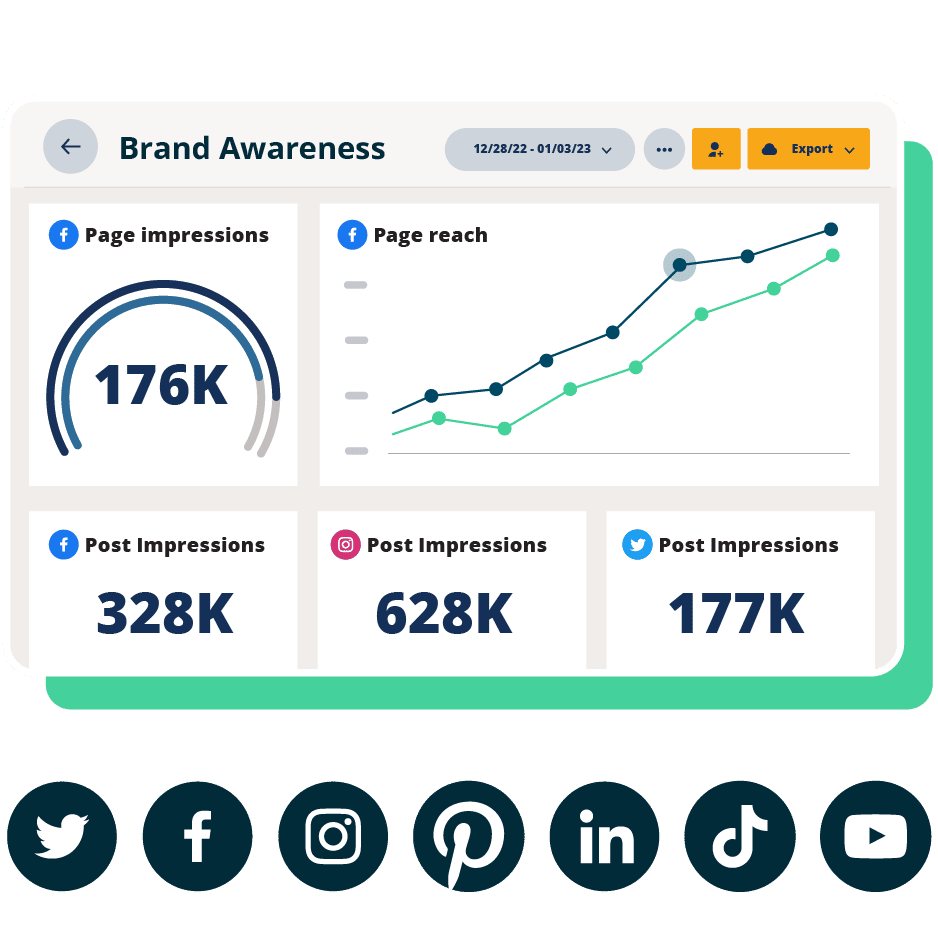
- Cross-Channel Visibility: Seeing performance across all networks on a single screen.
- Real-Time Optimization: The ability to spot a failing campaign before the budget is fully exhausted.
- Automated Reporting: Creating professional, visual reports for stakeholders that connect social activity to revenue, sign-ups, and customer retention.
Conclusion: Speaking the Language of Leadership
The final step in mastering social media ROI is effectively communicating the results. Executive stakeholders are rarely interested in "likes" or "impressions" unless those metrics are directly correlated to business outcomes like reduced Cost-Per-Acquisition (CPA) or increased Customer Lifetime Value (CLV).
To win the support of leadership, social media managers must act as translators, converting the language of engagement into the language of finance. By focusing on consistent reporting, leveraging multi-touch attribution, and tying every social post back to a broader business goal, marketers can transform their social media efforts from a cost center into a sustainable, measurable revenue engine.

As the digital landscape continues to evolve, the brands that succeed will be those that view social media not as an experimental playground, but as a scientific instrument—one that, when used with precision, offers a significant and verifiable return on every dollar invested.











