Siti Muinah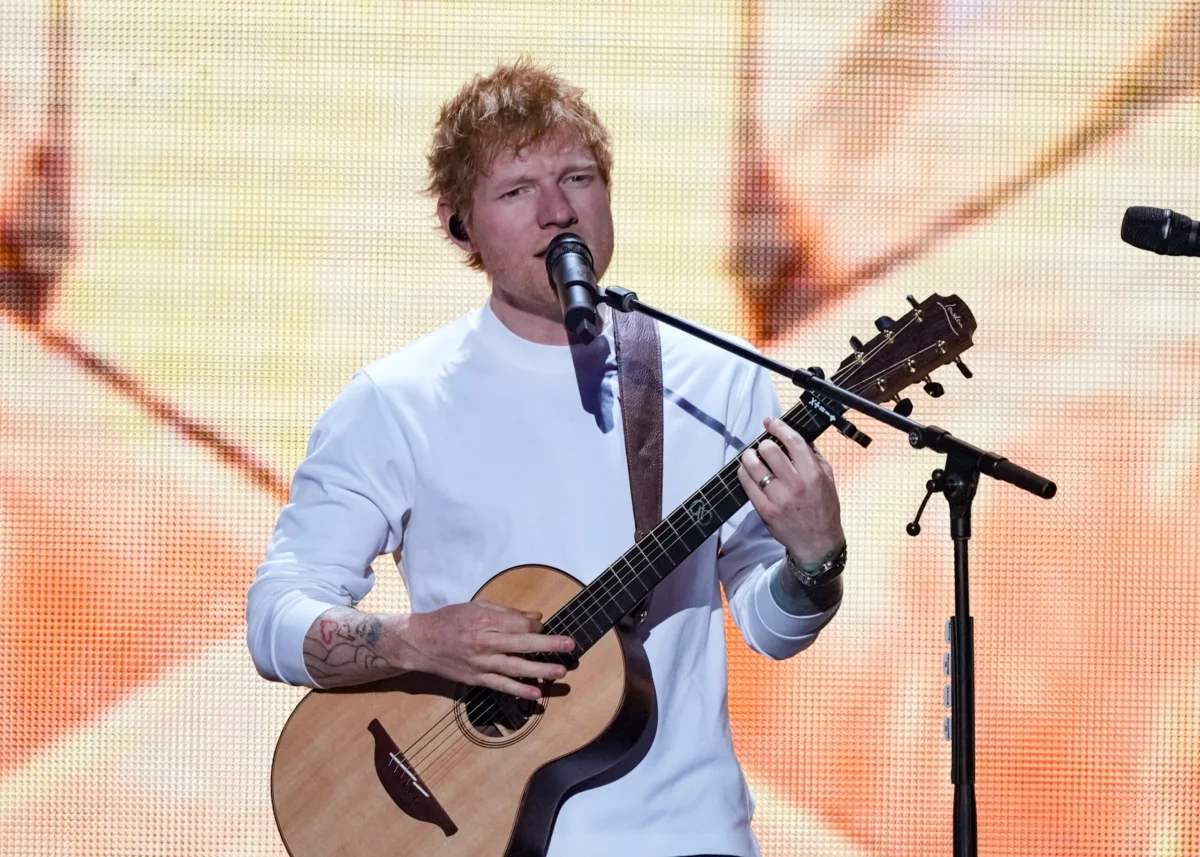
The global music industry is currently grappling with a high-stakes collision between artistic expression, corporate venue management, and the volatile landscape of modern geopolitics. This week, Ed Sheeran—one of the world’s most successful touring artists—stepped onto the stage at Philadelphia’s Lincoln Financial Field to face a situation he never anticipated: navigating the fallout of a tour in disarray following the forced removal of his opening act, Macklemore.
The controversy, which has sent shockwaves through the touring circuit, has forced a reckoning regarding the role of venues in regulating performer content, the responsibilities of headlining artists, and the intersection of political activism with large-scale commercial entertainment.
The Chronology of a Tour in Flux
The trouble began during the first week of September at MetLife Stadium in East Rutherford, New Jersey. Macklemore, known for his politically charged discography, utilized his platform during Sheeran’s Sept. 4 and 5 shows to address the ongoing humanitarian crisis in Gaza and the West Bank.
The rapper’s performance, which included his 2024 protest track "Hind’s Hall" and explicit calls to "free Palestine," drew immediate and intense backlash. Several organizations, most notably the Israeli-American Council, publicly condemned the performance and pressured stakeholders to remove the artist from the remainder of the tour.
The situation escalated rapidly. Shortly after the MetLife dates, the Messina Touring Group (MTG), the promoter responsible for the U.S. leg of the Loop Tour, announced that Macklemore would no longer be participating. The promoter’s justification was logistical and contractual: they claimed that several venues slated for upcoming dates had informed them that they would not permit the concerts to proceed if Macklemore remained on the bill. Faced with the threat of mass tour cancellations that would have impacted hundreds of thousands of fans, the promoter made the executive decision to drop the rapper.
The ripple effect was immediate. Following the removal, a string of supporting acts—including singer-songwriter Aaron Rowe, the Danish band Lukas Graham, the Irish folk group Beoga, and producer/artist Finneas—withdrew from their respective tour commitments in protest. By the time Sheeran took the stage in Philadelphia this past Saturday, he was performing as a solo act, attempting to reconcile his commitment to his fans with the internal turmoil of his own tour.
Ed Sheeran’s Direct Address to the Audience
Saturday’s show at Lincoln Financial Field served as the first public forum for Sheeran to address the controversy directly. In a somber and candid moment before his set, the singer-songwriter opened up about the emotional weight of the past week.
"Before I play some songs tonight, I hope it’s okay if I say a few words about this last week," Sheeran told the capacity crowd. "I’m used to my music being criticized, and I’m always happy to take that because I’m lucky. A lot of you like my stuff, and to be honest, I’m surprised… But this week, the criticism was about something much more important, and I’ve had to take and make difficult decisions, and I am making mistakes, and I’m so so sorry."
Sheeran’s comments were carefully calibrated, balancing his desire to remain a "non-activist" musician with his discomfort regarding the censorship he witnessed. "I don’t want to disappoint fans, and I’ve never wanted to be an activist musician, but this has put me in the middle of an important and passionate argument about freedom of speech and the most complex political issue on the planet," he noted.
Crucially, he emphasized his unease with the precedent set by the venues. "I am deeply worried about the idea that venues pre-approve content for performance," Sheeran stated. "This happens in so many places that I perform around the world, but it should never happen in the free world."
Official Responses and the Conflict of Perspectives
The conflict has essentially created two distinct narratives: one focused on the preservation of the tour and the fan experience, and another centered on the sanctity of artistic freedom.
The Promoter’s Position
Messina Touring Group has maintained a strictly pragmatic stance. By citing the potential for massive cancellations, they framed the removal of Macklemore as a "necessary evil" to ensure the survival of the tour. Their perspective highlights the vulnerability of major touring acts to the policies of stadium owners and management companies, who are ultimately responsible for the safety and operations of their facilities.
Macklemore’s Response
Macklemore, for his part, has remained unrepentant. In a detailed statement following his removal, the rapper confirmed that he and Sheeran held "difficult conversations" regarding the fallout. While he expressed personal respect for the headliner, he pushed back against the culture of neutrality. Macklemore doubled down on his actions, stating he does not regret using his stage time to voice his political convictions. To solidify his stance, the rapper announced a $1 million donation to Palestinian relief organizations, signaling that his activism remains a core component of his professional identity.
Broader Implications: The "Safe Space" Dilemma
The Loop Tour crisis raises profound questions about the nature of a "safe space" in modern entertainment. Sheeran noted that his concerts have always been intended to be spaces of "unity, joy, escapism, and love." However, the events of the past week have challenged the viability of that ideal when confronted with the polarized realities of the outside world.
The Erosion of Artistic Autonomy
The precedent of venues threatening to pull out of events due to a performer’s speech is a chilling development for the live music industry. If venues begin to operate as arbiters of permissible content, it creates a "chilling effect" that could lead to widespread self-censorship among artists. This, as Sheeran noted, is particularly concerning in the context of the "free world."
The Fragility of Touring Logistics
The withdrawal of artists like Finneas and Lukas Graham demonstrates that for many modern musicians, solidarity is an essential component of the industry. These artists have signaled that they are no longer willing to perform under conditions where they feel their colleagues are being silenced for their political views. This creates a significant logistical headache for promoters, who may find it increasingly difficult to curate supporting acts if they cannot guarantee a baseline of creative freedom.
Conclusion: A Turning Point for Live Entertainment
The Loop Tour debacle is unlikely to be an isolated incident. As global tensions continue to influence the cultural sphere, artists, promoters, and venue managers are being forced to define the boundaries of speech in a public setting.
Ed Sheeran finds himself in a difficult position: a global superstar who prioritizes his relationship with his audience, yet finds his carefully curated, apolitical brand disrupted by the urgent demands of global politics. His decision to continue the tour, while simultaneously condemning the act of venue-led censorship, reflects a delicate compromise.
Whether this crisis leads to a shift in how venues handle contractual stipulations regarding performer speech, or whether it signals a deeper divide between artists and corporate stakeholders, remains to be seen. What is clear is that the "business as usual" approach to international touring is undergoing a radical shift, and the industry will be forced to adapt to a reality where the stage is no longer an escape from the world, but an active participant in it.
As the Loop Tour continues its North American run, the focus remains on whether the industry can find a path that honors the diversity of artistic expression while managing the logistical realities of global stadium touring. For now, the events of the past week serve as a sobering reminder of how quickly the intersection of art and politics can reshape the trajectory of even the largest tours in the world.

 Nila Kartika Wati
 Asro
Asro