Ali Ikhwan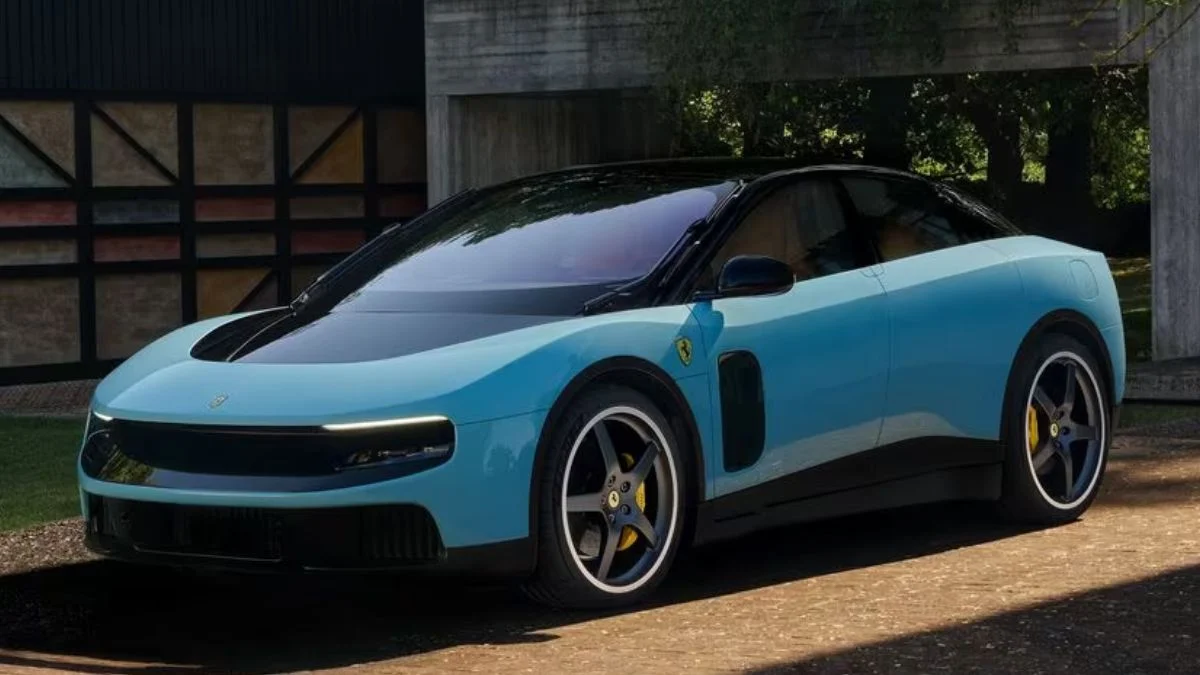
On May 25, the automotive world held its breath as Ferrari unveiled its most ambitious project in decades: the Luce. As the storied Italian manufacturer’s first fully electric vehicle, the Luce was intended to be a watershed moment—a $640,000, quad-motor, 1,113-horsepower declaration that the “Prancing Horse” was ready to lead the charge into the post-combustion era. After five years of clandestine development and high-profile collaboration with legendary designer Jony Ive, the stakes could not have been higher.
CEO Benedetto Vigna stood before the global press, describing the launch as a "very, very important day" for the brand. Yet, as the silk shroud was pulled back, the reaction was not one of awe, but of immediate, profound confusion. Within hours, Ferrari’s stock price—usually a bastion of stability in the luxury sector—suffered a sharp, stinging decline. Analysts, investors, and die-hard tifosi were left asking the same question: Is this still a Ferrari?
The Chronology of a Controversial Launch
The road to the Luce began in 2020, as Ferrari signaled its intent to pivot toward electrification without compromising the "emotional" driving experience the brand is famous for. For five years, the industry speculated on whether the first electric Ferrari would be a supercar, a grand tourer, or a radical new concept.
- May 2020: Ferrari announces a strategic shift toward sustainable technology, emphasizing that electrification will enhance, rather than replace, the thrill of driving.
- 2022: Rumors swirl that Jony Ive, the creative genius behind Apple’s most iconic designs, is working closely with the Maranello design team.
- Early 2025: Teaser campaigns suggest a "new era" for the brand, focusing on "lightness" and "the future of performance."
- May 25, 2025: The official global reveal of the Luce. The specs—1,113 horsepower and a sub-two-second 0-60 time—are world-class, but the design language deviates sharply from every internal combustion predecessor.
- May 26-27, 2025: Market correction begins. Ferrari shares drop as the investment community expresses skepticism over the brand’s identity shift. Social media consensus labels the design "derivative," "generic," and "reminiscent of a household appliance."
The Anatomy of the Design Failure
Markets rarely crater solely because of aesthetics. Investors understand that design is subjective; however, they are highly sensitive to "brand dilution." The failure of the Luce is not that it is electric—Porsche proved with the Taycan that an EV could be an authentic part of a sports car brand’s portfolio—but that it abandons the visual semiotics that define a Ferrari.
The Luce is a liftback sedan. Its silhouette is soft, gentle, and devoid of the aggressive, aerodynamic contours that have characterized Ferrari since the days of Enzo. It was unveiled in a muted, ethereal blue, a far cry from the aggressive Rosso Corsa that serves as the brand’s most recognizable asset. Even the naming convention breaks tradition. While the F40, the 812 Superfast, and the Testarossa announce themselves with authority, "Luce"—the Italian word for "light"—whispers. It feels like a philosophical statement, not a performance machine.
As one market analyst noted, "This is the furthest deviation from the brand’s ethos we have ever seen. It’s not just a change in engine; it’s a change in soul."
Official Responses and Internal Justification
The leadership at Ferrari remains firm in their logic, though they find themselves increasingly isolated. CEO Benedetto Vigna has defended the Luce by arguing that new propulsion technology mandates a "clean slate" design approach.
"The architecture of an electric vehicle is fundamentally different from a combustion vehicle," Vigna stated during the post-reveal investor call. "We had to be bold. If we had simply forced the new technology into the body of an existing Ferrari, we would have been criticized for not innovating. We chose to prioritize the engineering reality of the platform."
This "innovation-first" philosophy, however, ignores the psychological contract a luxury brand holds with its customer base. Ferrari’s leadership seems to believe that brand equity is a secondary concern to technological efficiency. In the luxury automotive sector, this is a dangerous gamble. A Ferrari is not purchased for its utility; it is purchased for its identity. When that identity is stripped away, the price tag—$640,000—becomes impossible to justify.
The Lessons of Heritage: What Ferrari Could Have Learned
The error committed by Ferrari is not unique. It is a recurring trap for legacy brands attempting to enter new technological frontiers. By trying to appear "fresh" and "unshackled," they accidentally erase the very traits that made them desirable in the first place.
The Hermès Model: Weaponizing DNA
When Hermès expanded into high-end fashion, they did not mimic mainstream trends. Instead, they leaned into their equestrian history. Their runway shows are held at the Garde Républicaine, using actual horses and saddles as part of the visual narrative. They weaponized their history to make the new product feel legitimate.
The Apple Watch: Reductionism as Identity
When Apple launched the Watch, they were entering a category dominated by traditional Swiss horology. They did not try to look like a Rolex or a Casio. Instead, they applied the "Apple" design language—clean typography, minimalist interfaces, and premium materials—to a new form factor. It was immediately recognizable as an Apple product because it adhered to the strict design codes established by the iPhone and Mac.
The Burberry Pivot: Innovation in Context
Burberry’s entry into the metaverse and digital gaming could have resulted in generic, futuristic designs. Instead, they brought their iconic Nova check and the classic trench coat into the virtual space. They innovated in service of their heritage, rather than abandoning it.
The Jaguar Parallel: A Warning Unheeded
Ferrari’s misstep mirrors the recent struggle of Jaguar. In 2024, Jaguar attempted a radical brand "revitalization" alongside its shift to an electric-only lineup. They dumped their logo, altered their design language, and chased a "modernist" aesthetic that left the public confused and contemptuous.
Both Ferrari and Jaguar fell for the same fallacy: the belief that "new" means "unrecognizable." They treated their brand identity as a constraint to be overcome rather than an anchor to be leveraged. When a brand enters a new, unfamiliar category, that is precisely the moment to double down on the aesthetic cues that consumers trust.
Implications for the Future of Luxury
The rejection of the Luce by both the market and the public holds several critical implications for the future of luxury brand strategy:
- The "Bridge" Strategy: When shifting from internal combustion to electric, a manufacturer must build a bridge. The car should look like a Ferrari that has evolved, not a space-age object that happens to have a logo slapped on the hood.
- Asset Over-Indexing: In a landscape of rapid change, distinctive brand assets (color, silhouette, logo, sound, and nomenclature) are the only things that remain constant. These must be highlighted, not minimized.
- The Sportscar Imperative: By choosing a five-seater liftback as the first flagship electric vehicle, Ferrari missed the opportunity to define what an "electric sports car" should be. By playing in the sedan category, they invited direct comparisons with generic high-end EVs, where the Ferrari name carries less weight than it does on the track.
Conclusion
Ferrari is at a crossroads. The Luce is a marvel of engineering, but it is a failure of brand management. By attempting to separate the technology from the emotion, Ferrari has inadvertently weakened the very aura that makes it the most valuable name in automotive history.
The market has spoken: consumers do not want a generic electric car with a Ferrari badge. They want a Ferrari that happens to be electric. If the brand continues to prioritize a "clean slate" approach, it risks losing the die-hard fans who have built the company’s prestige over the last 80 years.
To survive the electric transition, Ferrari must return to the Maranello side of the river. They must stop whispering and start screaming again. Because if a Ferrari doesn’t look like a Ferrari, it’s just another piece of expensive hardware in an increasingly crowded, electrified world. And that is a luxury the brand cannot afford.


 Nana
Nana
 Jia Lissa