Nana Wu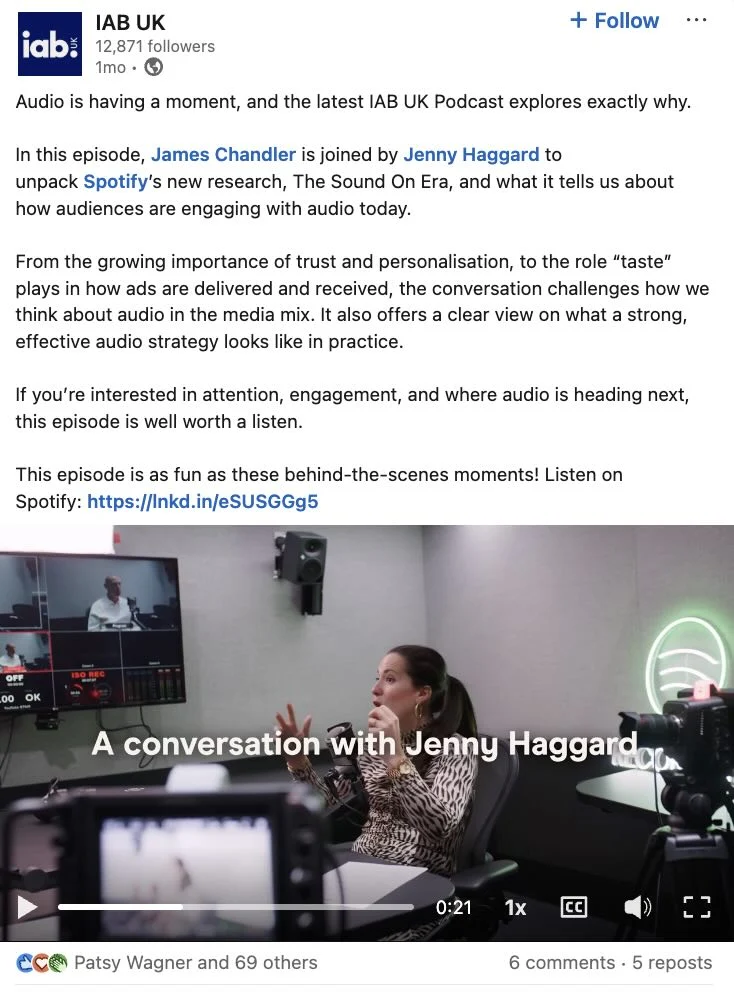
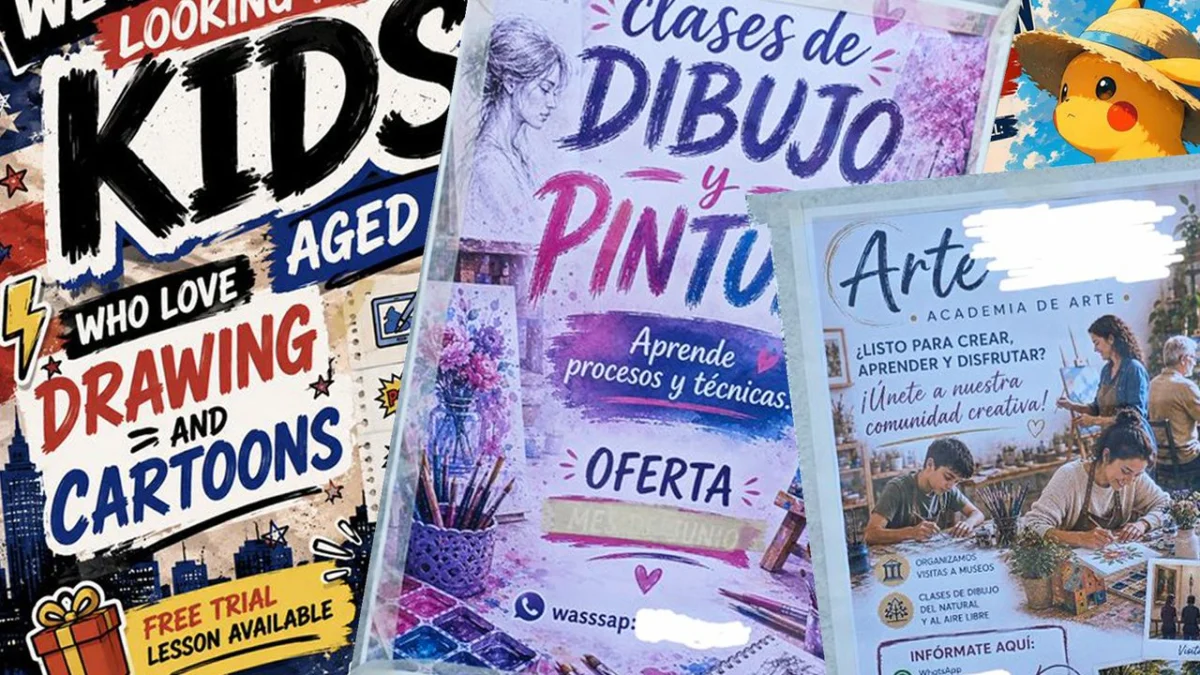
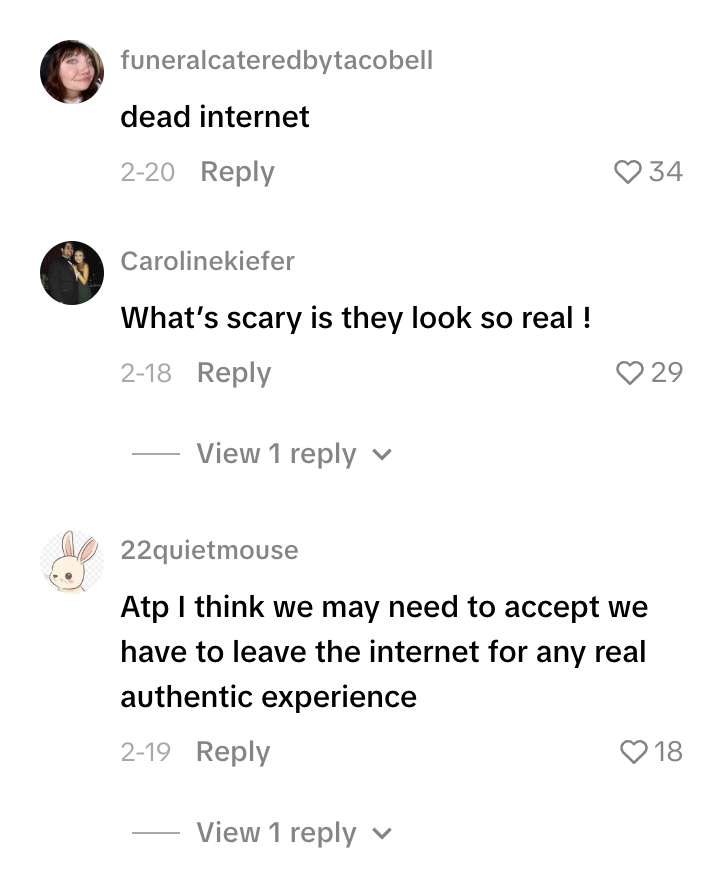
In the fast-evolving landscape of digital marketing, a quiet crisis of confidence has taken root. As Generative AI tools lower the barrier to content production, the internet has become saturated with what industry insiders call "AI slop"—a relentless stream of generic, overly polished, and indistinguishable text and imagery. But as the volume of content reaches a fever pitch, a significant shift is occurring: audiences are hitting a wall.
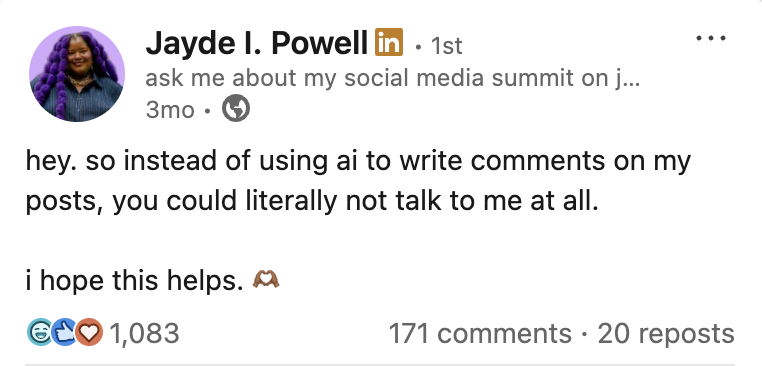
Professional audiences, particularly in the B2B sector, are signaling a profound fatigue. The question isn’t just about whether AI can produce content, but whether anyone actually cares to consume it. With Gen Z users increasingly opting to block accounts that rely on automated output and professionals craving authentic, nuanced perspectives, the pendulum is swinging back toward human-led storytelling.
The State of the "Dead Internet": A Timeline of AI Fatigue
The current discourse surrounding AI in marketing didn’t emerge in a vacuum. It is the culmination of several years of rapid AI adoption followed by an inevitable consumer correction.
- Early 2024: The "Golden Era" of AI experimentation begins. Brands rush to adopt LLMs for everything from blog posts to social media replies, prioritizing speed and volume over substance.
- Late 2024 – Early 2025: The first signs of "AI blindness" appear. Engagement metrics for B2B brands begin to plateau or dip as audiences develop a sixth sense for "textbook" AI prose—characterized by predictable three-point lists, excessive em-dashes, and repetitive sentence structures.
- Mid-2025: The "Dead Internet" theory gains mainstream traction. Critics argue that as AI-generated bots begin talking to other AI-generated bots, the value of online discourse is plummeting.
- Q1 2026: The Sprout Social Pulse Survey reveals a tipping point. Half of Gen Z consumers report that they will actively block or unfollow accounts for posting AI-generated content.
- Present Day: Leading brands, including Spotify, are pivoting their strategy. The focus has shifted from "automated scale" to "human-centric authority," prioritizing real-world expertise and employee-driven storytelling.
The Data: Why "Good Enough" is No Longer Good Enough
The numbers behind this shift are stark. According to the Q1 2026 Pulse Survey, 6 in 10 consumers report being less likely to engage with brand content in the current AI-saturated atmosphere. Despite this, there remains a persistent disconnect: while consumers are begging for human-generated content as their number-one priority, marketers continue to use AI for creative tasks more than any other function.
This misalignment creates a "value vacuum." While AI excels at tedious data collection, summarization, and logistical analysis, it fails when tasked with the creative nuance required to build brand authority.
Perhaps most tellingly, search behavior is evolving. Data suggests that AI-driven search engines—such as Perplexity and the AI-integrated versions of Google—are disproportionately favoring human-written content. One study noted that 82% of articles cited by these platforms are authored by humans, while only 18% are AI-generated. This suggests that LLMs are actively "searching" for the very human nuance, original research, and unique opinion that AI fails to replicate.
Expert Perspectives: The Case for "The Zags"
Patsy Wagner, Associate Director of Global Content & Owned Channel Marketing at Spotify, has been at the forefront of this shift. For Wagner, the danger of AI in B2B marketing isn’t just that it’s robotic; it’s that it’s too "safe."
"AI content often sounds identical in cadence and punctuation," Wagner explains. "The more a brand defines its distinct tone, the more it will differentiate and connect. Humans are drawn to ‘the zags’ or even minor errors. AI produces textbook content, but that doesn’t get noticed. I recently told our agency, ‘Give me something I can hate,’ because it’s easier to pull back from a big swing than to work with something too palatable."
Wagner’s philosophy highlights a fundamental truth: in a world of algorithmic homogeneity, "perfection" is boring. Human voices provide the friction—the bold opinions, the vulnerable storytelling, and the industry-specific context—that stops the scroll.
Building an Ecosystem of Human Voices
For brands looking to break through the noise, the strategy involves decentralizing the brand account. In the B2B space, people trust people, not logos. To rebuild this trust, companies are fostering an ecosystem composed of three key pillars:
1. Executive Voices
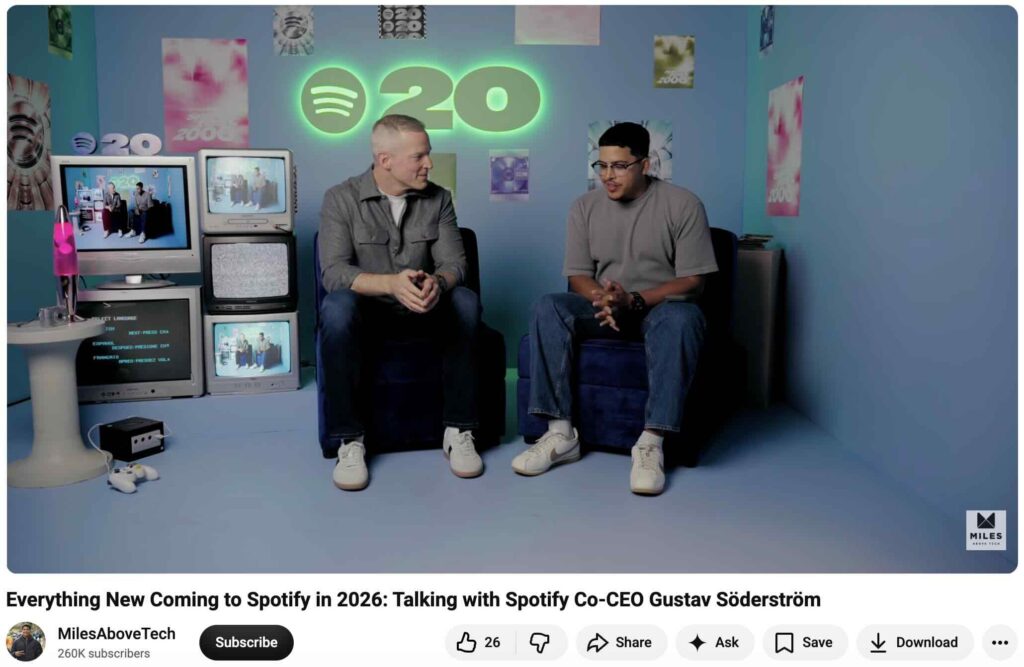
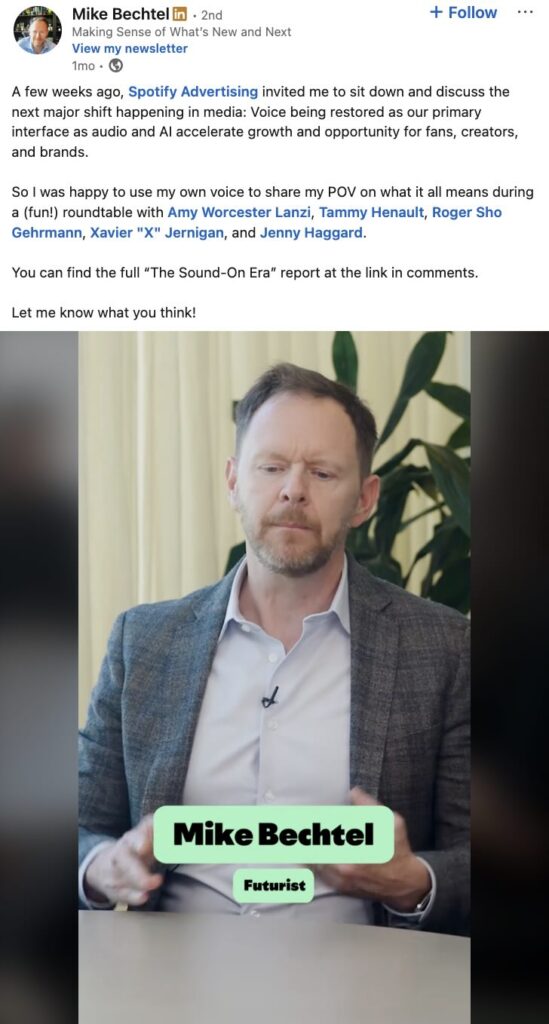
Leadership is no longer a boardroom function; it is a communication function. The Sprout Social Content Benchmarks Report indicates that nearly half of LinkedIn users are actively seeking company updates delivered directly by leadership. When an executive like Spotify’s co-CEO, Gustav Söderström, shares a POV on industry trends or product innovation, it provides a level of transparency and historical context that a brand account simply cannot replicate.
2. Employee Creators
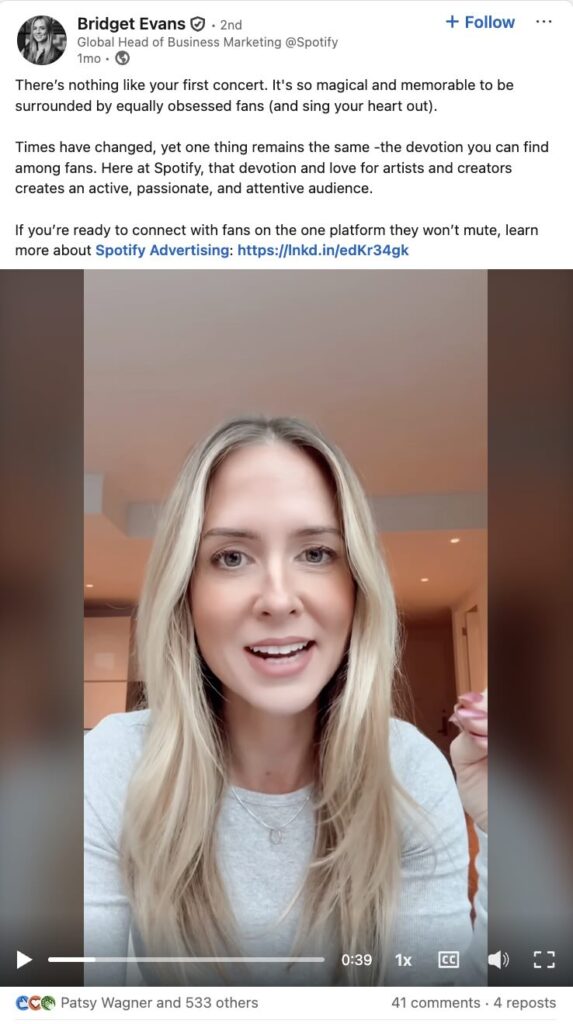
Employee-generated content has emerged as the "secret weapon" for modern brands. By empowering employees to develop their personal brands alongside the company’s, brands can tap into a network of diverse, expert voices. At Sprout Social, the Internal Creator Network saw a 680% increase in video impressions year-over-year, proving that when employees are given the freedom to showcase their individuality, the content resonates significantly deeper with audiences.
3. Influencers and Creators
Long-term partnerships with industry-specific creators allow brands to embed themselves within established communities. With 64% of consumers stating they are more likely to purchase after seeing a brand partner with a trusted creator, these relationships are no longer just about reach—they are about validation.
The Implications: Moving Toward Integrated Marketing
The move away from AI-slop is not a return to the past, but an evolution in how we define "marketing technology." It requires a sophisticated integration of social, content, SEO, and brand teams working in concert.
Distinct Brand Identity
As AI standardizes the "how" of writing, the "who" becomes the primary differentiator. Brands must treat their human creators as characters in an extended universe. This means moving beyond visual identity (logos and fonts) and focusing on a cohesive, human-led "brand voice" that is carried by real people across platforms.
The AEO (Answer Engine Optimization) Shift
As search engines evolve into answer engines, the game has changed. You can no longer rely on SEO "hacks" to drive traffic to a central hub. Instead, brands must be present where the conversations are happening: on Substack, Reddit, TikTok, and LinkedIn. Being "everywhere" requires a distributed strategy where human-generated insights are published across various channels to feed the LLMs with high-quality, authentic data.
Cultural Integration
Finally, the most successful brands are those that treat content as a cross-functional discipline. At companies like Spotify, the lines between SEO, social media, and content marketing are blurring. By fostering a culture where experts are encouraged to share their work, brands create a sustainable engine for discovery and trust.
Conclusion: The Human Imperative
The era of "set it and forget it" content is coming to a close. While AI will undoubtedly remain a tool for efficiency—handling data, research, and technical formatting—it cannot replace the human capacity for genuine insight, creative risk, and emotional connection.
The brands that thrive in the coming years will not be those with the most automated workflows, but those that successfully humanize their operations. By activating executives, empowering employee advocates, and fostering deep relationships with creators, companies can cut through the fog of AI-generated content. In the final analysis, the internet may be vast and increasingly automated, but the human desire for authenticity remains the most powerful force in marketing.


 Nana
Nana
 Jia Lissa