

In the landscape of language acquisition, textbooks often rely on repetitive, dry scenarios—ordering coffee, asking for directions, or introducing oneself in a stiff, academic tone. However, a new pedagogical approach has emerged that swaps mundane daily interactions for the bizarre, high-stakes adventures of an extraterrestrial named Frank. By blending science fiction with foundational Japanese language instruction, the Frank and the Obaasan series is providing a refreshing, narrative-driven path for beginner students to master hiragana, basic grammar, and cultural nuances.
The series, which follows the misadventures of an alien who crash-lands in Fukui, Japan, is now offering its first five episodes for free, inviting learners into a world where intergalactic diplomacy meets local Japanese etiquette.

The Narrative Foundation: A Crash-Landing in Culture
Frank is not a metaphorical alien; he is a literal visitor from another world. His mission was an intergalactic intelligence-gathering operation, but a catastrophic ship failure left him stranded on Earth. With his technology compromised and his knowledge of the Japanese language severely lacking, Frank finds himself under the tutelage of Obaasan—a local, no-nonsense grandmother who serves as both his guide to Earthly life and his unintentional cultural mentor.
The story serves as a mirror for the language student. Just as Frank must navigate the complex, often baffling social cues of human interaction, the reader is tasked with deciphering the language alongside him. The brilliance of this approach lies in its context; by grounding lessons in a story, the vocabulary—ranging from the essential search for "natto" (fermented soybeans) to the etiquette of local greetings—becomes memorable, rather than a rote list of words to be memorized and discarded.
Chronology of the Adventures: From Arrival to Revelation
The series unfolds across a series of structured episodes that escalate in both complexity and comedic value.
- Episode One: The Encounter. The series opens with the initial meeting between the disoriented alien and the stoic Obaasan. Frank’s lack of proficiency in Japanese is immediately apparent, leading to a humorous series of exchanges that establish the central dynamic of the series: the master/student relationship between a grandmother and an extraterrestrial.
- Episode Two: Water, the Best Thing in the Universe. Frank begins to understand basic physical needs, discovering the concept of hydration. The episode focuses on simple sentence structures and the introduction of fundamental nouns, all while Frank experiences the wonders of a simple glass of water.
- Episode Three: Sushi is Not Human. As Frank begins to understand food, he encounters the cultural staple of sushi. His confusion—believing the sushi might be a living, breathing being—allows the series to explore the language of identification and negation.
- Episode Four: Sushi is Something to Eat. The narrative deepens as Frank learns the difference between a person and a meal. This episode provides an excellent vehicle for teaching comparative language and the nuances of Japanese culinary culture.
- Episode Five: Frank is Not from America. In the most recent installment, the social scope expands as Frank is introduced to Obaasan’s neighbors. The gossip regarding Frank’s origins forces him to make a choice: pretend to be from a distant country or admit his true identity.
Pedagogical Methodology: Bridging the Gap
The Frank and the Obaasan series is specifically designed for beginner to upper-beginner students. Its primary pedagogical goal is to move the student away from reliance on romaji (Latin characters) and toward a comfort with hiragana.
Each chapter follows a structured format:
- Full Japanese Text: The scene is presented in its original form, encouraging the reader to attempt comprehension without crutches.
- English Translation: A bridge for those moments when context alone isn’t enough.
- Line-by-Line Breakdown: A granular analysis of grammar, kanji, and vocabulary, presented in plain, accessible English.
Furthermore, the integration with the Makoto+ Sentence Explorer offers a modern, tech-forward layer to the experience. By using unique "Story Codes," students can unlock the specific sentences from each episode, allowing them to dissect the language further and engage in "Read-Repeat" exercises. This dual-pronged approach—the charm of the narrative and the technical rigor of the database—provides a comprehensive learning ecosystem.
Supporting Data and Accessibility
The creators of the series have made it clear that they intend to lower the barrier to entry for Japanese learners. By providing the first five episodes free of charge, they have democratized access to what is often an expensive field of study.
For those looking to deepen their engagement, there are four primary pathways:
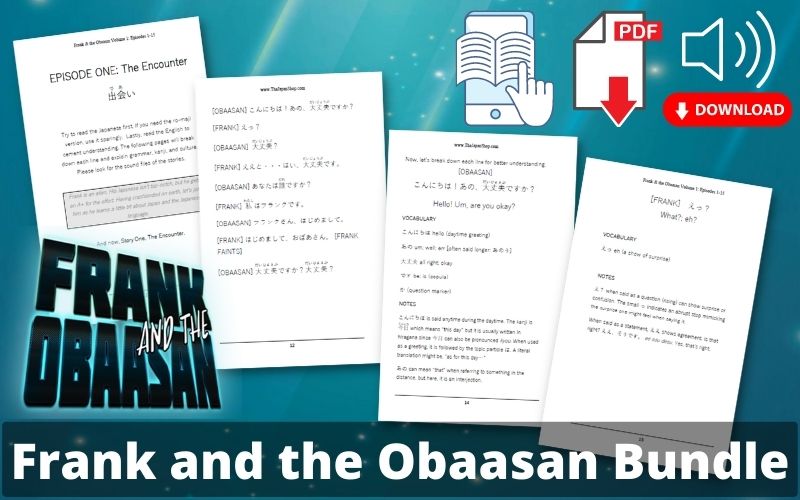
- The Makoto+ Shogun Membership: A comprehensive, subscription-based service that grants access to the full repository of episodes, along with audio integration and advanced tools.
- The "Beri-Beri-Shoshinsha" Digital Bundle: A collection tailored specifically for absolute beginners, focusing on foundational building blocks.
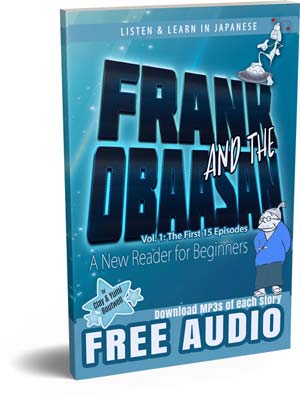
- The Digital Book Bundle: A direct purchase of the two core books in the series, which includes the promise of future volumes at no additional cost.
- Physical Editions: For students who prefer a tactile learning experience, paperback editions are available through their online shop, allowing for a traditional classroom-style study.
Official Stance and Community Feedback
The community response to the series has been overwhelmingly positive. Critics and users alike praise the series for its "fun-first" philosophy. Florian, a recurring customer at TheJapanShop.com, notes: "This should be the first reader for beginners who already know hiragana and some basic Japanese grammar and vocabulary."
The creators emphasize that language learning does not have to be a chore. By introducing a character like Frank—who is fundamentally an outsider—they create a space where it is safe for the student to make mistakes. Frank’s mistakes are part of the plot; therefore, the student’s mistakes are simply part of the learning process.
Implications for the Future of Language Learning
The success of the Frank series points to a broader trend in educational technology: the "Gamification" of language acquisition. By wrapping educational content in high-quality storytelling, the series manages to increase learner retention rates significantly. When the brain is engaged by a plot, it is far more likely to retain the linguistic structures contained within that plot.
Furthermore, the inclusion of cultural notes—such as the proper way to greet someone or the etiquette surrounding social visits—ensures that students aren’t just learning how to translate words, but how to understand the Japanese mindset. The transition from Episode One to Episode Five reflects a genuine progression in the learner’s journey: from identifying oneself, to describing one’s needs, to explaining one’s origins.

In conclusion, the Frank and the Obaasan series is a testament to the idea that the best way to learn a foreign language is to find a story worth listening to. Whether you are in it for the promise of learning complex grammar or simply to see if Frank ever manages to fix his ship without triggering an intergalactic incident, the series offers a unique, effective, and highly enjoyable path to fluency.
For the aspiring student, the message is clear: sign up, unlock the chapters, and join Frank on his journey to understanding Japan, one laugh—and one kanji—at a time.











