


As the global technology sector grapples with a deepening "AI disillusionment" phase, Meta has doubled down on its commitment to generative artificial intelligence. The social media giant recently unveiled "Muse Image," a sophisticated visual creation and remixing suite integrated directly into its ecosystem of apps, including WhatsApp and Instagram. While Meta frames this as a leap forward in user engagement, the release has reignited a fierce debate regarding the practical utility, ethical implications, and societal necessity of AI-generated imagery.
Main Facts: What is Muse Image?
Muse Image is the latest product to emerge from Meta’s heavily funded Superintelligence Labs. The tool is designed to move beyond simple text-to-image generation, offering users the ability to manipulate existing photos, generate entirely new scenes, and remix visual content across Meta’s platforms.
The feature set includes:

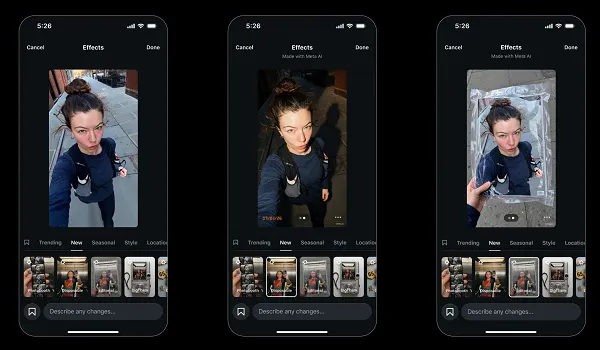
- Contextual Editing: The ability to insert subjects into new, hyper-realistic backgrounds—such as placing a family pet into a famous historical painting.
- Creative Effects: Over 30 new AI-powered filters and effects for Instagram Stories.
- Conversational Generation: Users can generate images directly within WhatsApp chat threads by interacting with Meta AI.
- Social Integration: A controversial feature allowing users to @-mention Instagram accounts to incorporate public profiles and content into AI-generated images.
Meta positions these tools as "creative enhancements" meant to simplify digital expression. However, the rollout has been met with skepticism from industry analysts who question whether these features solve real human problems or merely contribute to an increasingly cluttered and synthetic digital landscape.
A Chronology of Meta’s AI Pivot
The development of Muse Image did not happen in a vacuum; it is the culmination of a massive, multi-year strategic pivot that has fundamentally reshaped Meta’s corporate identity.
- 2023–2024 (The Infrastructure Build-Out): Recognizing the paradigm shift brought on by large language models, Meta shifted its focus from the Metaverse toward AI dominance. This period saw the company commit hundreds of billions of dollars to GPU procurement and data center expansion.
- Early 2026 (The Talent Acquisition Phase): Meta successfully recruited top-tier researchers and engineers, including high-profile figures, to staff its Superintelligence Labs. The mandate was clear: build models that could compete with, and eventually surpass, the offerings from OpenAI and Google.
- June 2026 (The "Utility" Reality Check): In a rare moment of corporate candor, Meta Superintelligence Chief Alexandr Wang appeared on The Core Memory podcast. Wang admitted that while current AI tools are "somewhat helpful," the overall user experience is not "overwhelmingly better." He explicitly stated that the burden lies with Meta to build tools that provide genuine, tangible value.
- July 2026 (The Launch): Despite Wang’s recent skepticism, Meta released Muse Image just weeks after his comments. The timing suggests a friction between the company’s internal critique of AI’s current state and the pressure to maintain a competitive release cadence.
Supporting Data: The Cost of Creation
The resources poured into these features are staggering. Meta’s capital expenditure on AI infrastructure has reached historic highs, with the company’s total investment in hardware, power, and human capital reaching into the hundreds of billions.

Critics argue that this expenditure creates a "sunk cost" trap. Because the company has invested so much, it feels compelled to release features regardless of whether they represent a genuine user need. For instance, while generating a template for a party invitation is a practical use case, the ability to generate hyper-realistic, fake scenes—or to manipulate photos of other people—raises questions about the "return on investment" regarding human well-being and truth.
Furthermore, the environmental footprint of these models is substantial. The training and inference costs for image generation require massive compute cycles, which in turn demand significant energy and water resources for data center cooling. The contrast between the environmental cost and the trivial use cases—like placing a pet in a painting—has become a focal point for environmental watchdogs.
Official Responses and Strategic Rationale
Meta maintains that its AI tools are designed to foster creativity. In its official announcement, the company emphasized that Muse Image is about democratizing design. "The model powers new creative tools across Meta’s apps," the company stated, highlighting that these features are currently rolling out in select markets with plans for a wider global expansion.

However, the company’s internal sentiment remains nuanced. By tasking leaders like Alexandr Wang with the honest assessment of AI’s current efficacy, Meta has signaled that it is aware of the public’s "AI fatigue." Yet, the decision to push forward with Muse Image suggests that the company believes the path to utility is through iteration. The strategy appears to be: release the tools, collect the data, and refine the product until it becomes indispensable.
The Ethical and Social Implications
The release of Muse Image carries significant baggage, particularly regarding privacy and the integrity of digital content.
The Opt-Out Controversy
Perhaps the most contentious aspect of Muse Image is its integration with Instagram. Meta has enabled a feature that allows users to use public Instagram photos in AI-generated images via the app. Crucially, this is an opt-out system. This means that, by default, the content of millions of users is being utilized as training fodder or as assets for AI remixing. Wired and other outlets have highlighted the privacy concerns inherent in this model, noting that many users remain unaware that their personal photography can now be "remixed" into AI compositions without their explicit, prior consent.
The Erosion of Reality
Beyond privacy, there is the philosophical question of "why." When people communicate on platforms like WhatsApp, they are typically seeking connection. By introducing tools that make it easy to share synthetic, false, or misleading depictions, Meta may be inadvertently undermining the very foundation of social trust. If every photo shared in a chat could be an AI-generated fiction, the social value of shared visual media begins to decline.
The Backlash Against "Job-Replacing" Systems
The timing of this release is also critical. We are currently in a period of broad societal backlash against AI. From the creative industries concerned about the devaluation of human art, to workers worried about automation, the public is increasingly sensitive to how these tools are deployed. By presenting tools that seem focused on "fun" at the expense of privacy, Meta risks appearing tone-deaf to the broader, more serious anxieties surrounding AI’s impact on the job market and the fabric of reality.
Looking Forward: A Race for Relevance
Ultimately, the release of Muse Image may be less about solving a specific user problem and more about keeping pace with competitors in the "AI Arms Race." Whether it is to climb the ranks of industry benchmarks or to ensure that Meta remains the default platform for social interaction, the company is prioritizing speed of deployment over a measured, user-centric rollout.

For the average user, the question remains: is this a genuine improvement, or is it merely "noise" designed to fill our feeds? As the novelty of generating pets in famous paintings fades, Meta will need to move beyond these superficial applications if it truly wants to satisfy the challenge set by its own leadership: to build tools that are not just technically impressive, but fundamentally and "overwhelmingly" better for the people who use them.
The industry will be watching closely to see if Meta’s next move involves addressing these core concerns or continuing to push the boundaries of what is possible, regardless of whether it is what the public actually needs.











