Ali Ikhwan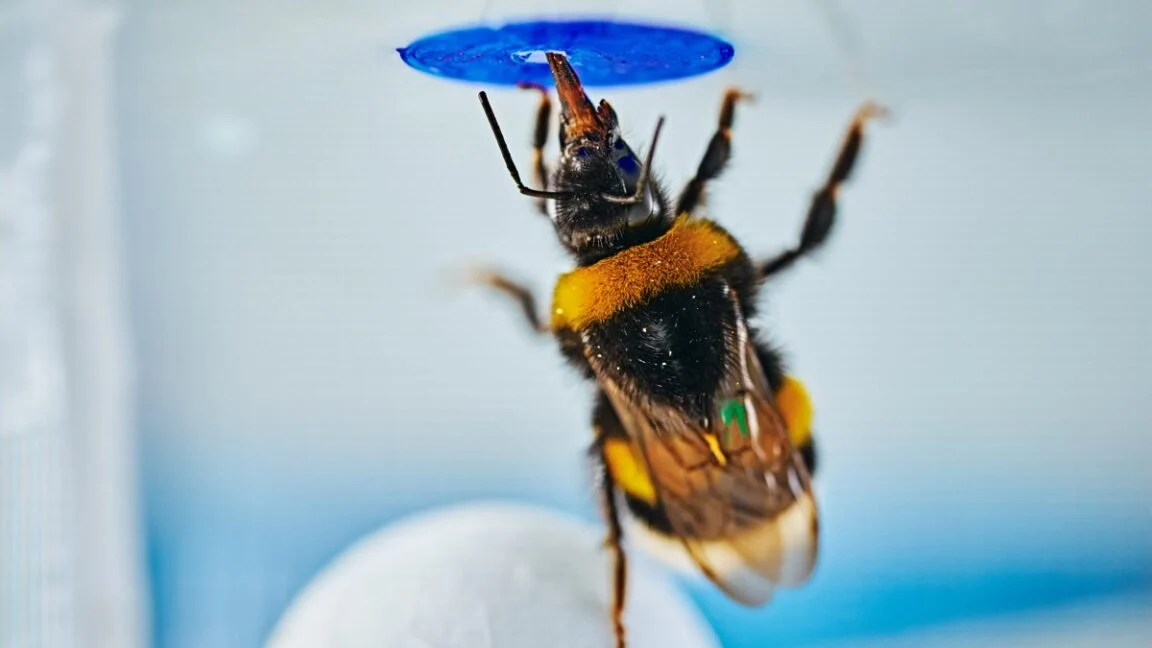
For decades, the field of cognitive ethology—the study of animal intelligence—has been dominated by the assumption that complex problem-solving is the exclusive domain of large-brained mammals and avian species. From chimpanzees using sticks to extract termites to crows crafting hooks to retrieve food, the ability to recognize a causal relationship between an object and an unreachable goal has long been considered a hallmark of "higher" cognition.
However, a groundbreaking study published in the journal Science in 2026 has shattered this hierarchical view of intelligence. Researchers from the University of Finland have provided the most compelling evidence to date that Bombus terrestris, the common bumblebee, is capable of spontaneous, goal-directed problem-solving. This "insect version" of the classic "box-and-banana" puzzle suggests that intelligence is not merely a function of brain size, but rather a flexible cognitive toolkit that can emerge in even the smallest of creatures.
The Evolution of Insect Intelligence: Main Facts
The core of the research, led by Olli Loukola, centers on whether insects can identify a tool-based solution to a problem they have never encountered before. In the classic "box-and-banana" experiment—frequently used to test primate intelligence—a subject must move an object (a box) to a specific location (under a hanging banana) to access a reward.
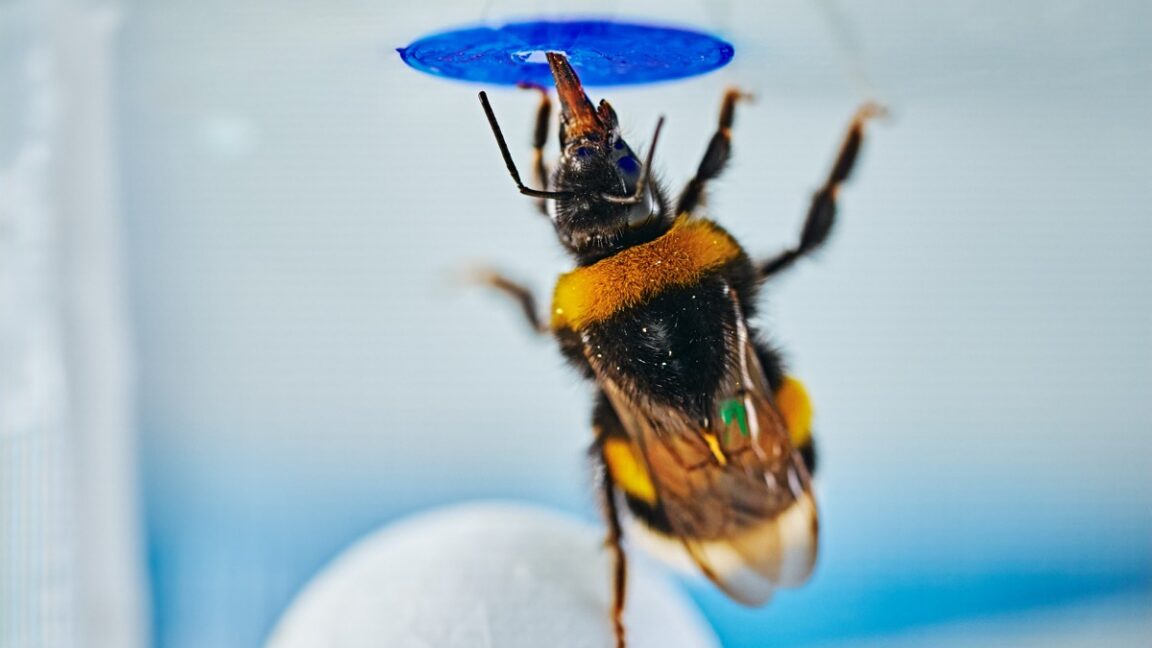
In the 2026 study, the team created a miniature version of this conundrum for bees. The bees were presented with an artificial flower containing a sugar reward, but it was positioned over a deep pit, rendering it physically inaccessible to a bee trying to fly to it. To obtain the reward, the bees had to roll a ball into the pit and then land on the ball, which effectively bridged the gap and allowed them to reach the flower.
The results were striking: the bees did not simply stumble upon the solution by accident. Through carefully controlled experiments, the team demonstrated that the bees understood the functional utility of the ball as a tool, a feat of cognitive abstraction previously unseen in insects.
A Chronology of Discovery: From Cooperation to Cognition
The road to this discovery began several years prior, with an exploration of social behavior. In 2024, Loukola and his colleagues published a foundational study in the Proceedings of the Royal Society B, which examined whether bumblebees could cooperate to solve complex, multi-part challenges.
The 2024 Cooperation Trials
In those initial experiments, pairs of bees were tasked with two specific objectives: pushing a Lego block into a central arena or manipulating a door at the end of a tunnel to release a reward. The team discovered that bees were significantly more likely to engage in these tasks when a partner was present, compared to solitary bees or untrained controls.
While the researchers cautioned that this behavior required more nuanced monitoring to confirm true "cooperation" rather than mere social facilitation, the findings served as a catalyst for the 2026 experiments. If bees could work together to manipulate their environment, could they also independently "reason" through a physical puzzle?
The 2026 Problem-Solving Experiments
The transition from social cooperation to individual problem-solving was the focus of the recent Science paper. The research followed a rigorous, tiered methodology:
- The Baseline Test: Bees were divided into groups. One group was trained on the individual components (the flower is a reward; the ball is movable) but was never shown the solution to the puzzle. A second group was trained only on the flower’s reward, and a third served as an untrained control. The first group solved the problem at a statistically significant higher rate, suggesting they were not relying on gradual reinforcement learning, but rather an immediate synthesis of information.
- The Perceptual Feedback Test: To ensure the bees weren’t just playing with the ball because the rolling motion was inherently rewarding, researchers introduced a barrier. The bees had to push the ball through an opening to reach the flower.
- The "Hidden Goal" Test: The final, and perhaps most definitive, stage involved an arena with two invisible compartments. The bees had to move the ball into the correct compartment, which was completely obscured from view at the start. Twenty-three of the 30 subjects succeeded, with 16 performing the task without any erroneous moves, effectively ruling out accidental discovery.
Supporting Data and Experimental Rigor
The scientific community often treats claims of "animal insight" with skepticism. To address this, Loukola’s team went to great lengths to isolate variables. By using multiple openings in the barriers and hidden-reward arenas, they effectively neutralized the possibility that visual cues were "guiding" the bees by accident.
The data indicates a clear performance gap. In the initial tests, the bees that had learned the properties of the individual elements were significantly more efficient in their interactions with the ball. They exhibited a structured, goal-directed approach—moving the ball directly toward the pit—rather than the erratic, disorganized movements seen in the untrained control groups. The failure of the control groups to replicate this success confirms that the behavior is not an innate, instinctual response to a ball, but a learned application of an object to solve a novel obstacle.
Official Responses and Peer Review
The publication of the study in Science has sparked intense discussion within entomology and cognitive science circles. Peer reviewers have highlighted the study’s design as a gold standard for insect cognition research.
"The researchers have successfully navigated the ‘black box’ problem," noted one independent researcher. "By isolating the goal from the agent’s line of sight, they have provided the clearest evidence to date that bumblebees are capable of generating novel, goal-directed solutions."
However, the authors themselves remain humble about the limitations of their work. A primary critique, which the researchers acknowledged, is the inability to track the "Eureka!" moment. While the data shows success, it does not reveal the neurobiological or behavioral precursors to that success. Does the bee pause? Does it scan the environment in a way that suggests a hypothesis-testing phase? Future studies, likely involving high-speed, 3D-gaze tracking, will be required to determine if these bees are experiencing a moment of insight or if they are performing a rapid, high-order computation that we are only just beginning to map.

Implications for the Future of Cognitive Science
The implications of these findings extend far beyond the study of bees. If a creature with a brain the size of a pinhead—containing roughly one million neurons—can solve problems that were once thought to require the massive, complex neural architecture of a primate, we must fundamentally reconsider our definition of intelligence.
1. Challenging the "Brain Size" Hypothesis
For years, the "social brain hypothesis" has suggested that intelligence evolved to manage complex social interactions, and that larger brains were necessary to facilitate these interactions. The success of the bumblebee, a creature that is both social and highly individualistic in its problem-solving, suggests that cognitive efficiency may be more important than raw volume.
2. Redefining "Insight"
The study provides a new, measurable framework for "insight" in non-mammalian species. By using the "box-and-banana" model as a template, researchers now have a standardized tool to test cognitive flexibility in other insects, such as ants, wasps, and even flies. This could lead to a massive expansion in our understanding of the cognitive landscape of the insect world.
3. Robotics and AI
The potential applications of this research are not limited to biology. Engineers working in swarm robotics are particularly interested in how simple, decentralized units can solve complex problems without a central "brain" directing every action. If bumblebees can use physical tools to reach a goal, the algorithms governing robotic swarms could be updated to prioritize such flexible, individual-to-collective problem-solving strategies.
Conclusion: A New Frontier
As we look toward the future, the research conducted by the University of Finland serves as a humbling reminder of our limited understanding of the natural world. We have long viewed the insect kingdom as a realm of instinct, driven by hardwired, unthinking programs. The bumblebee’s ability to "see" a tool where others see an obstacle suggests that the divide between "instinct" and "reason" is not a wall, but a gradient.
The bees have, in their own silent way, challenged us to rethink our place in the cognitive hierarchy. As Loukola and his team continue their work, the scientific community awaits the next discovery with bated breath. Whether it is through the complex architecture of a hive or the simple, elegant solution of rolling a ball to reach a flower, it is clear that the minds of the miniature are far more expansive than we ever dared to imagine.
In the words of the researchers, this study "establishes a foundation for future studies to further investigate the cognitive processes underlying insight in insects." For now, the bumblebee stands as a testament to the idea that greatness—and intelligence—does not require size; it only requires the ability to look at a problem and see a solution.


 Jia Lissa
 Asro
Asro