The Burning Man festival has long occupied a unique, polarizing space in the American cultural consciousness. It is simultaneously a bastion of radical self-expression, a haven for countercultural experimentation, and an increasingly institutionalized enterprise tangled in the complexities of Silicon Valley influence, environmental logistics, and high-stakes corporate governance.
Jehane Noujaim and Vikram Gandhi’s new HBO docuseries, The Man Will Burn, attempts to peel back the layers of this sprawling, temporary metropolis. Yet, despite enjoying unprecedented, multi-year access to the Burning Man Project (BMP) and its inner circle, the series ultimately functions as a visually stunning but structurally indecisive portrait. It is an engaging work that frequently reaches the precipice of deep investigative journalism, only to pull back, settling for a sanitized, observational aesthetic that leaves the viewer with more questions than answers.
The Core Facts: A Portrait of a Cultural Phenomenon
At its heart, The Man Will Burn is a chronicle of a community in crisis. The series tracks several turbulent years of the festival’s history, centering on the existential threat posed by the COVID-19 pandemic, the logistical nightmares of the 2023 flooding, and the ongoing internal power struggles within the Black Rock City LLC leadership.
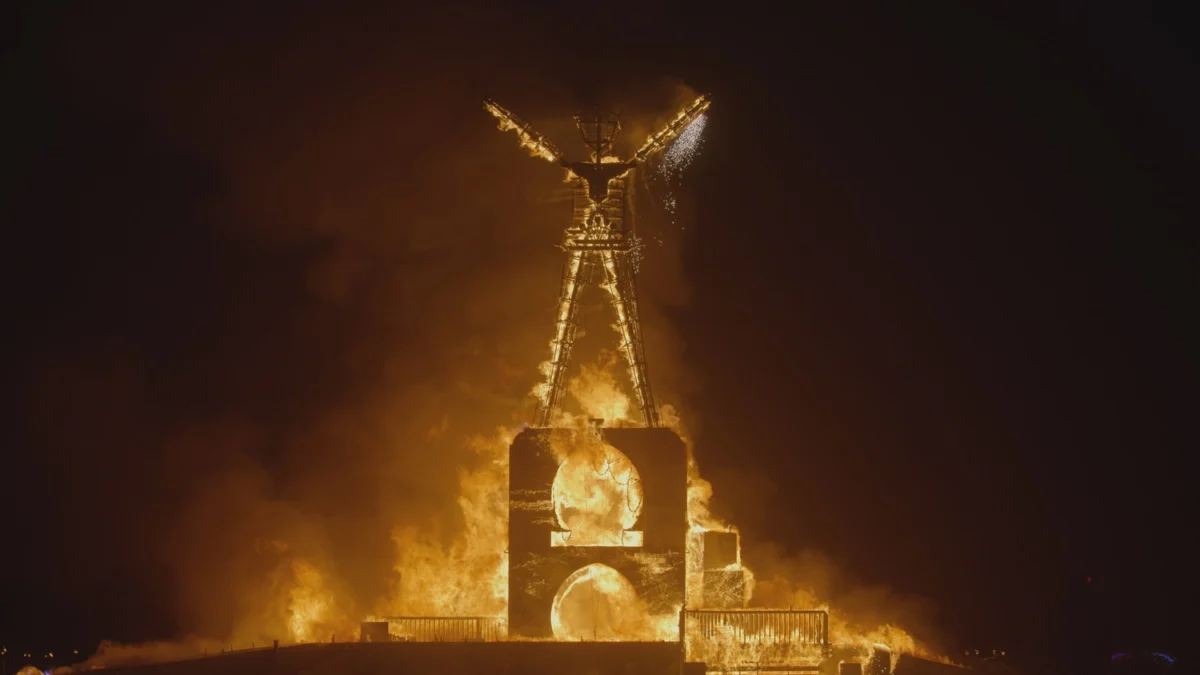
The documentary is visually arresting, utilizing drone-heavy cinematography to capture the surreal beauty of the Nevada desert transformed into a temporary city of 80,000 inhabitants. From the meticulously constructed art installations to the pyrotechnic displays that define the event’s climax, the film succeeds as a technical achievement. However, it falters in its narrative rigor. By focusing heavily on the "party line"—that Burning Man is a unified, harmonious family of outsiders—the directors miss the opportunity to interrogate the very contradictions that make the festival such a fascinating study in modern sociology.
A Chronology of Discontent: From Pandemic to Deluge
The series structure is anchored by a timeline that begins in the lead-up to the 2021 festival. This period serves as the primary engine for the series’ early drama. As the world navigated the complexities of the global pandemic, the Burning Man leadership faced an impossible binary: cancel the event for the second year in a row, or risk public health and the brand’s reputation by attempting a return.
The internal discord is palpable. CEO Marian Goodell and the board of directors are shown grappling with the necessity of the event for the sake of the organization’s financial solvency and the spiritual needs of its devotees. Standing in opposition to these efforts are figures like board member and investor Kimbal Musk. Through the lens of the directors, Musk serves as a lightning rod for the festival’s deeper tensions, embodying the intrusion of billionaire-class interests into what was once a decentralized, grassroots gathering.
The narrative momentum continues through the subsequent "renegade" events of 2021 and the eventual return to the playa in 2022, culminating in the chaotic, rain-soaked 2023 festival. Throughout these years, the film captures the shifting dynamics of the festival’s infrastructure, yet it consistently opts for a "wait and see" approach to the conflict, rarely digging into the potential long-term fallout of these crises.
Supporting Data: The Conflict of Values
While the film is rich in footage, it is relatively thin on objective data regarding the festival’s economic and environmental footprint. The series introduces us to two specific "everyman" perspectives: Lindsay, an online professor from Pasadena, and Ray, a Black veteran from rural North Carolina. Through their eyes, we see the allure of the "burner" lifestyle—the promise of a space free from the constraints of societal expectations.
However, their experiences are used as anecdotal entry points rather than data-driven case studies. We learn of the origins of the festival—the Cacophony Society and the transition to the Black Rock City LLC in 1999—but the film stops short of analyzing how this corporatization has shifted the festival’s demographic profile. The inherent whiteness and privilege underlying the event are acknowledged in passing, but the series lacks the analytical teeth to explore how these factors influence the festival’s evolving mission.
Official Responses and Internal Dynamics
One of the most notable aspects of The Man Will Burn is its access. By gaining trust with the Burning Man Project, the filmmakers secured interviews with those who have shaped the event for decades. Yet, this access appears to have acted as a double-edged sword.
The documentary often feels like an extended corporate documentary, where the disagreements between leadership are framed as "benign." When the topic of the festival’s reliance on Silicon Valley wealth arises, the film remains strikingly mute. There is an absence of critical interrogation regarding how these wealthy patrons influence the festival’s "radical" idealism. The viewer is left wondering: what do the true believers think of the increasing "glamping" culture and the influence of tech elites? The film suggests that everyone is working toward the same goal, a sentiment that feels less like objective truth and more like a carefully curated public relations narrative.
Implications: The Cult of the Playa
Perhaps the most damning critique of The Man Will Burn is its inadvertent comparison to the cults explored in previous HBO works, such as The Vow. By allowing the subjects to recite the "party line" without significant challenge, the festival begins to look less like a social experiment and more like a closed-loop ideology.
The implication is that the community has become so insular that it has lost its ability to self-reflect. When the film covers the 2023 disaster, it relies on the testimony of participants who maintain, "It’s okay! We’re all okay!" This creates a jarring disconnect for the viewer, who sees the devastation and the logistical failure while the film attempts to reassure us that the experience was, ultimately, a triumph of the human spirit.
Structural Shortcomings and Missed Opportunities
The series suffers from a lack of editorial focus. It spends significant time on the town-and-gown conflicts in Gerlach, Nevada, only to abandon the narrative thread entirely. It teases the idea of a potential coup against the established leadership, then drops the subject just as it becomes interesting.
By failing to commit to either a hard-hitting investigative tone or a more intimate, character-driven study, the series lands in a bland middle ground. It is too long at four hours for the amount of substantive information provided, yet too shallow to be considered a definitive history of the event.
The Bottom Line
The Man Will Burn is a testament to the fact that access does not always equate to insight. The filmmakers were granted the keys to the kingdom, but they chose to document the aesthetics of the castle rather than the rot in the foundation.
If you are a fan of the festival, you will likely appreciate the high-quality footage and the nostalgic walk through recent history. If you are looking for a deep dive into the political, financial, and sociological complexities of Burning Man, you will likely walk away feeling underserved. The documentary captures the sparkle and the dust, but it misses the fire.
As Burning Man looks to the future, facing questions about land ownership, environmental sustainability, and its place in a changing world, it deserves a more rigorous lens than the one provided here. The festival has always prided itself on being a space for radical change; ironically, the documentary about it has remained stubbornly static.
In the final analysis, The Man Will Burn is an engaging, well-produced piece of media that succeeds as a commercial for the Burning Man experience, but fails as a piece of investigative journalism. It is a surface-level reflection of a complex, layered event, leaving the deeper, more uncomfortable truths about the festival buried beneath the desert floor.