

Navigating the vast, vacuum-sealed expanse of space has long been treated as a feat of initial propulsion—getting a payload off the ground was the primary challenge. However, as the orbital environment becomes increasingly crowded and strategic, a new reality has emerged: once you are in space, moving around is the true hurdle.
On Tuesday, Impulse Space, a California-based startup dedicated to solving the complex logistical challenges of space mobility, announced a landmark $500 million Series D funding round. This latest injection of capital brings the five-year-old company’s total funding to more than $1 billion, signaling a massive shift in investor confidence toward the "last-mile" delivery services of the space economy. Founded by Tom Mueller, a foundational engineer behind SpaceX’s propulsion systems, Impulse Space is rapidly positioning itself as the primary logistics provider for the burgeoning orbital ecosystem.
The Evolution of Impulse Space: A Five-Year Trajectory
The rise of Impulse Space is not merely a story of capital accumulation; it is a testament to the accelerated pace of the modern aerospace industry. Founded in 2019, the company emerged from stealth with a clear mission: to democratize access to the far reaches of orbit.
2019–2021: The Foundations
Under the leadership of Mueller, who served as a key architect of the Merlin engines that powered the Falcon 9, the company began with a focus on high-efficiency, non-toxic propulsion. The engineering philosophy was rooted in the idea that traditional chemical propulsion—often reliant on hypergolic fuels—was too cumbersome and hazardous for the rapid, iterative needs of modern satellite deployment.
2023: The Debut of ‘Mira’
The company’s first major milestone occurred in 2023 with the launch of "Mira," a small, agile spacecraft designed to demonstrate the viability of orbital maneuvering. Utilizing a novel propulsion system fueled by a combination of nitrous oxide and ethane, Mira proved that space vehicles could perform complex orbital shifts without the heavy infrastructure or environmental risks associated with traditional propellants.
2024: The Shift to Industrial Scale
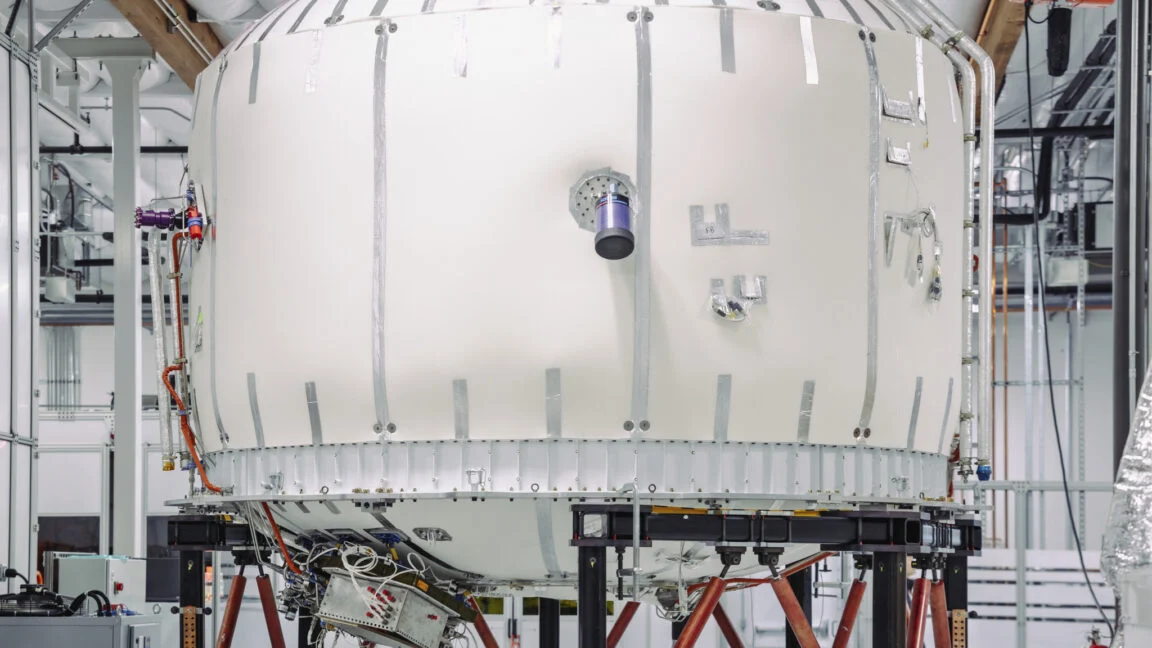
Following the success of Mira, Impulse Space pivoted toward scaling its operations. The introduction of "Helios," a larger, more powerful "kick stage" vehicle, marked a departure from small-scale demonstrations to industrial-grade logistics. The Helios stage is designed to provide the thrust necessary to move large payloads between orbits, effectively acting as a "space tug" for commercial and government assets.
Supporting Data: Why Mobility is the New Market Frontier
The surge in funding for Impulse Space is not an isolated event; it is reflective of a fundamental shift in how the aerospace industry views the orbital environment. According to industry analysts, the demand for "in-space transportation" is projected to grow by an order of magnitude over the next decade.
The Commercial Demand
The commercial sector has been the primary driver of this demand. Companies launching constellations of satellites for telecommunications, Earth observation, and climate monitoring are finding that traditional launch vehicles often leave their assets in "sub-optimal" orbits. Without the ability to change orbit, these satellites are essentially stranded. Impulse Space’s services allow operators to pay for a "taxi" to get their hardware exactly where it needs to be, extending the operational life and utility of their investments.
The Government Pivot
The U.S. Space Force has emerged as a significant catalyst for the mobility sector. As the orbital landscape becomes a theater of geopolitical tension, the ability to maneuver assets—either to avoid debris, evade potential threats, or reposition to counter the maneuvers of adversarial spacecraft from Russia or China—has become a national security priority. The fiscal shift in the Space Force budget, which now emphasizes resilience and maneuverability, has provided a clear, long-term revenue stream for companies like Impulse Space.
Official Perspectives: Capturing the Momentum
For Tom Mueller, the $500 million infusion is less about survival and more about the necessity of speed. "Timing is everything," Mueller noted in a recent interview. He emphasized that the company had not necessarily been aggressively seeking a new round, but the pressure to meet the overwhelming demand from both commercial and government sectors necessitated a rapid expansion of production and R&D capabilities.
The "All-Happening-Now" Strategy
Eric Romo, the president and chief operating officer of Impulse Space, underscored the urgency of the moment. "It’s all happening now," Romo said. "And I think that’s going to continue, and the market’s going to continue to find exciting new things. No one was talking about data centers in space a year ago, right? And so who knows what we’re talking about this time next year."
Romo’s perspective highlights the fluid nature of the industry. The company is positioning itself not just as a hardware manufacturer, but as an infrastructure provider that can adapt to whatever the next "big thing" in space may be—whether that is orbital manufacturing, data centers, or lunar supply chains.
Strategic Implications: Moving Beyond Low-Earth Orbit
The implications of this funding round reach far beyond the balance sheets of a single company. They point toward a maturation of the space economy where "getting there" is no longer the end goal.
The Lunar Ambition
Perhaps the most significant long-term implication is Impulse Space’s move into the lunar sector. The company has explicitly stated its intent to provide landing services in the "1-ton-class" to NASA for its Artemis-related Moon Base initiatives. Providing heavy-lift logistics for the Moon requires a level of reliability and precision that has previously been the exclusive domain of government agencies. By moving into this space, Impulse is effectively competing with, and complementing, the established aerospace primes.
The Geopolitical Context
As the United States seeks to maintain its orbital hegemony, the role of private companies in supporting national security cannot be overstated. By developing the ability to maneuver freely between low-Earth orbit (LEO) and geostationary orbit (GEO), Impulse Space is helping the U.S. military overcome the "fixed-position" vulnerability of traditional satellite fleets. This capability serves as a deterrent, ensuring that American assets remain agile enough to avoid interception or interference.
A Sustainable Future
One of the most promising aspects of the Impulse Space model is its focus on non-toxic propellants. As the number of objects in orbit increases, the environmental and collision-related risks of hypergolic fuels become more pronounced. By normalizing the use of greener, safer propellant alternatives, Impulse is setting a standard for responsible stewardship of the orbital environment—a necessity if humanity is to maintain a permanent presence in space.
Conclusion: The Road Ahead
The $500 million Series D funding represents a vote of confidence in the belief that space is no longer just a destination, but an operational domain. Impulse Space has managed to bridge the gap between high-concept engineering and the practical, hard-nosed reality of industrial logistics.
As the company moves forward, the challenges will be significant. Scaling production for the Helios vehicle, managing the complexities of deep-space navigation, and navigating the shifting regulatory landscape of space traffic management will require more than just capital. It will require the same innovative spirit that Mueller brought to SpaceX years ago.
However, if the current trajectory holds, the next few years will see Impulse Space evolve from a promising startup into a cornerstone of the space infrastructure industry. The company is not merely building rockets; it is building the roads, bridges, and delivery trucks of the 21st-century space economy. As Eric Romo suggested, we are standing on the precipice of a new era, and if the last five years are any indication, the next twelve months will likely bring developments that were once considered the realm of science fiction. The race is no longer just to reach the stars—it is to master the space between them.












No comments yet. Be the first to join the conversation!