

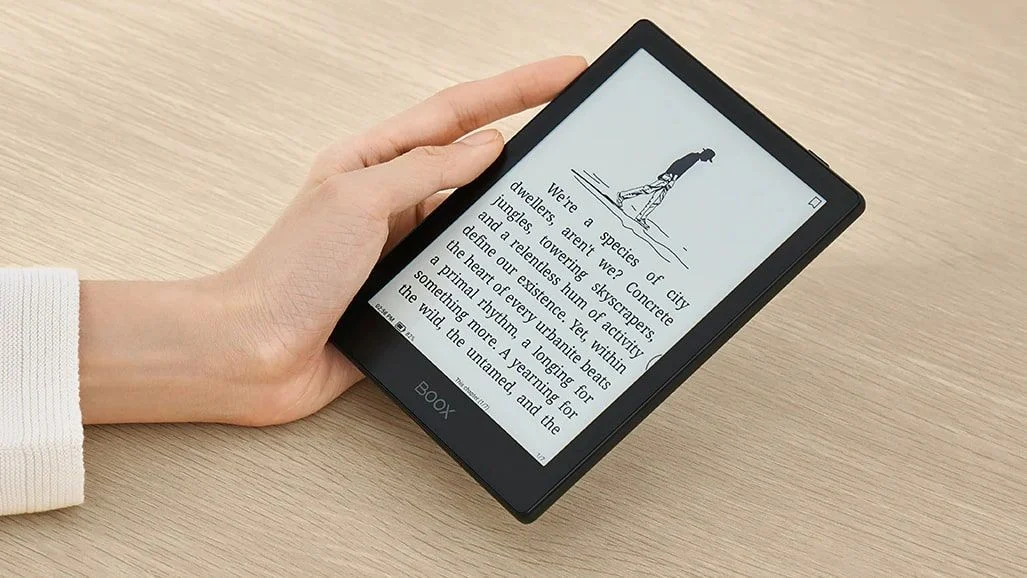
The landscape of digital reading is on the precipice of a significant transformation. At Computex 2026, a landmark announcement from display technology titan E Ink and semiconductor powerhouse MediaTek signaled a bold new direction for e-readers. By integrating advanced artificial intelligence directly into the hardware of future devices, the companies aim to transition the humble e-reader from a passive, single-purpose tool into a sophisticated, context-aware smart device.
While the partnership promises to solve long-standing performance issues for color e-paper displays, it has also ignited a spirited debate regarding the "sanctity of the page" and whether the distraction-free environment that defines the e-reader experience is under threat.
The Evolution of the Partnership: A Chronological Overview
The collaboration between E Ink and MediaTek is not a new development, but rather the culmination of years of iterative engineering. For nearly a decade, the two companies have worked in tandem to refine the fluidity of e-paper, a technology historically plagued by slow refresh rates and limited color gamuts.
- Early Foundations: Initial collaborations focused primarily on power efficiency and basic page-turning latency. As e-readers moved from monochrome to basic grayscale, MediaTek provided the low-power chipsets necessary to maintain the "weeks-long" battery life that became the industry standard.
- The Color Pivot: In recent years, as E Ink introduced its Gallery and Kaleido technologies—designed to bring rich colors to e-paper—the hardware requirements for processors spiked. Rendering color on electrophoretic displays requires significantly more computational overhead than black-and-white text, leading to the "sluggish" performance often criticized in early color models.
- The AI Integration Phase (2025-2026): Moving into 2026, the partnership shifted its scope toward "Edge AI." Instead of relying on cloud-based processing, which introduces latency and privacy concerns, the new focus is on putting high-performance AI SoCs—specifically the MT8115 and MT8126—into the chassis of e-readers. This allows for real-time processing of text, audio, and visual data locally on the device.
Under the Hood: The Technology Behind the Upgrade
The core of this announcement lies in the implementation of the MediaTek MT8115 and MT8126 system-on-chips (SoC). These processors are purpose-built to handle "edge computing," meaning the AI processes data directly on the hardware without needing a constant internet connection.
Enhanced Color Rendering and Fluidity
The technological limitations of color e-paper have historically hindered the reading experience, particularly for complex media like academic textbooks, graphic novels, and magazines. The new chips are designed to support displays up to 13.3 inches with a high-resolution 300 PPI (pixels per inch). By offloading the color-rendering math to the GPU-accelerated segments of the MediaTek chips, the displays can now achieve faster page transitions and more vivid, accurate color reproduction, closing the gap between e-ink and traditional LCD/OLED tablets.
AI-Powered Productivity Features
The introduction of these chips brings a suite of generative AI tools that were previously the domain of full-fledged smartphones or laptops. These features include:
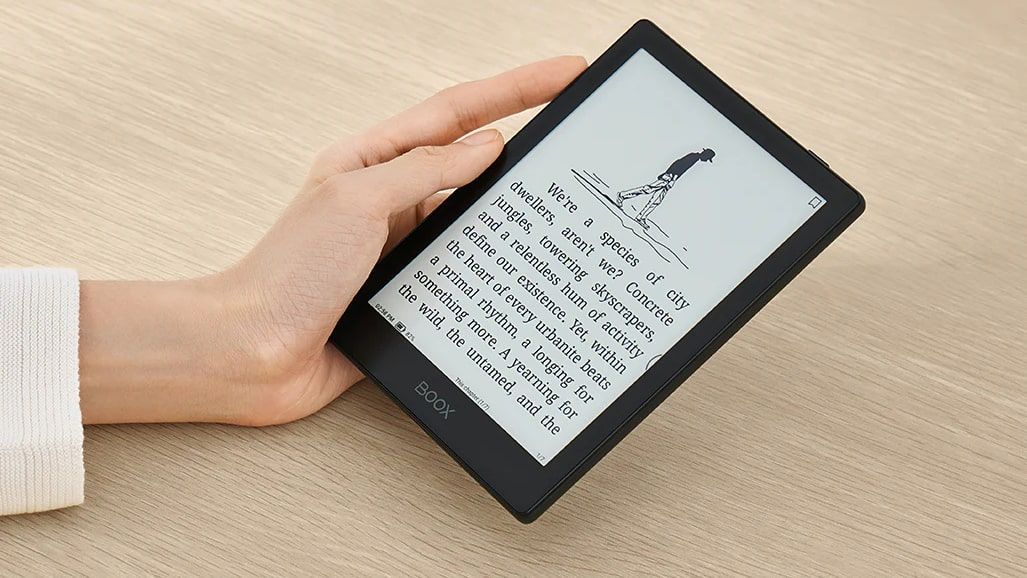
- Real-time Linguistic Translation: For readers navigating foreign-language texts, the device can provide instant translations without the need for manual lookups.
- Multi-Speaker Voice Recognition: For professionals or students using their e-readers for meeting notes or lectures, the device can now differentiate between speakers and generate accurate transcriptions.
- Intelligent Summarization: Users can highlight long-form documents or dense PDFs, and the on-device AI will provide a concise, high-level summary, effectively acting as a research assistant.
Official Perspectives: Bridging the Gap
The executives spearheading this initiative see it as an evolution of literacy rather than an intrusion into it. During the Computex 2026 presentation, JM Hung, VP of the Business Center at E Ink, emphasized the importance of optimization. "Building on our longstanding partnership with MediaTek, we continue to optimize the ePaper display experience," Hung stated, highlighting that the goal remains user comfort and visual fidelity.
Adam King, VP at MediaTek, provided a broader vision for the industry. "As generative AI reshapes the industry, we are combining MediaTek’s edge AI compute capabilities with E Ink’s full-color ePaper displays to evolve the digital reader into a true smart device," King noted. This perspective positions the e-reader as a tool for the "knowledge worker"—someone who needs the eye-friendly benefits of e-ink but cannot sacrifice the productivity tools offered by modern computing.
Implications: The Great Debate
The move to integrate AI into e-readers has been met with a mixture of excitement and apprehension. To understand the implications, one must look at why users choose e-readers in the first place.
The Case for "Smart" E-Readers
Proponents argue that e-readers are underutilized. By adding AI, the market for e-paper devices could expand beyond leisure readers to include researchers, lawyers, and students who spend hours staring at screens. A device that can summarize a 500-page report while maintaining the low-glare, eye-comfort benefits of an e-ink display could be a game-changer for those suffering from digital eye strain.
The "Distraction" Controversy
Conversely, the "purist" camp views these developments with suspicion. The fundamental appeal of an e-reader is its "boring" nature; it is a device built for a single task—reading—and it is arguably the last sanctuary from the constant barrage of notifications, AI prompts, and algorithmic suggestions that define the modern smartphone experience.
Critics argue that by introducing AI, manufacturers are effectively "bloating" the device. If an e-reader can transcribe meetings and summarize documents, will it eventually require a more complex operating system? Will it begin to suggest books or content via AI-driven marketing? The fear is that the "minimalist" interface will be replaced by a complex ecosystem that demands constant interaction, thereby destroying the very escapism that makes reading a unique human experience.
The Road Ahead: Will Amazon and Others Follow?
The silence from industry giants like Amazon (Kindle), Rakuten (Kobo), and Barnes & Noble (Nook) is notable. While these companies have been cautious about over-complicating their hardware, the pressure to innovate in a saturated market is immense.
If the E Ink and MediaTek partnership results in a superior, more fluid reading experience that consumers embrace, the major players will likely be forced to respond. The question then becomes: can they implement these AI features without turning the e-reader into a tablet-lite?
The challenge for manufacturers will be to implement "AI-optional" systems. If users can toggle these features off—keeping the device as a simple, distraction-free reader—the technology could be viewed as a welcome evolution. If the software forces interaction, the industry risks alienating its most loyal user base.
Conclusion
The partnership between E Ink and MediaTek marks a turning point in the history of e-paper technology. By prioritizing edge-based AI and hardware-level performance improvements, they are creating a new category of "Smart E-Paper" devices. While the technical improvements to color display rendering are universally praised, the integration of generative AI serves as a litmus test for the future of digital consumption.
As we move into the latter half of 2026, the industry will be watching closely to see if consumers truly want their reading devices to be "smart," or if the true luxury of the future will remain a simple, quiet screen that allows us to disconnect from the digital noise. For now, the e-reader is evolving—and whether that evolution is an improvement or an intrusion is a decision that will ultimately be made by the readers themselves.












No comments yet. Be the first to join the conversation!