Siti Muinah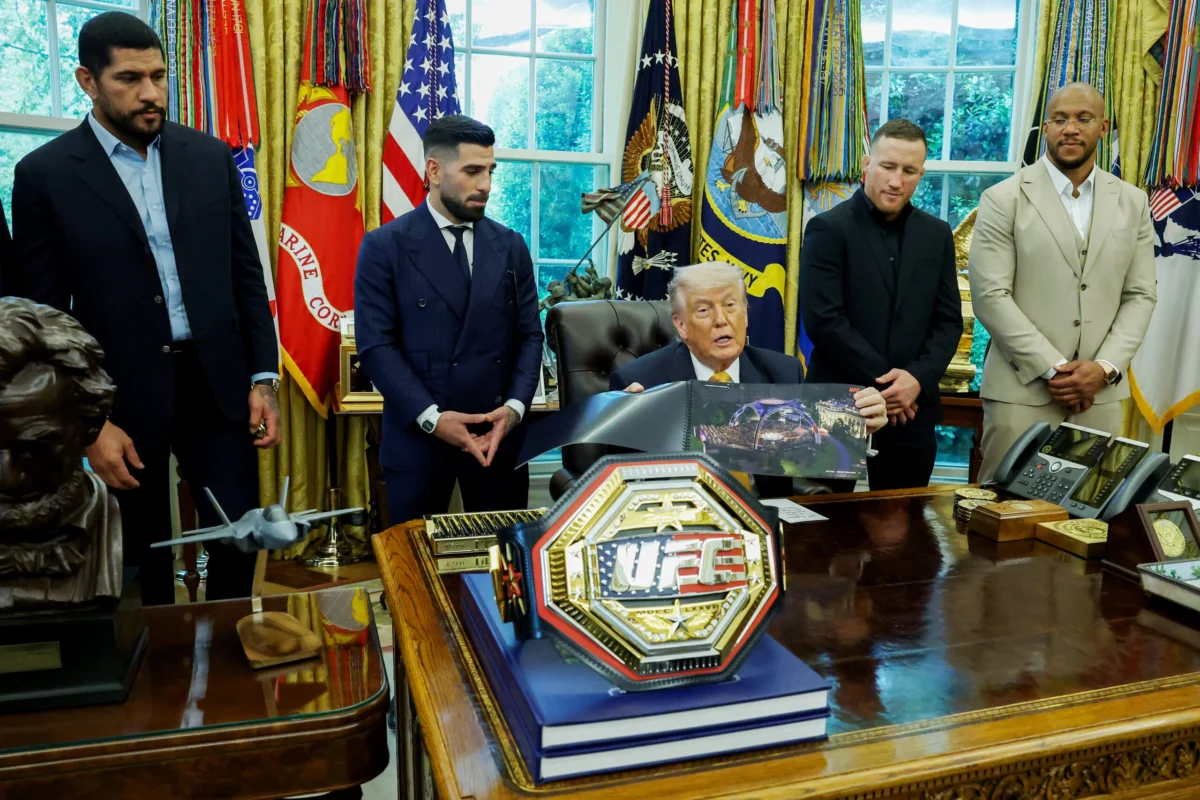
On the evening of June 14, 2026, the South Lawn of the White House—a space traditionally reserved for state dinners, Easter Egg rolls, and somber presidential addresses—will be transformed into the epicenter of global combat sports. As the sun sets over Washington, D.C., the world will bear witness to "UFC Freedom 250," a cage-fighting event that marks the collision of two of the most potent brands in the American zeitgeist: the Office of the President and the Ultimate Fighting Championship.
What began as an offhand remark between two long-time friends has spiraled into a $60 million logistical, cultural, and political gamble that defies conventional norms of governance and entertainment.
A Suggestion Born at Madison Square Garden
The genesis of this improbable event dates back to November 16, 2024, less than two weeks after the presidential election. President-elect Donald Trump was in attendance at UFC 309, held at New York’s Madison Square Garden. Surrounded by a cohort of political allies, including Elon Musk, Robert F. Kennedy Jr., and Tulsi Gabbard, Trump took in the fights alongside UFC CEO Dana White.
During a lull in the action, the conversation shifted from the bouts in the cage to the vision for the upcoming presidential term. According to White, Trump leaned over and proposed a radical idea: hosting a UFC event at the White House.

"I said, ‘Yes, we should,’" White recounted in an interview with The Hollywood Reporter. "I didn’t know what he meant… I was thinking maybe there’s some room that he’s thinking about where we’d have it. He’s like, ‘No, we’re gonna do it outside on the South Lawn.’"
For those in the UFC’s production team, the announcement was met with initial disbelief. Craig Borsari, the UFC’s chief content officer, admitted that when White first brought the idea to the internal team, he assumed it was a joke. "He’s funny, but he’s not a ‘joke around’ kind of guy," White explained. "Literally, when he says something, consider it done."
Chronology of a Mega-Event
Following that November conversation, the timeline for the event accelerated with military-like precision. By early 2026, the planning phase moved from conceptualization to execution.
- February 2026: TKO Group Holdings, the parent company of the UFC, publicly signaled the scope of the project. COO Mark Shapiro informed Wall Street analysts that the company would commit "upwards of $60 million" to the event, noting that the budget could climb even higher.
- May 6, 2026: President Trump hosted the event’s headlining fighters in the Oval Office, using the venue to emphasize the historical connection between his support for the UFC in the 1990s and the current, massive scale of the organization.
- Late May 2026: The physical transformation of the White House grounds began with the arrival of "The Claw," a massive, custom-built, temporary arena structure manufactured in Belgium and shipped via Philadelphia.
- June 13, 2026: The festivities kick off with a massive 85,000-ticket fan festival on the Ellipse, headlined by the Zac Brown Band, setting the stage for the following night’s main event.
- June 14, 2026: UFC Freedom 250 takes place on the South Lawn, coinciding with President Trump’s 80th birthday.
The Engineering of "The Claw"
The logistics of building a world-class sports arena on a historic landmark presented significant engineering hurdles. The goal, according to Dana White, was to ensure the infrastructure enhanced—rather than obscured—the setting.

"All I want to see during this fight is the White House, the full White House," White stated. "I don’t want to see a light, a microphone, any type of rigging, and if the fight goes the other way, I want to see the Washington Monument."
Borsari’s team conducted multiple laser-measurement surveys of the South Lawn to ensure the custom-built "Claw" structure could provide the necessary broadcast lighting and cover without ruining the wide-angle shots that will define the television aesthetic. The result is a structure that towers over the lawn, designed to frame the executive mansion in every broadcast shot.
However, the environment remains a concern. Beyond the structural engineering, White noted the unpredictable variables of an outdoor event in the nation’s capital, specifically the risk of rain, lightning, and the swarms of insects that proved to be a "brutal" distraction during a recent Rose Garden dinner.
Strategic Investments and Media Synergy
While the event is technically a sporting competition, TKO Group Holdings views UFC Freedom 250 as a long-term strategic investment. Despite an anticipated $30 million loss on the night of the event—even with high-profile sponsors like Ram Trucks and Crypto.com—leadership insists the "earned media" value will be astronomical.

The Paramount-UFC Integration
The event serves as a crucial showcase for the seven-year, $7.7 billion deal between the UFC and Paramount+. For Paramount, the data indicates a clear path to growth. Efrain Miron, head of content strategy for Paramount’s direct-to-consumer division, noted that the UFC audience is significantly younger than the platform’s traditional demographic, with a high correlation between UFC viewers and fans of shows like South Park.
"We see this once-in-a-lifetime stage as a strategic investment to drive subscriber acquisition at Paramount+," Mark Shapiro explained. By simplifying the viewing process—moving away from the "double paywall" model of the ESPN+ era—the UFC hopes to convert millions of casual viewers into loyal subscribers.
The Political and Cultural Prism
The optics of UFC Freedom 250 are inextricably linked to the current political climate. By hosting a "visceral" sport on the grounds of the White House, the Trump administration and the UFC are inviting a level of scrutiny that goes far beyond sports reporting.
A Test of Neutrality
Dana White has consistently pushed back against the narrative that the event is a political statement. "This is the 250th birthday of America. That’s the story that we’re going to tell," White stated. He argues that the event is intended to transcend partisan lines, framing it as a celebration of American resilience and independence.

However, critics point to the guest list—which is dominated by members of Congress and the administration—and the timing of the event on the President’s birthday as evidence that the lines between statecraft and entertainment have been effectively dissolved. The event occurs amid the backdrop of a potential $111 billion merger between Paramount and Warner Bros. Discovery, adding a layer of corporate intrigue to the spectacle.
The "Greatest Show on Earth"
Whether UFC Freedom 250 succeeds in its attempt to unify the country through combat sports remains to be seen. What is certain is that the event has captured the public imagination. From the Joe Rogan-narrated hype segments to the anticipation of seeing fighters walk from the vicinity of the Oval Office to the cage, the event is designed to be, as President Trump described, "the greatest show on earth."
For the UFC, it is a high-stakes gamble on the power of spectacle. For the White House, it is a bold redefinition of how a president can use the bully pulpit—and the front lawn—to engage with the American public. As the world watches on June 14, one thing is clear: the era of the traditional sports event has been superseded by something far more ambitious, unpredictable, and undeniably historic.

 Sagoh
Sagoh
 Nana Wu