

As Christopher Nolan prepares for the July release of his highly anticipated, big-budget adaptation of Homer’s The Odyssey, the project has become the center of an increasingly vitriolic cultural firestorm. While the film was expected to be a cinematic triumph following the massive success of the Oscar-winning Oppenheimer, it has instead become a lightning rod for debates surrounding casting, creative freedom, and the shifting landscape of modern Hollywood.
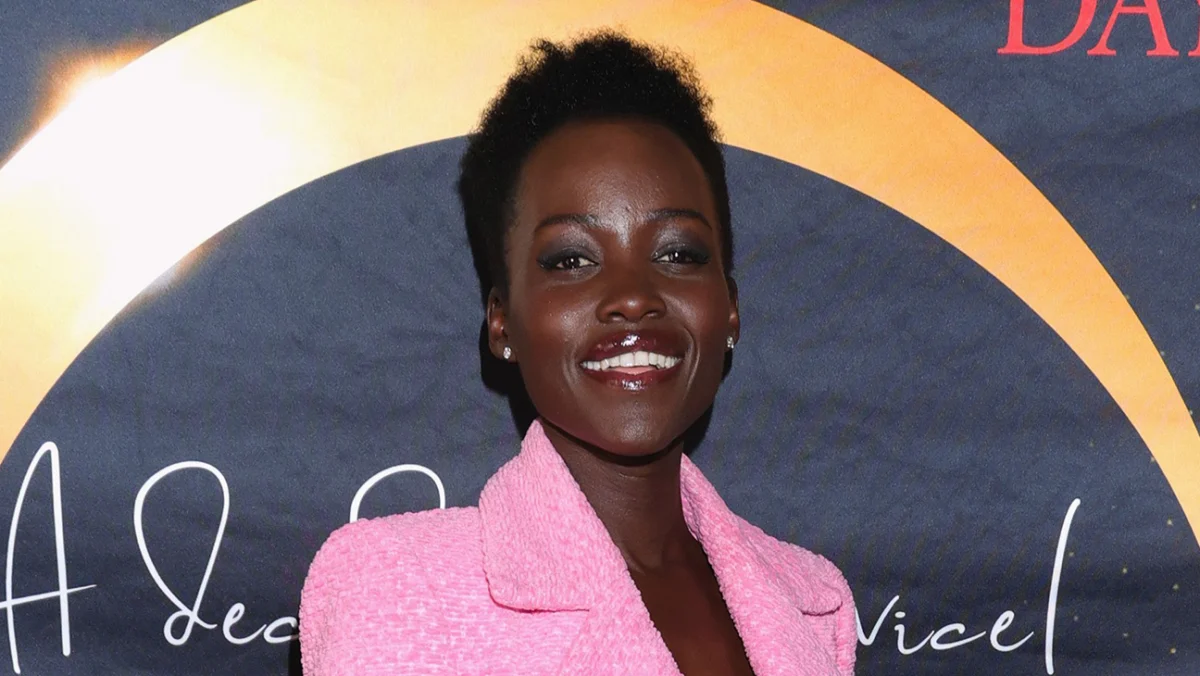
At the heart of the controversy is the casting of Academy Award-winning actress Lupita Nyong’o as Helen of Troy. The decision, recently confirmed in a Time magazine cover story, has prompted public outcry from conservative commentators, most notably Daily Wire host Matt Walsh, whose criticisms were amplified by X (formerly Twitter) owner Elon Musk.
Main Facts: A High-Stakes Adaptation
Christopher Nolan’s The Odyssey has been shrouded in secrecy for months, with only fragments of information reaching the public until the recent Time feature. The production boasts a star-studded ensemble cast, including Matt Damon as Odysseus, Tom Holland as Telemachus, Anne Hathaway as Penelope, Robert Pattinson as Antinous, and Zendaya as Athena.
However, the spotlight has fixed firmly on Lupita Nyong’o. In Homer’s original epic, Helen is famously described as the "most beautiful woman in the world," the catalyst for the Trojan War—the "face that launched a thousand ships." The casting of a Black woman in this iconic role has ignited a fierce debate regarding historical accuracy, "color-blind" casting, and the extent to which modern social sensibilities influence the creative decisions of A-list directors.
Chronology of the Conflict
The discourse surrounding Nolan’s casting choices did not emerge in a vacuum; it has been brewing for months, characterized by a series of escalating online confrontations.
The Initial Backlash
As early as January, rumors regarding the casting of The Odyssey began to circulate, prompting immediate reactions from some high-profile figures. Elon Musk, who has frequently used his platform to comment on "woke" culture in entertainment, was among the first to publicly criticize the project. At that time, rumors of other casting choices—specifically the potential involvement of trans actor Elliot Page as Achilles—drew a sharp rebuke from the tech billionaire.
Musk described the prospect of Page as Achilles as "one of the dumbest and most twisted things I’ve ever heard." The comment drew additional scrutiny due to Musk’s personal history; his own trans daughter, Vivian Jenna Wilson, has been estranged from her father since turning 18, a situation that has played out in the public eye. During the same period, Musk explicitly declared that "Chris Nolan has lost his integrity," signaling a hardening stance against the director.
The Walsh-Musk Exchange
The tension escalated on Tuesday following the Time magazine confirmation of Nyong’o’s role. Matt Walsh, a conservative political commentator known for his documentaries What Is a Woman? and Am I Racist?, posted a critique on X. He argued that the casting was a performative act, writing, "Not one person on the planet actually thinks that Lupita Nyong’o is ‘the most beautiful woman in the world.’ But Christopher Nolan knows that he would be called racist if he gave ‘the most beautiful woman’ role to a white woman."
Walsh concluded his post by labeling the director a "coward" who is "too afraid to do anything that even slightly challenges the spirit of the age." Elon Musk replied to the post with a succinct, "True."
On Wednesday, the exchange deepened when Walsh pushed for the role to be given to an actor like Sydney Sweeney. He framed the debate as a matter of institutional hypocrisy, claiming that if a studio were to cast a white woman as the "most beautiful woman in Africa" for a film set on the continent, it would result in public outcry and "murderous violence." Musk again entered the thread, adding, "Absolutely true. Such hypocrisy in Hollywood."
Supporting Data: The Career of Lupita Nyong’o
To understand the weight of the controversy, one must consider the subject of the criticism. Lupita Nyong’o is widely considered one of the most talented actors of her generation. A graduate of the prestigious Yale School of Drama, she gained international acclaim with her breakout performance in Steve McQueen’s 2013 Best Picture winner, 12 Years a Slave, for which she earned the Academy Award for Best Supporting Actress.
Her career has been defined by versatility and prestige. From her dual role in Jordan Peele’s horror masterpiece Us to her recurring appearances as Nakia in the Marvel Cinematic Universe’s Black Panther franchise, Nyong’o has demonstrated an ability to command both intimate, dialogue-heavy dramas and high-octane blockbusters. Her most recent lead performance in A Quiet Place: Day One further cemented her status as a box-office draw. Critics of the current casting controversy argue that the backlash overlooks her proven artistic merit in favor of regressive ideological purity tests.
Official Responses and Industry Silence
As the social media discourse reached a fever pitch, The Hollywood Reporter reached out to representatives for both Musk and Nyong’o for comment. The responses—or lack thereof—highlight the cautious atmosphere surrounding the production.
A representative for Christopher Nolan declined to comment on Musk’s statements, referring inquiries to Universal Entertainment. The studio, in turn, declined to address the specifics of the director’s creative choices or the external commentary. Representatives for Nyong’o did not respond to requests for comment.
Meanwhile, Matt Walsh continued to double down on his stance, dismissing accusations of racism from his own followers. In a later post, he wrote, "It’s funny that these people think they still accomplish something with the ‘erm actually this is racist’ routine. We don’t give the slightest shit if you think something is racist. The word has no meaning coming from you."
Implications: A Shifting Cultural Landscape
The controversy surrounding The Odyssey is emblematic of a broader, deeper schism in American culture, particularly as it relates to the entertainment industry.
The "Auteur" vs. The Audience
Christopher Nolan has long been viewed as one of the few directors capable of bridging the gap between high-concept intellectualism and massive commercial appeal. His ability to control his projects, from Inception to Dunkirk, has granted him a level of creative autonomy rarely seen in modern Hollywood. The current backlash suggests that even the most "untouchable" filmmakers are now subject to the intense, real-time scrutiny of social media audiences who demand adherence to their specific cultural or historical expectations.
The Role of Social Media Platforms
The involvement of Elon Musk brings a unique dimension to this debate. As the owner of X, Musk is no longer a passive observer; his engagement with these topics can amplify specific political critiques to hundreds of millions of users instantly. By validating the claims of commentators like Walsh, Musk is actively participating in the "culture wars" that have begun to define the marketing and reception of major studio releases.
The Future of Casting
The question remains: will this controversy impact the film’s performance? History suggests that high-profile social media "boycotts" or controversies often have little impact on the final box office numbers of blockbuster films, as general audiences tend to be driven by star power and visual spectacle. However, the intensity of this debate suggests that "blind casting"—the practice of selecting actors based on ability rather than strict adherence to historical or source-material demographics—will continue to be a primary battleground for the foreseeable future.
As the release of The Odyssey approaches, the film will be forced to exist in a reality where the conversation is as much about who is playing the parts as it is about the performance itself. For Nolan, a director who has always focused on the integrity of his vision, the coming months will be a test of whether his audience will focus on the mythic scale of his storytelling or be distracted by the cacophony of the digital age.











No comments yet. Be the first to join the conversation!