Pevita Pearce
The landscape of portable gaming has been irrevocably altered over the last three years. With the explosive popularity of the Steam Deck and the subsequent influx of Windows-based handhelds from ASUS, Lenovo, and MSI, the "big three" console manufacturers have faced a mounting question: when will they join the fray? While Nintendo has long dominated the space with the Switch, Sony and Microsoft have remained largely on the sidelines—until now.
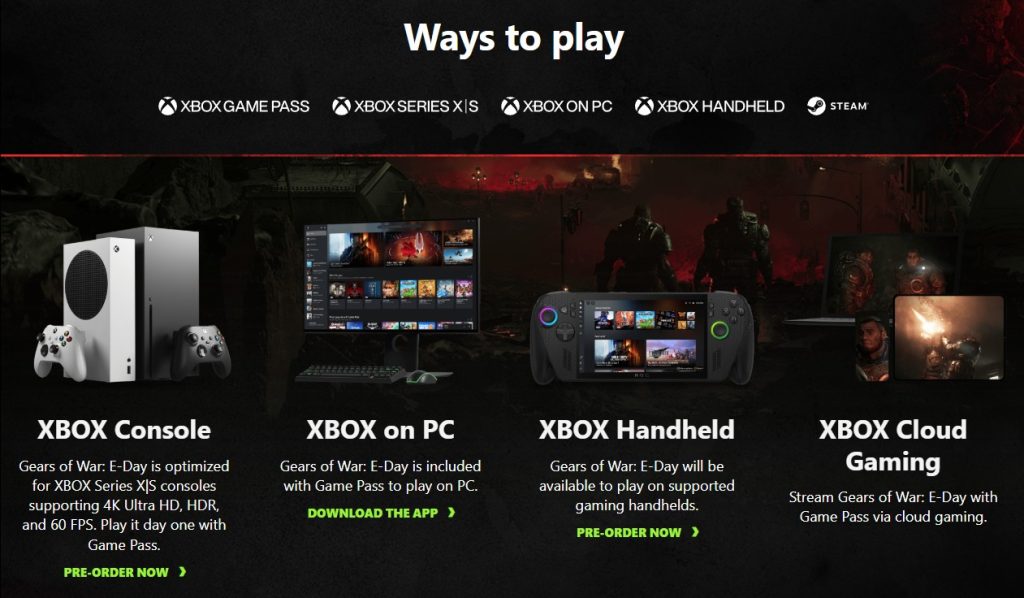
Recent activity on official Microsoft game store pages has sent shockwaves through the industry, as a new "XBOX Handheld" logo has begun appearing alongside traditional platform badges. This development, while subtle, serves as a significant signal regarding Microsoft’s future hardware roadmap and its commitment to the burgeoning portable market.
The Discovery: What the "XBOX Handheld" Logo Means
The discovery, first brought to light via reports from Notebookcheck, indicates that Microsoft is actively categorizing its software library for a handheld experience. The badge has been spotted on the store pages for highly anticipated upcoming titles, including Gears of War: E-Day, Halo: Campaign Evolved, and State of Decay 3.
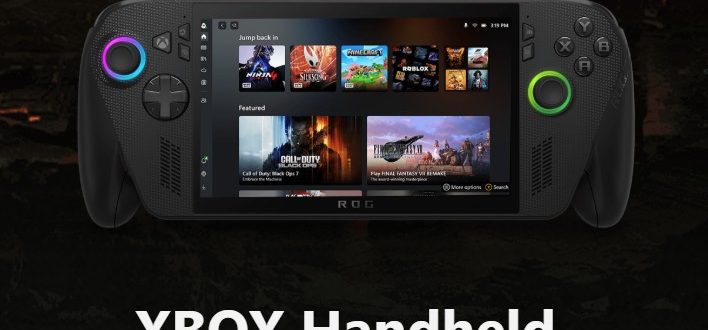
Crucially, the badge does not read "Xbox on handhelds"—a phrasing that might imply generic compatibility. Instead, it specifically uses the branding "XBOX Handheld." By placing this logo in the "Ways to play" section of its storefront, Microsoft is establishing a standardized certification program.
Current evidence suggests that this tag is being applied to devices like the ASUS ROG Ally and ROG Ally X. By verifying which titles are optimized for portable Windows hardware, Microsoft is effectively creating an "Xbox Handheld" ecosystem that exists independently of a singular, proprietary piece of hardware. This move allows Microsoft to capture the portable market share currently held by third-party OEMs while maintaining the brand identity of the Xbox ecosystem.
A Chronology of Microsoft’s Portable Ambitions
To understand the weight of this new logo, one must look at the timeline of Microsoft’s evolving relationship with portable gaming.
- The Early Rumors (2023): As the success of the Steam Deck solidified, industry insiders began reporting that Microsoft had entered the early R&D phase of a "Project Helix" handheld. Speculation was rampant that Microsoft was prototyping a device capable of running games natively rather than relying solely on Cloud Gaming.
- The Period of Uncertainty (Early 2024): Mid-year reports surfaced suggesting that the project had faced significant internal hurdles. Many analysts argued that Microsoft’s pivot toward a software-first approach—prioritizing Game Pass subscriptions over hardware sales—might have led to the cancellation or indefinite delay of a first-party handheld.
- The Hardware Pivot (Late 2024 – Early 2025): The rise of the ROG Ally and the Legion Go forced Microsoft’s hand. Rather than ignoring these Windows-based handhelds, Microsoft began closer collaborations with ASUS and Lenovo to optimize Windows 11 for smaller form factors and controller-based navigation.
- The Present (June 2026): The official implementation of the "XBOX Handheld" logo marks the culmination of this strategy. It is no longer just a rumor; it is a live, consumer-facing feature on the official Xbox store.
The Logic of the "Handheld" Badge: Data and Compatibility
The decision to implement this badge is rooted in the complex reality of the PC gaming market. Unlike the console environment, where every Xbox Series X is identical, the "PC handheld" market is fragmented. Different chips (AMD Z1 Extreme, Intel Core Ultra), varying screen resolutions (1080p vs. 1200p), and inconsistent thermal envelopes make it difficult for the average consumer to know if a game will perform adequately on their device.
By introducing the "XBOX Handheld" label, Microsoft is providing a "seal of approval." It informs the consumer that the game has been tested and verified to run on portable hardware. This is a critical data-driven move:
- Standardization: It signals that Microsoft is likely enforcing performance targets for its first-party studios to ensure their games are "Handheld Ready" at launch.
- Market Expansion: It allows Xbox to treat portable Windows devices as a distinct platform, potentially allowing for specialized "Handheld" game modes, optimized UI/UX, and power-saving settings that are absent in the desktop version of the game.
- Cross-Platform Synergy: By unifying the branding, Microsoft ensures that users feel they are part of the Xbox family, whether they are playing on a $500 handheld or a $5,000 gaming rig.
Official Responses and Strategic Silence
To date, Microsoft has maintained a carefully crafted silence regarding a dedicated, first-party Xbox handheld console. When questioned about the potential for a "Surface-style" gaming handheld, company executives, including Phil Spencer, have frequently pivoted to the importance of the Windows ecosystem.
"Our goal is to make sure that the player’s experience is seamless, regardless of the hardware they are using," a spokesperson for Xbox stated during a recent industry briefing. While they declined to comment on the specific "XBOX Handheld" branding, they noted that the company is "continually looking for ways to make our storefront more user-friendly for the diverse range of devices that run Windows."
This strategic ambiguity is classic Microsoft. By avoiding a hard "yes" or "no" regarding a first-party device, they retain the flexibility to pivot. If the "XBOX Handheld" certification program succeeds in dominating the portable space through third-party hardware, they may never need to release their own physical unit. Conversely, if the market signals a demand for a highly optimized, proprietary Xbox portable experience, the infrastructure (the logo, the software optimization, the storefront support) is already in place to support a launch.
Implications for the Industry
The implications of this move are far-reaching for gamers, developers, and competitors alike.
For the Consumer
For the average gamer, this is a win. The uncertainty surrounding "will this game run well on my handheld?" is a primary pain point for portable PC gaming. Microsoft’s certification reduces the friction of purchase, allowing users to trust that their device is supported by the platform holder.
For the Competition
Sony and Nintendo will be watching closely. Nintendo’s upcoming successor to the Switch will need to contend with a Microsoft that has successfully expanded its reach into the portable space without the overhead of manufacturing a new console. Sony, currently focused on the PlayStation Portal (a streaming-only device), may find itself increasingly isolated if the market shifts toward the "full PC in your pocket" philosophy championed by Microsoft.
For the Future of "Project Helix"
Does this logo kill the dream of an Xbox-branded handheld console? Quite the opposite. The logo serves as a bridge. It creates a defined category of "Handheld" within the Xbox ecosystem. If Microsoft were to release a dedicated console tomorrow, it would not have to fight for recognition; it would simply be the "Gold Standard" device within the already established "XBOX Handheld" category.
Conclusion: A Measured Expansion
Microsoft is not acting out of desperation, but out of a calculated desire to own the platform layer of the portable revolution. By refusing to limit themselves to a single piece of proprietary hardware, they are turning every Windows-based handheld into an extension of the Xbox brand.
Whether or not we ever see a dedicated "Xbox Handheld" console in the vein of a Game Boy or a PlayStation Vita is, in many ways, irrelevant. Microsoft has effectively "soft-launched" its handheld platform. By branding the experience, certifying the software, and integrating the store, they have signaled that the era of Xbox on the go is no longer a future promise—it is the present reality. For those who have been waiting for Microsoft to take portable gaming seriously, the presence of that small, black-and-white badge on store pages is the most significant development in years. The "Xbox Handheld" is here, even if it is currently living on hardware made by someone else.

 Reynand Wu