This week, we take a deep dive into the intersection of fan culture, speculative history, and the harsh realities of big-budget filmmaking. From the artistic revitalization of the Los Angeles Science Fantasy Society (LASFS) clubhouse to the retrospective analysis of 1990s blockbusters and the latest in space exploration, here is your comprehensive briefing on the current state of the genre and beyond.
1. Clubhouse Beautification: The LASFS Aesthetic Upgrade
The Los Angeles Science Fantasy Society (LASFS) has unveiled a striking series of new murals on the storage container situated behind their recently inaugurated clubhouse. The artwork, created by Selina Phanara, infuses the industrial space with a vibrant, sci-fi-inspired aesthetic.
The murals have drawn particular praise from the community for their attention to detail—specifically the mission number displayed on the depicted rocket, a nod that has resonated deeply with the local fan base. These murals serve as more than just decoration; they represent a commitment to fostering an immersive environment for the club’s members, transforming mundane infrastructure into a visual tribute to the genre’s enduring legacy.
2. American Rejects: The Constitutional Paths Not Taken
A recent feature in Yahoo! has reignited interest in the "what-ifs" of American political history, highlighting five constitutional amendments that, had they passed, would have fundamentally altered the United States.
The "United States of the Earth"
In 1893, Representative Lucas Miller of Wisconsin introduced 46 bills in a single day. Among his most radical proposals was the renaming of the nation to the "United States of the Earth." Miller’s vision was one of infinite expansion; he argued that the republic could grow through the admission of new states until every nation on Earth was incorporated into the Union. The proposal was met with derision, with the press branding Miller a "crank," and he failed to secure his party’s nomination for a second term.

The Death of the Presidency
The mid-19th century saw several attempts to dismantle the executive branch. In 1860, as the nation teetered on the brink of the Civil War, Representative John William Noell proposed replacing the single presidency with a three-person executive council. Members would be elected by region and hold mutual veto power. This idea resurfaced in 1878 via Representative Milton Isaiah Southard, who argued that the American people were inherently opposed to the "one-man power" of a monarchy. These legislative ghosts serve as a reminder of the radical experimentation that once defined the early American political discourse.
3. Cinematic Autopsy: The Supergirl Box Office Failure
The Hollywood Reporter has published an in-depth analysis of the recent Supergirl film, a project that has become a textbook case of a "box office bomb." The report paints a picture of a studio in crisis, grappling with creative misalignment and post-production desperation.
Chronology of a Collapse
- May 2025: Principal photography concludes.
- Fall 2025: Internal screenings suggest the film is not resonating.
- December 2025: Test screenings confirm that the film is "just okay," prompting DC Studios to seize control of post-production.
- February/March 2026: Additional photography occurs, including a nine-day shoot to reconfigure the film’s climactic battle.
Creative Friction and the Soundtrack
A key point of contention was the film’s soundtrack. DC Studios head James Gunn is known for his mastery of the "needle drop," but the creative clash between Gunn and director Craig Gillespie proved fatal to the film’s tone. While early cuts featured a cover of Cyndi Lauper’s "Girls Just Want to Have Fun," the final version opted for a cover of Jimmy Eat World’s "The Middle," a decision that has drawn heavy criticism from both audiences and industry analysts. The reconfiguration of key scenes and the heavy involvement of writer Jeremy Slater in the final months highlight a fundamental lack of consensus on the film’s identity.
4. Before Mars Attacked: Independence Day at 30
As Independence Day marks its 30th anniversary, director Roland Emmerich and producer Dean Devlin have reflected on the origins of the blockbuster that defined a generation of disaster cinema.
The "Welcome to Earth" Genesis
The film’s iconic imagery—massive ships blotting out city skylines—originated from a conversation in Devlin’s home. Emmerich wanted to capture the sheer scale of an alien invasion. The title "Independence Day" was a calculated move to secure a release date ahead of Tim Burton’s Mars Attacks!. While Mars Attacks! faltered, Independence Day earned over $800 million globally, cementing its place in pop culture history.

The Stargate Connection
Devlin offers a different origin story, citing a frustrated reporter who asked if the duo believed aliens built the pyramids during the Stargate press tour. That skepticism sparked the concept: "What if we woke up tomorrow morning and walked outside to get the newspaper and above it was a 15-mile-wide spaceship?"
5. Memory Lane: WarGames and the Cold War
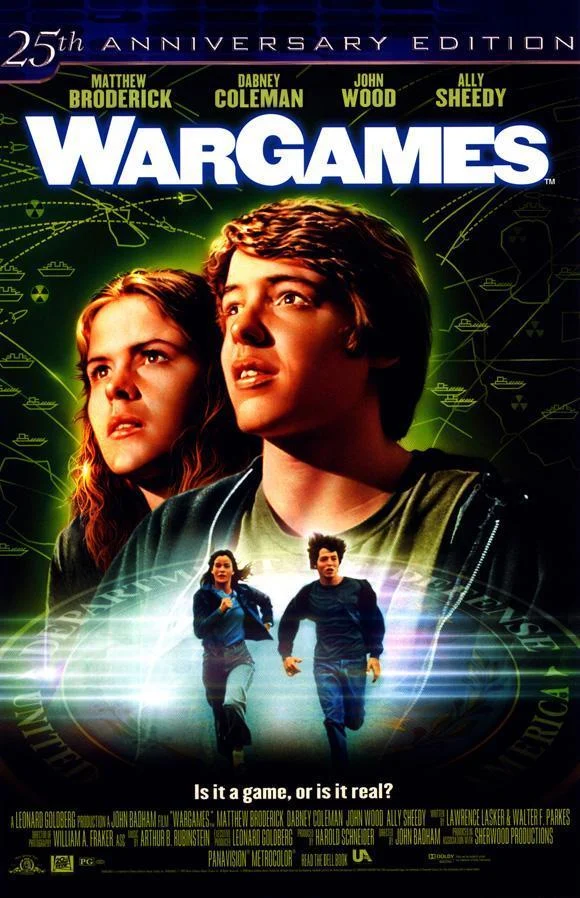
Paul Weimer revisits the 1983 classic WarGames, examining its impact on a generation raised under the shadow of mutually assured destruction.
The Absurdity of War
WarGames moved beyond the grim, serious tone of contemporary films like Colossus: The Forbin Project. Instead, it used the metaphor of a "game" to expose the bankruptcy of nuclear strategy. The film’s mantra—"the only winning move is not to play"—remains a cornerstone of sci-fi philosophy.
Modern Relevance
The film hit differently just months after its release, when Stanislav Petrov identified a system glitch that suggested a U.S. first strike. This real-world incident transformed WarGames from a mere thriller into a hauntingly accurate depiction of how technological fragility could lead to global catastrophe.
6. Let Rover Come Over: NASA’s Lunar Ambitions
NASA has announced plans to potentially send an unused Mars rover to the lunar south pole. The rover, named PROMISE (Polar Rover for Observation, Mapping and In-Situ Exploration), was originally the engineering test model for Curiosity and Perseverance.

Technical Implications
Unlike solar-powered missions, PROMISE uses a plutonium power source. This is critical for the lunar south pole, where the rover must survive two weeks of darkness and temperatures as low as -200 degrees Fahrenheit. NASA officials, including administrator Jared Isaacman, believe this technology will provide an "immense capability" for lunar exploration, allowing for long traverses into crater regions previously inaccessible to solar-reliant equipment.
7. Skylab: The Space Station That Almost Wasn’t
Smithsonian Magazine has highlighted the return of the Skylab backup flight unit to public display. The original Skylab, launched in 1973, suffered catastrophic damage during ascent, losing a solar array and a heat shield.
The subsequent repair mission by the crew of Skylab 2 is now the stuff of NASA legend. Communications from the crew were famously laced with expletives as they struggled to deploy a makeshift sunshield. This "we fix anything" attitude secured the future of the station and provided a critical proof-of-concept for long-duration human spaceflight. The Smithsonian’s decision to display the backup unit with only one solar array extended serves as a poignant, historically accurate tribute to the damaged laboratory that once orbited above us.
8. Timey-Wimey Physics and Adaptation Analysis
Finally, in the realms of science education and critical analysis:
- PBS Space Time: A recent video explores the potential of combining the Schrodinger’s Cat thought experiment with the twin paradox of relativity. The question posed—could we be simultaneously old and young if we sent a quantum twin around the galaxy?—continues to push the boundaries of public understanding regarding quantum time.
- Lost in Adaptation: YouTuber Dominic Noble has released an analytical deep-dive into the adaptation of Project Hail Mary. By breaking down the narrative shifts between Andy Weir’s novel and its film counterpart, Noble explores the inherent difficulties of translating hard science fiction to the screen, particularly when balancing technical accuracy with emotional resonance.
This report was compiled with contributions from Mike Kennedy, Andrew Porter, John King Tarpinian, N., Cat Eldridge, Jonathan Cowie, Chris Barkley, Mark Roth-Whitworth, Kathy Sullivan, and Steven French. Title credit goes to Kip W.