Ammar Sabilarrohman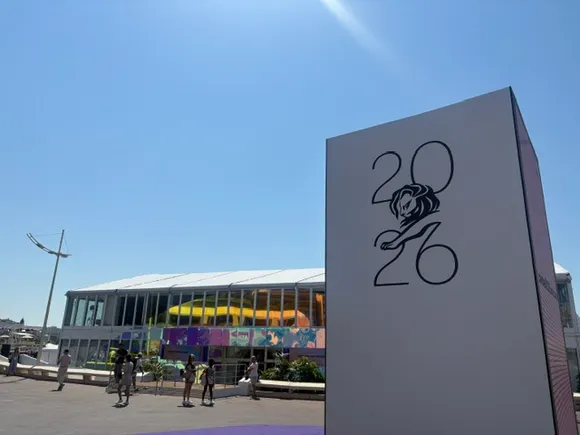
The French Riviera has long served as the global epicenter for the advertising industry, a place where the salt air of the Mediterranean meets the high-stakes boardroom negotiations of the world’s largest brands. This year’s Cannes Lions International Festival of Creativity, however, felt less like a celebration of radical reinvention and more like a period of sober consolidation. As the industry grapples with the seismic shifts brought on by generative artificial intelligence, economic contraction, and the democratization of content creation, the festival served as a mirror reflecting an industry caught in a profound tug-of-war between technological efficiency and human-centric artistry.
Main Facts: A Festival in Transition
At its core, the 2024 edition of Cannes Lions was defined by a tension between the automated and the authentic. While the buzz around AI reached a fever pitch, there was a palpable sense of fatigue among veteran attendees who felt the technology had yet to deliver on its promise of creative "wow" factor.
The festival highlighted a critical shift: while approximately 40% of all entries showcased some form of AI integration, the most celebrated and awarded campaigns were those that aggressively pivoted toward manual craft, analog techniques, and raw, human imperfection. This duality dominated the narrative, suggesting that in an era where machines can generate infinite content, the "human touch" has become the industry’s most scarce and valuable commodity.
Chronology: The Week of Contrasts
The week-long event unfolded in a series of distinct phases, mirroring the evolving priorities of the marketing C-suite:
- Early Week (The Tech Hype Cycle): The initial days were dominated by major tech platforms showcasing their latest generative AI tools. Despite the glitz of the promenade, early feedback from senior executives indicated a growing impatience with the superficial application of these tools. The conversation quickly shifted from "What can AI do?" to "What business value does it actually generate?"
- Mid-Week (The Craft Correction): By Wednesday, the conversation pivoted toward the creative winners. The recognition of work like Coinbase’s "Your Way Out" and Apple TV’s analog-inspired rebrand signaled a return to traditional storytelling and artisanal precision. Attendees began to openly contrast these tangible successes against the abstract promises of AI-only activations.
- Late Week (The Strategy of Integration): The final days focused on the professionalization of the creator economy. With creator-led marketing projected to reach a $44 billion valuation in the U.S. by 2026, the focus shifted from "influencer marketing" as an experimental side-hustle to a core, integrated pillar of enterprise-level media strategy.
Supporting Data: The Economic and Structural Shift
The festival occurred against a backdrop of financial scrutiny. Recent data points highlight the changing landscape of how brands participate in global events:
- The AI Proliferation: With nearly 40% of submissions utilizing AI, the technology is no longer a niche tool; it is foundational. However, the disconnect remains: while efficiency gains are being realized in production, the "business impact" of these gains remains largely unproven in the eyes of industry leaders.
- The Creator Boom: Forecasts from the Interactive Advertising Bureau (IAB) indicate a staggering growth trajectory for creator-led media, with spending expected to hit $44 billion in 2026. This data underscores why agencies are no longer siloing creator strategy but are instead embedding it into the heart of their creative ecosystems.
- Leaner Delegations: The "Cannes party" reputation is facing a reality check. Compared to pre-pandemic years, many organizations have significantly trimmed their rosters. CMOs are increasingly traveling with "surgical teams"—small, high-impact groups—rather than bloated entourages, reflecting a wider trend of fiscal tightening across the marketing landscape.
Official Responses: The Voice of the Industry
Industry leaders provided a candid assessment of the current state of affairs, often pointing to a gap between the festival’s presentation and the daily reality of agency life.
Angela Tangas, Global CEO of Oliver, articulated the skepticism surrounding AI: "Everyone’s in an arms race to try and demonstrate some form of value when it comes to utilization of AI. At the moment, all that value is focused on efficiency gains as opposed to focusing on true business impact."
Rebecca Sykes, partner and head of emerging technology at The Brandtech Group, noted the lack of genuine innovation on the festival floor: "There’s a lot of tech presence, there’s not a lot of technological ‘wow.’ You know the technology’s way more advanced than what’s actually on the show or being demonstrated because the focus is on the activations that make sense on the beach."
Daale Carter, Chief Client Experience Officer at BBDO, echoed the sentiment that the festival occasionally struggles to keep pace with the practitioners: "You realize you’re five steps ahead of where the conversation is in many spaces."
Perhaps most telling was the perspective of Instacart CMO Laura Jones, who noted the rarity of genuine insight: "The most surprising thing for me has been I’ve actually had a few events with really substantive, thoughtful conversation," she remarked, while acknowledging that a vast majority of festival content remains "platitude-laden puff."
Implications: Where Does the Industry Go From Here?
The End of the "Everything" Brand
One of the most profound takeaways from the festival is the move away from the "all-encompassing" brand strategy. In an age of digital noise, brands are finding that attempting to be everything to everyone results in a diluted message. The success of campaigns like Dove—which featured real, critical Reddit reviews—proves that modern consumers crave honesty over airbrushed perfection. This "warts-and-all" approach is becoming a competitive advantage.
The Professionalization of Creators
The days of transactional, one-off influencer deals are effectively over. The integration of creators into the broader marketing ecosystem implies that they are now viewed as strategic partners rather than simply distribution channels. For marketers, this means the challenge of the coming year will be balancing the creator’s authentic voice with the brand’s rigid business requirements.
The Return to Human-Centric Craft
As AI begins to commoditize the "average" ad, the value of the "extraordinary" ad—that which requires human intuition, empathy, and manual craft—will only rise. The Grand Prix-winning work at this year’s Cannes Lions proves that while technology may handle the heavy lifting of production, the creative spark that defines a brand’s soul remains resolutely human.
The Sustainability of the Festival
Finally, the "Cannes experience" itself is under pressure. The dissonance between mass agency layoffs and the extravagant nature of the festival is no longer ignored by the industry. Moving forward, for Cannes Lions to remain relevant, it must justify its existence not through beachside excess, but by delivering tangible, actionable, and substantive intelligence that helps agencies and brands survive an era of constant, rapid-fire disruption.
As the sun sets on another Cannes Lions, the industry departs with a clearer understanding of its path: the future belongs to those who can master the efficiency of the machine while never losing sight of the human truth that makes an ad resonate in the first place. Whether the industry can balance this duality—and whether the festival can provide the necessary air conditioning (both literal and metaphorical) to keep the conversation cool—remains the defining question for the year ahead.

 Nana Wu
 Neng Nana