As the third season of HBO’s House of the Dragon reaches its midpoint, the narrative focus has shifted significantly from the internal squabbles of Dragonstone to the volatile landscape of the Reach. Following three episodes dominated by Rhaenyra Targaryen’s strategic maneuvering, the fourth episode, titled "Tumbleton," provides a harrowing, in-depth exploration of Team Green’s mobilization. By turning the lens toward a previously obscure market town, the series successfully elevates the stakes of the Dance of the Dragons, highlighting the human cost of the civil war and the rise of a new, formidable antagonist.
The Strategic Significance of Tumbleton
The choice of "Tumbleton" as the episode title is a deliberate masterstroke in narrative framing. In the expansive history of George R.R. Martin’s Westeros, Tumbleton has historically functioned as a peripheral, relatively inconsequential settlement. Unlike the centers of power such as King’s Landing or Dragonstone—where the machinations of the Iron Throne are a constant, pulsating reality—Tumbleton has remained a quiet corner of the Reach.
By centering the episode here, the showrunners signal a departure from high-politics to the gritty, ground-level reality of a nation at war. As Martin’s lore suggests, backwaters rarely attract the attention of the great and powerful unless they are destined to become a pyre for their ambitions. The town, situated at the headwaters of the Mander, is suddenly thrust into the spotlight, serving as the latest focal point in the conflict. Its inclusion acts as a stark reminder that the “game of thrones” is not merely played by those wearing crowns, but is felt most acutely by those living in the shadow of the great houses.
Unraveling the Tapestry: Symbolic Foreshadowing
The opening credit sequence remains a vital interpretive tool for dedicated viewers. In this week’s iteration, the tapestry features a new, cryptic panel: two figures, one whispering intently into the ear of the other. While speculation is rampant, the figures appear to represent the shifting alliances of the Black council, with some observers pointing to a potential clandestine dialogue between Corlys Velaryon and Torrhen Manderly.
Perhaps most striking is the physical state of the tapestry itself. The deliberate tear in the fabric now appears to decapitate the rat lurking beneath the Iron Throne, a visual metaphor for the ongoing purge of subversives within the Red Keep. This evolving imagery continues to serve as a bellwether for the season’s narrative, suggesting that the machinations of the small council are becoming increasingly lethal and unpredictable.
The Emergence of Ormund Hightower: A New Kind of Villain
The introduction of Ormund Hightower, portrayed with chilling precision by James Norton, provides the season with a necessary infusion of menace. Described by Alicent Hightower as a scholar, intellectual, and art collector—yet simultaneously a man of “cruel” temperament—Ormund is a stark departure from the more impulsive villains of earlier seasons.
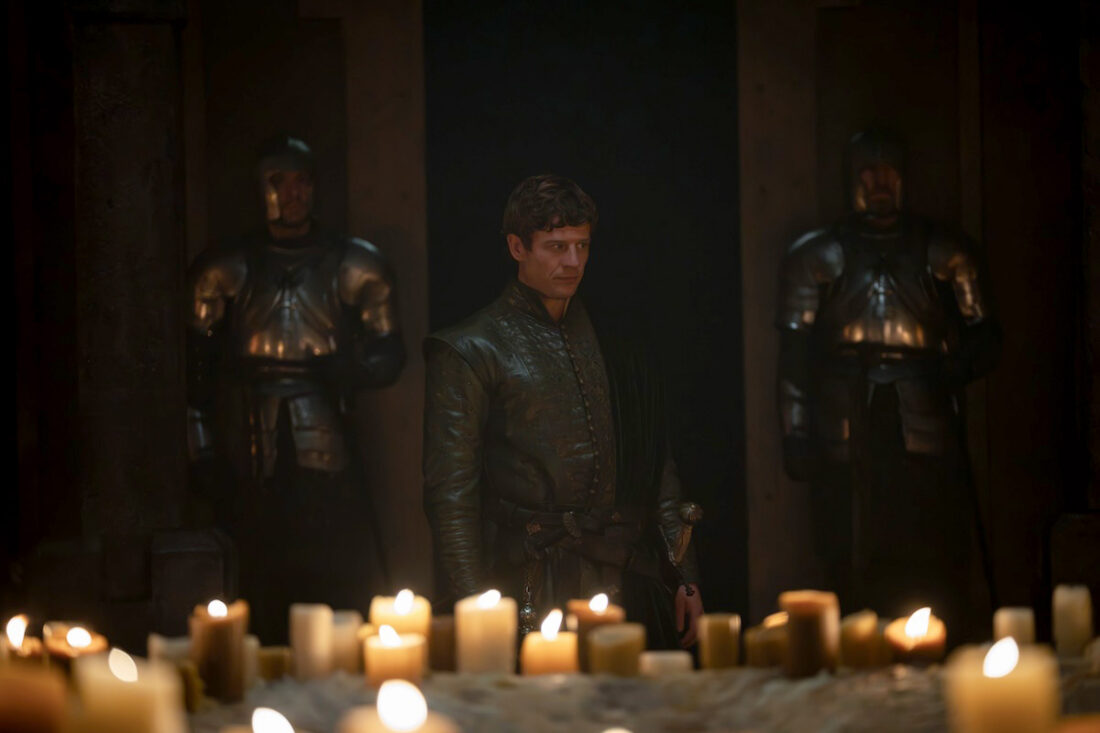
Norton portrays him with an imperious, posh exterior that masks a deep-seated, simmering rage. This characterization serves as a fascinating counterpoint to the corruption of Alicent’s older sons. By establishing that the Hightower stronghold of Oldtown was an environment of intense, rigid expectations, the show clarifies the nature of Daeron’s upbringing. The fact that Ormund harbors a desire to crown Daeron—driven by his own anti-Targaryen bigotry—adds a layer of internal discord to the Green faction. He is not merely a soldier; he is an ideologue who believes his family’s destiny has been usurped by the Dragonriders.
Stewards of Culture and the Myth of Oldtown
To understand the Hightowers, one must understand their relationship with civilization itself. As the rulers of Oldtown—the oldest city in Westeros—they serve as the self-appointed guardians of knowledge and faith. Home to the Citadel, the Starry Sept, and the eponymous Hightower, the family views themselves as the true bedrock of Westerosi society.
Their motto, "We Light the Way," takes on a darker, more nationalistic meaning in this episode. It is no longer just a reference to the lighthouse that guides ships into port; it is a declaration of their belief that they are the architects of culture. By positioning themselves as the light of the Seven Kingdoms, the Hightowers view the Targaryens as invaders who disrupted a natural order that existed long before the conquest. This historical grievance, woven into the fabric of the show, suggests that the conflict is not just about the Iron Throne, but about the very soul of Westeros.
The Antiquity of the Hightowers
The episode brushes against deeper, more speculative lore: the origin of the Hightower bloodline. While officially descendants of the First Men, whispers persist that they—along with House Dayne—may be remnants of an even older civilization, potentially linked to the mysterious Great Empire of the Dawn. Whether or not these theories are addressed on screen, they underscore the haughty, ethno-supremacist pride that defines Ormund’s character. He is an effete prig who views the Targaryens as interlopers who snatched away both temporal power and cultural dominance. This depth of characterization turns him into a sophisticated antagonist, reflecting the flaws of the entire Hightower lineage.
Tumbleton: The Reality of War for the Smallfolk
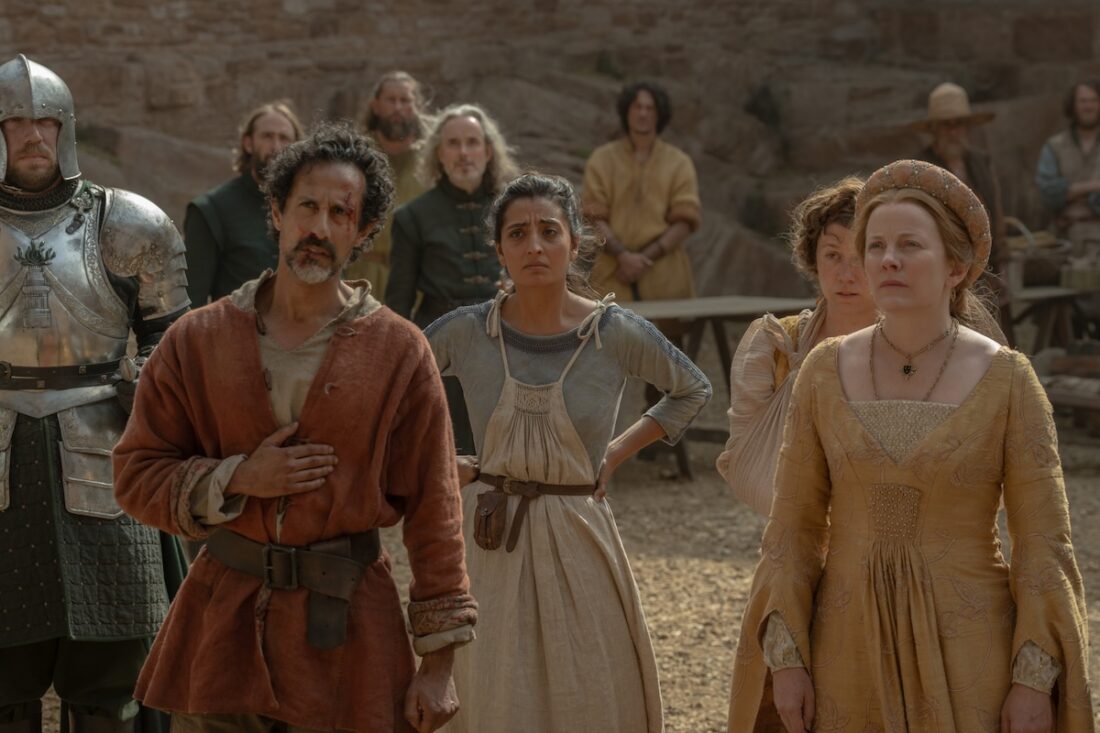
The production design of Tumbleton is notably distinct. With its tiered, ziggurat-style roofs and narrow stone streets, the town possesses an architectural aesthetic that sets it apart from the typical Medieval English look of King’s Landing. The presence of commoners like Kat—the wife of Hugh Hammer—provides a necessary "street-level" perspective.
The episode masterfully illustrates the horrors of military occupation. For American audiences, the depiction of the townspeople being forced to quarter soldiers serves as a brutal lesson in the necessity of protections against the state. The contrast between the lives of the Footly family and the common folk highlights a universal truth: in the Dance of the Dragons, the noble houses provide the spark, but the smallfolk provide the fuel.
Criston Cole: A Class-Conscious Tragedy
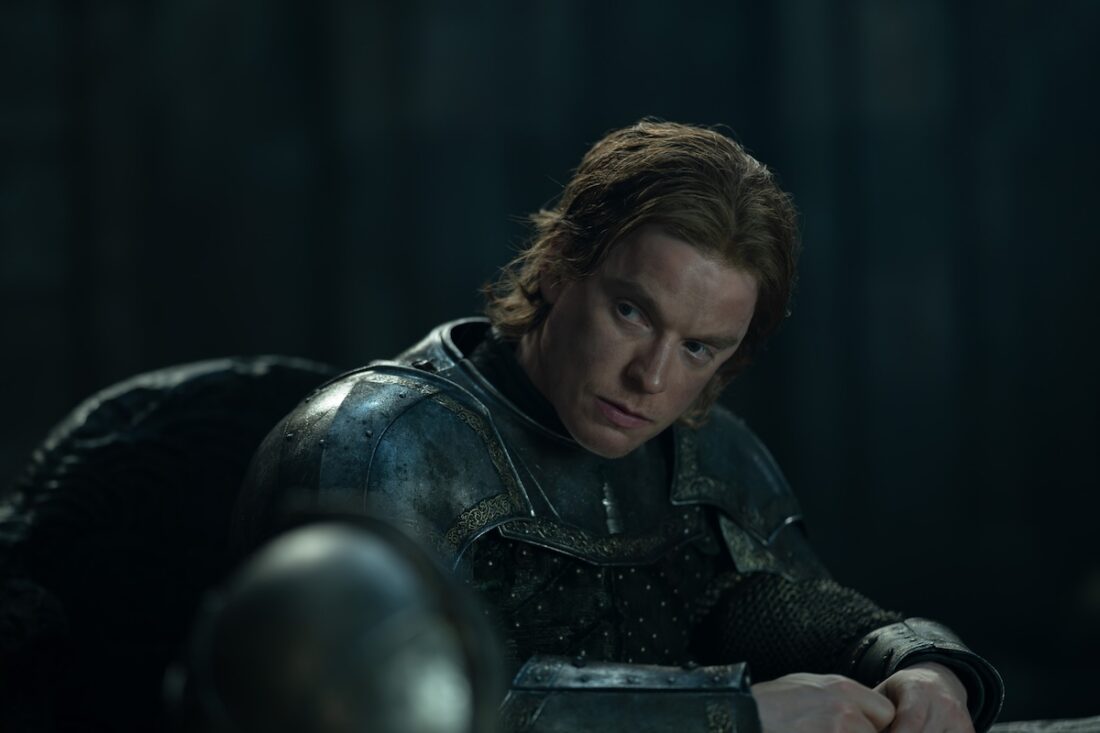
Amidst the high-stakes maneuvering, the show remains committed to exploring the trajectory of Criston Cole. While he is frequently the subject of internet vitriol, his character arc remains one of the most compelling studies in Westerosi class politics. A man defined by his own lack of high-born status, his bitterness is the byproduct of a system that only values him for his utility.
Now resigned to a grim fate following the Battle of Rook’s Rest, Cole is the perfect vessel for the show’s critique of the feudal system. He is a man who once bought into the myth of chivalry, only to realize that the code was a cage. His journey—from a celebrated knight to a disillusioned, dangerous instrument of the crown—mirrors the experiences of other characters, such as the dragon-seeds Ulf and Hugh. As these individuals are raised high by the whims of the nobility, one must wonder if they will find common ground or continue the cycle of violence.
DragonWatch: The Visuals of Devastation
The visual depiction of the dragons remains a highlight of the season. The corpse of Sunfyre, lying in the clearing near Rook’s Rest, is a haunting sight. Aegon’s insistence that his dragon still lives is a poignant display of grief and denial. The subtle, iridescent scale patterns seen on Sunfyre and Silverwing provide a grounded, realistic texture to these mythical beasts.
Conversely, the Blue Queen, Tessarion, is given a compact, stocky design that emphasizes her agility and protective nature toward Daeron. Her presence inside the Tumbleton Sept provides a scale comparison that is both intimidating and awe-inspiring. Furthermore, the grotesque aftermath of the Battle of Rook’s Rest, featuring the beheaded corpse of Meleys, serves as a permanent, visceral reminder of the cost of the war.
Implications and Future Outlook
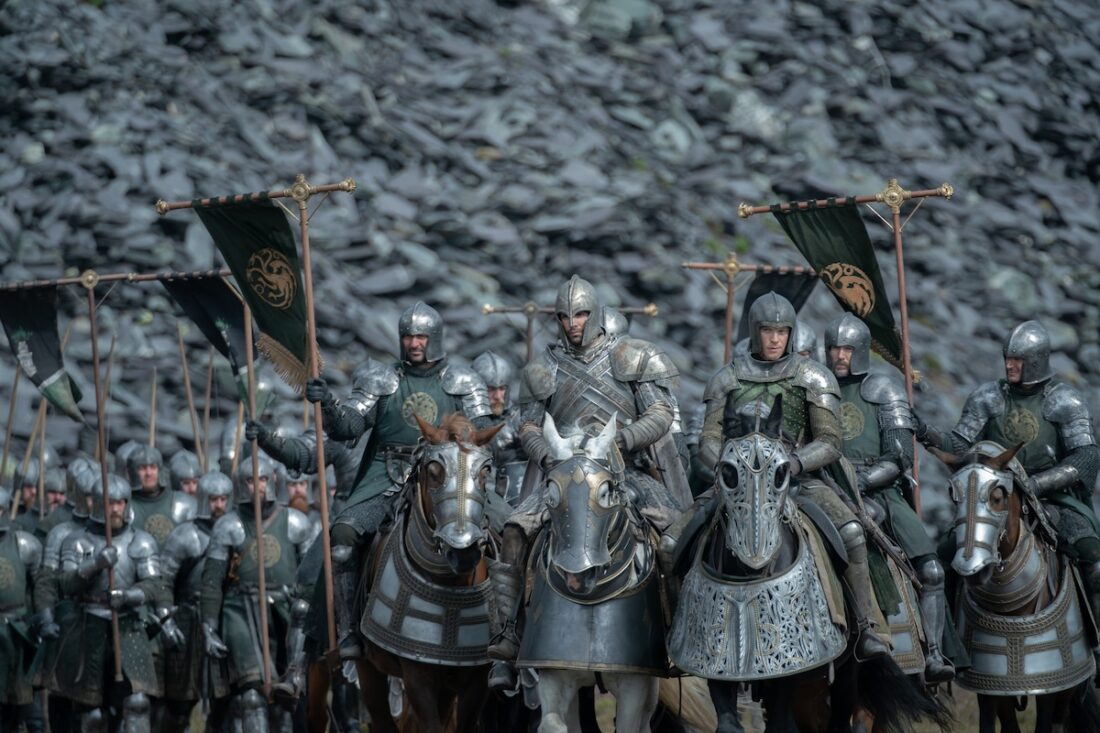
"Tumbleton" functions as a vital piece of place-setting for the latter half of the season. By establishing Ormund Hightower as a credible and intelligent threat, the show has effectively raised the tension. The looming collision between the Hightower forces and the supporters of Rhaenyra is now inevitable, and the political volatility within both the Black and Green councils suggests that the worst is yet to come.
As we move into the back half of season 3, the narrative is perfectly poised for a catastrophic escalation. The combination of internal power struggles, the rising resentment of the smallfolk, and the shifting loyalties of the dragon-seeds promises a season finale that will likely redefine the balance of power in Westeros. The stage is set, the pieces are moving, and in Tumbleton, the fire is ready to be lit.