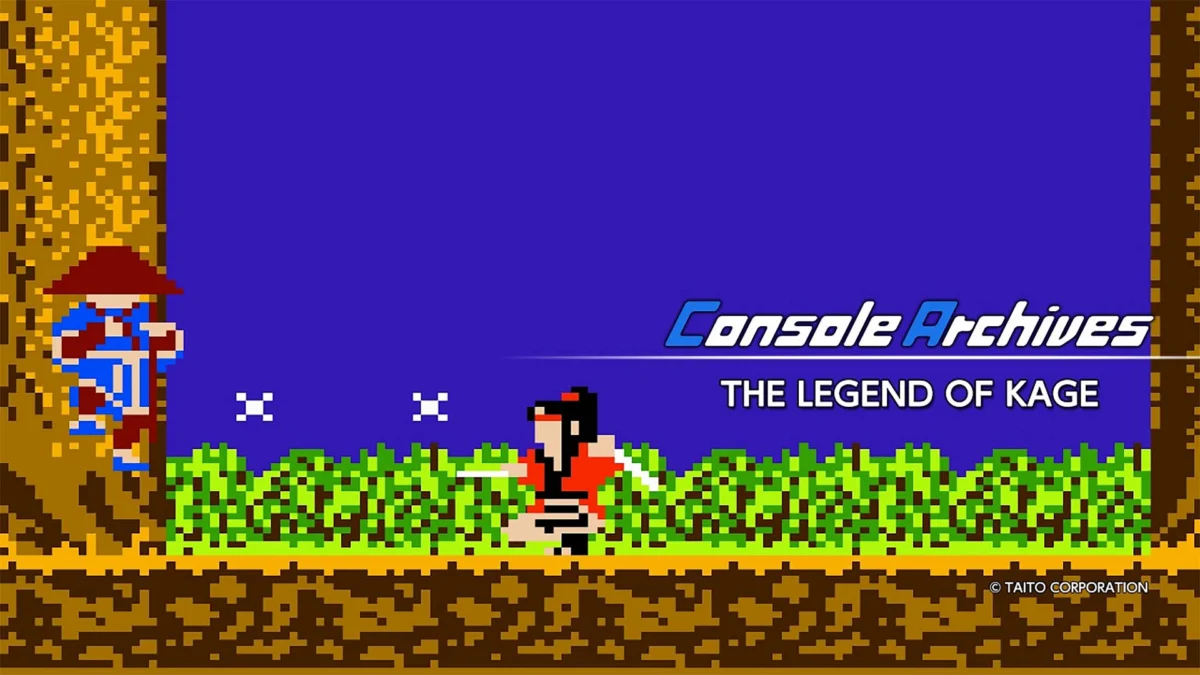
In an era where the gaming industry is increasingly obsessed with high-fidelity graphics, ray tracing, and sprawling open worlds, there remains a persistent, undeniable allure to the foundational pillars of electronic entertainment. This week, Hamster Corporation, the preservation-focused publisher known for its dedication to arcade and console history, has announced that the next title to join its prestigious Console Archives series is none other than TAITO’s 1986 cult classic, The Legend of Kage.
Scheduled for a worldwide release on June 18th, this digital re-release brings the frantic, high-speed action of the 8-bit era to the cutting-edge hardware of the Nintendo Switch 2 and the PlayStation 5. For veterans of the golden age of gaming, it is a nostalgic homecoming; for a new generation of players, it serves as a masterclass in minimalist, high-stakes game design.
Main Facts: A Ninja’s Duty on Modern Hardware
The release of The Legend of Kage via the Console Archives initiative is not merely a port; it is an act of digital preservation. Hamster Corporation has built its reputation on ensuring that the experience of playing a game on a modern console remains as authentic as possible to the original 1986 release.
- Release Date: June 18th
- Platforms: Nintendo Switch 2, PlayStation 5
- Publisher: Hamster Corporation
- Developer: TAITO
- Genre: Action / Platformer
The game places players in the shoes of Kage, an Iga ninja on a desperate mission. The premise is archetypal of 80s action titles: Kirihime, the princess, has been abducted by sinister forces and spirited away to the demon realm. Players must navigate treacherous forests and fortified castles, utilizing a limited but lethal arsenal of swords and shuriken. The core loop is defined by its relentless pace, demanding precision reflexes as players scale vertical environments and fend off waves of enemies.
The Chronology: Tracing the Legacy of an 8-Bit Icon
To understand the significance of The Legend of Kage, one must look back at the landscape of the mid-1980s. When TAITO first introduced the concept to home consoles in 1986, the industry was still finding its footing post-crash.
The Arcade Roots
Before it became a household name on 8-bit systems, The Legend of Kage existed as a formidable arcade cabinet. Released in 1985, the arcade version was renowned for its difficulty and its unique vertical scrolling mechanics. The player’s ability to leap massive distances—far beyond the height of the character sprite—was a technological marvel of the time. It allowed for a sense of verticality that most platformers of the day simply could not replicate.
The Transition to Home Consoles
The 1986 home console version was a vital milestone for TAITO. It demonstrated that the frenetic energy of the arcade could be translated into a living room experience. It became a staple in the libraries of many young gamers, gaining a reputation for being an "unforgiving" experience that required hours of practice to master. By including it in the Console Archives, Hamster is bridging a nearly forty-year gap, allowing the game to exist in a space where it can be evaluated by modern standards while retaining its original spirit.
Supporting Data: Why Preservation Matters
The Console Archives series serves a critical function in the current gaming ecosystem. As digital storefronts evolve and older hardware becomes increasingly difficult to maintain, the risk of "abandonware"—games that are no longer playable or accessible—becomes a genuine threat to the medium.
The Technical Challenge of Emulation
Hamster Corporation utilizes proprietary emulation technology that prioritizes cycle-accurate performance. When a player fires up The Legend of Kage on a PS5, they are not playing a "remastered" version with smoothed textures or adjusted physics. They are playing the original code, wrapped in an interface that provides modern conveniences such as save states, display filters (to simulate CRT monitors), and online leaderboards.

The Rise of Niche Gaming
The data suggests a growing market for retro-gaming. According to industry trend reports from the past three years, engagement with classic titles has seen a 15% increase among players aged 18–25. This "retro-renaissance" is driven by a desire for simplicity. The Legend of Kage embodies this: there are no complex skill trees, no sprawling cinematics, and no microtransactions. There is only the player, the controller, and the challenge of the next screen.
Official Responses and Industry Context
Hamster Corporation’s commitment to the Console Archives series has garnered praise from both critics and fans. By focusing on titles that defined the 8-bit and 16-bit eras, they are curating a digital museum that is interactive rather than static.
"Our goal is to ensure that the history of gaming is never truly lost," a representative from Hamster Corporation stated in a recent briefing. "Bringing The Legend of Kage to the current generation of hardware is about more than just selling a game; it’s about providing a window into the creativity of the designers at TAITO who laid the groundwork for the modern action genre."
TAITO, meanwhile, has continued to see their legacy titles thrive through these licensing partnerships. The company, which recently celebrated its own milestones in arcade history, views these re-releases as a validation of their enduring design philosophy. The decision to bring Kage to the Switch 2 and PS5 simultaneously underscores the cross-generational appeal of these titles.
Implications: The Future of Retro Gaming
The release of The Legend of Kage signals a shift in how modern consoles are being utilized. Both the Nintendo Switch 2 and the PlayStation 5 are positioning themselves as "all-in-one" ecosystems that support everything from the most advanced 4K, 120FPS experiences to the simplest pixel-art classics.
The Impact on Modern Game Design
The enduring popularity of The Legend of Kage provides a roadmap for indie developers. Many modern "roguelike" or "precision platformer" developers cite titles like this as their primary inspiration. The game’s focus on high-speed combat and screen-clearing tactics is the direct ancestor of modern hits like Katana ZERO or The Messenger. By keeping these titles available, developers have a living reference library of what makes "fun" mechanics work.
Sustaining the Ecosystem
As we look toward the future, the integration of legacy titles into the storefronts of the PS5 and Switch 2 suggests that the definition of a "modern" game library is expanding. It is no longer just about the latest AAA release; it is about the entirety of the medium’s history.
In conclusion, The Legend of Kage is a testament to the fact that great design is timeless. As players prepare to jump back into the demon realm this week, they are doing more than just replaying a childhood favorite or discovering a piece of history; they are participating in a cycle of appreciation that keeps the art form alive. Whether you are a long-time fan of the Iga ninja or a curious newcomer, the arrival of this classic on modern hardware is a celebratory moment for the gaming community.
How to Play: The Legend of Kage will be available for digital purchase via the Nintendo eShop and PlayStation Store starting June 18th. Players are encouraged to check the Console Archives hub for additional configuration settings to customize their retro experience.