

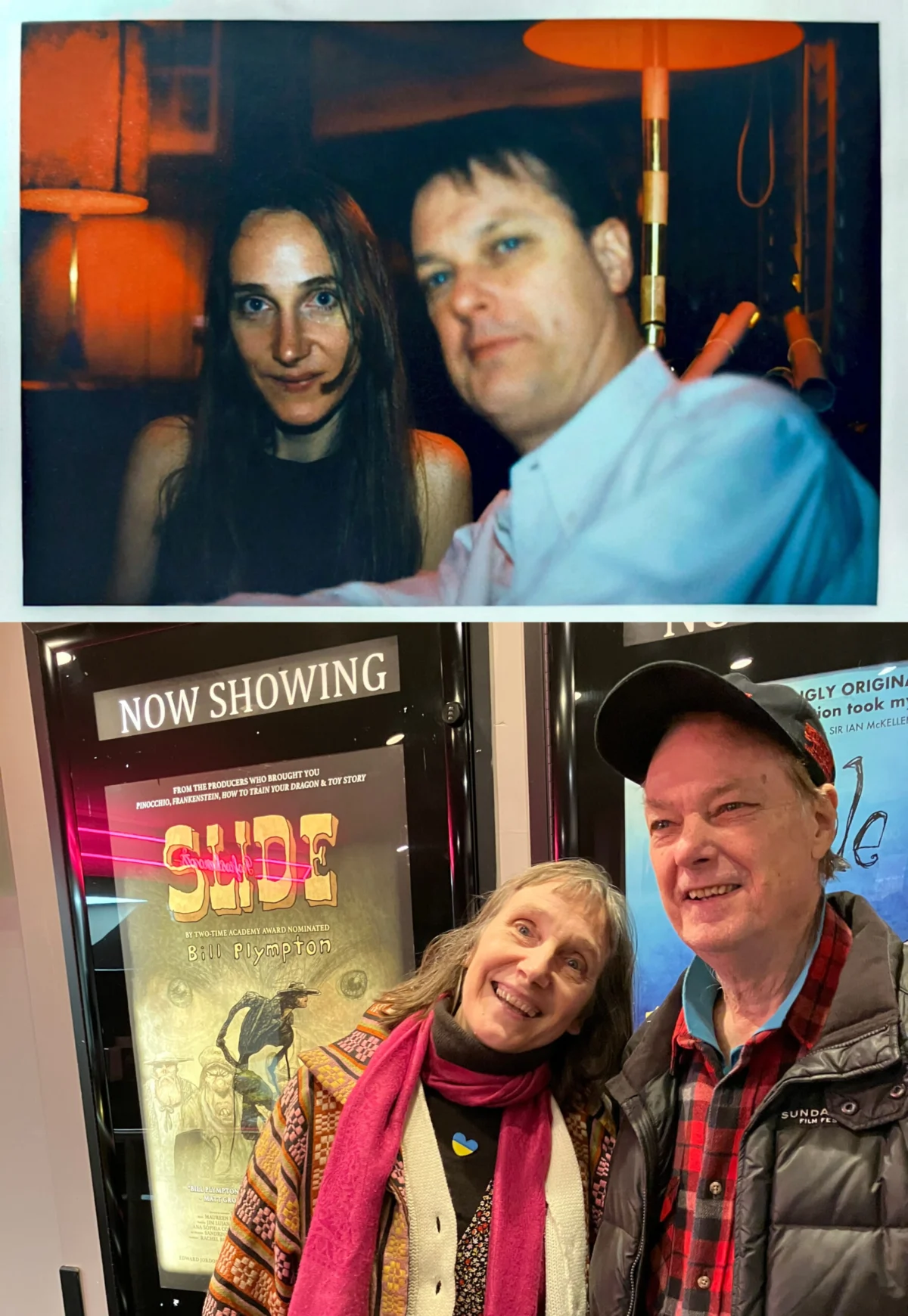
Introduction: The Unlikely Titan of Independent Animation
When the news surfaced that Bill Plympton had reached his 80th year, the animation community—and indeed, even those who have followed his career for decades—was struck by a rare moment of collective disbelief. It is difficult to reconcile the image of the man with the milestone. In the public consciousness, Plympton remains the quintessential middle-aged independent, perpetually captured in a polo shirt and shorts, darting between festival screenings with a suitcase full of sketches, DVDs, and merchandise.
For nearly half a century, Plympton has been more than a filmmaker; he has been a living, breathing blueprint for independent creation. While his surreal, morphing visual style and dark, often ribald humor are instantly recognizable, his true legacy lies in the industrial infrastructure he built around his craft. Plympton proved that an animator does not need to wait for a studio greenlight to exist. Instead, he treated his career as a "cottage industry," mastering the art of self-distribution, promotion, and direct-to-fan sales long before the digital age made such things commonplace.
A Chronology of Independence
Plympton’s career is not merely a filmography; it is a timeline of artistic defiance. His journey hit a critical inflection point in the late 1980s with the release of Your Face (1987). Recalling that period, Plympton remembers the visceral thrill of realizing his "weird cartoon shorts" possessed commercial viability. After an electric reception at the Annecy International Animation Film Festival, he found himself surrounded by acquisitions executives from major networks like MTV, BBC, and Canal Plus.
"I thought, ‘Hey, I can make a living on my weird cartoon shorts, wow!’" Plympton recounts.
The era of the late 80s and early 90s provided a fertile landscape for his work. Platforms like The Tournee of Animation, Sick and Twisted, and MTV’s Liquid Television served as vital conduits for his vision. Unlike his peers who sought to climb the ranks of traditional animation houses, Plympton occupied the interstitial spaces of the industry, feeding a hunger for transgressive, personal work.
As the industry shifted, so did Plympton. When the market for short-form television sales cooled, he pivoted toward feature-length narratives. With The Tune (1992), he broke the unspoken rule that independent animators were confined to the short-film format. He went on to release I Married a Strange Person!, Mutant Aliens, Hair High, Idiots and Angels, and Cheatin’, becoming perhaps the most prolific independent feature animator in history. He estimates he is currently working on his 10th feature, a feat he notes with characteristic bluntness: "I can’t remember any filmmaker ever making 10 animated features by themselves. Not Disney, Tex Avery, Norman McLaren, Miyazaki, Chuck Jones, or anyone."
The "Plympton Dogma": A Business Model for the Creative
The secret to Plympton’s endurance is found in what fellow animator Signe Baumane calls the "Plympton Dogma": Make your films short, fast, cheap, and funny.
This is not merely a creative constraint; it is a survival mechanism. Plympton’s model relies on a cycle of self-subsidy. He takes on commercial work—such as his iconic Taco Bell commercials—to fund his personal projects. These personal projects, in turn, generate their own revenue through a relentless, manual effort.
Animator Patrick Smith, who has observed Plympton’s model closely, notes that the veteran’s approach is a stark lesson in self-sufficiency. "At the core of that model is the process of subsidizing independent films with commercial work, and then, in turn, those films bringing in income themselves," Smith explains. "He never tried for any grants or government assistance. This self-sufficiency was a major lesson: that his independence is linked not only to his aesthetic, but also to his business model."
This "boots-on-the-ground" approach extends to the festival circuit. Plympton is rarely seen merely attending a screening; he is working the room. He views his audience as a community, selling his drawings and books directly to them. This creates a feedback loop of engagement that renders the artist immune to the whims of gatekeepers. It is a grueling, unglamorous existence that requires a specific kind of stamina—the refusal to accept that institutional support is a prerequisite for artistic output.
Supporting Perspectives: A Legacy of Mentorship
The influence of Plympton on the next generation of animators cannot be overstated. Beyond his own filmography, his impact is felt in the careers of artists like Don Hertzfeldt, Signe Baumane, and Patrick Smith.
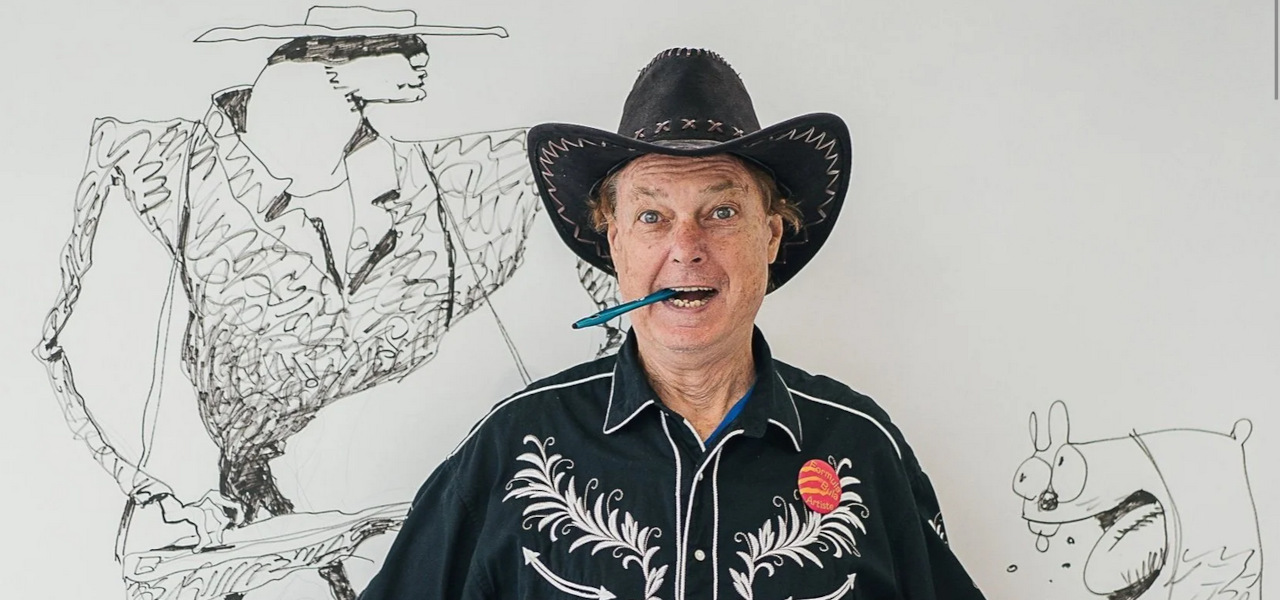
Baumane, who recently helped organize a "roast" to celebrate Plympton’s 80th birthday, views him in almost spiritual terms. "Yes, Bill Plympton is a spiritual leader because he believes in the thing larger than himself: animation and the animation community," she says. She highlights that Plympton’s greatest gift to his peers is not a stylistic technique, but the psychological permission to persist.
"He inspires thousands of animators to aspire to do the impossible—to make films independently from the studio system or government grants," Baumane adds. "Can you be an indie animator like Bill Plympton? It’s hard, but you have to die trying because the journey is worth it."
Plympton’s impact also takes a concrete, humanitarian form. Throughout his years in New York, he has consistently employed and mentored young, inexperienced artists. He treats his staff not as cheap labor, but as creative collaborators. At the recent roast, the atmosphere was one of profound gratitude—a testament to a legacy built on more than just the films themselves, but on the careers he helped cultivate.
The Resilience of the Human Hand
In an age increasingly dominated by generative AI and sterile digital workflows, Plympton remains committed to the physical labor of animation. "I really enjoy the act of putting pencil or pen to paper," he says. "It has a texture that’s similar to paintings in a museum. And I like that. I want all the mistakes and accidents to show that it was made by a human hand."
This commitment to the "analog" persists even as he embraces modern digital distribution. While he admits to being "digitally ignorant" in the early 2000s, he has slowly adapted his promotional strategies to the online era. Yet, the core of his work remains unchanged: the human, messy, and often absurd struggle to express a unique vision.
Baumane points to this resilience as the key to his longevity. Having weathered at least two near-bankruptcies and countless instances of rejection and betrayal, Plympton has consistently emerged from the ashes of his own failures. When asked what the definitive lesson of his career is, his younger collaborators provide a uniform answer: "Just keep going."
Implications for the Future of Animation
As the broader animation industry faces significant instability, characterized by layoffs and the consolidation of studios, Plympton’s path offers a compelling alternative. For young artists entering the field today, the "Plympton Model" is not just a historical curiosity—it is a viable, albeit difficult, path forward.
"I believe that now is an opportune time for young artists to get into animation," Plympton asserts. He encourages newcomers to focus on the essentials: build a short film, get it into festivals, and maintain direct contact with the industry’s business side.
The implication of Plympton’s 80-year career is simple but profound: Independence is not a romanticized, solitary state of being; it is a rigorous logistical, financial, and promotional commitment. It involves storage boxes, mailing lists, copyright negotiations, and the physical act of showing up.
Plympton’s legacy is ultimately one of agency. He has proven that the "impossible" is merely a matter of endurance. By refusing to let the lack of institutional support serve as an excuse, he has created a roadmap for others to follow. Whether or not one loves every frame of his surreal output is irrelevant; the respect he commands is for the act of paving one’s own road and, once paved, the discipline to keep walking it, day after day, year after year.
At 80, Bill Plympton is not looking back at a finished career. He is looking at his next sketch, his next film, and his next audience. As he says, he remains "totally addicted" to the act of creation, and for the animation world, that addiction remains the most inspiring force in the industry.









No comments yet. Be the first to join the conversation!