Reynand Wu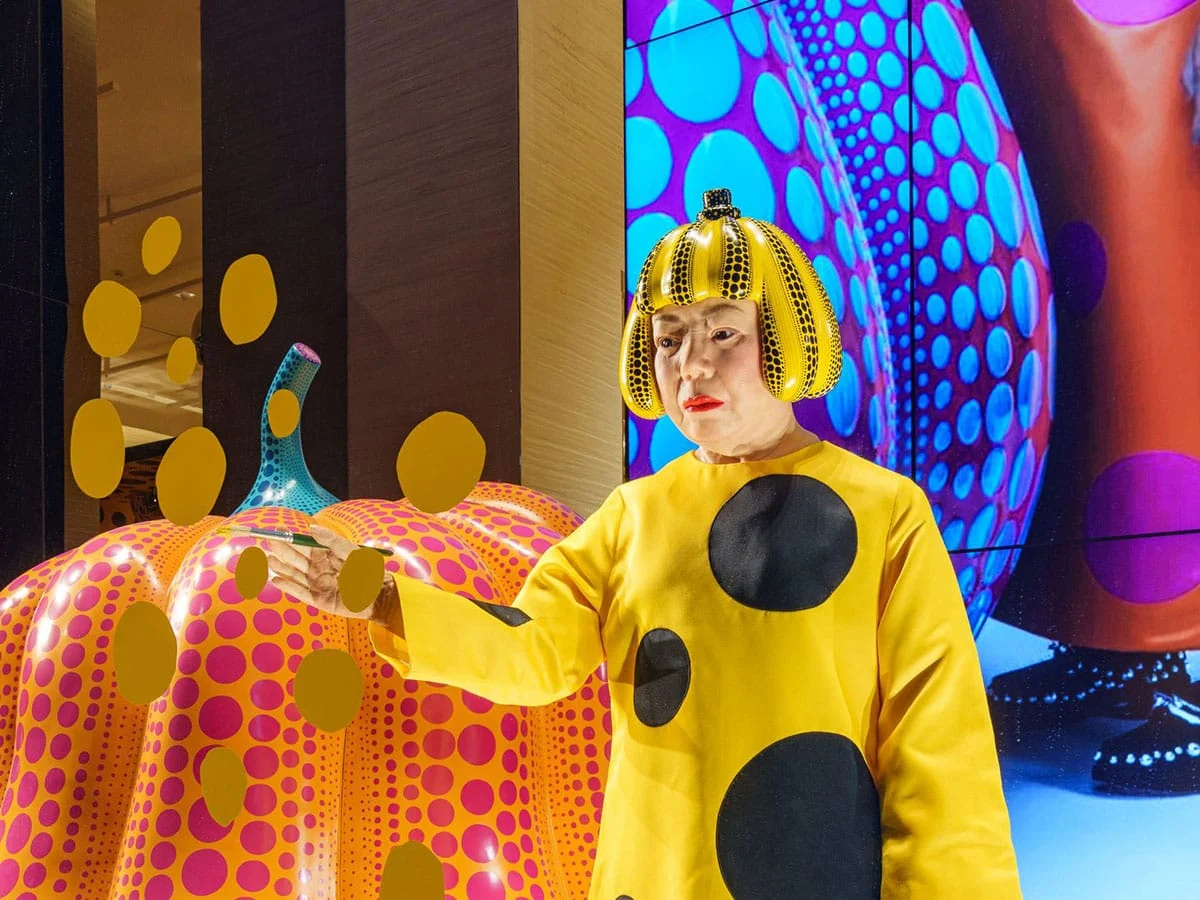
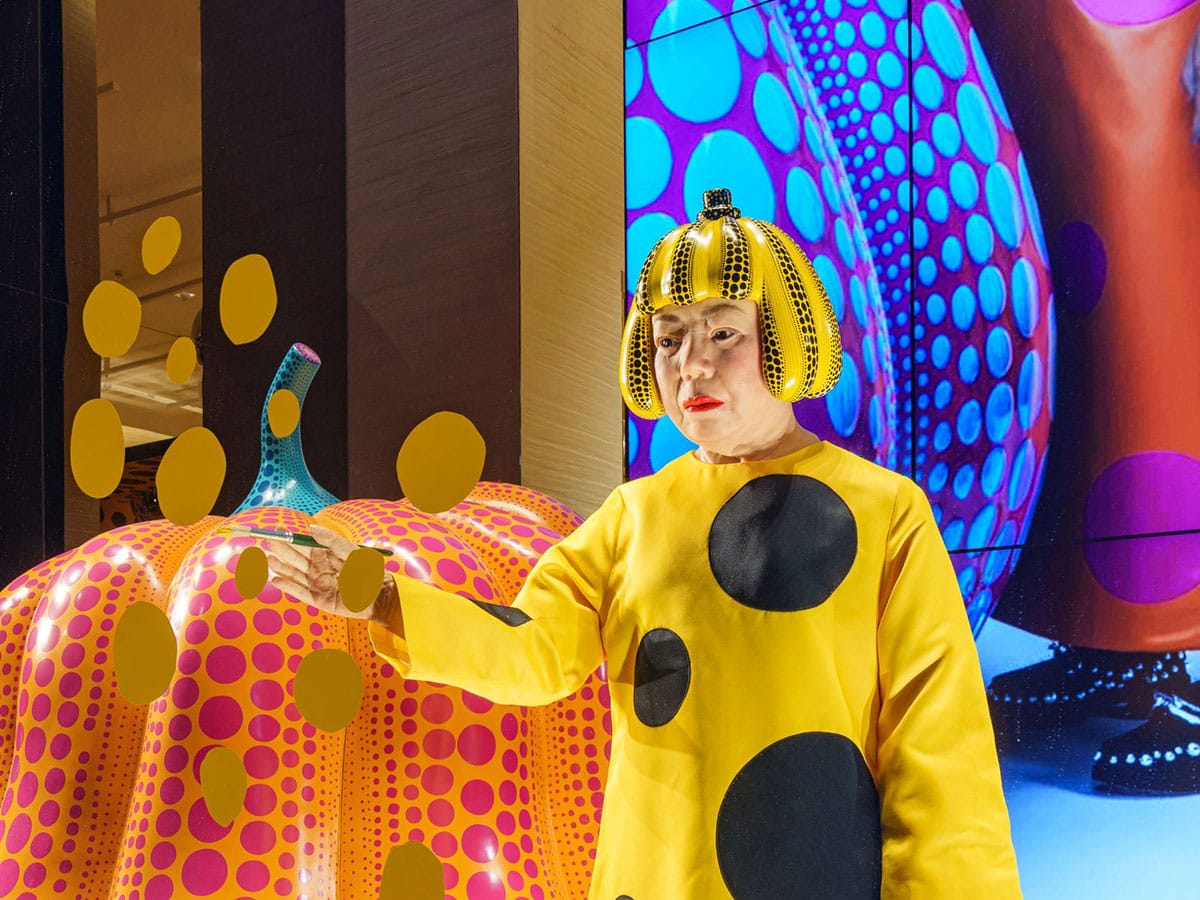
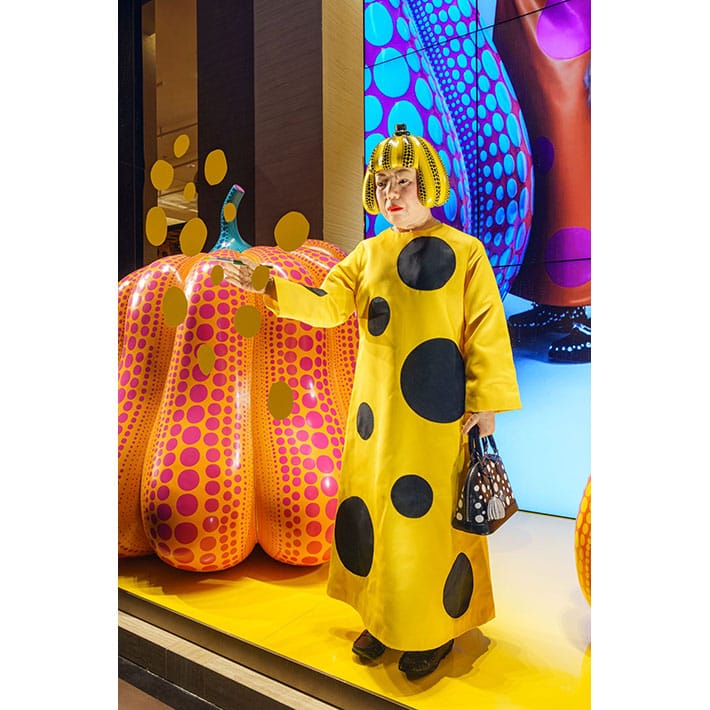
In the heart of Tokyo’s bustling Shibuya Ward, the storefront of Louis Vuitton’s Omotesando flagship has become the epicenter of a global cultural convergence. A hyper-realistic, life-sized humanoid robot depicting the legendary avant-garde artist Yayoi Kusama now occupies the window display, transfixing passersby with a rhythmic, hypnotic performance. This installation marks the latest chapter in a decadelong creative dialogue between the French luxury house and the Japanese visionary, serving as the crown jewel of their highly anticipated 2023 collaborative collection.
Main Facts: The Intersection of Luxury and Avant-Garde
The installation is more than a mere marketing gimmick; it is a feat of engineering that bridges the gap between fine art and retail theater. Standing over six feet tall, the animatronic Kusama is a triumph of uncanny realism. Equipped with sophisticated sensory technology, the robot mimics the artist’s characteristic focused intensity, clutching a paintbrush in her right hand to meticulously paint her signature polka dots against the glass.
The robot’s movements are startlingly fluid. Its eyes track movement, its lips purse in concentration, and it occasionally offers a subtle, knowing smile to the onlookers gathered on the sidewalk. This display is the culmination of a global tour, having previously mesmerized audiences in Paris, New York City, and London. Its arrival in Tokyo is being treated as a triumphant homecoming, grounding the global campaign in the very geography that shaped the artist’s early life and career.
A Chronology of Collaboration: Ten Years of Dots
The partnership between Louis Vuitton and Yayoi Kusama is not a modern impulse but the evolution of a long-standing creative symbiosis. To understand the gravity of the current display, one must look back to 2012, when Marc Jacobs—then the artistic director of Louis Vuitton—first invited the "Princess of Polka Dots" to collaborate.
That initial collection broke the mold of traditional luxury collaborations, proving that high fashion could embrace the chaotic, repetitive, and transformative power of Kusama’s "Infinity Nets." The 2012 collection was a landmark event, cementing the polka dot as a symbol of both luxury prestige and high-art rebellion.
Following the success of that first venture, the relationship remained dormant for years, existing only in the annals of fashion history as a gold-standard collaboration. However, in 2022 and 2023, the two entities reunited for an expansive anniversary collection. This current iteration is far more ambitious, spanning not just accessories and leather goods, but a comprehensive line of ready-to-wear clothing, fragrances, and footwear, all unified by the recurring motifs of dots, pumpkins, and mirrored spheres—Kusama’s recurring visual lexicon.
Supporting Data: The Anatomy of a Viral Sensation
The "Yayoi Kusama Robot" is arguably the most successful retail installation of the decade, measured by digital engagement and foot traffic. Since its first appearance in the Louis Vuitton flagship windows in Paris, the robot has occupied a significant share of social media discourse.
The Engineering of the "Uncanny"
The robot utilizes advanced robotics, including:
- Sensory Integration: Infrared and motion sensors that allow the figure to react to human proximity, ensuring that the "gaze" of the robot feels deliberate and personal.
- Articulated Anatomy: High-torque actuators in the neck, jaw, and eyes that mimic human micro-expressions, preventing the "stiff" look common in standard retail mannequins.
- Materiality: The synthetic skin and hand-painted details are designed to hold up under the intense lighting of a storefront, maintaining a lifelike glow even from a distance.
Industry analysts note that the decision to deploy this technology across global flagship stores is a strategic response to the "experience economy." In an age of e-commerce dominance, luxury houses are finding that the only way to lure customers back into physical spaces is by offering "Instagrammable" spectacles that cannot be replicated on a screen.
Official Responses and Artistic Intent
Louis Vuitton has remained characteristically tight-lipped regarding the specific technical specifications of the robot, preferring to allow the installation to speak for itself. However, representatives have emphasized that the robot is an extension of Kusama’s philosophy of "self-obliteration."
By placing a robot version of herself in the windows of one of the world’s most recognizable luxury brands, Kusama is effectively multiplying her presence. As she has stated in past interviews regarding her work: "My art originates from hallucinations only I can see. I translate these hallucinations and obsessional images that plague me into sculptures and paintings." The robot acts as a vessel for these obsessions, allowing her vision to be present in multiple global cities simultaneously—a digital, mechanical version of the infinity she has spent a lifetime exploring.
For the artist, who resides voluntarily in a psychiatric hospital in Tokyo, this partnership is a rare public-facing endeavor. The collaboration represents a totalizing vision where the artist’s work consumes the brand, rather than the brand merely decorating the artist’s work.
Implications: The Future of Luxury Retail
The success of the Louis Vuitton x Yayoi Kusama installation signals a permanent shift in how luxury brands approach their physical presence. We are witnessing the end of the "static window display." The future, as demonstrated by the Omotesando store, is performative, kinetic, and deeply psychological.
1. The Blurring of Boundaries
The "Uncanny Valley" effect—where a replica looks almost human but feels slightly "off"—is usually considered a failure in robotics. Here, however, it is a feature. The slightly unsettling nature of the robot forces the viewer to pause, contemplate, and record. It turns the window shopper into a content creator, providing free, high-value marketing for the brand.
2. The Cultural Value of Heritage
By revisiting a 10-year-old collaboration, Louis Vuitton is signaling the importance of "brand heritage" in the modern era. They are not merely launching a new product; they are curating a legacy. This creates a sense of scarcity and historical importance that drives consumer demand for the collection, even among those who might not typically follow avant-garde art.
3. The Digital-Physical Synthesis
The collection itself features complex techniques like "screen-printed dots" and "embossed leather" that mimic the texture of paint. When paired with the robotic installation, the entire retail environment becomes an immersive ecosystem. This is a blueprint for the "phygital" (physical and digital) shopping experience that many luxury brands are currently scrambling to perfect.
Conclusion: A Must-Visit Destination
For those currently in Tokyo, a visit to the Omotesando store is essential. The juxtaposition of the serene, white-washed, minimalist architecture of the Louis Vuitton store against the vibrant, obsessive, and slightly manic energy of the Kusama robot creates a tension that is rare in modern retail.
The collection itself—a vibrant explosion of polka dots across iconic bags like the Speedy and the Keepall—serves as a tangible souvenir of this intersection between high art and high fashion. As the robot continues its residency in the heart of Shibuya, it stands as a testament to the fact that when art and commerce are aligned with such precision, the result is not just a product, but a cultural phenomenon that lingers long after the window display is changed.
Whether you are a collector of Kusama’s limited-edition pieces or simply a passerby drawn in by the hypnotic gaze of the robot, the experience at Omotesando is a stark reminder of the power of imagination. In a world increasingly dominated by fleeting digital trends, the Yayoi Kusama robot reminds us that the most effective way to grab the world’s attention is still, quite simply, to make your mark—one dot at a time.


 Neng Nana
 Asro
Asro